I recently watched The Weather Underground, a 2002 documentary on the eponymous radical organisation active within the United States during the 1970s. The film may be of interest to those studying radicalisation, insurgency and political violence, as it effectively explores the rise, evolution and demise of a revolutionary organisation. It also raises some semantic/ethical questions about ‘who is a terrorist’.
….The use of violence for political messaging may be viewed as ‘terrorism’, and this is typically how the Weather Underground is understood. But is this accurate? Terrorist groups deliberately target civilians to scare or terrorise wider populations into a certain political behaviour. The WUO refrained from such action: they used violence against buildings rather than people, to symbolise their discontent with specific policies and actions, but without killing those held responsible. It was ‘propaganda of the deed’, but without the bloodshed. Accordingly, none of WUO’s attacks resulted in casualties (the one exception has not been definitively linked to the group), and for this reason alone, it is difficult to call WUO a ‘terrorist’ organisation.
Uh, no it isn’t. As the commenters at KoW are busy trying to inform Ucko, this narrative does not fit the facts of the history of the Weathermen.
David, I suspect, is not trying to romanticize the Weathermen here so much as force-fit them into his theoretical model of terrorism, possibly influenced by a tactical turn that was undertaken by the IRA to drive up financial costs for the British government while minimizing the bad press that and damage to their public image that had been growing from earlier, bloody, IRA bombings.
Just received a review copy courtesy of Dr. Bunker and James Driscoll of Taylor & Francis – could not have arrived at a better time given several research projects in which I am engaged.
The 237 page, heavily footnoted, book is organized into three sections: Organization and Technology Use by the narcos networks, Silver or Lead on their carrot and stick infiltration/intimidation of civil society and the state apparatus, and Response Strategies for the opponents of the cartels. Bunker’s co-authors Matt Begert, Pamela Bunker, Lisa Campbell, Paul Kan, Alberto Melis, Luz Nagle, John Sullivan, Graham Turbiville, Jr., Phil Wiliams and Sarah Womer bring an array of critical perspectives to the table from academia, law enforcement, intelligence, defense and security fields as researchers and practitioners.
Looks good – will get a full review here at a later date, but a work that will definitely of interest to those readers focusing on national security, COIN, 4GW, irregular or Hybrid war, terrorism, transnational organized crime and black globalization.
First, the criminal insurgencies in Mexico have been increasing in intensity since the formal declaration of war-penned with the initial deployment of Army units into Michoacán and Ciudad Juárez against the insurgent gangs and cartels-by the Calderón administration in December 2006. Over 30,000 deaths in Mexico, just over ten-times the death toll from the 9-11 attacks, have now resulted from these conflicts with 2010 surpassing the earlier end of year tallies with almost 13,000 total killings. While most of these deaths have been attributed to cartel on cartel violence, an increasing proportion of them include law enforcement officers (albeit many of them on cartel payroll), military and governmental personnel, journalists, and innocent civilians. While some successes have been made against the Mexican cartels, via the capture and targeted killings of some of the capos and ensuing organizational fragmentation, the conflicts between these criminal groups and the Mexican state, and even for neighboring countries such as Guatemala, is overall not currently going well for these besieged sovereign nations. Recent headlines like those stating “Mexico army no match for drug cartels” and “Drug gang suspects threaten ‘war’ in Guatemala” are becoming all too common. Further, it is currently estimated that in Mexico about 98% of all crimes are never solved-providing an air of impunity to cartel and gang hit men and foot soldiers, many of whom take great delight in engaging in the torture and beheading of their victims.
Just starting reading this magnum opus by eminent strategist Edward Luttwakand I am thoroughly enjoying it; particularly, the context-building historical digressions that enrich the text. Highly recommended.
Strategic dogma, that is. Thoughts by Joseph Fouche at The Committee of Public Safety.
Heh. Regarding the crappy and buggy formatting performance of the comment field here that JF terms “the worst on the internet”, I’ll be happy to take suggestions for a new, no-hassle, plug-in that works well with wordpress. There were trade-off issues involved with what was available at the time of the last site redesign and I rejected options that were actually, if it is to be believed, worse. I would like to do some post holiday tweaking of the site and if there are better things out there, I’ll see if they can be used to replace the current plug-in.
Zenpundit is a blog dedicated to exploring the intersections of foreign policy, history, military theory, national security,strategic thinking, futurism, cognition and a number of other esoteric pursuits.

 by Dr. Robert J. Bunker (Ed.)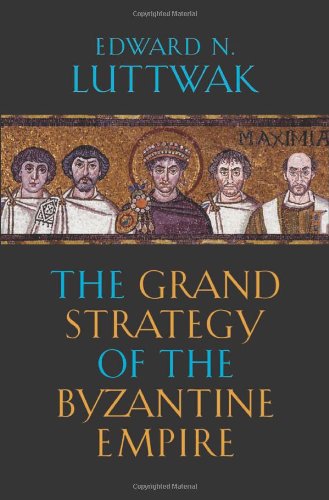
 by
by 


