The children of the people of Acahaulinca, because of hunger,
are not born
they hunger to be born, only to die of hunger.
Blessed are the poor for they shall inherit the moon.
I find these lines quite striking.
Rugama’s moon is a bleak moon, but that’s a function of Rugama’s comparison of the cost of moon shots with the fate of generations hungry in Acahaulinca, wherever that is. I can point you to the moon, though — with the mandatory zen caution.
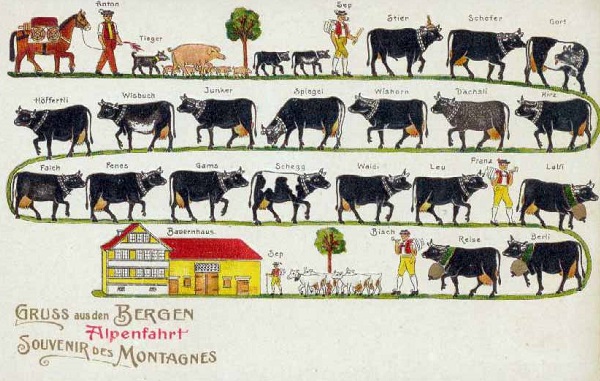
[ by Charles Cameron — party time! — i have a strange sense of party, oxen invited ]
.
I’m delighted to note a Boustrophedon reference. first by a poet, naturally, Ange Mlinko, in her poem:
A levitating anvil. Omen of seagull
Blown inland. Ranch gate said riverstyx,
but it was the woodland that looked lethal:
no place to put down your foot. Bucolics
demand boustrophedon.
— then in the New Yorker cmmentary by Dan Chiasson:
Art imitates life imitating art: “boustrophedon” describes the path that a plow takes as it moves back and forth in a field, the same serpentine path followed by rivers and by classical manuscripts that alternate between left-right and right-left lines of text. Soon, our contemporary Eurydice in the wrong footwear makes the momentous decision to “shed her red wedge / with its Mary Jane band.” Orpheus, who knows how the story ends, steps in to mansplain her error.
[ by Charles Cameron — the poem as guided tour ]
.
So, my son Emlyn asked me where I would like my ashes scattered when I’m gone, offering to do me that service, and the ensuing discussion made it clear I had an opportunity not only to send him to some places I’ve loved where he’d be likely to find adventure, but also to provide him with reading (or listening) along the way — again, close to my mind and heart and potentially revelatory for his.
^^
I was tossing this around in my mind a day or two ago, and this poem announced itself:
Paradise or Pasadena, since you asked
I should like my ashes scattered in the upper atmosphere,
in Bach to be precise,
in deep feeling, in the St Anne Prelude and Fugue,
in “not of this world” in other words,
believing that if met by JSB
at the General Resurrection, I was most choicely planted.
Bach, seriously, is the mountain range I have assiduously
climbed since early youth,
and the St Anne not the most obvious,
but among the most glorious works therein,
though I am also vastly taken by Contrapunctus IX
and the Dorian Toccata was my first love.
More practically, fold me between pages of Yeats or Rilke,
and leave me on a bench in the Huntington Gardens.
That’s by no means my final response to Emlyn’s question, I look forward to many more hours of pondering and reminiscing. But it’s a thought..
**
Here, for your delight and enrichment, are the musical offerings the poem mentions:
The St Anne Prelude and Fugue, played here by Peter Hurford:
Contrapunctus IX from The Art of Fugue, played by Glenn Gould on piano, his usual instrument:
and, in a rare instance for Gould, on organ:
— and the Dorian Toccata and Fugue, my first Bach love, which I bought, treasured, and binge-listened to back in the late 50s (?) on a 45 rpm disc:
**
Noteworthy, the second of two images of Ton Koopman accompanying that last recording — which shows the fierce nature of Koopman when he was young — fading in right at the end of the Toccata:
I would love to have known him back when..
**
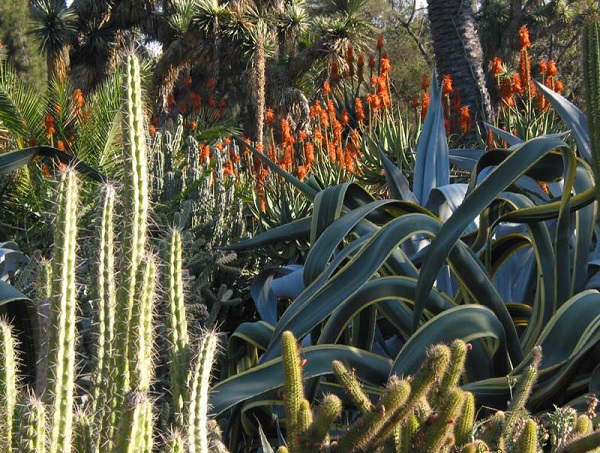
And place — the Huntington Gardens in Pasadena, which include a garden of flowers named in Shakespeare’s works, a Japanese garde, rose garden, and — my absolute favorite –the Desert Garden, containing 5,000 varieties of cactus and other xerophytes across 10 acres..
I suspect that losing oneself in those 10 acres is the closest thing to visiting an alien planet to be found on this one…
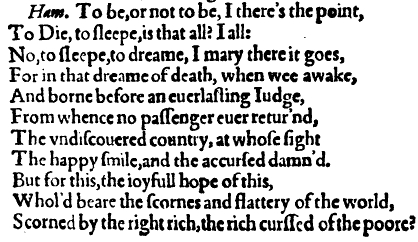
Once you’re in the garden and have escaped the lure of the cacti, the cool of the Huntington Library is nearby — with some stunning William Blake illuminations perhaps, and both a First Folio Shakespeare and the remarkable “bad” First Quarto of Hamlet which preceded it.
How has the mighty soliloquy been truncated:
To Die, to sleepe, is that all?
**
Cacti, roses, Folio, scholars, tea rooms — heaven, in its earthly approximation…
[ by Charles Cameron — sheer gossamer speculation about the trump effect ]
.
There’s a sort of weird logic to it. Trump, the fantasist extraordinaire has indeed had one of his fantasies come true, and it’s a big one — “most powerful man on earth” — akin to being heavyweight champion of the world, but moreso. POTUS says it by implication: MPMOE makes it explicit.
Give the man credit for that, and then watch as he tosses out other fantasies — like a gambler scattering coins in a fountain after a successful night at a Vegas hotel casino — and declares them all true by extension —
biggest crowd?
if he’s the MPMOE, must be.
et cetera, et cetera
if he’s the MPMOE, must be.
ad infinitum
if he’s the MPMOE, must be.
never before seen
if he’s the MPMOE, must be.
last trump?
**
This really has to do with magical thinking, or poetry as it veers towards prophecy perhaps, as in “and of his kingdom there shall be no end”.
Or so I suppose.
**
Footnote:
Russian President Vladimir Putin is the most powerful person in the world right now, according to the latest ranking from Forbes. REUTERS/Sergei Karpukhin
[ by Charles Cameron — Senators Hirono, McCain — and death shall have no dominion ]
.
You have probably seen Sen. John McCain‘s speech, so I’ll begin with Sen. Mazie Hirono. She too, like McCain, has a severe cancer diagnosis, she too flew in to vote, she too made an impassoned speech on thr Senate floor. Here’s a clip from her speech:
Here, from the other wise of the aisle, with similar dignity and depth, is McCain:
**
And death shall have no dominion
And death shall have no dominion.
Dead man naked they shall be one
With the man in the wind and the west moon;
When their bones are picked clean and the clean bones gone,
They shall have stars at elbow and foot;
Though they go mad they shall be sane,
Though they sink through the sea they shall rise again;
Though lovers be lost love shall not;
And death shall have no dominion.
And death shall have no dominion.
Under the windings of the sea
They lying long shall not die windily;
Twisting on racks when sinews give way,
Strapped to a wheel, yet they shall not break;
Faith in their hands shall snap in two,
And the unicorn evils run them through;
Split all ends up they shan’t crack;
And death shall have no dominion.
And death shall have no dominion.
No more may gulls cry at their ears
Or waves break loud on the seashores;
Where blew a flower may a flower no more
Lift its head to the blows of the rain;
Though they be mad and dead as nails,
Heads of the characters hammer through daisies;
Break in the sun till the sun breaks down,
And death shall have no dominion.
Zenpundit is a blog dedicated to exploring the intersections of foreign policy, history, military theory, national security,strategic thinking, futurism, cognition and a number of other esoteric pursuits.