zenpundit.com » paradox

Archive for the ‘paradox’ Category

Two summits, one Korean peninsular

Wednesday, April 18th, 2018

[ by Charles Cameron — colloquially speakin’, there’s a whole lot of prayin’, partyin’ & paradoxin’ goin’ on]
.

War on the Rocks brings us a fascinating article by Ramon Pacheco Pardo of the Institute for European Studies of Vrije Universiteit Brussel and Senior Lecturer in International Relations at King’s College London, titled The Korean Summit that Really Matters, and you guessed it, it’s not the one between Trump and Kim, its the one between North and South — and the WOTR piece has more (perhaps not unexpectedly) about the South than the North.

For my purposes, the WOTR piece opened eye-catchingly with a Buddhist and Christian doublet:

On Monday, South Korea’s Catholic Church held an unusual prayer: It prayed for the success of the upcoming inter-Korean summit. The following day, South Korean President Moon Jae-in attended a Buddhist service, also praying for the summit’s success.

That much religion in two short sentences put me on the alert —

— and only from there did the writer move to a comparison between the Moon and Trump summits:

Clearly, the Moon administration is leaving nothing to chance to ensure that next week’s meeting with North Korean leader Kim Jong Un redefines Korean geopolitics. Both Moon and, to a lesser extent, Kim have been preparing for this moment for years. This is why the upcoming inter-Korean summit, not the much-discussed summit between Kim and U.S President Donald Trump, is the one that really matters for the future of the peninsula.

**

For a detailed look at the entire Korean situation, look at or critique the whole WOTR piece:

  • WOTR, The Korean Summit that Really Matters
  • The two articles Pacheco Pardo links to regarding President Moon attending Catholic and Buddhist prayers are:

  • NK News, S. Korea’s Catholic Church prays for inter-Korean summit’s success
  • NK News, Moon vows efforts to establish peace between the two Koreas
  • **

    Digging around a bit farther afield from there brought rewards.

    We already knew that Junche — “usually left untranslated, or translated as ‘self-reliance'” is ideology of North Korea, and that it is effectively a cult of personality of the revolutionary (dynastic) leader — nothing much new to glean there — but the South Korean leader’s speech led me onwards:

    President Moon Jae-in has called on Buddhists to show their support for peace on the Korean Peninsula. “The Hwajaeng theory espoused by Wonhyo (617-686), one of the greatest masters in the history of Korean Buddhism, means a ‘cooperative resolution of conflict,’ and it will hopefully be fulfilled on the peninsula, as we resolve conflicts and division between the two Koreas,” he said.

    His remarks came during a Buddhist ceremony on April 17 to pray for security and peace on the peninsula, with chief monks and representatives from major temples across the country, and also some non-Korean Buddhists, in attendance.

    Aha!

    **

    Wonhyo seems to have been something of a blithe spirit, as well as a scholar, the author of voluminous works:

    [Wonhyo] tried to embody in his own life the ideal of a bodhisattva who works for the well-being of all sentient beings. Transcending the distinction of the sacred and the secular, he married a widower princess, visited villages and towns, and taught people with songs and dances.

    — as one of his commentators puts it. You can almost hear Wikipedia laugh or snort (your choice) as it says:

    While the Buddha discouraged such behaviors, his [Wonhyo’s] songs and dances were seen as upaya, or skillful means, meant to help save all sentient beings.

    **

    Get serious, please!

    The required reading would appear to be in:

  • Jogye Order of Korean Buddhism, Wonhyo: Selected Works, A Charles Miller, ed & tr
  • Defeating language at its own game by all available means, no wonder Wonhyo taught by dancing and singing!

    **

    That’s all very well, and may please the poet-theologian in me, but what about Hwajaeng and conflict resolution?

    As a methodological approach, hwajaeng refers to Wonhyo’s relentless pursuit of ostensibly variant or conflicting Buddhist doctrinal positions, investigating them exhaustively until identifying the precise point at which their variance occurs and then showing how differences in fundamental background, motivation, or sectarian bias on the part of the proponent of that particular doctrinal position led to the production of such apparent contradictions. He never judges any proposition to be ultimately correct: it is only determined to be valid or invalid from a given standpoint. Wonhyo then lays out his own argument in contradistinction to the attached views he has previously elaborated.

    It will be instructive to see how President Moon develops this approach vis-a-vis South-North dialog, and how the somewhat inscrutable Kim Jong Un receives and adapts to it..

    **

    The image in the top panel, above, shows President Park Geun-hye and Cardinal Andrew Yeom Soo-jung. President Moon succeeded President Park after her impeachment in the 2017 elections. He is shown praying, second left, in the lower panel, above,

    Image sources:

  • Korea.net, President meets Catholic leaders
  • Korea.net, President Moon asks Buddhists to join peacemaking on peninsula
  • Okay, my head is spinning.

    Jordan Peterson, ouroboroi, paradise, and so forth

    Wednesday, March 28th, 2018

    [ by Charles Cameron — oh damn, cameron’s on about the ouroboros again, when do we get to strategy? ]
    .

    A slide from a youtubed lecture:

    **

    I have found someone who gives emphasis to many of the things I give emphasis to, and which few other peple emphasize. And FWIW, the Jungians do this better than most, but then I’ve been reading and appreciating them for ages. This is new.

    Okay, Jordan Peterson. He’s been thinking across a wide range of fundamental concepts for many years now, and considerable fame has accrued to him. How I managed not to notice him until now, I’ll never know. Here he is, anyhow —

    — with that ouroboros slide faintly visible behind him. The limits of vision, faintness included, are among his many interests, FWIW.

    **

    I’ve read Tanner Greer‘s recent critique of Peterson, which was enough to catch my inner eye, and then today there was an invite from Zen —

    Hell yes.

    And I’m maybe ten minutes into that lecture, have skipped around a bit, and went back to lecture #7 for a clear shot of the ouroboros behind him, which I’ve now inserted at the top of this post.

    **

    Peterson’s ouroboros is a conflation of a bird, a cat and a snake — wings, claws and venom — birds, cats and snakes being the three classes of being that can kill you from a tree. A “winged, legged serpent” — the “dragon of chaos”. That’s not how I get to the ouroboros, and my equivalent interest is in its recursive nature.

    I wrote the poem below, as far as memory serves, in the Anscombe-Geach living room, heart of Oxford’s superb logic team at the time, back in the mid nineteen-sixties, and published it, I think, in Micharel Horovitz‘ 1969 anthology of Britain’s equivalent of the USian beat poets, Childrenn of Albion — wow, of which you could have purchased Amazon’s sole remaining copy for $729.32 as I was writing this — now it’s only $32.57 — is that a difference that makes a difference?

    Here’s the poem:

    I formatted it more recently in a HipBone Games manner, as a single move with a recursive tail.

    **

    Another significance of the ouroboros for Peterson is that the serpent (antagonistic to us) guards a treasure (to be desired)..

    So along with recursion, we have predatory chaos, aka the unknown and indeed unknowable unknown, and the treasure trove or hoard. And as you might intuit, it’s a short leap from there to the word-hoard — poetry in the palm of your mind, with an early mention in Beowulf.

    Here are a few gems from Peterson’s seemingly inexhaustible hoard:

  • there’s no place that’s so safe that there isn’t a snake in it..
  • even God himself can’t define the space so tightly and absolutely that the predator of the unknown can’t make its way in..
  • that’s the story of the garden
  • — and those are from maybe a three minute stretch of a two hour lecture — the word means “reading” — one of forty, is it, in the series?

    **

    Phew. I just received the book, Maps of Meaning: The Architecture of Belief, from Amazon —

    — the print is small — too small for me — stronger glasses coming soon..

    **

    Look, Stormy Daniels was just on 60 Minutes, offering prurient interest under cover of adversarial politics, how could I resist? I could have watched ten more minutes of Peterson video, and grabbed twice the number of notes I’ve made here — but that can wait.

    Stormy Daniels and her lawyer, Michael Avenatti, can show you strategy..

    Ah, but Jordon Peterson can show you abstraction.

    **

    Consider the recent school shootings. I go back to Columbine.. Peterson goes back to abstraction, mapping, and time-space:

    For example, we’re all sitting in this room, and someone leaps in with a weapon.

    It’s like this was known territory a second ago, and now it’s not known territory at all. Even though you’d say, well many things have remained the same, it’s like, yeah, but all the relevant things have suddenly changed, right? And so part of the way of conceptualizing that is that you can manifest a geographic transformation by moving from genuine geographic explored territory into genuine unexplored geographic territory. But you can do that in time as well. Because we exist in time as well as space. And so a space that’s stable and unchanging can be transformed into something completely other than what it is, by the movement forward of time. So why am I telling you that? It’s because we’ve mapped the idea of the difference in space, between the known and the unknown, to the difference in time between a place that works now and a place that no longer works, even though it’s the same place, it’s just extended across time.

    Consider the recent election:

    That’s what an election does, right?

    It’s like, we have our leader, who’s the person at the top of the dominance hierarchy, and defined the nature of this particulatr structure. There’s an election, regulated chaos, noone knows what’s going to happen, it’s the death of the old king, bang! We go into a chaotic state, everyone argues for a while, and then out of that argument they produce a consensus, and poof, we’re in a new state, like that’s the meta-story, right, order > chaos > order, but it’s partial order, chaos, reconstituted and revivified order — that’s the thing, that this order is better than that order, so that there’s progress, and that’s partially why I think the idea of moral relativism is wrong – there’s progress in moral order.

    Note:

  • plenty of intelligence
  • no actionable intelligence
  • a high level of abstraction
  • following the logic of evolution
  • not the logic of logic
  • too paradoxical for that
  • **

    That’s more than enough.

    Au revoir, quite literally!

    Kayfabe is an analog for war and love maybe, not a model

    Sunday, February 11th, 2018

    [ by Charles Cameron — hat-tip to Ferdinando Buscema, magician and therefore cognitive science specialist extraordinaire ]
    .

    **

    Occasionally one reads a truly stunning article — stunning, I mean stunnng.

    Eric R. Weinstein‘s 2011 Edge answer, WHAT SCIENTIFIC CONCEPT WOULD IMPROVE EVERYBODY’S COGNITIVE TOOLKIT? is one such article, and as such I have retained the full caps in its title.

    The theoretical background is :

    Evolutionary biologists Richard Alexander and Robert Trivers have recently emphasized that it is deception rather than information that often plays the decisive role in systems of selective pressures. Yet most of our thinking continues to treat deception as something of a perturbation on the exchange of pure information, leaving us unprepared to contemplate a world in which fakery may reliably crowd out the genuine. In particular, humanity’s future selective pressures appear likely to remain tied to economic theory which currently uses as its central construct a market model based on assumptions of perfect information.

    If we are to take selection more seriously within humans, we may fairly ask what rigorous system would be capable of tying together an altered reality of layered falsehoods in which absolutely nothing can be assumed to be as it appears. Such a system, in continuous development for more than a century, is known to exist and now supports an intricate multi-billion dollar business empire of pure hokum. It is known to wrestling’s insiders as “Kayfabe”.

    Evolutionary biology, okay — I have other preferences for go-to model theory, but this one seems popular among non-magical realists on the cutting edge.. and the analog proposed in this article is kayfabe.

    **

    Which is?

    What can be seen as “tying together an altered reality of layered falsehoods in which absolutely nothing can be assumed to be as it appears”? What, in other words, can model all these altered realities? And kayfabe cannot be the answer, since it is one of those altered realities itself. No — for sure, it may provide a superb analog for professional wrestling and those others — “war, finance, love, politics and science” — mentioned later in the piece:

    Kayfabrication (the process of transition from reality towards Kayfabe) arises out of attempts to deliver a dependably engaging product for a mass audience while removing the unpredictable upheavals that imperil participants. As such Kayfabrication is a dependable feature of many of our most important systems which share the above two characteristics such as war, finance, love, politics and science.

    — but it cannot model them.

    **

    Let’s take a closer look at the analogy, though:

    What makes Kayfabe remarkable is that it gives us potentially the most complete example of the general process by which a wide class of important endeavors transition from failed reality to successful fakery.

    That’s skirting the “model” concept again, but:

    While most modern sports enthusiasts are aware of wrestling’s status as a pseudo sport, what few alive today remember is that it evolved out of a failed real sport (known as “catch” wrestling) which held its last honest title match early in the 20th century. Typical matches could last hours with no satisfying action, or end suddenly with crippling injuries to a promising athlete in whom much had been invested.

    **

    The idea was to avoid two “paradoxical risks”:

    • Occasional but Extreme Peril for the participants
    • General: Monotony for both audience and participants
    • Think about that in the context of war — extensive boredom punctuated by episodes of extreme risk? Try these descriptions from WWI:

      Since then we have been doing infantry work in the trenches. We have been out of work on our trenches; only shrapnel and snipers. Some one described this war as “Months of boredom punctuated by moments of terror.” It is sad that it is such a bad country for cavalry.

      and:

      “Months of boredom punctuated by moments of terror” : such is a description of life in the Navy which a naval lieutenant quotes as exactly fitting the facts.

      That covers army and navy, both from Where does the phrase of “boredom punctuated by moments of terror” come from? — but what about the air? It’s not from WWI, but anyway:

      In Barry Lopez’s essay “Flight” (published in About This Life and originally in Harper’s October 1995) he quotes pilots describing flying as “hours of boredom punctuated by minutes of terror.

      And what of love — after, as they say, the honeymoon is over?

      **

      For that matter, and at an entirely different scale, what about the heartbeat?

      That’s “boredome punctuated by excitement” in a nutshell, iterated, and becoming a (mostly) relable rhythm..

      Iterated. Rhythm.

      **

      I’m unconvinced that the heartbeat is an example of “the general process by which a wide class of important endeavors transition from failed reality to successful fakery”.. And that’s a crucial element of the general process, eh? It has to do with the way in which “important endeavors transition from failed reality to successful fakery.”

      I’d read that as potentially covering the transition from failed Mueller to successful Fox, if things go that way. YMMV:

      But “general process” — again, what’s the mnodel? And more preciseluy, what would the model look like in “stocks and flows” system dynamic form, say in STELLA? See Donella Meadows, Leverage Points: Places to Intervene in a System?

      **

      Or HipBone?

      I’m not convinced Mueller / Fox is a “boredom then excitement” example, much less that Mueller and Fox are allied in producing their result, whatever this may turn out to be — but Democrat and Republican, perhaps..

      And my search for the abstraction, the underlying model of the general process proposed continues..

      **

      KAYFABE in Professional Wrestling tells us more:

      To lift the veil on the world of professional wrestling, we need to take a look at the term ‘kayfabe‘. Kayfabe is a wrestling word coming from the early carnival days of wrestling for the word “keep”, originally used as “keep quiet”, or “keep secret”. Kayfabe is often seen as the suspension of disbelief that is used to create the non-wrestling aspects of the business, such as feuds, angles and wrestling gimmicks (or in layman terms, a wrestler’s on-screen persona from their personality down to their attire). In relative terms, a wrestler breaking kayfabe during a show would be likened to an actor breaking character on camera.

      In the past, it was common for wrestlers to adhere to maintaining kayfabe in public, even when outside the ring and off-camera, in order to preserve the illusion that the competition in pro wrestling was not staged.

      Kayfabe breaking as analogous to “an actor breaking character on camera”? And kayfabe transitioning from “virtual” to “real” — another of our favorite themes? Here we are again, from our first source:

      Importantly, Kayfabe also seems to have discovered the limits of how much disbelief the human mind is capable of successfully suspending before fantasy and reality become fully conflated. Wrestling’s system of lies has recently become so intricate that wrestlers have occasionally found themselves engaging in real life adultery following exactly behind the introduction of a fictitious adulterous plot twist in a Kayfabe back-story.

      So “wrestlers have occasionally found themselves” — wrestlers, plural, found themselves engaging, plural — in adultery? Our model needs to accomodatee this plurality along with all the rest.

      Adultery?

    Hipbone’s Uncertainty Principle

    Monday, February 5th, 2018

    [ by Charles Cameron — divergent and convergent, expansive and focused thinking ]
    .

    Consider this:

    **

    Breath expands, then contracts the lungs. That’s basic.

    Let’s apply it to the paradox above. I’d go with Dirac in my expansive, divergent phase, and Feynman for eventual convergence and verification.

    Poetry is closely analogous to science in this regard.

    **

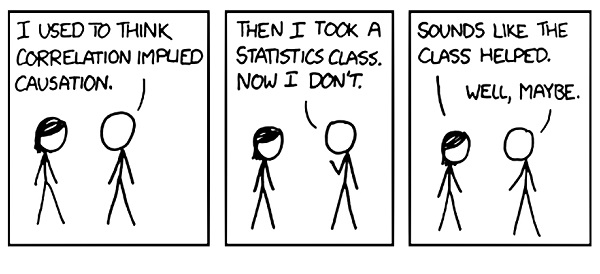
    xkcd’s uncertainty:

    What’s the distance between inside, and within — and politics?

    Sunday, January 7th, 2018

    [ by Charles Cameron — eerie distances between thus and so, this and that — and Trump, Wolff ]
    .

    Speaking practically: switching between the delicate details of the North Korean situation, and those of the Iranian situation, each of which involves a potential nuclear adversary and some deterrent balance, and each of which contains the other as a subset — what’s the mental distance between those two mindsets? How fast can a sharp mind switch betweeen them. Or, for that matter, between foreign affairs and domestic politics? Or between dealing with House and Senate? Or between treating with Democrat and Republican?

    Is there a zoom at work here, between these difficult distances?

    **

    I’d been wondering recently about some mental distances that illustrate the difference betweeen qualitative and quantitative realms, subjective and objective realities..

    I’ve been asking myself, what’s the distance between inside and within, between x-ray and insight, or sky and heaven?


    Wm Blake, Newton (left); Angel (right).

    And what scale should we use to peer into such questions? — the compass Blake’s Newton uses to parcel out earth is purely terrestrial, purely rational, and Blake’s own blazing angels would have no place in it. Should we perhaps use Taleb‘s Wittgenstein‘s ruler?

    Unless you have confidence in the ruler’s reliability, if you use a ruler to measure a table you may also be using the table to measure the ruler.

    Here, the distance between the measurer and the measured is itself in flux.

    **

    Back to politics.

    How do those whose entire lives have been concerned with the largely substantial, ascertainable or verifiable facts of focus groups, polls, votes, election results, majorities, minorities, policies and so forth — with no time for Rilke‘s “angels’ hierarchies” — function when weighing the “mental stability” or “very stable genius” of a President with that same President’s policy with regard to — gasp — Kim Jong-Un?

    Who has his own issues of “very stable genius” or “mental stability”?

    And who doesn’t even have a semi-reliable chronicler like Wolff to illuminate the swathe he is cutting through ideology, dogma, doctrine, advisors, generals, and.. Juche?

    How many minds do we have among the generals, among the punditry, who can roam at all scales of the relevant realms, psychological and political, blatant and nuanced, knowable and profoundly unknown?


    Switch to our mobile site