zenpundit.com » 2011 » November

Archive for November, 2011

The matter of the Black Banners and Benghazi

Wednesday, November 9th, 2011

[ by Charles Cameron — flag of AQ in Iraq, Benghazi, implications for Arab Spring, for AQ, millennarian / Mahdist implications, cautions ]

.

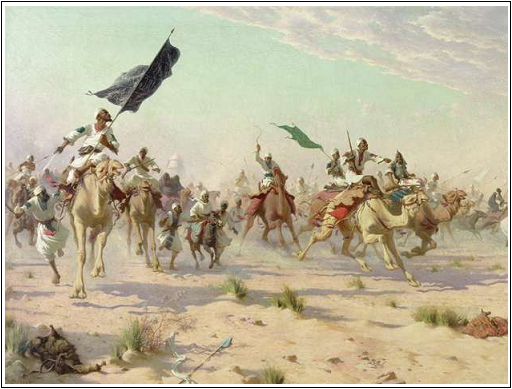
omdurman.png
black banner of the Mahdi at Omdurman 

The question of whether a certain flag flying in Benghazi and elsewhere is in fact an (or teh) Al-Qaida flag has now reached Andrew Sullivan.

Sullivan quotes Will McCants of Jihadica at some length, and also links to the relevant pieces by Aaron Zelin of Jihadology and Adam Serwer, now of Mother Jones. McCants and Zelin are very much the right people to be reading on this topic, and while Serwer’s remit is wider, he’s a bright lad too.

Here’s Sullivan’s money quote from McCants:

[The flag’s] appearance in Benghazi certainly raises questions… Nevertheless, the appearance of the flag in other Arab countries is not necessarily evidence of growing support for al Qaeda or terrorist group’s presence. It could just as easily be youth taking advantage of their newfound freedom to scare their elders, or repressed Salafis using the most shocking symbol possible to voice their anger in public. There is also an element of “Wish You Were Here” photography to many of the photos of the ISI’s flag being unfurled around the Arab world and posted in jihadi forums. This is not to say that the appearance of the flags, particularly in protests, should be ignored. But more corroborating evidence is needed before hitting the panic button.

Okay?

I want to take this a step further.

As McCants very briefly and understatedly indicates in his piece, black flags or banners are associated in Islam not only with the Prophet, but with the Figure at the Far End of Time, the one that’s awaited, the Mahdi. So there are really two questions raised by the presence of these flags:

1:

Are they at some level indicative of Al Qaida?

That’s the question that people seem to be asking, and answering with either an incautious, unqualified “yes yes” or a more cautious and informed “maybe, but let’s not jump to hasty conclusions, there are many shades of influence between vague sympathy and radical participation”.

The “more corroborating evidence” that McCants feels is needed “before hitting the panic button” might include some unobtrusive interviews with the folks waving (or hoisting) those banners, or cheering them on, to see what a bunch of them have to say for themselves… But to me, that’s the less interesting of the two questions.

More interesting, because it deals with the undertow not the height of the tide, how flammable the kindling is, rather than whether it has already been ignited, its potential, not just its currently kinetic energy… is this one:

2:

Are these flags at some level indicative of Mahdist expectation?

Black banners are associated in ahadith with the “end times” expectation that a triumphant army will sweep from Khorasan to Jerusalem.

I have covered this ground repeatedly on ZP, because I believe it is underplayed in most western narratives on the topic of jihad, and most recently I’ve pointed to its significance in Ali Soufan‘s recent book, The Black Banners.  Fwiw, the black flags are also mentioned, and a version of the Khorasan hadith cited, in Syed Saleem Shahzad‘s book, Inside Al-Qaeda and the Taliban, pp 200-01, though there the emphasis is on the ghazwa-e-hind, a topic I’ll be returning to…

Here’s one version of the hadith:

Messenger of Allah said: “If you see the Black Banners coming from Khurasan go to them immediately, even if you must crawl over ice, because indeed amongst them is the Caliph, Al Mahdi.” [Narrated on authority of Ibn Majah, Al-Hakim, Ahmad]

Here’s Ali Soufan’s comment on what he learned as an Arabic speaking FBI interrogator of such AQ figures as KSM and Abu Jandal:

I was to hear that reputed hadith from many al-Qaeda members I interrogated. It was one of al-Qaeda’s favorites. […] It is an indication of how imperfectly we know our enemy that to most people in the West, and even among supposed al-Qaeda experts, the image of the black banners means little…

So – along side the question of what the specific flag in question (with the Shahada and Prophet’s seal) means in terms of support for AQ within parts of the Arab Spring — there’s another question to be quietly and unobtrusively investigated – overlapping to some extent with the AQ question, but separate, distinct, less “obvious” to western minds, and in some ways more significant.

What does the presence of this particular black banner, or any black banner more generally, tell us about the state of apocalyptic expectation?

3:

Use with caution:

Just as the presence of black flags may indicate any number of different shades of interest in or sympathy with AQ, so that presence may indicate any number of different shades of interest in or sympathy with Mahdist expectations.

Here again, “more corroborating evidence” is needed “before hitting the panic button” – and here again, that would presumably require some unobtrusive interviews with the folks waving (or hoisting) those banners, or cheering them on, to see what a bunch of them actually have to say for themselves… about the Mahdi, about the end times and “final war” — and most of all, specifically about the hadith regarding black banners, and the victorious army from Khorasan.

Let me just quote from the opening paragraph of Timothy Furnish‘s book Holiest Wars: Islamic Mahdis, Their Jihads, and Osama bin Laden, and from the closing paragraph of Richard Landes‘ monumental, magisterial overview, Heaven on Earth: the Varieties of the Millennial Experience.

Furnish:

Muslim messianic movements are to fundamentalist uprisings what nuclear weapons are to conventional ones: triggered by the same detonating agents, but far more powerful in scope and effect.

Landes:

I respectfully submit that we will do better in the face of this immense challenge if we understand the varieties and dynamics of the most protean belief in human history: millennialism.

4.

And let me add one further caution:

This one is about the analysis of those unobstrusive — and I do mean, unobtrusive! — interviews, and also about quotes like the ones I’ve just given from Furnish and Landes.

The excitable (Richard Landes calls them “roosters”) will tend to overstate the current of apocalyptic enthusiasm, because it’s exciting — because they will in fact by the very nature of apocalyptic expectation be what Landes terms “semiotically aroused”.  The cautious (Landes calls them “owls”) on the other hand, will understate the current, because it seems jejeune or hysterical (compare, in the west, the way we mock the old guy with tattered coat and “end is nigh” banner).

So our analysis (and our reading of any materials concerning apocalyptic expectation, including my own posts here on ZP) needs to be alert, but not excited.  Neither overstating, nor overlooking, a matter of considerable significance.

Hoover on Charles Hill and Hill on Grand Strategy

Tuesday, November 8th, 2011

Lexington Green sent this extended profile/interview with Charles Hill by Emily Esfahani Smith. The tone of the article is somewhat hagiographic because Hill is a fellow at the Hoover Institution and….well…. this is in Hoover’s journal 😉  If you can get past that, it is a worthwhile read about a deep thinker and scholar of grand strategy.

Profile in Strategy: Charles Hill

….In diplomacy, literature is relied upon because, as he writes in “Grand Strategies,” “The international world of states and their modern system is a literary realm; it is where the greatest issues of the human condition are played out.” That is why Alexander the Great carried the Iliad with him on his conquests, and why Queen Elizabeth studied Cicero in the evenings. It is why Abraham Lincoln read, and was profoundly influenced by, Walt Whitman’s “Leaves of Grass,” and why Paul Nitze paged through Shakespeare on his flights to Moscow as America’s chief arms negotiator.

Hill, for his part, has always kept the “History of the Peloponnesian War” in his mind as the “manual of statecraft.”

Why Thucydides? He explains: “When you read the Peloponnesian War, you realize that Thucydides is moving from one set of problems to another, and you have to deal with them all-rhetorical problems, material problems, and moral problems. That’s the closest literary work related to statecraft that I can imagine.”

To understand world order-and those who manipulate it for their own aims-requires a literary education, the kind students were once able to find at such places as Yale, where Hill now teaches the humanities to freshman undergraduates.

This is a departure from his days at the State Department, where he helped orchestrate monumental events in the grand strategy of the Cold War. One of his first memories as a diplomat was of being seated behind Adlai Stevenson at the UN during the Cuban missile crisis, characteristically scribbling notes-in grand strategy, no detail can be lost. Later, Hill was a “China watcher” during that country’s Cultural Revolution. And when the Iran-Contra scandal nearly brought down the Reagan administration, Hill’s meticulous notes played an influential role in the Congressional investigations by shedding light on the chronology of then-Secretary of State George Shultz’s knowledge of the arms sale. Over the years, Hill has also served as confidante to Secretaries of State. For Henry Kissinger, Hill was speechwriter and policy analyst. For Shultz, Hill was an executive aide and trusted ally.

These days, Hill embodies grand strategy in a different way. After a long and distinguished career as a diplomat, Hill is now a heralded figure in academia. Beyond his appointment as a research fellow at the Hoover Institution, he is the Brady-Johnson Distinguished Fellow in Grand Strategy, a Senior Lecturer in Humanities, and a Senior Lecturer in International Studies at Yale. Alongside historians John Gaddis and John Kennedy [ sic] , he teaches one of Yale’s most legendary courses to a select group of elite students-future statesmen-the Grand Strategies course.

And yet, Hill tells me stoically, “There is no grand strategy in our time.” Turning his attention to the turmoil in the Middle East, Hill provides an example. “America’s lack of strategic outlook responding to the Arab Spring is really distressing.”

Hill retains the diplomat’s gift for understatement.

Read the rest here.

ADDENDUM:

Book Review: Grand Strategies by Charles Hill 

Trial of a Thousand Years, by Charles Hill-a review

Currently Reading

Monday, November 7th, 2011

Turning the pages of a few books. Here’s what I am reading right now:


The Five Percent: Finding Solutions to Seemingly Impossible Conflicts by Peter Coleman

An intriguing book about the nature of intractable conflicts (ex. Israeli-Palestinians), including the mathematical patterns and complexity behind the attractors and how to break the deadly cycle. A courtesy review copy from the publisher, I am about 1/3 finished and will review soon, perhaps this week.

A Terrorist’s Call to Global Jihad: Deciphering Abu Musab al-Suri’s Islamic Jihad Manifesto by Jim Lacey

Earlier this year, I read Architect of Global Jihad, the bio of Syrian Islamist theorist and terrorist, Abu Musab al-Suri. Here Jim Lacey interprets a digest taken from al-Suri’s monumental 1600 page magnum opus, Islamic Call for Global Jihad. The dry, autodidactic, tone of al-Suri comes through in Lacey’s text.

Storming the World Stage: The Story of Lashkar-e-Taiba (Columbia/Hurst) by  Stephen Tankel

A courtesy review copy from the author, I finished this book about the Pakistani infamous Ahl-e-Hadith terrorist group and ISI proxy, Lashkar-e-Taiba recently. I would have reviewed here already except that my review is being published in an overseas magazine and it has not yet been released. An informative book by Carnegie scholar Stephen Tankel that traces the evolution of the group that gained worldwide attention by their horrific attack on Mumbai.

Another Bloody Century: Future Warfare by Colin S. Gray

I am 3/4 finished with this work by eminent strategist Colin Gray who is making a case for the eternal continuity of war, if not the tactical iterations of warfare. Valuable for Gray’s Clausewitzian take on all the avant garde schools of strategy, warfare and futurism that abound. I set it aside for a while because I was burning out on a steady diet of war and strategy books, PDFs, articles and internet threads 🙂

Gunpowder, treason and plot

Saturday, November 5th, 2011

[ by Charles Cameron — instance of religious terrorism, UK, Catholicism, Protestantism, Vendetta-the-movie, Anonymous, OWS, Pharaoh ]

.

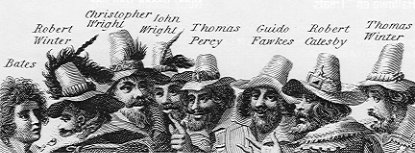
men.jpg

I am seven hours “behind” the land of my birth, but today would be the day on which to remember one Guy — named Guido in the image above — Fawkes, a terrorist whose religious and political sympathies were closely interwoven.

*

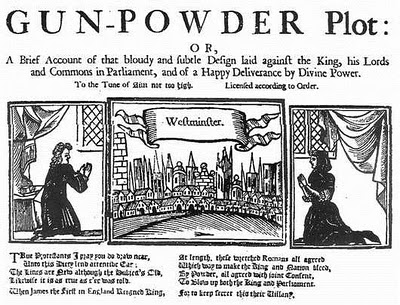
Archbishop Cranmer‘s [dare I say, Laudable?] blog today has a poetic description of the event, a fine illustration:

gunpowderplot.jpg

and some fascinating comments portraying both the event itself and religious terror more generally…

We have had four hundred years to “remember, remember” — should we remember, or should we forgive and forget?

*

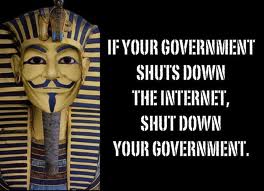
The mask worn in the movie V for Vendetta is a Guy Fawkes mask, now also associated with both the Anonymous group and the Occupy movement… and it shows up in all sorts of strange places…

images1.jpg

Pharaoh? Guy Fawkes?

Clear proof that if you connect too many dots, you may go what we Brits call “dotty”…

Major General Fuller is Right

Saturday, November 5th, 2011

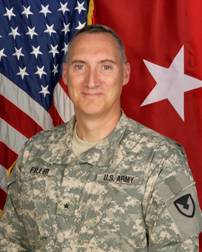
Major General Peter Fuller lost it yesterday and committed an unpardonable political sin – spontaneously telling the truth to reporters:

US general fired from Afghan training job

….Referring to Karzai’s recent assertion that Afghanistan would side with Pakistan if Pakistan got into a war with the U.S., Fuller was quoted as calling the comments “erratic,” adding, “Why don’t you just poke me in the eye with a needle! You’ve got to be kidding me . I’m sorry, we just gave you $11.6 billion and now you’re telling me, I don’t really care?”

Fuller said the Afghans have at times made unreasonable requests for U.S. assistance.

“You can teach a man how to fish, or you can give them a fish,” Fuller was quoted as saying. “We’re giving them fish while they’re learning, and they want more fish! (They say,) ‘I like swordfish, how come you’re giving me cod?’ Guess what? Cod’s on the menu today.”

Fuller also said the Afghans don’t understand the extent to which the U.S. is in economic distress or the “sacrifices that America is making to provide for their security.” He said the Afghans are “isolated from reality.”

Allen said the “unfortunate comments” don’t represent the solid U.S. relationship with the Afghan government….

 The relationship of the Karzai’s regime to the United States is a lot like that of a 32 year-old drug-addict living in his parent’s basement. The parents keep muddling through life, hoping their son will suddenly wake up one morning and decide to clean up his act, get a job, move out, get married and have 2.5 kids, a dog and a house with a white picket fence. The parents cling to that hope and cherish it but the reality is that the son staggers out of bed every day, sometime in the afternoon, only to go find their dealer, score some heroin and get high.

Karzai’s egime has less chance of governing Afghanistan effectively than the average heroin addict does of kicking their habit. And the reason is a) far and away Hamid Karzai and, secondarily b) Most Afghans fear a strong central government. The US has managed to do two things at the strategic level that a nation should never do in fighting a counterinsurgency war – support a government  that will not take sensible measures even in the interest of it’s own survival and permit insurgents a sanctuary and third country sponsorship.

General Fuller’s career is now effectively over. Too bad we cannot say the same for Mr. Karzai.


Switch to our mobile site