zenpundit.com » 2012

Archive for 2012

The First Battle — a review

Friday, August 24th, 2012

[by J. Scott Shipman]

The First Battle, Operation Starlite and the Beginning of the Blood Debt in Vietnam, by Otto J. Lehrack, Lt.Col., USMC, Ret.

This is an older book, but important. A few weeks ago I was having lunch with a good friend, Bruce. Bruce is a Vietnam veteran and since both of us are readers many of our lunch conversations revolve around the books we have read, and this meeting was no exception. Bruce enthusiastically recommended The First Battle and No ShiningArmor, both by Lt.Col. Lehrack, and Last Men Out, by Bob Drury and Tom Clavin. He said Lehracks first twenty pages of The First Battle was the best description of the situation that led the United States to become involved in Vietnam. Since my knowledge of Vietnam is embarrassingly meager, I ordered all three when I returned home from lunch. Given Bruce’s descriptions, The First Battle was first up. Lehrack begins the first chapter, Inching Towards the Abyss, with a profound first sentence:

The United States came to this pass in baby steps, characterized more by Cold War fears, hubris, and inattention than by level-headed policy examination.

(Sounds familiar doesn’t it?)

The result of Lehrack’s effort is a readable and powerfully inspiring story of the first battle of the Vietnam War fought only by Americans, specifically, the United States Marine Corps. Code named, Operation Starlite, this “first battle” was a coordinated air, sea, and land attack, but to the green, untested Marines fighting battle-hardened Viet Cong troops nothing about this first encounter was typical or routine.

Lahreck, drawing on interviews with warriors from both sides, provides the reader an up-close view of the savagery and the valor of this battle that resulted in two Americans receiving the Congressional Medal of Honor. The prose is fast paced and detailed, but not so detailed one with no experience/knowledge of Marine Corps jargon can’t keep up. Lehrack includes a fairly exhaustive glossary of the unique terms used, so the military/USMC novice will have a ready guide close-by.

The book is divided in three parts. Part 1 describes general attitudes of the American public, politicians, and military personnel with respect to Vietnam. Part 1 also provides a description of the planning process for the battle and the rationale. Also included is an assessment by the Viet Cong of their American opponents, dated 3 July 1965 (about a month prior to Operation Starlite):

American strong points

  • The have reached the training level of an expeditionary force.
  • Armed with modern weapons, lighter than French expeditionary forces, they have quick transportation, quick movement, have capability of quick reinforcement, thanks to vehicles, aircraft, boats.
  • Usually concentrated in groups.

Weak points compared with French

  • No spirit of combat; afraid of guerillas; always rely on modern weapons, so they lose initiative and self-confidence (when in contact, they call fire for support and reinforcement); sometimes artillery must conduct fire support for the whole period of operation.
  • Lack of combat experience, just know combat in theory only (through field manuals). Moreover, on a strange terrain, they usually walk in the open, bewildered like ducks (we say that American troops are most opportune targets for guerrillas).
  • Much effort required for messing; and water. Food must be supplied for each meal by helicopters. When moving to any place they must use helicopters and artillery fire support, so objective will always be disclosed, brining good opportunity for guerrilla follow up.
  • Cannot undergo long and hard operations. When operating far from base, about seven kilometers, must use vehicles.
  • Not able to bear local weather and climate, so troops will fall ill.
  • Defensive positions sometimes well organized but they are slow to get that way. In one instance it took ten days to organize defenses and thirty to install mines.
  • They do not know the terrain well.
  • They run slowly.

(This list is offered for those readers who have insight into whether these weaknesses persist in our military—I do not know.)

In Part 2, Lehrack describes the battle, and the aims of the American commander “to isolate, and then destroy the enemy.” Lehrack follows individuals and units through the battle, and spares no detail in the hardships, risks, and depravations endured by the participants. He offers a gripping and realistic description of the “fog of war:”

The Marines quickly learned a practical lesson that all warriors have known since ancient times. Theoretically, one is supposed to line up in an assault or other planned formation and fight that way. But once battle is joined the formation rapidly degenerates into a series of isolated small actions. In Starlite, as in most battles, it seemed that the fights generally meant that four or five men on one side would be heavily engaged with a similar number on the opposite side. Each combatant became so preoccupied with taking care of his situation that he often had little knowledge of and didn’t really care what was going on a few yards away. Throw in the sounds, the smells, and the fear and you have the notorious “fog of war” that explains why such widely differing accounts describe the same battle.

Good friend of this blog, Lynn Wheeler adds this observation in another forum on the effect Starlite had on Viet Cong planning/tactics::

Perhaps the most important reason for the so-so result was that the Viet Cong had gained an enormous appreciation of the Marines’ ability to project power from the sea as a result of Starlite. Never again in the course of the war did they permit their units to tarry on the coastal plain. When they had a job to do near the water, they came in and did it, and then they fled inland again. Although they developed good antiaircraft techniques and weaponry during the war they had neither the ordnance nor the expertise to thwart an amphibious landing force.

Part 3 is titled The Blood Debt. As eloquently as Lehrack introduced the reader the to attitudes and assumptions of most Americans in his opening chapter, so he concludes. Fifty-four Americans died and an estimated six hundred of the enemy perished in Operation Starlite. By the numbers and a “body count” mentality, we “won” the battle, but in 1965 the Vietnam War was just getting started, and we know how it ended. Lehrack writes:

America spent another ten years, and more than 56,000 additional lives, to follow a failed policy. Like gamblers who have already lost their gambling money, and then the rent money, and the car payment, and then the grocery money, and then borrowed or stole in the hope of changing their luck, the Johnson and Nixon administrations kept signing markers to America for a debt in gore that they hoped a reversal of fortune would justify.

The criminal portion of this gut wrenching conclusion is that American political leaders had no confidence in a military solution in Vietnam. Lehrack quotes President Johnson speaking with a senator, “They hope they will wear us out. And I really believe they’ll last longer than we do.” Eventually, and thankfully, the American public said, “no more.” Amazingly, Lehrack citing Hugh M. Arnold‘s examination found that of an official justification of the war there “were a total of twenty-two separate American rationales: From 1949 to 1962, the emphasis was on resisting communist agression; from 1962 to 1968, it was on counter-insurgency; after 1968, it was on preserving the integrity of American commitments.”

Lehrack correctly laments American unfamiliarity with Vietnamese culture and their visceral attitude towards foreign invaders. We were making the world safe for democracy, and the Vietnamese fell back on nationalism as a recruiting tool and justification for feeding over a million people into the maw of war. Lehrack also points out that Marine leadership knew early on “that Vietnam was more a political war than military.” The Marines had the Small Wars Manual derived from their actions in the Philippines, Nicaragua, and Haiti while the U.S. Army had four pages in their Field Regulations on guerilla warfare. Lehrack speculates a pacification effort, something the Marines knew well, may have been successful if properly applied to good governance on the part of the South Vietnamese government.

Of course these speculations are just that, and there is little evidence given our current predicament in Afghanistan that we learned our lessons. The shelf-life of hubris is eternal.

Bruce was right; this is a powerful little book, and comes with my highest recommendation.

Addendum: LCDR B.J. Armstrong has an enlightening essay on rotary aircraft, which includes Operation Starlite here.

Cross-posted at To Be or To Do.
Game On, Face Off, Onion

Friday, August 24th, 2012

[ By Charles Cameron — with almost no effort & no comment — games, war, realism, Onion ]
.

Modern Warfare 3:

Modern Warfare 3 — Face Off:

The Onion’s Modern Warfare 3:

What eye and mind can reasonably absorb

Friday, August 24th, 2012

[ by Charles Cameron — visual thinking, graphical presentation, the magical number seven plus or minus two, human intelligence ]
.

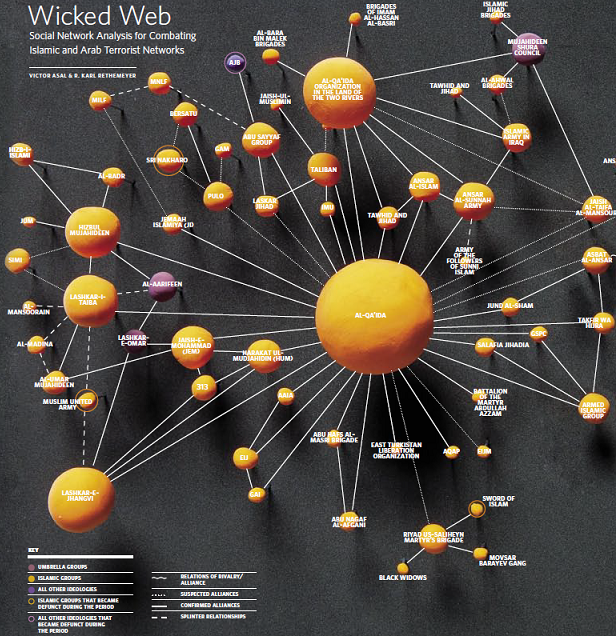
Look:

click image to download pdf & see pp 12-13 for closer, full-size look

Got it? That’s part of a double-page spread from the University of Maryland’s START Program report for 2011:

The National Consortium for the Study of Terrorism and Responses to Terrorism—better known as START – is a university-based research center committed to the scientific study of the causes and human consequences of terrorism in the United States and around the world.

Looking through the rest of the report, I’m tempted to say a snazzier, jazzier magazine I’ve seldom seen!

**

I maintain that’s far nicer to look at, but no more comprehensible than, this gorgeous and justly infamous power point slide:

click image for a closer, full size look

Got that one, too? That was a slide used to help GEN McChrystal understand that war he was fighting.

**

Watson and Crick introduced their 1953 paper in Nature, A Structure for Deoxyribose Nucleic Acid, with these words:

We wish to suggest a structure for the salt of deoxyribose nucleic acid (D.N.A.). This structure has novel features which are of considerable biological interest.

No less witty is the opening of George A. Miller‘s only somewhat less celebrated paper three years later in The Psychological Review, The Magical Number Seven, Plus or Minus Two: Some Limits on Our Capacity for Processing Information:

My problem is that I have been persecuted by an integer. For seven years this number has followed me around, has intruded in my most private data, and has assaulted me from the pages of our most public journals. This number assumes a variety of disguises, being sometimes a little larger and sometimes a little smaller than usual, but never changing so much as to be unrecognizable. The persistence with which this number plagues me is far more than a random accident. There is, to quote a famous senator, a design behind it, some pattern governing its appearances. Either there really is something unusual about the number or else I am suffering from delusions of persecution.

The gist of Miller’s piece (and by gist I explicitly mean the always misleading broad strokes version) is that we can usually manage to hold five to nine chunks of thought in mind at any given time, but that if we want to understand more than that, we need to “chunk” our thoughts in such a way that we think of “seven plus or minus two” items (Miller’s “magical number”) but can peer into any one of them and see it divided into lesser portions which we can also comprehend, in what I’ll call a tree > trunk > limb > branch > twig > leaf arrangement — always remembering that a tree may be part of a forest, and that sometimes ee just can’t see the forest for the trees…

Miller explains chunking succinctly thus:

It seems probable that even memorization can be studied in these terms. The process of memorizing may be simply the formation of chunks, or groups of items that go together, until there are few enough chunks so that we can recall all the items.

Neat, hunh? And he concludes, with another pleasant touch of wit:

And finally, what about the magical number seven? What about the seven wonders of the world, the seven seas, the seven deadly sins, the seven daughters of Atlas in the Pleiades, the seven ages of man, the seven levels of hell, the seven primary colors, the seven notes of the musical scale, and the seven days of the week? What about the seven-point rating scale, the seven categories for absolute judgment, the seven objects in the span of attention, and the seven digits in the span of immediate memory? For the present I propose to withhold judgment. Perhaps there is something deep and profound behind all these sevens, something just calling out for us to discover it. But I suspect that it is only a pernicious, Pythagorean coincidence.

**

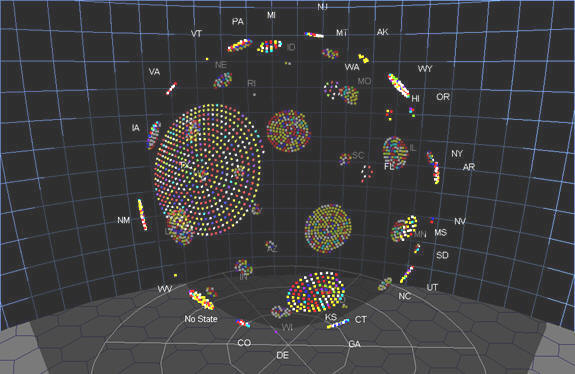
Of course there are high-node graphics programs like Starlight Analytics (from Future Point Systems via Battelle and the Pacific Northwest National Laboratory) which allow you to sample one of a cluster of very similar nodes, or to see where the outliers are and zero in on them…

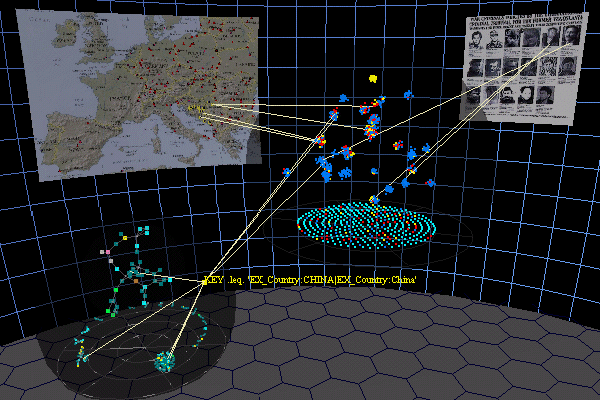
or to focus in on only those nodes connected to one particular name or place on a map:

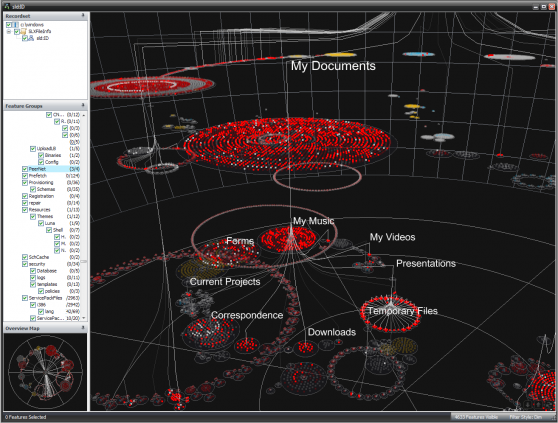
But can you find a file you’re looking for any faster by locating it somewhere in this graphic…

than by using your usual search methods?

So okay, high level analytics like Starlight may be useful for analysts who have the costly software and time to pinpoint and track and zoom and annotate and comprehend, become alarmed or calmed, and respond appropriately.

But people reading that glossy report from the START program? People trying to brief GEN McChrystal from a powerpoint slide?

Seven. Seven plus or minus is your number.

**

Once more, with feeling.

The moral of this tale is that graphical presentations of ideas to explain complexities should generally feature seven plus or minus two nodes, maximum, for eye and mind to consider at any one time, with perhaps an additional three or four that the eye can glide across to, forming a second chunk — thus delivering a maximum of 13 nodes without zooming in.

for the direct communication of major drivers in a complex situation — seven nodes plus or minus two is your optimal number.

**

Ah — but see, I forgot to show you the rest of that first image:

You can handle grasping the import of an image two parts, surely, can’t you?

Okay then — if you can, perhaps you can help me out…

Turning Away From Strategy

Thursday, August 23rd, 2012

It appears that the Pentagon no longer intends to educate the most talented members of the officer corps to think strategically.

I say this because the status of the premier professional military education institutions – the war colleges and NDU – have been devalued, their leadership slots demoted and their educational mission degraded. As a guest columnist for Tom Ricks noted back in June:

….The new uniformed leadership of the Armed Forces, i.e., General Dempsey and his staff, apparently intend to prune NDU back to where it was a few decades ago. There will be some modest resource savings, but since the entire university budget doesn’t amount to the cost of a single joint strike fighter, one has to wonder what is motivating all of what is happening here. In the cuts that have been discussed, Dempsey’s deputy, Marine Lt. Gen. George J. Flynn has wielded the meat axe, often with the aid of micromanaging action officers. No one here in the rank-and-file is sure if the urbane chairman is on board with the details of all of this. (Ironically, both the chairman and J-7 are NDU graduates with advanced degrees.)

This set of changes took place in stages. First, while very few general or flag officer slots were cut in the armed forces, the three-star president of the university slot was downgraded to two, and the school commandants, downgraded from two to one star. No big deal, one might say, but one would be wrong, very wrong. A three star in Washington can go head-to-head with a principal on the joint staff or a senior OSD bureaucrat to protect the university. To compound the problem, the last three star president was retired in the spring and the university was left for a few months under the command of a senior foreign service officer, a former ambassador, a woman of great diplomatic talent and experience with no clout in the Pentagon. The new commandant — a highly regarded Army two-star — will not report until deep into June, when all or most of the cuts have been set in concrete. (Interesting question: can an employee of the State Department legally or even virtually assume command of a DoD organization?)

….A new “charter” was subsequently published by the Chairman. It focused the university on joint professional military education and training, which in itself, is a good thing. Immediately, however, the research and outreach activities of the university, often more focused on national strategy than military affairs, came under intense scrutiny. These outfits had grown way beyond their original charters and had become effective and highly regarded servants of a wider interagency community. Much of their work was not done for the joint staff but for OSD Policy, and some of that in conjunction with civilian think-tanks. The research arm of the university was productive, even if not always useful in a practical way to the joint staff. It also was helpful to the colleges in a much more proximate and direct fashion than other think tanks, like RAND.

….The research, gaming, and publications arms of the university — a major part of the big-think, future concepts and policy business here — will be cut to somewhere between half and a third of their original sizes. To make things worse, many of the specific cuts appear to have been crafted in the Pentagon, and nasty emails have come down from on high, about how the university is bankrupt and going into receivership, which was never the judgment of the military and civilian accrediting officials, who inspect us regularly and have generally given the university high marks.

If it would be impressive if some of our senior generals had been as effective on the battlefield as they are in the bureaucracy.

Uncreative destruction of intellectual seed corn is a bureaucrat’s way of telling everyone to shut up, don’t question and get in line. There’s nothing wrong with having excellence at joint operations as an educational goal for most future brigadiers and major generals but our future theater commanders, combatant commanders, service chiefs and their respective staff officers need something more – they need strategy.  More importantly, the Secretary of Defense, the President, the Congress and the American people need the DoD to have an in-house capacity to generate deeply thought strategic alternatives, question assumptions and red-team any self-aggrandizing options the services or bureaucracy feel like offering up in a crisis.

The motivation here is simple, really. If you put out all the strategic eyes of the Pentagon, then the one-eyed men can be King. Or he can always contract out his strategic thinking to highly paid friends to tell him what he wishes to hear.

Naturally, this will have bad effects downstream in a superpower whose civilian leadership seldom has as good a grasp of geopolitics and the fundamentals of classical strategy as they do of law or the partisan politics of running for office. They will be in need of sound strategic advice from uniformed military leaders and they will be much less likely to get it. Instead, they will have senior officers who are less likely to balk when the President’s back-home fixer turned “adviser” or superstar academic with delusions of grandeur pushes a half-baked plan at an NSC meeting to “do something”. When that happens, the jackasses kicking down this particular barn will have long-since retired and cashed out with consultancies and sinecures on boards of directors.

While a lack of strategic thinking can undermine even a lavishly funded and well-trained military, the reverse is also true; strategic leadership can revive an army that is but a half-dead corpse.

A brief illustration:


After WWI the two states that made the most extreme cuts in military power were defeated Germany and the victorious United States. Germany was forced to do so by Versailles, but responded by opting under General von Seeckt to reduce to 100,000 men by making the Reichswehr a qualitatively superior nucleus of a future expanded German Army. Prohibited from having mass, the Germans opted for class with every long-serving recruit being considered officer material and being superbly trained (even to the extent of covert training and weapons testing jointly with the Red Army deep inside the Soviet Union to evade Allied inspections). Von Seeckt also instituted a shadow general staff office that thought deeply about tactical lessons, operations and strategy for the next war. Without the Reichswehr being what it was it is highly dubious that Hitler could have so rapidly expanded the Wehrmacht into a world-class land fighting force in so few years time.

.

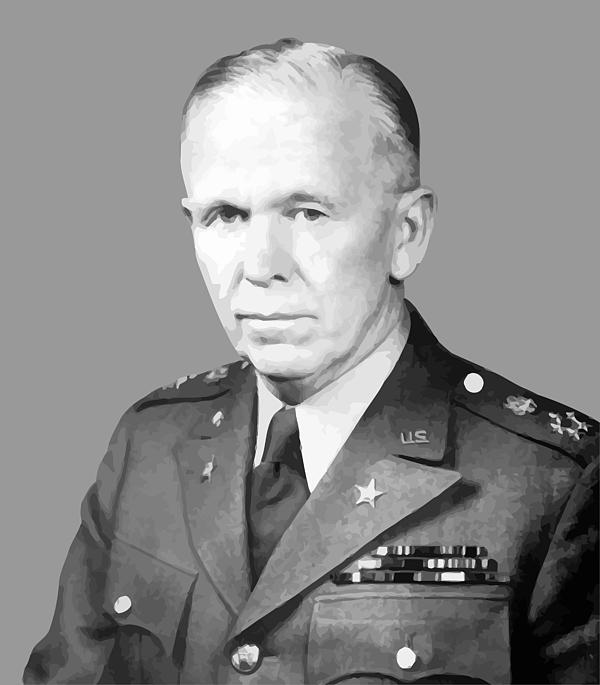
In contrast, the United States radically reduced the size of the regular Army and starved it of weapons, ammunition, gasoline, training and basic supplies. Promotions slowed to a crawl where ancient colonels and elderly majors lingered on active duty and future four and five star generals like Eisenhower, Patton, and Marshall all despaired and contemplated leaving the service. The Army’s – and to extent, America’s – salvation was in the fact that George Marshall persevered as a major and colonel in keeping a little black book of talented, forward thinking, officers and thought deeply and reflectively about building armies, helping enact “the Fort Benning Revolution” in military training. When FDR placed the power in Marshall’s hands as Chief of Staff he knew exactly what to do because he had a well-conceived vision of where the US Army needed to go to meet the national emergency of WWII. He was the American von Seeckt, except that Marshall was an infinite improvement morally, strategically and politically on his German counterpart. We were extremely fortunate to have had him.
.
We may not be as lucky next time.

Pussy Riot VII: three “very different” characters

Thursday, August 23rd, 2012

[ by Charles Cameron — a quick look at the dramatis personae ]
.

And let me repeat for the record: I am neither pro nor anti Pussy Riot. I have sympathies on both sides. It comes down to this: I love both liberty and liturgy.

The Washington Post was among the news sources hosting an AP bulletin from August 16, updated August 17 under the header, Art performer, poet, software programmer — three faces behind mask of Russia’s Pussy Riot band.

After pointing out that the group to which they belong strove for anonymity, the writer commented that they “have unwillingly emerged as vivid — and very different — characters.” Here’s the short form version of their differences:

One is a daring performance artist with Angelina Jolie lips and a notorious part in a filmed orgy just days before she gave birth. Another is a poet and environmentalist whose pre-Raphaelite looks project sweetness and sensitivity. Rounding out the trio is a quietly cerebral computer expert, who has applied her skills both to nuclear submarines and experimental art.

In more detail (and I’m still cutting quite a bit here to bring you the gist of the articled, and recommend you read the whole thing):

**

Nadezhda Tolokonnikova:

Tolokonnikova left her home in the frigid oil town of Norilsk at 17 to enroll in Moscow State University’s philosophy department. … “Feminism, art and politics take up all her time,” said David Abramov, who has helped Pussy Riot organize performances. “She devotes all her time to it.”

**

Maria Alyokhina:

Alekhina, an accomplished poet with long curly blonde hair, is quite a different face of Pussy Riot. Alekhina, mother of a five-year-old boy, has a long background in charity work and environmental activism. She organized protest pickets to defend Utrish, a natural reserve in Russia’s south, from developers and worked with Danilovtsy, a Russian Orthodox charity.

**

Yekaterina Samutsevich:

Samutsevich, 30, studied computers at Moscow Energy University and soon got a good job at a top research center. She was promptly hired to a job in a top secret department where she was designing software programs for Russia’s top nuclear submarine Nerpa, her father Stanislav said.

Samutsevich later quit and enrolled at the renowned Rodchenko Photography and Multimedia School to study media art. Her final project at the school was designing a web-browser which intentionally distorted and manipulated search results — an invention that was supposed to highlight society’s dependence on media and helplessness in the uncharted waters of web media.

Alexei Shulgin, a professor at the Rodchenko school … praised her as a talented artist and said that like many young people in Russia she “turned to art for answers about modern times.”

**

What if they had been a classical ensemble playing Stravinsky — might we detect a faint echoes of the Paris première of the Rite of Spring just shy of a century ago? — or, given their interest in the visual arts, Scriabin‘s 102 year old Prometheus: The Poem of Fire with its part for keyboard-for-lights, perhaps?

My own taste runs more to Bach.


Switch to our mobile site