zenpundit.com » 2016 » October

Archive for October, 2016

Trolleys come to Terror

Tuesday, October 18th, 2016

[ by Charles Cameron — a western koan makes it onto German TV? ]
.

What Hala Jaber calls a supermarket trolley in this tweet is not what this post is about — but it sure does connect trolley and terror!

**

Here’s the terror side of things, in a tweet from John Horgan:

The BBC halls it an “interactive courtroom drama interactive courtroom drama centred on a fictional act of terror” and notes:

The public was asked to judge whether a military pilot who downs a hijacked passenger jet due to be crashed into a football stadium is guilty of murder.

Viewers in Germany, Switzerland and Austria gave their verdict online or by phone. The programme was also aired in Slovakia and the Czech Republic.

The vast majority called for the pilot, Lars Koch, to be acquitted.

Here’s the setup:

In the fictional plot, militants from an al-Qaeda offshoot hijack a Lufthansa Airbus A320 with 164 people on board and aim to crash it into a stadium packed with 70,000 people during a football match between Germany and England.

“If I don’t shoot, tens of thousands will die,” German air force Major Lars Koch says as he flouts the orders of his superiors and takes aim at an engine of the plane.

The jet crashes into a field, killing everyone on board.

So, is the pilot guilty, or not guilty?

**

At the very least, he has our sympathy — but how does that play out in legal proceedings?

What’s so fascinating here is the pilot’s dilemma, which resembles nothing so much as a zen koan.

Except for the Trolley Problem:

trolley_problem
Image from Wikimedia by McGeddon under license CC-BY-SA-4.0

**

Substitute an Airbus for the trolley, 164 people for the lone individual on the trolley line, and 70,000 people for the cluster of five — and the pilot for the guy who can make a decision and switch the tracks.

There you have it: terror plot and trolley problem running in parallel.

To be honest, I think the full hour-plus movie is far more immersive, to use a term from game design, than the Trolley Problem stated verbally as a problem in logic — meaning that the viewer is in some sense projected, catapulted into the fighter-pilot’s hot seat — in his cockpit, facing a high speed, high risk emergency, and in court, on trial for murder.

It’s my guess that more people would vote for the deaths of 164 under this scenario than for the death of one in the case of the trolley — but that’s a guess.

**

The German film scenario — adapted from a play by Ferdinand von Schirach — is indeed a courtroom drama, a “case” in the sense of “case law”. And it’s suggestive that koans, too, are considered “cases” in a similar vein. Here, for instance, is a classic definition of koans :

Kung-an may be compared to the case records of the public law court. Kung, or “public”, is the single track followed by all sages and worthy men alike, the highest principle which serves as a road for the whole world. An, or “records”, are the orthodox writings which record what the sages and worthy men regard as principles [..]

This principle accords with the spiritual source, tallies with the mysterious meaning, destroys birth-and-death, and transcends the passions. It cannot be understood by logic; it cannot be transmitted in words; it cannot be explained in writing; it cannot be measured by reason. It is like a poisoned drum that kills all who hear it, or like a great fire that consumes all who come near it. [..]

The so-called venerable masters of Zen are the chief officials of the public law courts of the monastic community, as it were, and their collections of sayings are the case records of points that have been vigorously advocated.

**

Relevant texts:

  • John Daido Loori, Sitting with Koans
  • John Daido Loori, The True Dharma Eye
  • Thucydides Roundtable, Book I: An introduction

    Monday, October 17th, 2016

    [by T. Greer]

    On a summer night, nearly three thousand years ago, three hundred men of Thebes, wet and mud soaked, snuck into the town of Plataea with murder on their minds. Their attempt to launch revolution in Plataea was futile: most would die before the night was over. If their aim was political change, they failed, and failed utterly. But if their aim was undying fame, they succeeded. Perhaps they did not know that their deeds would echo through time, but they have. These were the men who began the Peloponnesian War. What they did is still read and written about thousands of years later.

    Why is this?

    Why is this war so well remembered?

    Thucydides answers these questions in terms of scale:

    This was the greatest movement yet known in history…there was nothing on a greater scale, either in war or other matters (1.1).

    Perhaps this was true in Thucydides’ day, but to moderns who have witnessed millions perish in global wars, the scale of the Peloponnesian War is minuscule. Even by classical standards, it can claim no special title in size or extent.

    Thebes and Plataea were separated by only seven miles. That is barely a shadow on the frontier of the greater ancient empires. Even the fabled Sicilian campaign, whose distance robbed Athens of her empire, was only half as far away as Caesar wandered from Rome, and only a fourth of the distance Han warriors traveled from their capitals at Chang’an or Luoyang to the farthest frontier of their empire.

    A bit less than three hundred Thebans died that day. This was a fairly normal casualty count for the war. Even Athens at her greatest could only put ten thousand hoplites into the field. In contrast, in one day of fighting at Cannae, Rome lost more than 50,000 men. Emperor Ashoka lamented that he killed more than 100,000 enemy soldiers in the conquest of Kalinga.

    Seen in this perspective, the Peloponnesian War was a tiny conflict, fought between the small towns of a fractious, tribalistic, and self-absorbed people. Despite this, it is not only remembered, but earnestly studied and carefully reconstructed. Many wars of far greater scale languish unremembered.

    Perhaps the key to the war’s hold on our minds is its complexity? This was a war that involved dozens of polities. It pitted land powers against sea powers, oligarchs against democracies, coalition against empire. Culture and ideology played their part in this war; so did domestic strife and civil conflict. This war spawned great contests for food, for wealth, and for power; it witnessed both plague and starvation. No matter what angle you wish to take, the Peloponnesian War has something for you.

    Yet the Peloponnesian War’s complexity is hardly unique. American history began, after all, with a war that stretched across land and sea, entangling enemies both domestic and foreign, flinging diverse cultures, ideologies, and political regimes into one violent contest. This sort of multi-sided warfare, one-part wheeling-and-dealing on the international stage, another part grandstanding on the domestic one, is the historical norm. It describes all great wars found in our records—and its shadows haunt the legends and ruins of wars who had no historian to record them. To parse through the tales of the Iroquois oral tradition, or piece together inscriptions from Mayan steles and tombs, is to be struck with wonder. It is wonder at the intricacy of their wars, the complexity of their alliances, and the drama of their betrayals.

    Above all, it is to wonder what classics these events might have produced if these peoples and places had a Thucydides to write about them. Alas! They had no Thucydides. There has been only one of him. That is all that truly sets the Peloponnesian War apart from the other wars of human history: this was the war witnessed by Thucydides.

    It is difficult to peg this Thucydides. Political scientists, historians, and military theorists all claim him as the father of their craft. Whenever one of these disciplines is infected with a new “path breaking” paradigm, a blizzard of articles are written to graft the latest fashion onto his work. This literature is enormous. Forgive me for quoting none of it. So many of yesteryear’s intellectual fads have died. They are forgotten. Thucydides and his history live with us still. He will outlast them all.

    In any case, their purpose for consulting Thucydides differs from mine. They approach his work like miners on the mountainside, drilling narrow shafts down through hardrock until they find something marketable. The results are predictable: Thucydides’ book is more often referenced than read, and when read, more often in part than in full. The quote is what matters.

    There is nothing entirely wrong with this. Analogies to Thucydidean events can be revealing; pithy Thucydidean one-liners add punch to all essays in need of it. But those who limit their acquaintance with Thucydides to a few snapshots miss a great opportunity. There is more to Thucydides than a frantic search to find another model for all time. If they look hard enough, the seeker of evergreen political models or eternal laws of war will find what they are looking for in Thucydides, though it is hard for me to believe that any thinker as subtle as he would smile on this quest. What I value in Thucydides is something different altogether. I do not turn to him for templates “for all time,” but for an escape from my time.

    We all live in the moment. A cacophony of words and sounds follow us wherever we go, broadcast into our cars, our workplaces, our homes, and our pockets. We live in an unescapable echo chamber—an echo chamber relentlessly focused on the now.

    Not so with Thucydides! His history is about many things, but 2016 is not one of them. Here then is a chance to put the present to the side. Cast away that dreadful election! Muffle the droning of the news reports. Close the Twitter stream. Before us is a world that has never heard of the twenty-first century nor imagined its problems. Your guide to this world will be a man from an alien past; his values and assumptions will be starkly different than your own. Wrestle with him—let your beliefs and assumptions be tested. What better chance to assay the building blocks of your politics than by exploring the politics of a different age, removed from the passions of the moment? Thucydides does not spell out his lessons for you. Instead he invites you to follow along with him and find what lessons history allows by yourself.

    This is a long process, for Thucydides’ history is a long book. But it does not go on forever. When you come out the other end, you will be ready to face the present again, hopefully more thoughtful, wise, and penetrating than when you began. My hope is that I will carry a little of what I have learned with me wherever else I go. In reading Thucydides, I aim for what Joseph Sobran once described as the real purpose behind reading ‘old books’:

    To know a single old book well, even if it hasn’t been canonized as a “classic,” is to have a certain anchorage you can’t get from most contemporary writing…you should find a few meritorious old writers you find absorbing and not only read them, but live with them, until they become voices in your mind — a sort of internal council you can consult at any time.

    When you internalize an author whose vision or philosophy is both rich and out of fashion, you gain a certain immunity from the pressures of the contemporary. The modern world, with its fads, propaganda, and advertising, is forever trying to herd us into conformity. Great literature can help us remain fad-proof…

    When confronted with a new topic or political issue, I often ask myself what Shakespeare, Samuel Johnson, Edmund Burke, or James Madison — or, among more recent authors, George Orwell, C.S. Lewis, or Michael Oakeshott — would have thought of it. Not that these men were always right: that would be impossible, since they often disagree with each other. The great authors have no specific “message.”

    But at least they had minds of their own. They weren’t mere products of the thought-factory we call public opinion, which might be defined as what everyone thinks everyone else thinks. They provide independent, poll-proof standards of judgment, when the government, its schools, and the media, using all the modern techniques of manipulation, try to breed mass uniformity in order to make us more manageable.1

    Thucydides earned a place at my “internal council” table. A spot has been saved for him near the doorway, between the seats given to Xunzi and Ibn Khaldun. One day he might sit opposite to Tocqueville; the next he will debate with Madison. In all cases I will be glad to hear his voice. But Thucydides is a wily one, and I am not quite ready to let him in yet. I have too many questions that must first be answered. So I invite him instead (or, at least, so I imagine) to a cozy side room, warmed by a great fire place and graced with two old armchairs. I ask him to sit down and bear kindly the interrogation that is to follow.

    • “How should I read your book?”
    • “Should it be understood as a work of what we call history, or literature, or social science?”
    • “How can I distinguish between your narrative of events and the events themselves?”
    • “Could your explanations be wrong? How would I know?”
    • “And why, for heaven’s sake, did you not tell us when and how the Athenians passed the sanctions on Megara?”

    Thucydides smiles, pulls out his manuscript, and begins his reply. I listen carefully, questioning here, prodding there, occasionally crying out, “You rascal, you almost fooled me!” and then arguing furiously against what I hear. I know these questions will not all be resolved in one sitting. It will go on for weeks, I think, and even then some queries will remain unanswered. But by then the old Hellene will be ready to take his seat place at my table. I, in turn, will have learned a great deal about the world and its workings that I’d never considered before.

    Luckily for you, Thucydides no longer lives in flesh and blood. I cannot secret him off to my study for weeks on end to prevent others from stealing his company. Everyone reading this has an equal claim to the historian; all can spend their evenings considering his words. I invite you to do so. Question him about his work, argue with him about war and power, badger him about what he might think of the wars in Vietnam or Iraq. Ask away! Just remember to write down what you have learned. Share with us what you have gained by wrestling with Thucydides.

    I will have more to say about Book I later this week. For now, welcome to the Thucydides Roundtable.

    —————————————————————————

    Joseph Sobran, “Reading Old Books,” The Imaginative Conservative (8 July 2013).

    Where did Britain go, RAND? Was it Brexit?

    Monday, October 17th, 2016

    [ by Charles Cameron — genuinely puzzled ]
    ,

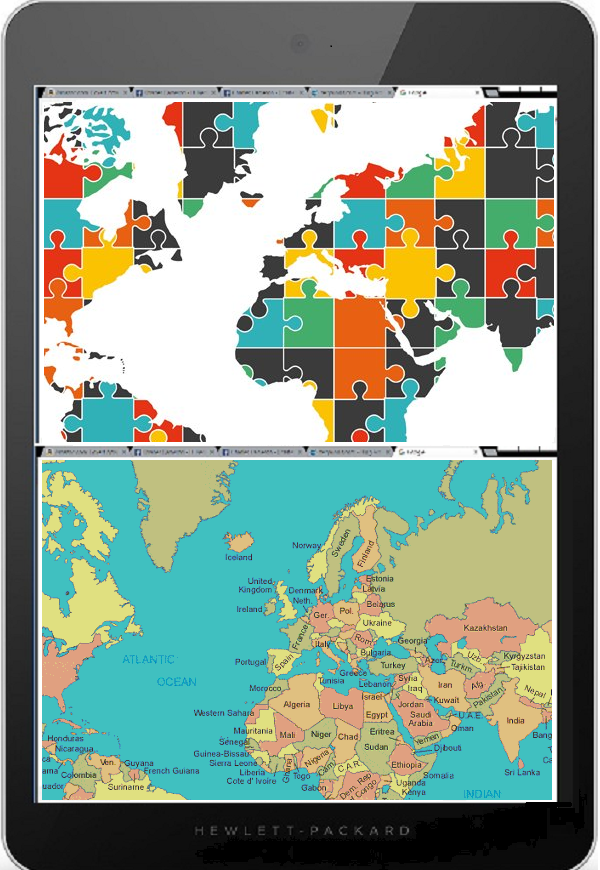
    RAND has a terrific puzzle map for the cover of its Election 2016: The International Issues essay, but..

    tablet-dq-rand-map

    .. where did Britain go?

    I don’t see Sweden either, so it can’t just be Brexit, can it? Not to mention chunks of Canada..

    At the intersection of Religion and Politics

    Sunday, October 16th, 2016

    [ by Charles Cameron — Metaxas (Christian) and Hindus (Bollywood included) ]
    .

    Eric Metaxas for Trump:

    Hindus for Trump:

    **

    Eric Metaxas is the author of the widely praised biography, Bonhoeffer: Pastor, Martyr, Prophet, Spy.

    My latest for Lapido: on the fall of Dabiq & failure of prophecy

    Saturday, October 15th, 2016

    [ by Charles Cameron — and detailing the scholarship of failed prophecy as context for ISIS’ upcoming loss of Dabiq ]
    .

    Here’s the opening of my piece posted two [now three] days ago on the LapidoMedia site:

    ISLAMIC STATE (ISIS) has relied on a saying of the Prophet Muhammad to recruit its impressionable young idealists to kill for God.

    But that prophecy could fail any day now, as alliance forces close in on the so-called ‘caliphate’.

    Prophet Muhammad is believed to have stated that the first great battle of the Islamic end times would come when Western forces attacked – and were defeated – at a small town in northern Syria called Dabiq.

    That should be any day now, according to ISIS’ Amaq News Agency. It issued a statement at the end of September that Turkish fire had killed a man in Dabiq, northern Syria, signalling the beginning of the end.

    amaq-agency

    The trouble is, current reports indicate that allied troops are within a few days of capturing Dabiq, thus disproving the prophecy.

    Let me say straight off — this is a complex and nuanced subject, and I hope to dig into it in greater detail shortly.

    **

    My piece had been edited — in journalism, that’s SOP — and appeared under the head and subhead:

    lapido-head

    Those are my editor’s words; my own emphasis is rather different. I don’t believe the fall of Dabiq will mean “game over” for ISIS recruiters, though I do think it will remove one major strand from their narrative — and experts are divided as ot its significance.

    The point I particularly wished to make in the article is that if and when Dabiq falls to allied forces, as seems pretty likely in the very near future, it will be a case of the type investigated by Leon Festinger in his classic, When Prophecy Fails.

    **

    The prophetic hadith on which ISIS has relied, to such an extent that it named its major English language magazine after it, says that the Roman (ie “crusader”) forces will be decisively defeated when “the Romans would land at al-A’maq or in Dabiq”.

    If my Google news feed is any good, the 21st century Battle of Dabiq hasn’t happened yet —

    dabiq-news-14th-oct-2016n

    — but it’s close, and from a military standpoint it looks as though the “allied” forces will likely defeat ISIS, which would be quite a notable defeat for ISIS’ apocalyptic rhetoric on the face of it.

    **

    Here are four people who have their respective eyes on the situation:

    Will McCants wrote the definitive treatise, The ISIS Apocalypse: The History, Strategy, and Doomsday Vision of the Islamic State. Here’s a paragraph largely drawn from that book (p. 105) as it appears in his most recent comment, ISIS fantasies of an apocalyptic showdown in northern Syria, dated October 3rd:

    The fact that Turkish Muslims, not infidel Romans, control Constantinople today and are working with the infidel Romans against the Islamic State makes the Dabiq prophecy a poor fit for contemporary events. The inevitable defeat of the Islamic State at Dabiq, should it ever confront “Rome,” would also argue against the prophecy’s applicability. But in the apocalyptic imagination, inconvenient facts rarely impede the glorious march to the end of the world.

    Imam Zaid Shakir, in Dabiq: An Argument Against ISIS in Jukly:

    One of the most powerful recruiting tools of ISIS has been its ability to create an apocalyptic appeal around the prophesized destruction of a “Crusader” army at Dabiq, a location in Northern Syria. So central has this idea been to the call of the group that they have given their propaganda magazine the name of that place –Dabiq. It is now obvious that such a confrontation and the ensuing victory of the “believers” will not occur. What is their contingency plan? Apparently, sending waves of suicidal murderers out into the world to reap a grim harvest of innocent souls.

    Tim Furnish, friend of this blog and frequent guest poster, spoke to this issue on A View from the Bunker 343: Dr. Timothy Furnish – Battle of Dabiq: First Shot in the Apocalypse or the End of ISIS? on October 9th. You can hear him on the Dabiq hadith from about the 3.23 mark. Around the 7.12 mark, Tim sets the stage:

    ISIS believes that in these battles they are fighting in Syria, particularly, and specifically in and around Dabiq, they believe they are setting off the eschatological timetable for the Islamic conquest of the world. This is what they believe. And again, this is not particular to ISIS. These ideas have been around for a long time, and they have been shared by a lot of other Muslims, it’s just that ISIS, instead of just writing books about them, pining about them, is actually going onto the battlefield and trying to make them a reality.

    The interview is a long one, and merits your attention — here I’ll just say that I summarized Tim’s point to him as “you appeared to downplay the significance of an ISIS defeat at Dabiq — did I get that right?” and he replied, “I did say that.” I’ll be interviewing Tim in further detail in the days to come, and report back.

    Lastly, Daveed Gartenstein-Ross, a Senior Fellow at the Foundation for Defense of Democracies. I quoted him briefly in my Lapido piece, but here’s his full quote in answer to my request:

    Whatever else it is, ISIS is an organization with a distinct theological outlook. It recruits using religious themes, and true believers feature prominently within its ranks. ISIS has anchored its rise and legitimacy to specific aspects of Islamic prophecy, and when its interpretation of this prophecy does not match reality, that will pose significant challenges for the organization — perhaps even existential challenges, if the group’s opponents play their cards right. (If ISIS fails, of course, that is not the same thing as jihadism itself failing.) Whether the U.S. government will be able to capitalize is a separate question, given that the U.S. shies away from messaging that touches on religious themes, and generally does not regard itself as a ‘credible voice’ in this regard.

    **

    I’d written this much at the point when Cole Bunzel‘s tweet yesterday turned up in my feed, and I quickly posted Cole Bunzel captures the Dabiq moment.

    **

    I am going to carry on here, a day later, with materials on Festinger’s When Prophecy Fails and later research along similar lines, because they offer us insight into the varieties of response that the failure of prophecy provokes in “true believers”. The simplest way to do this is to quote here the “Need to Know” coda to my Lapido piece:

    End-times prophecies have an unfortunate habit of failing.

    In Chicago, housewife Dorothy Martin persuaded her small group of followers that she had received a revelation from a planet named Clarion announcing the end of the world in a great flood on December 21, 1954.

    The earth failed to be devastated, despite her followers selling up and moving to a mountaintop to await the end – but it did trigger a research programme into ‘cognitive dissonance.’

    Martin’s small group could not accept their leader’s error, and instead went on a recruitment spree, according to expert Leon Festinger.

    Others like the Millerites in 1843 recalculate the date, and hope again.

    Jehovah’s Witnesses who have had to change the date of the Second Coming of Christ at least five times (in 1914, 1915, 1918, 1925, and 1975) are either abandoning the teaching, or spiritualizing the date.

    The Japanese sect Ichigen no Miya, ‘internalized’ the suffering its founder had predicted: He attempted to commit seppuku, but his followers intervened.

    He told them later: ‘I could see my own body as if it belonged to somebody else. I thought that I had managed to get out of my body at last, and I was greatly surprised to find that my body had changed itself into the islands of Japan and that a fire had broken out at its centre.

    ‘Then I knew that God had transferred the cataclysm to my own body. I thanked God and felt a bliss I had never experienced before.’

    That last quote in particular is pretty stunning: you can read more on the topic in Takaaki Sanada and Edward Norbeck, Prophecy Continues to Fail: A Japanese Sect, or the Introduction to Jon R Stone, Expecting Armageddon: Essential Readings in Failed Prophecy.

    **

    Another point bears mention. You’ll note that the title of Festinger’s book is When Prophecy Fails — the focus is on the failure of prophecies to be fulfilled in time, on or by a “date certain”, and most if not all of the research that has followed it takes the same form. The Dabiq prophecy, however, deals with a place, not a date — something fairly rare and little discussed in the literature..

    I mentioned this in a post to mailing-list I’m on, and Dr James Tabor of the Department of Religion, UNC Charlotte, commented (personal communication):

    This is a very important and valid point—“place” is often every bit as important, or more important, than “time.”

    Waco 1993 is a case in point, As Gene Gallagher and I show in our book, Why Waco, the key thing the FBI failed to understand was that David was not expecting any “apocalypse” in 1993—as his calculations pointed to 1995—and in Jerusalem—and that is essential—not in Waco, Texas. He thought he had to gather 144k faithful from around the world and everyone would meet in Jerusalem and fight in the final battle side by side with the Israelis.

    Of course Jerusalem, in the ancient apocalyptic things I deal with, is absolutely essential as the “place” where it all comes down.

    My friend and mentor Richard Landes (Encyclopedia of Millennialism and Millennial Movements, Heaven on Earth: The Varieties of the Millennial Experience, &c) similarly commented that the siege of Jerusalem in 1099, similarly, resulted in the disconfirmation of a place-based prophecy.

    **

    ISIS prepares for failure.

    Cole Bunzel, in his June Jhadica post, The Islamic State of Decline: Anticipating the Paper Caliphate, quoted the late Islamic State’s official spokesman, Abu Muhammad al-‘Adnani, from May 21, 2016:

    While in that statement ‘Adnani was sure to project a measure of confidence, remarking that the Islamic State is “becoming stronger with each passing day,” some of his comments betrayed the starker reality of a caliphate under siege. This was clear in the following queries: “Do you think, America, that victory will come by killing one or more leaders?” “Do you reckon, America, that defeat is the loss of a city or the loss of territory?” Responding to his own questions, ‘Adnani declared that killing the Islamic State’s leaders would not defeat the greater “adversary” — the group itself — and that taking its land would not eliminate its “will” to fight. Even if the Islamic State were to lose all its territories, he said, it could still go back to the way it was “at the beginning,” when it was “in the desert without cities and without territory.” The allusion here is to the experience of the Islamic State of Iraq, which between 2006 and 2012 held no significant territory despite its claim to statehood.

    Scripturally, the Qur’an describes the Battle of Ubud, in which the Prophet Muhammad himself was wounded, and which the Muslims lost, in Sura 3 verse 166:

    What ye suffered on the day the two armies met, was with the leave of Allah, in order that He might test the believers.

    And again, as I pointed out in April of last year, Qur’an 2:154-56 concerns those who fight fi sabil Allah, suggesting they will encounter “tests” up to and including “loss of lives” in the course of events:

    And do not say about those who are killed in the way of Allah, “They are dead.” Rather, they are alive, but you perceive [it] not. And We will surely test you with something of fear and hunger and a loss of wealth and lives and fruits, but give good tidings to the patient, Who, when disaster strikes them, say, “Indeed we belong to Allah , and indeed to Him we will return.”

    Cole Bunzel‘s latest tweet indicates that ISIS is indeed using this line of argument..

    The second issue of the ISIS magazine Rumiyah also sounds a note of preparation for defeat in the context of an article headed Paths to Victory:

    The Prophet (saw) also guided us – with great detail – to both the causes for victory and the hindrances to achieving it.

    The chief path to defeat is here said to be contention among leadership.

    Finally, Cole Bunzel’s tweet yesterday gave us the first clue as to how ISIS is responding to the almost certain defeat in real time:

    Date postponement.

    As I mentioned in yesterday’s post, Dr Stephen O’Leary has the detailed run-down on how that strategy operated in Millerite rhetoric, in the immediate and longer-term follow up to the failure of Miller’s 1844 end times prophecy — giving rise to the Great Disappointment — while led, twenty years later, to the founding of the Seventh Day Adventist church, and The Watch Tower Bible and Tract Society (Jehovah’s Witnesses) about twenty years after that.

    Twenty, forty years and counting.. and the Millerite ripples were only beginning..


    Switch to our mobile site