zenpundit.com

Irony

May 14th, 2013

From the State Department Human Rights Report on Russia under the Putin administration:

….The law forbids officials from entering a private residence except in cases prescribed by federal law or on the basis of a judicial decision. The law also prohibits government monitoring of correspondence, telephone conversations, and other means of communication without a warrant and prohibits the collection, storage, utilization, and dissemination of information about a person’s private life without his or her consent. While these provisions were generally followed, there were allegations that government officials and others engaged in electronic surveillance without judicial permission and entered residences and other premises without warrants.

News from yesterday about the United States government under the Obama Administration:

….The IRS sent Crossroads’ application to ProPublica in response to a public-records request. The document sent to ProPublica didn’t include an official IRS recognition letter, which is typically attached to applications of nonprofits that have been recognized. The IRS is only required to give out applications of groups recognized as tax-exempt.

“In an email Thursday, an IRS spokeswoman said the agency had no record of an approved application for Crossroads GPS, meaning that the group’s application was still in limbo.

and:

Internal Revenue Service officials in Washington and at least two other offices were involved with investigating conservative groups seeking tax-exempt status, making clear that the effort reached well beyond the branch in Cincinnati that was initially blamed, according to documents obtained by The Washington Post.

IRS officials at the agency’s Washington headquarters sent queries to conservative groups asking about their donors and other aspects of their operations, while officials in the El Monte and Laguna Niguel offices in California sent similar questionnaires to tea-party-affiliated groups, the documents show.

and:

The Justice Department secretly obtained two months of telephone records of reporters and editors for The Associated Press in what the news cooperative’s top executive called a “massive and unprecedented intrusion” into how news organizations gather the news.

The records obtained by the Justice Department listed outgoing calls for the work and personal phone numbers of individual reporters, for general AP office numbers in New York, Washington and Hartford, Conn., and for the main number for the AP in the House of Representatives press gallery, according to attorneys for the AP. It was not clear if the records also included incoming calls or the duration of the calls.

In all, the government seized the records for more than 20 separate telephone lines assigned to AP and its journalists in April and May of 2012. The exact number of journalists who used the phone lines during that period is unknown, but more than 100 journalists work in the offices where phone records were targeted, on a wide array of stories about government and other matters.

In a letter of protest sent to Attorney General Eric Holder on Monday, AP President and Chief Executive Officer Gary Pruitt said the government sought and obtained information far beyond anything that could be justified by any specific investigation. He demanded the return of the phone records and destruction of all copies.

“There can be no possible justification for such an overbroad collection of the telephone communications of The Associated Press and its reporters. These records potentially reveal communications with confidential sources across all of the newsgathering activities undertaken by the AP during a two-month period, provide a road map to AP’s newsgathering operations and disclose information about AP’s activities and operations that the government has no conceivable right to know,” Pruitt said.

I look forward to the report by the Russian Ministry of Foreign Affairs on Human Rights in the United States.
Immigration Bill to treat American Citizens as Conquered Subjects

May 13th, 2013

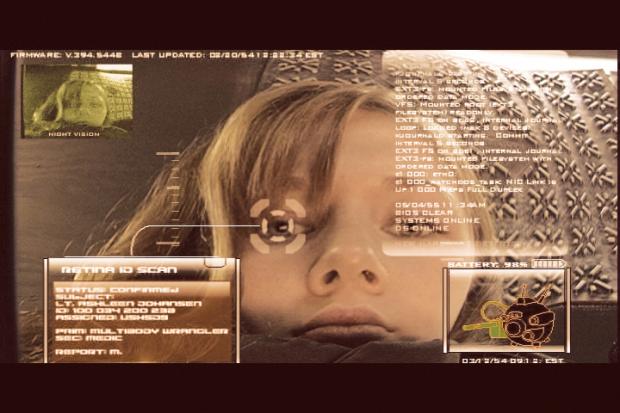
WIRED magazine so far is the only outlet to report on this nasty Creepy-State digital authoritarianism buried in the cosmically awful proposed Immigration “Reform”bill:

Biometric Database of All Adult Americans Hidden in Immigration Reform 

….Buried in the more than 800 pages of the bipartisan legislation (.pdf)  is language mandating the creation of the innocuously-named “photo tool,” a massive federal database administered by the Department of Homeland Security and containing names, ages, Social Security numbers and photographs of everyone in the country with a driver’s license or other state-issued photo ID.

Employers would be obliged to look up every new hire in the database to verify that they match their photo.

This piece of the Border Security, Economic Opportunity, and Immigration Modernization Act is aimed at curbing employment of undocumented immigrants. But privacy advocates fear the inevitable mission creep, ending with the proof of self being required at polling places, to rent a house, buy a gun, open a bank account, acquire credit, board a plane or even attend a sporting event or log on the internet. Think of it as a government version of Foursquare, with Big Brother cataloging every check-in.

“It starts to change the relationship between the citizen and state, you do have to get permission to do things,” said Chris Calabrese, a congressional lobbyist with the American Civil Liberties Union. “More fundamentally, it could be the start of keeping a record of all things.”

….“The most worrying aspect is that this creates a principle of permission basically to do certain activities and it can be used to restrict activities,” he said. “It’s like a national ID system without the card.”

For the moment, the debate in the Senate Judiciary Committee is focused on the parameters of legalization for unauthorized immigrants, a border fence and legal immigration in the future.

The committee is scheduled to resume debate on the package Tuesday. 

This provision is flatly unconstitutional, but the Bill of Rights is not held in high esteem by most members of Congress or the largest donors to the Democratic and Republican parties. Big Data  corporations intend to make enormous profits helping advocates of Big Government transform the “normal” of American life into what formally used to be considered appropriate for inmates in a minimum security prison.

Could a far less intrusive scheme be devised to validate employment status? Sure, but that would not hand bureaucrats and stringpullers of the Oligarchy enormous leverage to use someday over every man, woman and child in the United States.

Imagine, you have offended some local worthy with your letter to the editor or your campaign donation to their opponent and suddenly….your debit and credit cards stop working, your employer can no longer issue you your paycheck, you can’t enter any public facilities (the biometric scan rejects you as a “security threat”), the local hospital can’t provide you with medical care (“Access to records denied”). Maybe your driver’s license is suddenly void and the authorities therefore remotely disable your “smart car”. In a keystroke, you can be cyberoutlawed.

To where will you go to escape a powerful person manipulating an omnipresent data system? Or fix a “simple” computer error that is putting your entire life on hold? Or if a hacker gains access to your biometric records?  There are few good and reasonable uses for this kind of system, an enormous number of bad ones and none at all that justify being incorporated into an even a semi-free society.

The digital road to serfdom is being legislated one deceptively presented unread bill at a time.

A flock, a gaggle of tweeters?

May 13th, 2013

[ by Charles Cameron — a testament to bewilderment ]
.

It is pretty clear, I think, that Craig Little (upper panel) is not a mujahid from Daphne, Alabama, now living or dead in Somalia. He first tweeted on 22 March, 2009, however, and hasn’t tweeted since 29 July, 2010. Which gives him the name AbuAmerican on twitter.

Abu M, however, came later, first tweeting on May 15, 2012, and most recently on May 3, 2013. He has the Twitter handle AbuMAmerican, and is generally regarded as being the mujahid from Daphne, Alabama, Omar Hammami — of whom one might ask, is he in heaven, is he in hell, that demmed, elusive Pimpernel? Or still in Somalia, perhaps, dead or alive? Depending on what one believes about life, death, and beyond.

**

But that leaves us with two other contenders to consider:

Both these gents — the one with an “a” where an “e” would otherwise be, and the one with an _ at the end of his handle, as though you might need to crank a car with it — purport to be picking up where AbuMAmerican left off.

AbuAmerican_ with the crank handle is followed by Jarret Brachman, J. Dana Stuster, Khanserai, Peter Neumann, and Raff Pantucci among knowledgeable others — Raff also follows AbuAmarican with the improper “a”. And how’s this for complicated? AbuAmarican with the “a'” is followed, too, by the frankly cranky AbuAmerican_, by Chris Anzalone, IntelGirl, DC Gomez and Christof Putzel.

Putzel, in case this is any help, interviewed Hammami in 2012 for CurrentTV, long before Spencer Ackerman talked with him for Wired this April.

Neither Abu with an A nor Abu Crank have shown the kind of easy humor the Original Abu M showed in tweets like this:

**

But then — is Abu M any more real than his knockoffs? At least he’s the most interesting of the lot. And as JM Berger said to Attackerman, speaking of the “original” AbuMAmerican:

If it’s a hoax … it’s an incredibly elaborate one, and would be done for an extremely small audience.

Who’s Who? How should I know?

Elkus on Mad Dogs and Military History

May 10th, 2013

Adam Elkus has a lengthy and meaty post at Abu Muqawama, inspired by General Mattis, one that you should really read in full:

The Mattis Book Club

….But while gaining an understanding of the nature of war is useful, there are a lot of things it won’t do. This becomes most apparent in the section of the email where Mattis makes specific claims. Mattis repeatedly states that nothing is new under the sun, makes comparisons across big temporal zones (Alexander the Great in Persian Iraq vs. 2004 iraq), and advances specific analytical arguments about military theories. He does so on the basis of a sweeping generalization that 5,000 years of warfare tells us in aggregate that war has not changed. While this makes for a rousing line, it is also a fairly problematic statement. How do we really know that the nature of war has not changed in 5,000 years?

We should recognize that this is an isolated quote, and strive to not take out of context what was a heartfelt letter to a colleague in need of guidance. But the argument itself—as the cumulative product of a process of self-education in the nature of warfare, does merit some critical analysis. It is part of a humanistic conception of war that stresses the unity of military experience across the ages, and puts the fighting man’s will first. What Mattis dashed off in an email has been repeated by others in journal articles, blog posts, essays, and books. The military historian Brian McAllister Linn, in his seminal study of the Army’s cultures, dubbed it the “heroic” style of war. Linn constrasts this humanistic style this with technocratic Managers, defensive Guardians, and other military tribes with differing values and approaches.

So what do we know about 5,000 years of constant violence?

Often times the answer is that it depends. As my Fuller and Liddell-Hart examples illustrate, the quality of historical accounts is extremely uneven. Military history as a modern discipline only started with Hans Delbruck, a civilian who did some basic math and discovered that many of the most prominent chroniclers of pre-modern warfare were flat-out wrong about ancient history’s greatest battles and campaigns. Anthropologists still argue today about the nature of violence in the evolutionary state of nature and whether it can be mapped to violence in settled states. Second, it may be true that war is war in the Clausewitzian sense. But while it is technically true that Alexander’s Iraqi opponents and Sadrist mobs are both humans seeking to use force to impose their will, this in and of itself is not very useful. There are fairly prominent shifts in the character of politics, the international system, techology, wealth, and society that matter too.  

What constitutes politics is a very important point.

Take for example, the Romans. There was a definite shift between the Early-Middle Republican eras and the Late Republic in elite politics and the socioeconomic conditions upon which Roman assumptions about war and the organization and supply of Legions rested.  Growing inequality of wealth was making it harder for Plebian citizens to afford to muster for a campaign, the need for longserving “professional” Legates to maintain “institutional memory” of the “arts of war” of the Legions expanded even as the highly coveted opportunities for Patricians to command decreased. These trends clashed with what the Romans liked to  believe about themselves and the friction between advocates of reforms (often necessary and practical) and the upholders of  centuries of honored tradition made Roman politics increasingly bitter, dysfunctional and subsequently lethal. The early Romans would have been horrified by Marius and Sulla, to say nothing of Antony and Octavian.

In the end, the politics of the Romans, along with their battlefield experiences, changed how they organized and manned their Legions, why and how they fought the wars as they did and continued to shape Roman warfare as long as the empire lasted. Julius Caesar would have been as startled by Late Antiquity’s semi-barbarian “Roman” Magister Militiums as his own career would have dismayed Decius Mus.

Adam goes on to have some useful things to say about the need for combining historical and quantitative  social science  methodologies and the limitations of each. Delbruck’s overstated skepticism of the ancients aside, sometimes we moderns do not count any better in war or politics – or at times,  even worse

History doesn’t rhyme — it swears

May 10th, 2013

[ by Charles Cameron — finding both rhyme and obscenity here, to be honest — San Salvador then, Mexico today ]
.

**

I once had the privilege of hearing Carolyn Forché read her poems.

You can read and hear her reading the prose poem from which that excerpt is taken here — for richer background on her experiences in El Salvador, see her extraordinary essay El Salvador: An Aide-Mémoire in Granta, or find a copy of The American Poetry Review for July/August 1981, pp. 3-7.

Sources:

  • Carolyn Forché, The Country Between Us
  • Sunil S, El Narco and the Jihad in Pragati, illus credit: El cartel de San Luis
  • **

    I know, in the title of this post I’m conflating a quote attributed to Mark Twain, “History doesn’t repeat itself, but it rhymes”, with Bob Dylan‘s “Money doesn’t talk, it swears”. So be it.

    As Dylan also once said: “I said that.”


    Switch to our mobile site