zenpundit.com » politics

Archive for the ‘politics’ Category

It Seems the Oligarchs Distrust their own Creepy-state

Tuesday, July 10th, 2012

I previously made note of the emergence of an authoritarian Creepy-state element in American government, enjoying bipartisan popularity with this era’s predominantly Boomer elite politicians, CEOs and academic activists. Largely because this growing surveillance state is directed at controlling the rest of us and eroding the democratic and legal accountability of a self-imagined superclass.

Here’s a new (but unsurprising) wrinkle. The political-bureaucratic folks quietly building this incipient machinery of coercion already distrust and fear the men and women who are employed to run it. Evidently, the Rise of the Praetorian Class theory has been widely read.

US spy agency accused of illegally collecting personal data

WASHINGTON — One of the nation’s most secretive intelligence agencies is pressuring its polygraphers to obtain intimate details of the private lives of thousands of job applicants and employees, pushing the ethical and legal boundaries of a program that’s designed instead to catch spies and terrorists.

The National Reconnaissance Office is so intent on extracting confessions of personal or illicit behavior that officials have admonished polygraphers who refused to go after them and rewarded those who did, sometimes with cash bonuses, a McClatchy Newspapers investigation found.

The disclosures include a wide range of behavior and private thoughts such as drug use, child abuse, suicide attempts, depression and sexual deviancy. The agency, which oversees the nation’s spy satellites, records the sessions that were required for security clearances and stores them in a database.

Even though it’s aggressively collecting the private disclosures, when people confess to serious crimes such as child molestation they’re not always arrested or prosecuted.

“You’ve got to wonder what the point of all of this is if we’re not even going after child molesters,” said Mark Phillips, a veteran polygrapher who resigned from the agency in late May after, he says, he was retaliated against for resisting abusive techniques. “This is bureaucracy run amok. These practices violate the rights of Americans, and it’s not even for a good reason.”

The agency refused to answer McClatchy’s questions about its practices. However, it’s acknowledged in internal documents that it’s not supposed to directly ask more personal questions but says it legally collects the information when people spontaneously confess, often at the beginning of the polygraph test.

Even though it is against the law as well as internal regulations, the NRO management have given themselves the green light in a self-investigation to keep doing it to their own employees and anybody going through a security clearance background investigation – a vast number of people, many of whom have or will someday have incredibly sensitive positions in the defense, intelligence and national security communities.

After a legal review of Phillips’ assertions, the agency’s assistant general counsel, Mark Land, concluded in April that it did nothing wrong. “My opinion, based on all of the facts, is that management’s action is legally supportable and corrective action is not required,” he wrote.

But McClatchy’s review of hundreds of documents – including internal policy documents, memos and agency emails – indicates that the National Reconnaissance Office is pushing ethical and possibly legal limits by:

-Establishing a system that tracks the number of personal confessions, which then are used in polygraphers’ annual performance reviews.

-Summoning employees and job applicants for multiple polygraph tests to ask about a wide array of personal behavior.

-Altering results of the tests in what some polygraphers say is an effort to justify more probing of employees’ and applicants’ private lives.

Read the rest here.
.
The charitable explanation is that all this is bureaucratic overreach motivated by tiny empire building and budget-padding in the age of  austerity, where cybersecurity is one of the few “growth” areas of discretionary spending for senior bureaucrats to pursue.
.
The cynical explanation is that these are blackmail files being compiled systematically and deliberately; to be used later to compel IC/DoD/DHS/DoJ employees to stick with an agency party line, intimidate and punish whistleblowers or use their official positions to engage in illegal misconduct to benefit politically influential VIPs. Like harassing American citizens or journalists critical of an agency or administration policy or special interests.
.
There’s few good reasons for the government to do this – and those few are all narrowly related to genuine and specific security concerns we have had to live with since WWII – but many bad ones.

“We Hold these Truths to be Self-Evident….”

Wednesday, July 4th, 2012

In CONGRESS, July 4, 1776.
 

The unanimous Declaration of the thirteen united States of America,
When in the Course of human events, it becomes necessary for one people to dissolve the political bands which have connected them with another, and to assume among the powers of the earth, the separate and equal station to which the Laws of Nature and of Nature’s God entitle them, a decent respect to the opinions of mankind requires that they should declare the causes which impel them to the separation.

We hold these truths to be self-evident, that all men are created equal, that they are endowed by their Creator with certain unalienable Rights, that among these are Life, Liberty and the pursuit of Happiness.–That to secure these rights, Governments are instituted among Men, deriving their just powers from the consent of the governed, –That whenever any Form of Government becomes destructive of these ends, it is the Right of the People to alter or to abolish it, and to institute new Government, laying its foundation on such principles and organizing its powers in such form, as to them shall seem most likely to effect their Safety and Happiness. Prudence, indeed, will dictate that Governments long established should not be changed for light and transient causes; and accordingly all experience hath shewn, that mankind are more disposed to suffer, while evils are sufferable, than to right themselves by abolishing the forms to which they are accustomed. But when a long train of abuses and usurpations, pursuing invariably the same Object evinces a design to reduce them under absolute Despotism, it is their right, it is their duty, to throw off such Government, and to provide new Guards for their future security.


-Such has been the patient sufferance of these Colonies; and such is now the necessity which constrains them to alter their former Systems of Government. The history of the present King of Great Britain is a history of repeated injuries and usurpations, all having in direct object the establishment of an absolute Tyranny over these States. To prove this, let Facts be submitted to a candid world.

  • He has refused his Assent to Laws, the most wholesome and necessary for the public good.
  • He has forbidden his Governors to pass Laws of immediate and pressing importance, unless suspended in their operation till his Assent should be obtained; and when so suspended, he has utterly neglected to attend to them.
  • He has refused to pass other Laws for the accommodation of large districts of people, unless those people would relinquish the right of Representation in the Legislature, a right inestimable to them and formidable to tyrants only. 
  • He has called together legislative bodies at places unusual, uncomfortable, and distant from the depository of their public Records, for the sole purpose of fatiguing them into compliance with his measures. 
  • He has dissolved Representative Houses repeatedly, for opposing with manly firmness his invasions on the rights of the people.
  • He has refused for a long time, after such dissolutions, to cause others to be elected; whereby the Legislative powers, incapable of Annihilation, have returned to the People at large for their exercise; the State remaining in the mean time exposed to all the dangers of invasion from without, and convulsions within.
  • He has endeavoured to prevent the population of these States; for that purpose obstructing the Laws for Naturalization of Foreigners; refusing to pass others to encourage their migrations hither, and raising the conditions of new Appropriations of Lands.
  • He has obstructed the Administration of Justice, by refusing his Assent to Laws for establishing Judiciary powers.
  • He has made Judges dependent on his Will alone, for the tenure of their offices, and the amount and payment of their salaries.
  • He has erected a multitude of New Offices, and sent hither swarms of Officers to harrass our people, and eat out their substance.
  • He has kept among us, in times of peace, Standing Armies without the Consent of our legislatures.
  • He has affected to render the Military independent of and superior to the Civil power.
  • He has combined with others to subject us to a jurisdiction foreign to our constitution, and unacknowledged by our laws; giving his Assent to their Acts of pretended Legislation:
  • For Quartering large bodies of armed troops among us:
  • For protecting them, by a mock Trial, from punishment for any Murders which they should commit on the Inhabitants of these States:
  • For cutting off our Trade with all parts of the world:
  • For imposing Taxes on us without our Consent: 
  • For depriving us in many cases, of the benefits of Trial by Jury:
  • For transporting us beyond Seas to be tried for pretended offences
  • For abolishing the free System of English Laws in a neighbouring Province, establishing therein an Arbitrary government, and enlarging its Boundaries so as to render it at once an example and fit instrument for introducing the same absolute rule into these Colonies:
  • For taking away our Charters, abolishing our most valuable Laws, and altering fundamentally the Forms of our Governments:
  • For suspending our own Legislatures, and declaring themselves invested with power to legislate for us in all cases whatsoever.
  • He has abdicated Government here, by declaring us out of his Protection and waging War against us.
  • He has plundered our seas, ravaged our Coasts, burnt our towns, and destroyed the lives of our people. 
  • He is at this time transporting large Armies of foreign Mercenaries to compleat the works of death, desolation and tyranny, already begun with circumstances of Cruelty & perfidy scarcely paralleled in the most barbarous ages, and totally unworthy the Head of a civilized nation.
  • He has constrained our fellow Citizens taken Captive on the high Seas to bear Arms against their Country, to become the executioners of their friends and Brethren, or to fall themselves by their Hands. 
  • He has excited domestic insurrections amongst us, and has endeavoured to bring on the inhabitants of our frontiers, the merciless Indian Savages, whose known rule of warfare, is an undistinguished destruction of all ages, sexes and conditions. 

In every stage of these Oppressions We have Petitioned for Redress in the most humble terms: Our repeated Petitions have been answered only by repeated injury. A Prince whose character is thus marked by every act which may define a Tyrant, is unfit to be the ruler of a free people.

Nor have We been wanting in attentions to our Brittish brethren. We have warned them from time to time of attempts by their legislature to extend an unwarrantable jurisdiction over us. We have reminded them of the circumstances of our emigration and settlement here. We have appealed to their native justice and magnanimity, and we have conjured them by the ties of our common kindred to disavow these usurpations, which, would inevitably interrupt our connections and correspondence. They too have been deaf to the voice of justice and of consanguinity. We must, therefore, acquiesce in the necessity, which denounces our Separation, and hold them, as we hold the rest of mankind, Enemies in War, in Peace Friends. 

We, therefore, the Representatives of the united States of America, in General Congress, Assembled, appealing to the Supreme Judge of the world for the rectitude of our intentions, do, in the Name, and by Authority of the good People of these Colonies, solemnly publish and declare, That these United Colonies are, and of Right ought to be Free and Independent States; that they are Absolved from all Allegiance to the British Crown, and that all political connection between them and the State of Great Britain, is and ought to be totally dissolved; and that as Free and Independent States, they have full Power to levy War, conclude Peace, contract Alliances, establish Commerce, and to do all other Acts and Things which Independent States may of right do. And for the support of this Declaration, with a firm reliance on the protection of divine Providence, we mutually pledge to each other our Lives, our Fortunes and our sacred Honor.

Boko Haram: religious vs social war

Wednesday, June 27th, 2012

[ by Charles Cameron — follow up to Taliban: religiosity vs pragmatism ]
.

Sen. Ita Solomon Enang, Chairman of Nigeria’s Senate Committee on Business and Rules, recently responded to a press question about Boko Haram, in an interview published under the curious title, Boko Haram war more religious than social — Engang:

Q: Previously you said Boko Haram attacks were not targeted at Christians but with the consistent attacks on worshippers in churches, have you not changed your mind and how do you think this problem can be dealt with?

A: Unfortunately, I held a position that it is not a religious war in the past. But my position on that is becoming shaky because when people now blatantly take guns to churches and aim at unarmed worshippers, kill them and go away; or they take a bomb to the church and detonate it there, I would say this is like a jihad and I think we should stop behaving like ostriches. I think that the sooner we accept it as a religious war, the better we will be able to handle it.

**

I keep circling around this central point. Much of interest and concern in today’s world revolves around the manner in which politics and religion are separable, braided together, or inseparable…


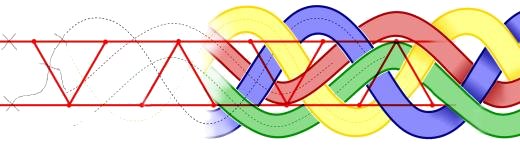
image credit: Christian Mercat, under GNU license v 1.2 — see documentation.

What does it mean for a war to be a religious war, or — to avoid the complexities that defining war bring into the picture while substituting the equivalent complexities attendant on the word violence — for violence to be religious violence?

  • Do both sides have to fight a religious war for it to be religious?
  • Can individuals perform acts of religious violence within a war that is not itself religious?

In some ways the issue parallels the one raised by Zen today in a quote from Colin Gray:

It is not sensible to categorize wars according to the believed predominant combat style of one of the belligerents. Guerrilla-style warfare is potentially universal and, on the historical evidence, for excellent reasons has been a favored military method of the weaker combatant eternally. There are no such historical phenomena as guerrilla wars. Rather, there have been countless wars wherein guerrilla tactics have been employed, sometimes by both sides. To define a war according to a tactical style is about as foolish as definition according to weaponry. For example, it is not conducive of understanding to conceive of tank warfare when the subject of interest is warfare with tanks and so forth, typically, if not quite always, in the context of combined arms.

Zen’s response to Gray:

Gray is correct that many wars partake of a blend of tactical fighting styles or that most wars are better defined (or at least should be in terms of causation) by their political character. That said, a specific fighting style sometimes is a definitive descriptive characteristic of a war, particularly if a dominant tactical style explains one side’s consistent comparative advantage (ex. the Macedonian phalanx vs. the Persians) in battle and some of the resultant choices which were forced upon the adversary.

**

We have a sort of Venn-diagram-in-words possibility: religiopolitical — but it’s really little more than a sop to the fact that religion and politics are at time closely woven. The religiosity of voiolence, and for that matter the violence of religiosity — these are things that wax and wane, shifting sands — they don’t always stay still long enough for us to box them in words, to reify them, to treat them as easily discernible and manipulable mental objects.

That said, to paraphrase Zen, “a specific religious style sometimes is a definitive descriptive characteristic of a war…”

Our understanding may be shifting and nuanced, but the briefs and executive summaries that decision-makers receive, the soundbites they articulate (can one articulate a soundbite?), and the headlines that preach their doctrines to the wide world — these use a given word or they don’t.

Let me turn that around: the briefs and executive summaries that decision-makers receive, the soundbites they articulate, and the headlines that preach their doctrines to the wide world inevitably either use a given word, or they don’t. And yet a realistic understanding of the given situation will be no less inevitably shifting and nuanced…

I feel very timid dipping a toe into Boyd in present company, but a fighter-pilot is a one-person observer, orienter, decider and actor, no? with a loop measured in fractions of seconds, not months? — whereas between intelligence gathering, strategic orientation, policy-making, and diplomatic or military action there are a multitude of communications channels — many of which function as shears that trim nuance down to the nub.

I suspect that questions like “is this a religious war?” and “is this guerrilla war?” carry (at a minimum) book-length subtleties with them, and wind up all too often with answers which are either yes or no, one or zero.

**

It’s all a bit like asking, “what game is this war we’re playing?”

One senior US official in Iraq was quoted by Anthony Cordesman as saying:

the current situation is like playing three dimensional chess in the dark while someone is shooting at you.

Tom Barnett, in The Pentagon’s New Map:

It is not chess but something closer to soccer. The ball is always moving, and substitutions are constantly changing the composition of both your team and your enemy’s. But worse still, your political leadership’s definition of the “problem” you are trying to solve keeps changing, making your attempts to keep score almost meaningless. You want to know what today’s definition of the problem is? Try reading the op-ed pages; you will have plenty to choose from.

John Arquilla and David Ronfeldt:

Major transformations are thus coming in the nature of adversaries, in the type of threats they may pose and in how conflicts can be waged. Information-age threats are likely to be more diffuse, dispersed, multidimensional nonlinear and ambiguous than industrial-age threats. Metaphorically, then, future conflicts may resemble the Oriental game of Go more than the Western game of chess. The conflict spectrum will be remolded from end to end by these dynamics.

As I noted recently, Alasdair MacIntyre wrote, about the complexity of contemporary life in general:

Not one game is being played, but several, and, if the game metaphor may be stretched further, the problem about real life is that moving one’s knight to QB3 may always be replied to by a lob over the net

When it comes time to think, there are only so many metaphor-boxes to fit your nuances into. You pays your money, and you takes your choice.

New Article: The Coming National Defense Crack-Up

Wednesday, June 27th, 2012


I have been asked to contribute foreign policy and defense pieces to IVN – The Independent Voter Network. The emphasis at IVN  is on well-supported brevity to inform a general audience of prospective voters for 2012 and not to entertain the legions of doctorate-seeking war nerdom with iterations of mutant 4GW, hybrid neo-Clausewitzian, counter-counter-insurgency theoretical castles in the sky 🙂 Different readership there.

Here is my first article:

The Coming National Defense Crack-Up

….Despite a major speech on defense issues given at the Citadel in 2011, Governor Romney’s strengths as a candidate are not associated with national security, while President Obama’s staff prefer to emphasize to the administration’s many successes in counterterrorism operations instead of the accumulation of serious issues faced by the Department of Defense, the armed services and America’s returning veterans.

This lack of debate is problematic because the next president will require a mandate for his solutions to the Pentagon’s laundry list of problems if they are to have a hope of passing the Congress in tight budgetary times. Some of the national defense problems are structural while others constitute a legacy of ten years of war in Afghanistan, Iraq and in remote lawless regions, but the political capital needed to fix them will be substantial:

  • Never has the Pentagon’s system for acquiring weapons and supplies been so dysfunctional or so ruinously expensive. Most of the major weapons systems of the past decade have been cancelled or halted in scandal at a cost of billions, including the Future Combat System, theF-22 Raptor , the next generation Destroyer, the Crusader, the Comanche helicopter, theExpeditionary Fighting Vehicle and the Littoral Combat Ship. The desk-bound military bureaucracy bitterly fought against the deployment of the life-saving MRAP while outfitting troops in uniforms that made it easier for the enemy to shoot them.
  • The Obama administration is attempting a “strategic pivot” toward Asia by focusing shrinking military resources in the Pacific, but the United States Navy will be extremely hard-pressed to carry out offshore balancing of a rising China with a reduced fleet of only 285 aging ships, the lowest number in a century. Nor do we have any regional allies with operational aircraft carriers – Japan has only a helicopter carrier, Britain is losing it’s last carrier in 2014, Australia and South Korea have no carriers and New Zealand barely has enough ships to constitute a functioning navy. Naval expansion would require a significant investment and several decades to complete…..

Read the rest here.

The Russians are Not Coming….Nor are they Going Away

Monday, June 25th, 2012

Now that Vladimir Putin has resumed the Presidency of Russia, it merits looking at the defense discussion that appeared under his name in Rossiiskaya Gazeta. Virtually everyone agrees that the condition of the Russian Army is parlous and that Putin’s program of difficult military reform to transform the Russian military from a conscripted army to a modernized professional force has not borne fruit. Therefore it is interesting to look at how Putin’s regime articulates it’s defense challenges with a mixture of bravado and brutal strategic realism we would never hear from an American politician.

Excerpts of the article are in bold while my commentary is in normal text.

 Being Strong 

…..The world is changing, and the transformations underway could hide various risks, often unpredictable risks. In a world of economic and other upheaval, there is always the temptation to resolve one’s problems at another’s expense, through pressure and force. It is no surprise that some are calling for resources of global significance to be freed from the exclusive sovereignty of a single nation, and that this issue will soon be raised as a “matter-of-course.”

There will be no possibility of this, even a hypothetical one, with respect to Russia. In other words, we should not tempt anyone by allowing ourselves to be weak. 

While some of this is boilerplate, it does demonstrate Putin’s astute view of Western elite noises about “global governance” as an effort to erode historic Westphalian legal norms of sovereignty for a self-aggrandizing reasons.

I am including paragraphs here from different parts of the paper where President Putin deals with nuclear weapons, though the first one continues from where the last excerpt left off.:

It is for this reason that we will under no circumstances surrender our strategic deterrent capability, and indeed, will in fact strengthen it. It was this strength that enabled us to maintain our national sovereignty during the extremely difficult 1990s, when, lets’ be frank, we did not have anything else to argue with.

….I remember in 2002 when the Chief of the General Staff proposed liquidating a base for strategic ballistic missile submarines on the Kamchatka Peninsula. Understandably, this proposal was motivated by dire circumstances. This would have deprived Russia of its naval presence in the Pacific Ocean. I decided against this. Due to the lack of the required budgetary funding, we had to ask private companies for help. I would like to thank them for that. Both Surgutneftegaz and TNK stepped up to provide the required funding for the base’s initial reconstruction. Budgetary allocations were later disbursed. Today, we have a modern base in Vilyuchinsk where next-generation Borei class submarines will soon be deployed.

….We have greatly increased the capabilities of our early missile warning system. Tracking stations have been launched in the Leningrad and Kaliningrad Regions and in Armavir, and a similar facility is undergoing tests in Irkutsk. All aerospace defence brigades have been equipped with the Universal-1S automation systems, and the Glonass satellite group has been deployed.

The land, sea and air components of our Strategic Nuclear Forces are reliable and sufficient. The proportion of modern land-based missile systems has grown from 13% to 25% over the past four years. The rearmament of 10 missile regiments with the Topol-M and Yars strategic missile systems will be continued.  Long-range aviation will maintain the fleet of strategic Tu-160 and Tu-95MS bombers; work is underway to modernise them. They will be equipped with a new long-range cruise missile system. Russia’s strategic aviation resumed combat patrols in their zone of responsibility in 2007. A new aircraft is being designed for strategic long-range aviation.

New-generation Borei class strategic submarines are being put on combat duty. These include the Yury Dolgoruky and Alexander Nevsky which are undergoing state trials.

….In the coming decade, Russian armed forces will be provided with over 400 modern land and sea-based inter-continental ballistic missiles, 8 strategic ballistic missile submarines…. 

This does not sound  like Putin puts much stock in his predecessor’s endorsement of Global Zero or President Obama’s goal of eliminating nuclear weapons. Or that a drastic unilateral American cut in nuclear weapons proposed by Global Zero to “break the triad” contemplated by the Obama administration would be reciprocated by Russia. Or any other nuclear power state.

Given that Pakistan, India, North Korea, Israel and China are reportedly increasing and improving their nuclear arsenals, it begs the question of whether the Obama or the Putin administrations have the most realistic view about nuclear weapons and their currency in international relations. Or what the Obama administration would use as bargaining chips to negotiate reductions in foreign nuclear arsenals after making gratuitously slashing unilateral cuts. And if the paper was not clear enough, Putin was more blunt about the strategic situation two days ago:

“With regard to further steps in the sphere of nuclear weapons, these further steps should be of a complex character, and this time all the nuclear powers should be involved in this process. We cannot disarm indefinitely while some other nuclear powers are building up their arsenal. It is out of the question!” 

On the subject of Russia’s land forces:

….There are no undermanned units in the Russian armed forces any more. The Army has over 100 combined and special brigades. These are full-scale military units with the requisite personnel and equipment. Their alert reaction time is one hour and they can be deployed to a potential theatre of war within 24 hours.

In the past, it took up to five days to prepare for combat readiness. The deployment and equipment of all the armed forces to wartime conditions could take nearly a year, even though most armed conflicts now last from a few hours to several days.

Why have we chosen the brigade as the main tactical unit? First of all, we have relied on our own experience in the Afghan and other wars, where mobile combat and assault groups reinforced with air and other support units have proved  more efficient than regiments and divisions.

The new brigades are smaller than divisions in the number of personnel but have a bigger strike capability, better firepower and support, including artillery, air defence, reconnaissance, communications, and so on. Brigades can operate both autonomously and jointly with other units. I admit that the quality is not perfect in all instances. We need to achieve the required standards in the near future. 

A Russian Army brigade numbers slightly over 4000 soldiers (vs. 3000-5000 in American and NATO militaries) and moving to a brigade structure is intended to make the Russian Army more versatile, flexible, deployable and mobile. The US essentially did the same thing with the “modularity” reforms for a brigade team force structure. However, I find it dubious that the Russian version is anything other than an aspirational work in progress or that Russia today could muster a force remotely approaching 100 combat brigades on short notice or keep them in the field for more than thirty days.

The old Soviet Red Army in the 80’s at the peak of it’s power was a military long on officers and critically deficient in NCOs  and the 90’s cratered the main force quality of what remained of the Soviet armies. Russia will not have a deployable fighting army for anything other than brief Georgia type raids and SPETSNAZ operations until it builds a proportionate NCO corps and modernized logistical support system.

On future war and it’s strategic context:

….The probability of a global war between nuclear powers is not high, because that would mean the end of civilisation. As long as the “powder” of our strategic nuclear forces created by the tremendous efforts of our fathers and grandfathers remains dry, nobody will dare launch a large-scale aggression against us.

However, it should be borne in mind that technological progress in many varied areas, from new models of weaponry and military hardware to information and communications technology, has dramatically changed the nature of armed conflicts. Thus, as high-precision long-range conventional weapons become increasingly common, they will tend to become the means of achieving a decisive victory over an opponent, including in a global conflict.

The military capability of a country in space or information countermeasures, especially in cyberspace, will play a great, if not decisive, role in determining the nature of an armed conflict. In the more distant future, weapons systems based on new principles (beam, geophysical, wave, genetic, psychophysical and other technology) will be developed. All this will, in addition to nuclear weapons, provide entirely new instruments for achieving political and strategic goals. Such hi-tech weapons systems will be comparable in effect to nuclear weapons but will be more “acceptable” in terms of political and military ideology. In this sense, the strategic balance of nuclear forces will play a gradually diminishing role in deterring aggression and chaos.

We see ever new regional and local wars breaking out in the world. We continue to see new areas of instability and deliberately managed chaos. There also are purposeful attempts to provoke such conflicts even within the direct proximity of Russia’s and its allies’ borders.

The basic principles of international law are being degraded and eroded, especially in terms of international security. 

Here we see much of the same keen interest Western military experts have had in RMA/”transformation” but more as new domains in which to fight or weapons to fight with, but Putin’s assumptions about the roots of international conflict remain exceedingly traditional in Clausewitzian and Machiavellian realpolitik senses. There’s no idea here that war’s political nature is being transformed by technological advances or even that breakdowns in order in other nations flow primarily from indigenous social forces  than from strategic conspiracies and manipulations of foreign powers hell-bent on humiliating Russia.

This is a worldview of cynical realism salted with nationalism and a paranoia induced by the lessons of centuries of Russian history. International relations, it follows, hinge primarily on power in all it’s manifestations, a few rules that separate the law of nations from the law of the jungle and that states exert power to accomplish rational strategic objectives. Furthermore, in an echo of Tsarist Russia’s last modernizer, Petr Stolypin, what Putin has put forth as a political program for his domestic audience (sincere or not) is “a great Russia”.

The good news is that President Putin is, unlike his Soviet predecessors, is uninterested in grand ideological crusades that would destabilize the world order and that Russia currently would be incapable of carrying any out. The bad news is that Putin is a shrewd strategic thinker, one who views the US as a long-term adversary of Russia and one who is likely to be highly antagonized and partially misread (and thus miscalculate)  the tactical geopolitics of intervention pursued by America’s R2P moralizers.

From Putin’s perspective, we are currently crusaders rather than deal-cutters grounded in reality. America does not need to appease other power,s but we’d further our own interests faster if we spent a little time looking at the world through the eyes of others

Hat tip to Lexington Green


Switch to our mobile site