Guest Post – Ashes in California: A reflection on the end of my father
Friday, November 27th, 2020[mark safranski / zen ]
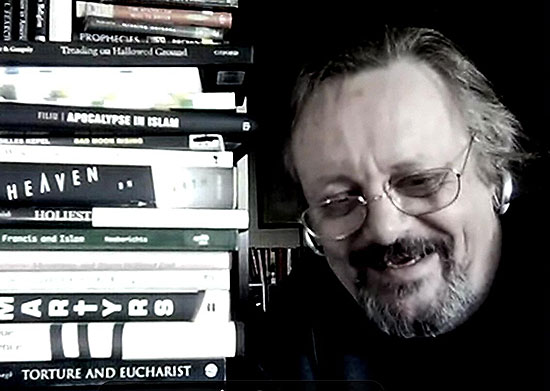
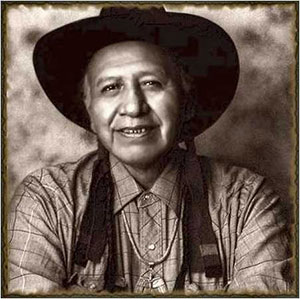
This year saw the passing of Charles Cameron, the longtime managing editor and co-blogger here at ZP. Charles is deeply missed by everyone who read or blogged here and to honor him on what would have been his birthday on Friday, we are publishing a memorial essay by his oldest son, Emlyn Cameron.
Ashes in California: A reflection on the end of my father
By Emlyn Cameron
In his mid-seventies, my father, always reluctant to do anything that might benefit his health, had a heart attack. A year later he had another one. This time he would undergo open-heart surgery. His physical condition meant the operation would put him at greater-than-average risk of dying.
The night before the surgery, I decided to walk to his hospital and talk to him. Telling your parent what you’d like them to know before they die is unhappy work. In my case, I got dizzy, and my face went numb and mostly immobile, and I felt as if I had a large bruise spreading deep in the tissue of my chest.
I had hoped it would bring him some fulfillment to know the effect he had upon his son. But, I doubted that when the issue of death ultimately asserted itself he would be in a position to care. My real aim was to make his death easier for me. This was part of a long attempt to steal incrementally from and lessen the store of grief I’d feel when he finally died.
I had started by trying to outright deny him the privilege of dying: When I was small, it occurred to me that Father wouldn’t be around forever. He was in his mid-fifties by the time I was 10, already unhealthy, and even other healthier, younger people died. I checked this with Mum, who confirmed my worry. So, I tried to go over his head – I asked God to step in and make a compact with me on the order of I’ll be good and pious if you’ll give my father a permanent reprieve.
Santa Claus stuff.
Some years later, in my early teens, I tried instead to maximize time with Father, despite my parents’ divorce: Every trip to a thrift store, or Saturday cruise between yard sales, in his battered sedan, and every heat-choked afternoon spent combing through his storage unit became essential. If I could spend enough time with him, maybe I could skip out on saying, “I could have, should have seen him more.” Whenever he drove away, I stood by the curb waving until his car evaporated at the horizon. Sometimes this would go on until my arms ached, or the blood refused to make the journey up to my fingertips and I had to use my arms in shifts. The way the street was quiet and empty and unchanged after he was gone made me uncomfortable. Eventually this ritual seemed silly and wasteful, so I gave up.
I tried a more circuitous path. My father and I had always been similar in our temperaments but extremely different in our interests. Now, I played that up. I was more contemptuous than necessary, said “no” whenever possible, and highlighted our differences. If I renounced a certain amount of my ability to see him and show him my total affection, it seemed to me that made the occasions when I did so more meaningful and the weight of his eventual death less of a loss.
Living with him for a while near the end of high school, I stuck rigidly to my plans to be out of the apartment as often as possible, though he invited me to spend evenings watching movies with him; Pointed out the flaws and limited results of his flitting and optimistic approach to life – always working on some new, abortive book project, always living paycheck to paycheck and relying on good fortune to prevail. I unloaded my more militant, cynical, and ambitious ideas on him and heckled him for not cleaning his dishes. For his part, like Bazarov’s father in Fathers and Sons, he smiled and adored me for my cavalier and dismissive attitude – every correction was proof that his boy had grown up bright and bold, an improvement, however bizarre, on his old man.
After I’d left for Oregon to attend college, Mum called. She had taken Father to the emergency room for chest pains. It was his first heart attack. In spite of all the time I’d spent trying to think my way around grief or fear, I was nervous, desolated, and a little excited by the drama of it all. Friends of mine drove up from Sacramento so they could give me a ride to the hospital. The sun sank behind the hills. We drove fast through the dark fields of rural northern California. The road ahead was foggy. The cabin of the tiny Volkswagen, where the blaring radio glowed, held the only visible light. My friends joked. I gripped the hand beside me.
Father was swaddled in hospital clothes and thin blankets, his hair a mad mess. I took a video to keep with my collection of his voicemails.
“This is what I was like before,” he said, looking into the lens. He smiled, and then stuck his tongue out.
After that crisis, my approach softened. I was more interested in setting aside time, though not all of it, to see him; in behaving with tenderness when it seemed honest; and in talking proudly about him, and in agreement with him.
When I sat by his hospital bed the following year, I shared what feeble, obvious sentimentalities I could: That I loved him, that I would miss him, that I appreciated all he had made me. I tried to keep it simple, in part so my voice would quaver as little as possible, and in part because – for all my consideration – I wasn’t sure what I could add to our time together. I remember crying. Not a great flow, but one or two warm, constricted tears, and I think he held my hand.
The next day, his operation was postponed. A friend who had been visiting him to talk about poetry took me to a drive-thru coffee shack.
“I don’t know what I’m going to do when he’s gone,” my friend said as we waited for our turn, the car idling in line. “Life’s going to be so different.”
“No, it’s not. It’s going to be painfully the same,” I said. “That’s the tragedy: We want the death to be big and life-changing but nothing changes. Every once in a while, we’ll get an idea to go see him and then we’ll remember we can’t. The world’s the same. Just a little poorer.”
My father came out of the surgery fine: an indefinite reprieve, a little longer to figure out how to make his death matter.
In 2018, I was accepted to grad school in New York. I credit this acceptance in large part to a personal essay I wrote describing my father’s ascetic approach to life — an apartment empty of most luxuries, but verdant with books, where all of his waking life, more or less, was spent studying and writing about the subjects of his passion — and how I felt that,irrespective of our many differences, if I was “my father’s son,” it was because I had inherited his monastic devotion to the subjects of my interest (My father, whose own pater had died well before Father was old enough to go to university, in turn credited his acceptance to Oxford to an essay about Bach’s B Minor Mass)
However, this acceptance — in combination with my family’s finances — meant I was going to be far from my home state indefinitely. Because I would not see many old friends for quite some time, and because Father had relinquished the apartment in which we’d lived together in favor of a nursing home, I stayed most of that summer as a guest of friends throughout California. It was only near the end of that summer that I saw him.
I visited him in his nursing home. Most of his things had been moved to the storage unit, but he had brought some small shelves with him. Across from the electric hospital bed in which he slept and worked, these had been deployed along the wall and filled with books on Russia, drone strikes, religious extremism, and protest art. Above his head was a photograph of his father, an officer in the Royal Navy who’d died young of a heart attack. Next to Father’s bed was a swivel table built to slide over his bed to provide a surface for food. His laptop occupied it and left only so much room as was filled by notepads and a mug stained with instant coffee grounds. Mum liked to joke that all my father had ever wanted was to stay in bed, writing, while food was brought to him, and he’d finally arranged it. She joked too that, when the nursing home had received him they had not thought he had the look of a long staying tenant. But Father had some secret vitality that was loathe to give up his endless work.
We talked about my classes. I was planning at that time to focus on conflict reporting and perhaps tensions in the Middle East. This enthused father, since it brought my interests within the sweep of his own. He also seemed to like it because I told him I thought domestic politics in the US was becoming so central to the news cycle that I might find myself working outside the spotlight of current events, and he was always proud when I found myself tacking against prevailing winds.
He told me that, when I was growing up in California he could always imagine my day to day life (even after the divorce) because he usually lived nearby by, and when I’d gone to college I attended a school at which he’d once taught so his imaginings could roam up to Oregon with me. He couldn’t say the same of New York and he asked me to write him a descriptive email once a week to help him out.
I said no, I didn’t think I’d be able to keep that up, which made him laugh. When my father laughed, there was usually no sound. He just smiled with his few teeth (four in the front, on the lower gum) and his shoulders hopped and jumped in a pantomime of chuckling.
I told him I was going to record a video every day and, instead of a weekly email, I would try to send him a montage of a year in New York. I said this with some self reproach, because I was not sure if he would live a year.
We had a long goodbye.
I went away and passed a glorious year in school. I found myself not following conflict reporting (I am a coward and fear death pretty patently, which rather limits the career options of a conflict reporter) and I also found myself increasingly fascinated by the topic of the American Right. I had found a field that felt as unifying to my own interests as religious extremism had been to my father’s career.
I recorded a video most days, but did not set aside time to edit it into a whole. Instead I sent Father irregular emails and every so often we had a video call via facebook messenger. In our exchanges he welcomed my new focus as a kind of secant to his intellectual sphere.
So, for that first year and some change, we bonded primarily by exchanging articles that showed a convergence between our interests. Being a continent away, and trying to navigate my first experiences of continuous independence, I sought to balance my need to focus on daily life in New York and making the most of the new ways in which my father and I had found ourselves connecting. This did not usually translate into lengthy messages, but I tried to make my responses consistent and prompt. Promptness was especially important.
And occasionally, without a better reason to say anything, the shadow of fear would fall over me and I’d send him an email or a twitter message just to say I loved him and hoped he knew, in case we went too long without speaking to do so again.
Eventually I tried something new with Father: He had been producing book reviews and short blog-post essays for many years. His focus had been Islamic fundamentalism and the wars in the Middle East, which had dominated current affairs for close to 20 years. My focus, domestic politics and the American Right, was increasingly central to current affairs now and an area that, while interesting to him, was not his primary concern. I was going to write essays and book reviews dealing with that topic, and he could edit them. If the finished product was good enough, he could post them as a domestic supplement to his writing on events abroad that would suit the political moment. In the process we could speak often and I could keep him apprised of what I was learning in an area of mutual interest.
So, from August 2019 on, my father and I worked on a series of essays and reviews together. He recommended works that had caught his attention or I broached a possible subject. Once a draft was complete, I would leave it with my father. He’d disentangle its clauses and disinter the submerged or incomplete ideas. Then, over messenger–our pixelated faces blurry and halting–he and I would discuss changes for hours.
My father and I, often interested in different topics or different parts of the same subject and hard to steer away from our preferred tracks, had not always been able to talk for very long or very constructively. Sometimes we spoke briefly along a mutual path; Sometimes we spoke at length but digressed ever further away from one another, each reaching for the conversational tiller. But, usually, it was at best one or the other between us and the conversations were (at least for me), frequently less about an organic back and forth that rarely appeared than about ensuring we had talked in any case.
But, during the months when we worked on these essays we kept steadily and naturally in close intellectual cooperation for whole afternoons. And at the end of day we had created something tangible together.
I returned to California briefly in December 2019 for a friend’s wedding reception. While I was home, another friend took me to see my father. Father had had a portion of his foot removed, so I helped him into his wheelchair.
I wheeled him out of the building, past other tenants. Many were moaning or seemed lost. Their vulnerability made me uncomfortable, especially as I rolled Father along and wondered if he would eventually be as unreachable. I did not think I would have the courage to visit him if his faculties eventually left him. Maybe that was why there seemed to be so few other visitors.
We drove my father to a Himalayan restaurant. He braced himself against my arm as he limped from the car to the door. We had a good dinner and spoke happily. When I took him home I said goodbye. This took quite some time, because I would give him a long hug and then I would delay leaving and talk awhile longer and then hold him again.

Finally, I hugged him the last time. I bent down to his chair, he stretched thin arms up around my neck, and I held him a long time. I kissed the crown of his head. Age had made the fine hair and skin very soft.
Then I joked that he had to be on his guard to live long enough for me to see him again when I could next fly into California.
I flew back to New York and not too very long after the Coronavirus brought most things to a halt. My father, because of his age and his reliance on dialysis, was in a high risk category, but the nursing home closed its doors to visitors and reported no internal cases. From that point forward my brother and Mum visited him by bringing his favorite foods to the glass door of the nursing home and waiving when he was wheeled to the front. Then his food would be taken inside by a staff member to ensure containment wasn’t interrupted.
On August 11, 2020, my father sent me an article about William Bar and conservative jurisprudence via twitter. I thanked him.
On August 12, 2020, my father sent me a link to an article by email and I put off responding.
The next day I sent him a photo of a line from Ezra Pound that reminded me of something he’d told me once. He read it but didn’t respond.
On August 28, 2020, my father had an outpatient surgery that went smoothly and my mum told me to email him, but I didn’t. I reminded myself a few times to do so, but I did not.
Ten days later, on Labor Day, I was having a beer with a friend outside of a bar in Brooklyn. Mum called and said that Father had had a heart attack in his nursing home and had been taken to the emergency room. She said she’d keep me informed.
I explained to my friend what had happened and said I wasn’t sure what to do, but that this had happened before and it wasn’t certain what it would mean. So we finished our drink and walked back to his apartment.
At 6:45PM, Mum texted me saying, “Still awaiting word. I think no news is good news in these circumstances.”
At 6:58PM my phone started to ring. It was Mum. It occurred to me briefly that she had said she would text me updates. I answered, finished something I was saying to my friend, and said hello.
“Hey Emlyn, so I’ve just talked to the doctor and something’s come up: Your father was flatlined for twenty minutes. They’ve managed to get his heart going but his brain isn’t coming back,” she said, calmly. “And they’ve asked me whether we want to continue having him on a ventilator, brain dead in a coma, or if we should let him go–” her voice broke, “–and I think we should let him go.”
I remembered that Father had liked to say that his body had just been there to carry his library card and his books. It struck me a little cruel that in the end it was only his brain that couldn’t be revived.
“I just thought you’d want to know.”
“Okay,” I said, and my voice shook, “Will you call me back afterwards?” She said she would. I asked her to put the phone near him when there was a chance, even though I knew he wouldn’t hear me, and to send me a photo of him since I couldn’t be there.
My mum put her cellphone near Father’s ear for a while. I said what I could, and for all the years I’d spent thinking about this moment, it was not much and it was difficult. I was glad I’d tried beforehand, and with more success I think, because, despite the sentimental need to say something, the time had passed.
People say that the dead are “gone,” but I believe “over” is more appropriate. The aspect of people we love, their character and personality, is like a tremendous event occurring briefly. And, though his heart was still working, the tender spectacle of my father was over.
Some time before, my father, who’d flirted coyly with religion all his life, had waylaid a Catholic priest present at the nursing home to perform last rites and asked him to visit
regularly to talk about theology. Mum arranged for this priest to come to the hospital and perform last rites for Father. My stepfather held up his cell phone on speakerphone, so that my younger brother — newly settled in his dorm room in LA — could listen in and Mum held the phone up on speaker phone so I could hear as well. The priest recited the Lord’s Prayer. The whole family, with the exception of Father and I, recited it with him.
When the ventilator was removed I heard a gasping, sucking noise. Mum assured me this was the ventilator and not Father. After that, it was uncertain how long his shallow breathing would sustain his body.
Mum sent two photos of Father. It was hard to look at them. Like when I visited him a few years earlier and he had smiled into the camera and said, “This is what I was like before,” he was in thin hospital clothes and his hair was in a disarray. But he looked horribly abandoned now, not in the sense of a person but of a place. He looked empty and his face sagged, mouth open, in a way that reminded me of an old pumpkin sinking in on itself.
I had a few more calls with Mum that night, as I tried to keep a distant vigil, and my friend very kindly allowed me to use a guest room to take the calls. At one point, he put on some low, nordic music with a chanting sound and walked me to a small shrine he had on his book case, where he kept funeral cards from his grandparents and his grandfather’s pipe. He performed an impromptu service involving scented candles and smoking the pipe, then allowing it to burn (as if to allow someone invisibly with us to partake as well). Though he did not have a specific practice to offer me, he gave me this improvised ritual as a kind of sacrament to my father in recognition of his life, which was kind.
I began alerting people via text message. I was a little uncomfortable with the idea of a large wave of consoling messages, though the sentiment would not go unappreciated, and I felt oddly hesitant to tell anyone lest it should somehow turn out that a mistake had been made and I would have to walk back the announcement later. So, I told a relatively small group of people to begin with, people I spoke to so often or who were so close to Father that leaving it unsaid would be bizarre. Otherwise, I might have told no one.
The next day I asked for my four days bereavement leave and booked a flight home. In the afternoon, Father’s heart stopped. After that, when I informed people, I wasn’t sure if I should tell him he died Monday, as I believed, or Tuesday as the death certificate would likely state.
Then I had dinner with some friends based in part on food my father had liked. We talked over what had happened. I got through most of it rather casually, until I tried to explain how I had waved at father’s car when I was a teenager. I began to cry and could only say, “I wrote it down. I wrote it down.”
The next day I flew out. As we approached California the landscape was obscured, but, unlike the trip through the darkened mountains to the north when father had his first heart attack, this time it was not fog: While I was away my home state had caught fire. Everything was hidden behind a pall of ash.
I stayed on a friend’s couch. The next morning the air quality was rated as unhealthy for the sensitive, and because I did not consider myself sensitive, I went outside to see the place I’d grown up.
Every time I return, the buildings are much the same but seem a little smaller. I walked a street where Father and I had often visited a local Indian restaurant and a Goodwill during the time when I had volunteered for every thrift store run. While I was away the Goodwill had closed and the building stood empty.
I looked towards the sun, which, through the smoke, looked like a blood moon. The layer of ash was so thick that one could stare into the sun indefinitely without one’s eyes watering. I wondered how long that would hold true.
I travelled with Mum to the crematorium, where I signed some papers and looked through a catalogue. We chose to do the simplest cremation and container and focus on where to spread the ashes. I asked if I could see my father and was told it would cost approximately $200, so I declined.
I couldn’t see him in the hospital either because of the virus and the high number of bodies currently being held in their morgue. I understood the necessity and decided that I would focus instead on the meal I’d had with him at the Himalayan restaurant and the way it had felt to hug him when I said goodbye. That was probably better.
It occurred to me that I would have to work hard to preserve that memory distinctly, because I would not feel his hair or soft skin again, or the way his arms reached up to encircle me.
In my time in California, Mum and I would have to sort his things to be sold or donated. Over the years, considering this ahead of time, I had made it a point to try to consider what to prioritize and if there was anything I would particularly want to preserve. I had a short list in my head.
Because I had taken my four days of leave starting Tuesday, and my flight back was early Sunday morning, I had three days left to help. Sometime after that, an antiquarian friend of my father’s was going to come and appraise what he’d left behind.
Mum took me to the storage facility where my father had kept his library. We stepped out of the car, into air thick with smoke. It would have felt humid, except that it was palpably dry.
I unlocked the slatted metal door. I lifted it part way before it stuck, pinned by a collapsed tower of file boxes. I ducked under, shifted the tower, and pulled the door the rest of the way up.
The inside was a mess. In the heat cardboard boxes full of books, just about the sum total of my father’s worldly possessions, had degraded and slumped against one another or spilled entirely to the floor. A folding table with two old eMacs and an electric typewriter atop it had collapsed in a warped V. A stained mattress lay sideways against folded bookcases.
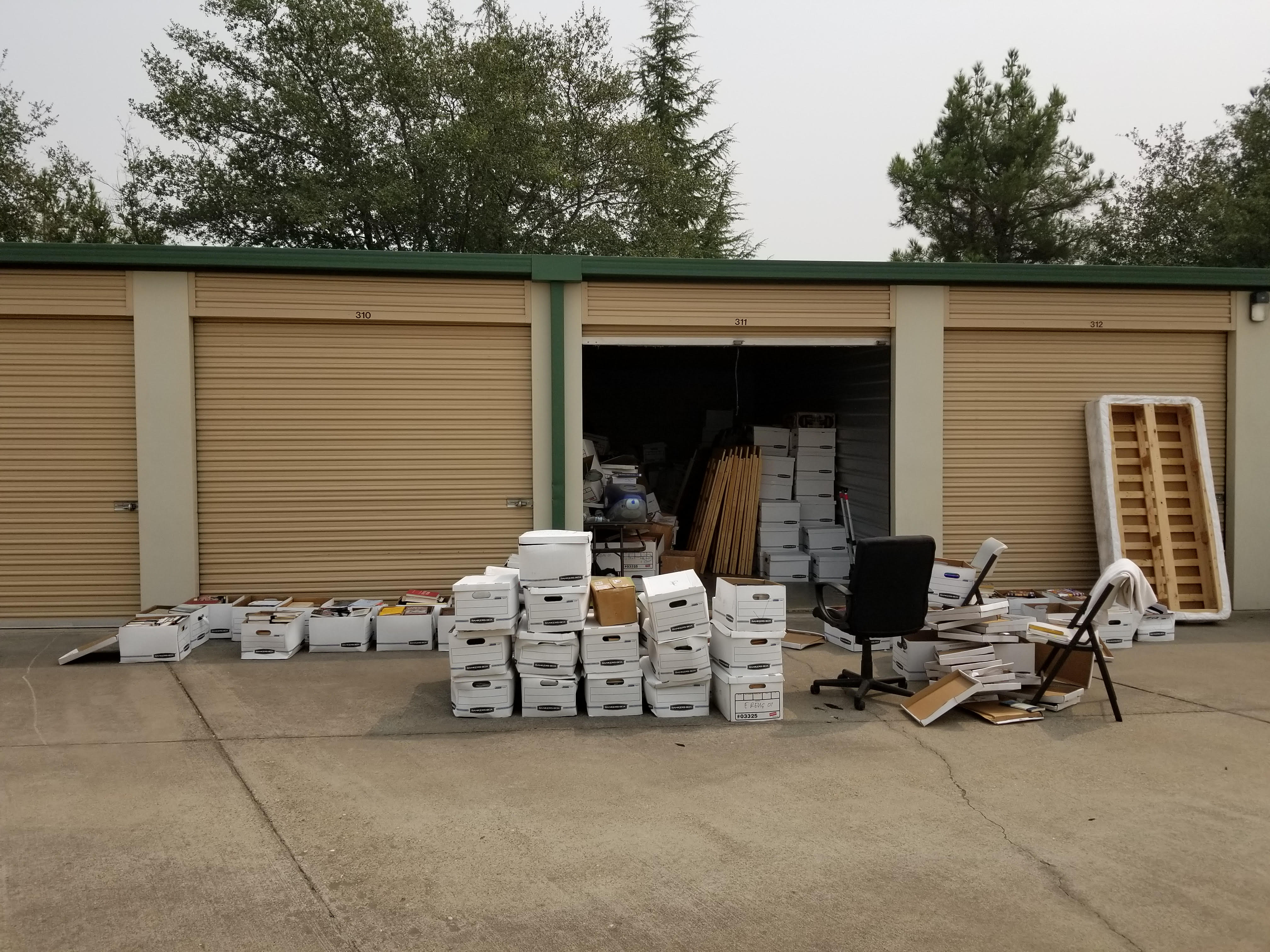
I had hope that, even though the time was short, I could unpack it all and look through everything, determining what to save and what to let go. I trusted in a certain urgent determination to sort it all out by force of will.
We spent several hours going through box after box: My father’s books on games and game theory; His collected Jung; his material on jihad; some boxes of papers he’d written or read on millennial cults and Y2K when he’d worked for a think tank; and his poetry.
I found most of what I’d hope to find, and, in an unconsidered addition, a small yellow book of the sheet music for the B-minor mass, which I kept. As I sorted, Mum would occasionally point out something I had taken no notice of and pull this aside. Then she’d tell me some new story about my father’s life I had not known.
I found, also, a surprising number of books on my own pet subject, the American Right. Not collected because of me (they well predated my interest in the topic) but because they had been of interest to my father in their own right, if more tangentially and some time ago. There were many more than I had anticipated, and I realized that they had been on his shelves for years, there to see all the while. Because I had not yet come into my own before I had gone away and his things had been transferred here, I had never noticed.
By the end of the first day of sorting we had gone through perhaps a third of what there was to uncover. We had spent a long time under the sun and, though the glare was not terrible yet, the heat still affected us, as did the smoke, and night was approaching.
Unable to keep everything that had been his, I opened an account with the same storage facility. It was smaller, but my own, and I took such as I could justify and moved it into my own keeping.
When we returned the air quality was rated Unhealthy and getting worse. I worked as fast as I could, but after a few hours we had only finished half the sorting and my chest had begun to tighten and my throat was feeling hoarse.
A friend — whose own father had died when we were all in High School and who gave me such counsel as he could — came to assist us. With his help I made what was inside more organized, if not fully inventoried.
My mum promised that she would go through it all with the antiquarian and if she saw anything she thought was important to keep she would do so. I gave her some suggestions and with regret shut the heavy metal door. I’d had my chance to make some sense of what had been left in my father’s wake and saved what I could, and I’d managed some but not nearly all of it. I felt a heavy sense of the inconclusive.
The next day I would have to fly back to New York and get some sleep before I started work again.
I could see the end of summer approaching. There was precious little to show for the year so far.
Father wouldn’t be around to see the change of colors in the fall, or the spring of new life out ahead.
That night Mum and I ate dinner together near the shuttered Goodwill. We ate in a restaurant that had monopolized my adolescent summer nights: Mel’s, a west coast phenomenon whose sock hop aesthetic is meant to be immutably quaint and familiar, embalmed in vinyl and fins.
Outside the coronavirus was still raging and the wildfires were still burning. But, the day I’d flown in the local restriction on indoor seating had been lifted.
The world was trying to go back to normal.