zenpundit.com » Glass Bead Game

Archive for the ‘Glass Bead Game’ Category

DoubleQuotes — origins

Sunday, October 11th, 2015

[ by Charles Cameron — IMO a really neat Zork-ish visualization game in one “passage”, albeit not in the least “twisty” ]
.

My first glimpse of the power of DoubleQuotes came to me after a visit to the Archives theological bookstore in Pasadena, where I had picked up a book by Haniel Long. I was reading it waiting for a bus to take me home, and ran across a paragraph that reminded me vividly of something else I had read. I had to get back to my bookshelves and find it. But which book?

It turned out to be a book by Annie Dillard — like Haniel Long, a fine and under-appreciated American stylist — and she wasn’t quoting Long, she had a styory of her own to tell..

**

Not long afterwards, I made a “visualization game” out of the two paragraphs, which I posted to a hermetic studies mailing-list on November 14, 1994:

Simply imagine this…

You walk along a white corridor. There are two framed texts, one on each side of the corridor, at eye level.

You stop and look at one of them, perhaps the one on the left, and read this quotation:

My friend Jens Jensen, who is an ornithologist, tells me that when he was a boy in Denmark he caught a big carp embedded in which, across the spinal vertebrae, were the talons of an osprey. Apparently years before, the fish hawk had dived for its prey, but had misjudged its size. The carp was too heavy for it to lift up out of the water, and so after a struggle the bird of prey was pulled under and drowned. The fish then lived as best it could with the great bird clamped to it, till time disintegrated the carcass, and freed it, all but the bony structure of the talon.

A note says this comes from the American writer Haniel Long’s book, Letter to Saint Augustine.

What does the citation say to you? Do you like the sense that hawk and carp are gripped in a mutual embrace, like the two hands drawing each other in an M.C. Escher print?

While you are reading this quote, your back is turned to the other. Do you turn round and read the second text?

If so, you find a second quote, this time from Annie Dillard’s book, Teaching a Stone to Talk:

And once, says Ernest Seton Thompson — once, a man shot an eagle out of the sky. He examined the eagle and found the dry skull of a weasel fixed by the jaws to his throat. The supposition is that the eagle had pounced on the weasel and the weasel swiveled and bit as instinct taught him, tooth to neck, and nearly won. I would like to have seen that eagle from the air a few weeks or months before he was shot: was the whole weasel still attached to his feathered throat, a fur pendant? Or did the eagle eat what he could reach, gutting the living weasel with his talons before his breast, bending his beak, cleaning the beautiful airborne bones?

The two texts have the same weight: their images (osprey, carp, weasel, eagle) mirror one another, their language is similar, the quotes are roughly the same length, there is even a parallel between the framing of the first story in terms of Jens Jensen and the second in terms of Ernest Seton Thompson. They are twins.

Standing between them can be like wearing stereophonic headphones.

You walk on towards the open doorway at the end of the corridor, on the right…

That post, with that pair of quotes from Long and Dillard, was the immediate precursor to my HipBone Games, providing me with an insight into what a single “move” in a Hesse-style Glass Bead Game might look like.

On the felicities of graph-based game-board design: four

Tuesday, September 8th, 2015

[ by Charles Cameron — cross-posted from Sembl — following parts 1, 2 and 3 with a fourth ]
.

Back in my student days, I used to have a three dimensional tic-tac-toe board, 4 x 4 x 4, made of plexiglas sheets with holes drilled in them, and using colored golf-tees for markers. I could play pretty well on that board, but these ones would drive me nuts — whether for tic-tac-toe or for HipBone / Sembl.

with a chaser:

And that’s what I call a DoubleTweet.

John Holland, RIP

Sunday, August 30th, 2015

[ by Charles Cameron — a Magister has departed ]
.

John Holland

**

I am saddened to hear that John Holland — the “father of genetic algorithms” — is no longer among us. Happily, I understand his passing was peaceful.

Obits:

  • Santa Fe Institute, Complexity science giant John Holland passes away at 86
  • Boston Globe, John H. Holland, 86; advanced study of complex adaptive systems
  • Washington Post, Goodbye to the genius who changed the way we think
  • New York Times, John Henry Holland, Who Computerized Evolution, Dies at 86
  • **

    I corresponded very briefly with John Holland, because of his interest in the Glass Bead Game — which he discussed in his Omni interview in connection with his own life’s work:

    I’ve been working toward it all my life, this Das Glasperlenspiel. It was a very scholarly game, starting with an abacus, where people set up musical themes, then do variations on it, like a fugue. Then they’d expand it to where it could include other artistic forms, and eventually cultural symbols. It became a very sophisticated game for setting up themes, almost as a poet would, and building variations as a composer. It was a way of symbolizing music and of building broad insights into the world.

    If I could get at all close to producing something like the glass bead game I can’t think of anything that would delight me more.

    See also:

  • Omni, And then there was A-Life
  • Wikipedia, John Henry Holland
  • h/t Mike Sellers

    As opposed to carnivores, militarily speaking

    Thursday, August 13th, 2015

    [ by Charles Cameron — discussing the Iran deal, Gershom Gorenberg introduces me to some Israeli slang ]
    .

    quote-everyone-s-a-pacifist-between-wars-it-s-like-being-a-vegetarian-between-meals-colman-mccarthy
    Source: izquotes.com

    **

    Gershom Gorenberg is a friendly acquaintance from Center for Millennial Studies days, and his book The End of Days: Fundamentalism and the Struggle for the Temple Mount is one I admire, and one that is becoming more and more relevant as the days and years pass. In an article for Prospect, What a No Vote on the Iran Deal Would Mean, he cites “veterans of [Israel’s] military and intelligence agencies” as “the most prominent dissenters from Netanyahu’s position” on the Iran agreement, detailing:

    There’s Shlomo Brom, ex-head of strategic planning in the Israeli general staff, who has debunked precisely the myths about the Vienna accord that fill Schumer and Sherman’s statements. Ami Ayalon, former commander of the Israeli Navy and ex-head of the Shin Bet security service, has stated that “when it comes to Iran’s nuclear capability, this [deal] is the best option.” Yuval Diskin, another former Shin Bet director, this week tweeted in Hebrew that he “identifies absolutely” with Thomas Friedman’s New York Times column on why Israelis should support the accord.

    He then admits bias — an unusual but welcome touch..

    Yes, I’m picking my experts (though if space and patience allowed, I could list many more).

    and gets to the remark that triggered my writing this post:

    What Ayalon, Brom, Diskin, and colleagues who have expressed similar views have in common is that — to use Hebrew slang — they’re not “vegetarians.” They know there’s sometimes no choice but to use military force.

    **

    There’s a ratio here that would please my fellow designer/explorer of a Glass Bead Game variant, Paul Pilkington, author of three lovely small books on the Glass Bead Game [1, 2, 3] with a fourth in the works:

    carnivore : vegetarian :: militarist : pacifist

    — or something along those lines.

    **

    Ron Hale-Evans, another GBG variant designer and the founder of the Ludism site, in his Kennexions variant on the Bead Game would take just such a ratio, and apply to it the rules by which the Norse poets derived their “kennings” — cunning sleights-of-phrase by which they applied poetic epithets in place of common nouns.

    As cantuse‘s post Dragonsilver: The True Nature and Purpose of Lightbringer tells us:

    A kenning is a phrase that generally refers to any compound word that describes in figurative language something which could be expressed in a single-word. The principle derives from Old Norse epic traditions.

    Ron suggests that “such an analogy provides four kennings possible (or at least permissible)”. In the case of the pacifist / vegetarian analogy, for instance, a carnivore would be kenned as a “vegetarian militarist”, a vegetarian as a “carnivore pacifist”, a militarist as a “pacifist carnivore”, and a pacifist as a “militarist vegetarian”.

    The phrasing my seem awkward at first, but the kennings based on the analogy:

    sea : whale :: road : horse

    gave the Norse poets the poetic turns of phrase “whale road” for the sea, “sea horse” for the whale, “horse sea” for a road, and “road whale” for the horse, all of which make a fair amont of sense. And once you get the hang of it, you can think not just in ratios but in kennings, as the mind adapts to seing the binary oppositions (vegetarian / carnivore) as well as the paralellisms (vegetarian / pacifist) as a matter of course when encountering phrases such as “carnivore pacifist”.

    Ron, if you’d care to update or correct me on Kennings / Kennexions, please feel free to do so — Paul, likewise with my use of ratios.

    **

    Since analogy lies at the heart of both cognition and creativity, it would be interesting to see what impact the habit of thinking in Paul’s ratios or Ron’ss kennings, if taught in schools, would have on creative thinking and, frankly, mathematics. I have the suspicion that..

    ratios : kennings :: algebra : geometry

    — but what do I know?

    **

    And what of the Iran nuclear deal, and all those Israeli natsec experts?

    Intriguing DoubleTweet variants & more

    Monday, August 3rd, 2015

    [ by Charles Cameron — also genetics, genetic algorithms and John Holland on the glass bead game ]
    .

    An abstract DoubleQuote:

    Thi9s is like one of my DoubleQuotes boards, empty — the reader is incited to fill in the blanks. And —

    A Skew DoubleQuote:

    **

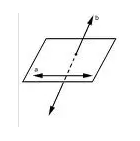
    Parallelism is a pretty obvious form of linkage, opposition is almnost the same, yet also sharply distinct — and there’s the style of linage where two ideas could be be described as in oblique relation, intersecting, but not in direcxt opposition or parallelism. And then, then there’s the situation where wo ideas, two lines of thought, may pass quite close by one another, without intersecting- – ideas that pass in the night — in a manner that would be oblique if they were in the same plane, but they’re not – skew ideas?

    I’m using the definition of skew that says “Skew lines lie on separate planes, they are not parallel, they do not intersect” — as illustrated here:

    skew lines

    Poets love skew links between thoughts, for the leaps they embody:

    Li Po drowning, drunk, into the moon reflected in the Yellow River. Crazy? Crazed. Amusing? Mused.

    **

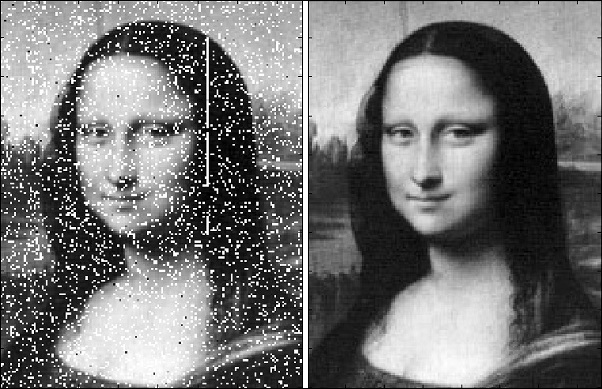
    Bryan Alexander alerted me to the bead game matter. You may need to read the whole article, The Codes of Modern Life by Alex Riley to understand how Reed-Solomon codes allow for the nifty correction of errors in complex messages:

    rs-mona-lisa

    but what led Bryan to cc me in on the discussion was the passing mention that DNA-stored data could best be protected bu encasing the DNA encapsulated in “microscopic beads of glass” — cue the Glass Bead Game by Hermann Hesse:

    DNA in glass beads

    **

    While on the subject of genetics, it’s worth recalling once again that John Holland, the “father” of genetic algorithms, once told interviewer Janet Stites:

    I’ve been working toward it all my life, this Das Glasperlenspiel. It was a very scholarly game, starting with an abacus, where people set up musical themes, then do variations on it, like a fugue. Then they’d expand it to where it could include other artistic forms, and eventually cultural symbols. It became a very sophisticated game for setting up themes, almost as a poet would, and building variations as a composer. It was a way of symbolizing music and of building broad insights into the world.

    If I could get at all close to producing something like the glass bead game I can’t think of anything that would delight me more.


    Switch to our mobile site