zenpundit.com » 2011 » April

Archive for April, 2011

Porter at Infinity Journal

Friday, April 8th, 2011

Infinity Journal has added a more “blog-like” or “column-like” section to cover events within a contemporaneous frame in addition to their peer-review articles which come out quarterly (or perhaps bimonthly) more contemporaneous peer reviewed articles, oriented toward current events, in addition to their quarterly publication of the journal . Dr. Patrick Porter of Offshore Balancer ( and King’s College) has the maiden post with a provocative piece:

Exclusive: Lost in Libya: The UK does not understand strategy

The limited war of 2011 would refuse to be quarantined. After all other options were exhausted, it could culminate in a land war against Tripoli. Distressingly, we would shoulder the burden of invading, pacifying and administering this country. Occupation would probably lead to resistance – and Libya propelled more foreign-born jihadi volunteers into Iraq than any other nation. A new front in the War on Terror would open up. Idealists now calling for humanitarian rescue would discover that all along they opposed Western imperial hubris….

Free registration required. 

Admittedly, I stole the excerpt above from SWJ Blog – the online format of IJ makes it difficult for bloggers to quote sections of articles by copying and pasting into blog posts. This probably cuts down on the velocity and extent of IJ articles circulating in the .mil/strategy/foreign policy online world (blogosphere, twitter, listservs). OTOH the editors may not care as it probably reduces the amount of inane vs. informed criticism as well 🙂

In any event. Dr. Porter’s article is worth reading.

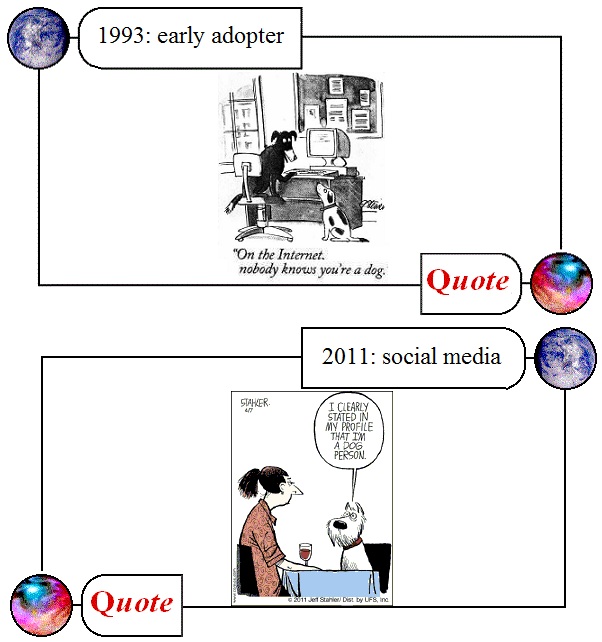
It’s a dog’s life

Friday, April 8th, 2011

[ by Charles Cameron — cross-posted from ChicagoBoyz ]

General Sam on the Battle of Saylers Creek

Thursday, April 7th, 2011


Callie Oettinger alerted me to some reflections on Civil War history by one of the fathers of Delta Force, LTG Samuel Vaughan Wilson over at Command Posts:

Memories of the Battle of Saylers Creek

I remember the holes in the wood siding of Lockett House, where my grandmother, Lucy Lockett was born and raised. The holes were made by mini balls fired by both sides.  There were thirty-two of them in the front side of the house alone, along with four larger scars made by cannon balls.

In the course of the battle, the farmhouse had been turned into a hospital for both the Northern and Southern forces, and Lucy Lockett’s young niece, Mamie Lockett, had spent most of the fight crouched on a pile of last fall’s potatoes there on the floor of the basement, her tiny frame shielded by that of her nanny’s.

When I would visit her in the early 1930’s, “Cousin Mamie-we sometimes called her “Aunt Mamie”-would sit there in the front parlor rocking and holding on to her cane, and, if I was patient and kept quiet long enough, she would talk about the battle of Saylers Creek, which shattered Lee’s Army of Northern Virginia on the way to Appomattox Courthouse.

“After a while,” she would say….

Read the rest here.

The Year of Living Memory

Wednesday, April 6th, 2011

[ by Charles Cameron ]

*

Some people’s — and more to the point, some peoples’ — living memory appears to be longer than others. China, for instance, has what you might call long term living memory.

*

But first, the Crusades. When Bush 43 first used the word “crusade” in reference to the US response to 9/11, I went to Google and checked, and the first listing for “crusade against” that came up was to The Crusade Against Dental Amalgam. I’m the suspicious type, and as I suspected, the word “crusade” simply doesn’t have the same valence for most twenty-first century Americans that it has for many in the twenty-first century Arab world. In the US, a crusade is a concerted effort to change just about anything, the use of mercury in dental fillings being just one example.

Across the Arab world, however, the word has very different connotations: thus Amin Maalouf writes in The Crusades through Arab Eyes:

The Turk Mehmet Ali Agca, who tried to shoot the pope on 13 May 1981, had expressed himself in a letter in these terms: I have decided to kill John Paul II, supreme commander of the Crusades. Beyond this individual act, it seems clear that the Arab East still sees the West as a natural enemy. Against that enemy, any hostile action — be it political, military, or based on oil — is considered no more than legitimate vengeance. And there can be no doubt that the schism between the two worlds dates from the Crusades, deeply felt by the Arabs, even today, as an act of rape.

That’s long term living memory for you.

*

I’m writing this because I just read a fascinating article by Robert Barnett on the New York Review of Books blog titled The Dalai Lama’s ‘Deception’: Why a Seventeenth-Century Decree Matters to Beijing — need I say more?

The title will suffice for those who don’t have much time today — I understand, we’re all under the fire-hose one way or another — while those with the ability to sneak in ten or fifteen minutes laterally while the clock’s not watching can and should definitely read the whole thing…

*

I have just one side-observation though — the article tells us, among many other things directly relating to Tibet and the history of the Dalai Lamas:

And again, when Jiang Zemin made a brutal decision to annihilate the basically harmless Falungong cult in 1999, it is believed that he saw it as analogous to the religious movement that had started the Taiping Rebellion and nearly toppled the Qing in the mid-19th century.

I think that’s right — but what Barnett doesn’t mention, since Taiping is only an aside for him, is that the rebellion was only eventually quelled at the cost of between twenty and thirty million lives…

I mentioned my own hunch that memories of Taiping were behind the Chinese government’s fierce response to Falun Gong in question time after Ali A Allawi‘s talk on Mahdist movements in Iraq at the Jamestown Foundation a few years back, and he responded that similarly, the reason the Iraqi government took such fierce action against a small Mahdist uprising near Najaf — even calling in US air support as I recall, for an incident perhaps best compared in US terms with Waco — was that they remembered the Babi movement in their own neck of the woods, and the tens of thousands who died back in the 1850s, around the same time as the Taiping in China.

*

Living memory — which could almost be a definition of history, or at least of what historical research aims to create — can itself be long term or short, perishable or perennial.

And then there’s Psalm 90, which declares “For a thousand years in thy sight are but as yesterday when it is past, and as a watch in the night.”

Now (and I’m being playful here, albeit with a touch of serious intent) does that suggest a Memory that reaches back in perfect detail through the eons to the Big Bang and perhaps before it? Or … “twentieth century? nineteenth? the Crusades?.. it’s all a bit of a blur, I’m afraid — it all rushes by so fast…”

*

There seems to be a choice set before us as individuals — and more to the point, as peoples:

Shall we choose Lethe, and the restfulness of oblivion, or Mnemosyne — the mother of all Muses? There are, you know, immediate educational implications, and serious geopolitical implications down the road, for the choice we make…
Carl Prine interviews Don Vandergriff

Wednesday, April 6th, 2011

Investigative reporter, Iraq veteran and Military.com columnist/blogger Carl Prine has an excellent interview with blogfriend Don Vandergriff at Prine’s Line of Departure:

Not So Quiet Goes the Don!

….DON VANDERGRIFF: Yeah. Well, it goes back to the competency approach – Leave No Child Behind.

It’s like training for the test or rote memorization. And that’s what PowerPoint is. It’s a tool of the competency theory of education, if you think about it.

There’s no thought being put into it. It follows a format. People find out what the boss likes to see and they put it into that format. They depend on that. Because – as you and I know- if you really know what you’re talking about, they get up there and just tell it.

PRINE OF DEPARTURE: You and I have known each other for years. And we’ve been talking about “Careerists” and what they do to a military culture.

And the reason why I ask this is because there’s this young captain who I really respect. He’s one of the best young captains I’ve ever met. And he asked me, “Carl, how do you define a ‘careerist?’ What is a ‘careerist?'”


DON VANDERGRIFF: A “Careerist” is a courtier. All he’s interested in doing is flattering the King. Courtiers form together and you get “groupthink.”

There are a lot of problems that come from Careerists. A Careerist is someone who puts self before service. A Careerist doesn’t understand that by making your subordinates better than you are, you’re actually making your entire organization better.

PRINE OF DEPARTURE: And you’re making yourself better.

DON VANDERGRIFF: Right.

DON VANDERGRIFF: To get to the bottom line, it’s selfish leadership….

Read the rest here.


Switch to our mobile site