The Colombianization of Mexico
Saturday, April 11th, 2009
One of my Twitteramigas pointed this out. A re-post from STRATFOR:
….Then there is a third war being waged in Mexico, though because of its nature it is a bit more subdued. It does not get the same degree of international media attention generated by the running gun battles and grenade and RPG attacks. However, it is no less real, and in many ways it is more dangerous to innocent civilians (as well as foreign tourists and business travelers) than the pitched battles between the cartels and the Mexican government. This third war is the war being waged on the Mexican population by criminals who may or may not be involved with the cartels. Unlike the other battles, where cartel members or government forces are the primary targets and civilians are only killed as collateral damage, on this battlefront, civilians are squarely in the crosshairs.
There are many different shapes and sizes of criminal gangs in Mexico. While many of them are in some way related to the drug cartels, others have various types of connections to law enforcement – indeed, some criminal groups are composed of active and retired cops. These various types of criminal gangs target civilians in a number of ways, including, robbery, burglary, carjacking, extortion, fraud and counterfeiting. But of all the crimes committed by these gangs, perhaps the one that creates the most widespread psychological and emotional damage is kidnapping, which also is one of the most underreported crimes. There is no accurate figure for the number of kidnappings that occur in Mexico each year. All of the data regarding kidnapping is based on partial crime statistics and anecdotal accounts and, in the end, can produce only best-guess estimates. Despite this lack of hard data, however, there is little doubt – based even on the low end of these estimates – that Mexico has become the kidnapping capital of the world.
….Between these extremes there is a wide range of groups that fall somewhere in the middle. These are the groups that might target a bank vice president or branch manager rather than the bank’s CEO, or that might kidnap the owner of a restaurant or other small business rather than a wealthy industrialist. The presence of such a broad spectrum of kidnapping groups ensures that almost no segment of the population is immune from the kidnapping threat.
Colombia went through a similar cycle, opportunistic criminal gangs taking advantage of the accelerating civil war between the Colombian government, FARC and ELN in order to kidnap 25,000 + people per year. We can speculate that this state of affairs, where the civilian population was being chronically terrorized, was a precursor to the formation of the AUC Loyalist paramilitaries by the small businessmen and big landowner class, and promptly began clearing rural areas and small towns of rebels, rebel sympathizers, habitual criminals and family members of the same by savagely killing them off.
I will wager that Mexico is going to hit this phase in less than a year.

 and
and  , had an op-ed in
  has a more general implication:
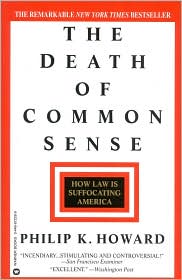 Suffocating America
 in which he detailed example after example of how the overlawyering of regulatory systems in America by an emerging and hyper-aggressive legal class was producing neither restraint on government abuses nor fine-tuned social outcomes but instead created a state of paralyzed rigidity, risk aversion, perverse incentives and general dysfunction; in other words, chaos instead of order.
 by
by . Col. Osinga credits Boyd associate Dr. Grant Hammond and The Mind of War with introducing him to the ideas of John Boyd and inspiring him in his own intellectual journey as a student to try to understand and explain Boyd’s strategic theories.
 , Hammond enjoyed the advantage of having had a personal and intellectual relationship with Col. Boyd, one that Hammond called “Transforming”. This gives Hammond’s shorter biography insights into how Boyd’s mind worked that Coram and Osinga miss (or more properly, could not have known), including the “perverse glee” Boyd felt in discovering and exploring the Darwinian mismatch between perception and unfolding reality. While Robert Coram wrote about the demanding aspect that collaborators sometimes felt when dealing with the relentlessly autodidactic John Boyd, who could call at any time of the day or night and talk for hours, Hammond was actually on the receiving end of this treatment for six years:
 , Ernst Mayer’s
  , Gerard Radnitsky and W.W Bartley’s edited collection entitled
  (focus on particularly on Karl Popper’s essay and that of Donald T. Campbell) and Stuart A. Kauffman’s
  .
. emerging threat. Current efforts from the F-22 and the Future Combat System appear to be particularly out of step with the evolving environment. Smaller and more efficient systems such as unmanned aerial vehicles and coordination systems built on open platforms (as in a Intranet) that alloworganic growth in complexity make much more sense.

