zenpundit.com » recommended reading

Archive for the ‘recommended reading’ Category

Recommended Reading

Monday, December 14th, 2009

The Journal/e-zine edition….always gotta change it up 😉

American DiplomacyThe Arab as Insurgent” – Norvell DeAtkine

….In a widely quoted book among senior Arab military professionals, The Qu’ranic Concept of War, Pakistani general, S. K. Malik has written that “war is the cause of God” and not a calamity to be avoided.  There is much in this book that would promote unconventional war, including the importance of total war concepts, the use of terror to strike fear into the hearts of the enemy, the use of psychology, using economic tools, and as he wrote, avoiding “the kid gloves” approach to war.  For many pages he details the strategy promoted in the Qu’ran, mostly based on the early wars of the Prophet and his followers against the “apostates.” In other passages he extols the early Muslim armies’ ability to fight on favorable terrain, at a time of their choosing, and using deception and intelligence to gain advantage over the enemy.  Echoing a theme written by T. E. Lawrence, the principal aim in warfare is to win “bloodless battles” by convincing the enemy of the futility of resistance

SSI “Schools for Strategy: Teaching Strategy for 21st Century Conflict ” –  Dr. Colin S. Gray

Because strategic performance must involve the ability to decide, to command, and to lead, as well as the capacity to understand, there are practical limits to what is feasible and useful by way of formal education in strategy. The soldier who best comprehends what Sun-tzu, Clausewitz, and Thucydides intended to say, is not necessarily the soldier best fitted to strategic high command. It is important to distinguish between intellect and character/personality. The superior strategist is ever uniquely a product of nature/biology, personality/psychology, and experience/opportunity. Nonetheless, formal education has its place.

Strategic genius is rare, strategic talent is more common, though still unusual. The latter can be improved by formal education, the former most probably cannot. However, there is merit in the educational aspiration to help educate instinct for a better performance.

Marine Corps Gazette– “Where Is Our Kilcullen?: Professional relevance as a result of education” – LT.Col. Michael D. Grice

That is not to say that the Marine Corps hasn’t produced brilliantly intellectual officers. Pete Ellis, the eccentric but brilliant mastermind who not only predicted war with Japan 20 years before it was fought but had the foresight to provide the operational plans to win it, is one Marine who comes to mind. Victor “Brute” Krulak, an enormously influential Marine whose book, First to Fight, is required reading by every Marine, is another. More recently, the intellectual talents of LtGen P.K. Van Riper and Gen James N. Mattis have had enormous impacts on the Marine Corps. We have brilliance within our ranks; that is inarguable. What we do not have, however, is a systemic way to develop and educate officers to a level consistent with our Army, Navy, Air Force, and coalition counterparts.

Studies in Intelligence – “Thinking About the Business of Intelligence: What the World Economic Crisis Should Teach Us“- Carmen Medina and Rebecca Fisher

Lesson 2: We are overly sanguine about how close our information and intelligence sources approximate reality.

“Our understanding of causality and sequence leaves much to be desired.”

The second lesson from the global financial crisis is that economists thought their limited data accurately reflected reality. Famously, many of the financial houses in New York quantified their risk positions using algorithms that “assumed away” the very conditions that led to the crisis. In addition, as blogger and CNBC commentator Barry Ritholtz has noted, many of the actions that precipitated the crisis were hidden even to the most careful observers; what was in essence a “run” on the world’s largest financial institutions didn’t occur in the physical world-it happened as people pulled the virtual plug on their investments in the privacy of their own homes.

The Wilson Quarterly Robots at War: The New BattlefieldPW Singer

….Lawrence J. Korb is one of the deans of Washington’s defense policy establishment. A former Navy flight officer, he served as assistant secretary of defense during the Reagan administration. Now he is a senior fellow at the Center for American Progress, a ­left-­leaning think tank. Korb has seen presidential administrations, and their wars, come and go. And, as the author of 20 books and more than 100 articles, and a veteran of more than a thousand TV ­news-­show appearances, he has also helped shape how the American news media and public understand these wars. In 2007, I asked him what he thought was the most important overlooked issue in Washington defense circles. He answered, “Robotics and all this unmanned stuff. What are the effects? Will it make war more likely?”

Korb is a great supporter of unmanned systems for a simple reason: “They save lives.” But he worries about their effect on the perceptions and psychologies of war, not merely among foreign publics and media, but also at home. As more and more unmanned systems are used, he sees change occurring in two ways, both of which he fears will make war more likely. Robotics “will further disconnect the military from society. People are more likely to support the use of force as long as they view it as costless.” Even more worrisome, a new kind of voyeurism enabled by the emerging technologies will make the public more susceptible to attempts to sell the ease of a potential war. “There will be more marketing of wars. More ‘shock and awe’ talk to defray discussion of the costs.”

The Wilson Quarterly – “Rediscovering Central Asia” – S. Frederick Starr

In AD 998, two young men living nearly 200 miles apart, in ­present-­day Uzbekistan and Turkmenistan, entered into a correspondence. With verbal jousting that would not sound out of place in a ­21st-­century laboratory, they debated 18 questions, several of which resonate strongly even ­today.

Are there other solar systems out among the stars, they asked, or are we alone in the universe? In Europe, this question was to remain open for another 500 years, but to these two men it seemed clear that we are not alone. They also asked if the earth had been created whole and complete, or if it had evolved over time. Time, they agreed, is a continuum with no beginning or end. In other words, they rejected creationism and anticipated evolutionary geology and even Darwinism by nearly a millennium. This was all as heretical to the Muslim faith they professed as it was to medieval ­Christianity.

Few exchanges in the history of science have so boldly leapt into the future as this one, which occurred a thousand years ago in a region now regarded as a backwater. We know of it because a few copies of it survived in manuscript and were published almost a millennium later. ­Twenty-­six-year-old Abu ­al-­Rayhan al-Biruni, or al-Biruni (973-1048), hailed from near the Aral Sea and went on to distinguish himself in geography, mathematics, trigonometry, comparative religion, astronomy, physics, geology, psychology, mineralogy, and pharmacology. His counterpart, Abu Ali Sina, or Ibn Sina (ca. 980-1037), was from the stately city of Bukhara, the great seat of learning in what is now Uzbekistan. He made his mark in medicine, philosophy, physics, chemistry, astronomy, theology, clinical pharmacology, physiology, ethics, and even music. When eventually Ibn Sina’s great Canon of Medicine was translated into Latin, it triggered the start of modern medicine in the West. Together, the two are regarded as among the greatest scientific minds between antiquity and the Renaissance.

National Defense – Marines Use Simulations To Hone ‘Critical Thinking’ Skills – Grace V. Jean 

Before sending them to war, the Corps puts units through a pre-deployment exercise called “Mojave Viper” at Twentynine Palms, Calif. The simulated battle gives marines a chance to test their cognitive decision-making skills against live actors who role-play tribal leaders, civilians and insurgents. With the digital trainer, “we can better prepare the unit or leader for that live exercise through some of these other tools, and give them an opportunity to rehearse and remediate through numerous repetitions,” said Lt. Col. Dave Lucas, program manager of Combat Hunter.

….The interactive program walks students through a number of scenarios in which they are asked to interpret what is going on and to look for clues that can tip them off to potential threats. For example, if troops are arriving in an area for the first time, they can look at the townspeople’s body language to learn about their attitudes. Details such as whether they are standing in an open or closed posture, exposing the soles of their feet – an insult in many Middle Eastern cultures – or making eye contact are subtle but crucial signs of friendliness or hostility.

ISN Mexican Cartels Recruit Texan Teens – Samuel Logan

Teenage assassin

Rosalio Reta, also known as “Bart,” worked for Miguel Treviño, the second in command of Los Zetas, one of Mexico’s most powerful criminal organizations. Based in Nuevo Laredo, Triveño oversaw the movement of drugs through his city into the Texan city of Laredo and destinations beyond, across the eastern half of the US.

Reta likely never met Treviño, but did spend enough time in the bars of Nuevo Laredo to meet one of Treviño’s recruiters, someone on the lookout for young American kids interested in earning a little money on the side. Reta, however, was not hired to work as a mule, the most common job for new recruits. He was hired to kill; and as court documents revealed, he killed for the first time when he was 13, in 2000 or 2001.

As he grew into his assassin role, eliminating targets for Treviño on both sides of the border, Reta began earning between $5,000 and $50,000 a hit. He sometimes received a bonus – a kilo or two of pure cocaine – and at the very least received a $500 weekly retainer fee just so he was available when his Mexican handlers called.

That’s it!
Stocking Stuffers……

Saturday, December 12th, 2009

In a burst of raw self-interest – and also a little love for my blogfriends – these books make nifty gifts for any war nerd or deep thinker on your Christmas list:

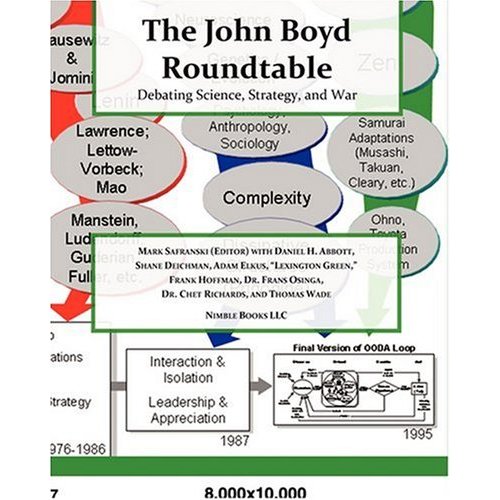
The John Boyd Roundtable: Debating Science, Strategy, and War – Mark Safranski (Ed.)


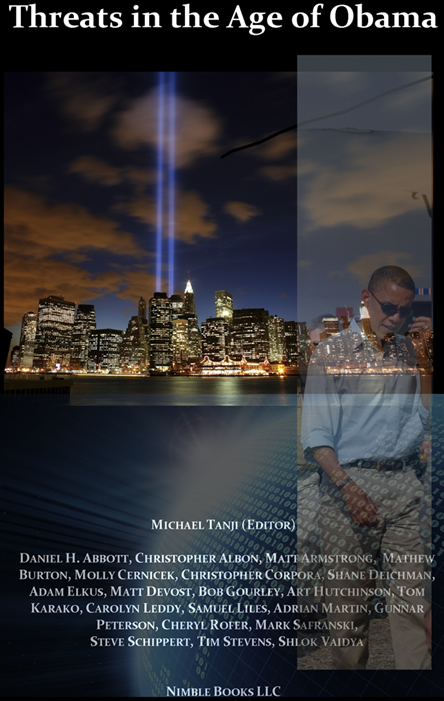
Threats in the Age of Obama – Michael Tanji (Ed.)

Great Powers: America and the World After Bush – Thomas P.M. Barnett

Brave New War: The Next Stage of Terrorism and the End of Globalization – John Robb

Science, Strategy and War: The Strategic Theory of John Boyd – Frans Osinga


The Genius of the Beast: A Radical Re-Vision of Capitalism  by Howard Bloom

Intelligence and How to Get It: Why Schools and Cultures Count  by Richard Nisbett

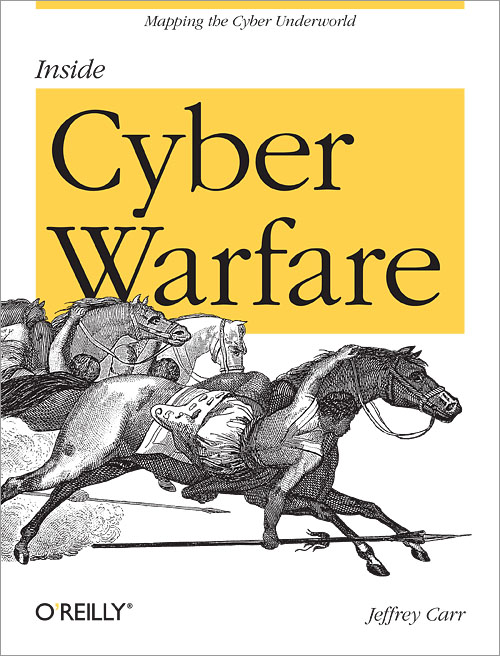
Inside Cyber Warfare: Mapping the Cyber Underworld  by Jeffrey Carr

This Is for the Mara Salvatrucha: Inside the MS-13, America’s Most Violent Gang  by Samuel Logan

Full Disclosure:

In copmpliance with new Federal regulations of dubious Constitutional merit, I hearby declare ZP does not accept money for publishing reviews or any paid advertising. Courtesy review copies were extended to me by authors or publishers acting on behalf of Sam Logan, Tom Barnett and Jeff Carr. I edited the first book in this post and was a contributing author to the second one. All of the books, with the exception of Cyber Warfare have been the subject of prior reviews or posts at ZP.

Shorter Recommended Reading

Monday, December 7th, 2009

I’m pretty tired, megaproject due on Monday which I finished a few hours ago, but I have not done one of these posts in a while.

TopBilling! HG’S World600 Years of Naval Strategy

It’s a big post, as befits six centuries of history and strategy:

The key point of the article focuses on the real goal behind the theory of sea power by Captain Alfred Thayer Mahan. Their point is that Mahan saw maritime strategy in these terms.

Naval preparedness is the sharp edge of maritime strategy, then, but it is only a means to an end. For Mahan, commerce was the true path to affluence and national greatness: “War has ceased to be the natural, or even normal, condition of nations, and military considerations are simply accessory and subordinate to the other greater interests” they serve.17 Prosperity took precedence. The “starting point and foundation” for comprehending sea power was “the necessity to secure commerce, by political measures conducive to military, or naval strength. This order is that of actual relative importance to the nation of the three elements-commercial, political, military” (our emphasis).

This is why nations covet access to faraway regions like Asia. In essence, commerce is about unfettered access to the means for producing wealth and national power. Reliable access is impossible without the military means to protect it, and to keep others from denying it. Mahan thus advances a tripartite concept, which we call his first “trident” of sea power. Access to sources of economic well-being-foreign trade, commerce, and natural resources-ranks first within the Mahanian trident, military access third. This cuts against the usual, military-centric understanding of Mahan.

I immediately took notice of this passage because during my recent trip I visited the Ming Dynasty Tombs, where 13 of the 16 Ming Emperors are buried. The Changling tomb of the third Ming Emperor, Yongle Emperor, has an exhibit that traces the acomplishment of this emperor, now considered one of the greatest in Chinese history. One exhibit is given prominence, and is centered to draw attention to Admiral Zheng He who under the sponsorship of Emperor Yongle led seven naval expeditions between 1405 and 1433.

….What was the motivation for these voyages? Not global conquest or imposition of their political system on their neighbors. The goal was to support the tributary system and promote trade and commerce. Historians are somewhat divided on why China ended the voyages and imposed the Hai jin order banning maritime activities. One thing is certain, today’s China appears poised for the first time in 600 years to reach a level of power equal to the early Ming Dynasty.

How does this all square with Alfred T Mahan’s theory? Let us look at the Yongle Emperor’s goal. He wanted to gain respect and demonstrate to those in the extended region that China was the superpower because she controlled the seas. The result, would be tribute and commerce leading to prosperity and continued “national greatness” for China. A great plan, but in a world of a belief in the Mandate of Heaven manipulated by palace Eunuchs fate deemed a different result.

Read the rest here.

One more Naval appraisal, I  really liked this post by Galrahn at Information Dissemination:

Screening Asymmetrical and Symmetrical Threats at Sea

What exactly is asymmetrical about submarines, smaller missile boats, mines, aircraft, and/or land-based missile systems? Swarm tactics with small boats does not represent an asymmetrical military capability, rather it represents a symmetrical naval tactic that is well chronicled as far back as Themistocles.

The way this Office of Naval Intelligence report describes Iranian capabilities as “asymmetrical” does not encourage me, because it essentially groups equipment and tactics that are common among small nations – littoral submarines, missile boats, mines, shore based anti-ship missiles – as an asymmetric military capability. That is fundamentally inaccurate, these capabilities are symmetrical even as these capabilities specifically target what is seen as a weakness in US Navy Fleet forces.

All of these naval capabilities – littoral submarines, missile boats, mines, shore based anti-ship missiles – are simply exploiting the absence of a single naval element of combat in the US Navy:

Normally, I do not like to weigh in on maritime matters, there’s a lot to know there and it is not my area of expertise or more than a passing interest but I think Galrahn has hit on a stubborn lacuna among the flag officers. Lt. Gen. Paul van Riper more or less kicked the Navy’s collective ass so badly in that infamous wargame years ago, that the need for smaller, screening, combat vessels should be a problem en route to being solved by now. Calling attacks from small vessels and missiles “asymmetreic” seems to mean in Navyspeak “If we call it this an ‘asymmetric threat’ then we don’t have to buy those goddamn little brown water boats like Martin Sheen was riding in Apocalypse Now!“.

Adam Elkus and Lt. John Sullivan on borders and 3rd  Generation gangs ramping up security threats.

Fun with dinosaurs.

Eide Neurolearning BlogOrchid Kids: The Positives of Intense and Demanding Children

Shepherd’s PiA-Space Past and Future

For IC and Social Media -philes.

In HarmoniumSome thoughts on Anthropology as a “Science”

That’s it!

Recommended Reading

Monday, November 16th, 2009

Excellent, excellent stuff today.

Top Billing!  William F. Owen (AFJ)The War of New Words

This is a much discussed article by SWC stalwart and military consultant, Wilf Owen:

…..Hybrid threats have always existed, but previously we called them “irregulars” or “guerrillas”; both words, in this context, are more than 180 years old. The definition of hybrid threats as “a combination of traditional warfare mixed with terrorism and insurgency” accurately describes irregulars and guerrillas, both of which can be part of either an insurgency or a wider conflict. Yes, guerrillas have changed over time. So have regular forces. Armies of 1825 looked very different from those of 1925 or 1975, yet all were regular forces. Do we need a new word for regular or “conventional” forces? “Hermaphrodite” perhaps?

The most common attempt to redefine the activities of irregular forces and guerrillas has been the using the word “asymmetric,” predicated on trying to describe a dissimilar employment of ways and means that was apparently new. Yet history does not support this thesis, nor does it usefully inform thinking about the future.

The use of the word “hybrid” implies that there is some new phenomenon that requires new codification. If you want to testify before Congress that the U.S. armed forces must have the ability to confront and defeat guerrillas and irregulars, then that advice has been valid for 200 years. Why is it different today?

Those who use the word “hybrid” also tend to use the word “complex” when describing contemporary warfare. This raises the question: When was warfare ever simple? Contemporary warfare is no more complex than historical warfare.

It may be that there is a generation of serving soldiers who do not understand war and warfare as well as past generations, but that is not to say that war today is more complex. The Internet does not make warfare more complex. TV coverage does not make war more complex. Public opinion does not make war more complex. If the root of the argument is that society is becoming more complex, therefore warfare will be more complex, then 20 years from now it will become supercomplex or hypercomplex. Obviously, this is rubbish.

Wilf is an arch-Clausewitzian and he is taking his SWJ amigo Frank Hoffman to task here, along with the 4GW school, EBO advocates, Network-centric Warfare, the COINdinistas, Martin van Creveld, John Boyd, John Robb and pretty much every military theorist since maybe von Moltke the Elder. I enjoy Wilf’s commentary and he has at times, been kind enough to contribute to my projects or engage me in debate. While I can say that I have learned from his insights, on some matters he’s completely wrongheaded and we are never going to agree. Wilf is, however, a great read.

John Robb –  IS THE US DoD LOCKED IN AN IVORY TOWER?

The other reason, and this explains the innovation gap, is that most commercial innovation requires an ability to: synthesize strands of complex analysis that span multiple fields of endeavor, plow through ambiguous or messy data in real-time without pause, and flexibly respond to rapidly changing events.  In short, everything a PhD is trained NOT to do, at risk of professional suicide.

Yes. In fairness, I will add some caveats to John’s point. First, his argument applies most to PhD’s on the tenure track in universities or university-like settings. Secondly, there are brilliant PhD’s out there who are fantastic synthesizers and original thinkers. They just happen to drive most of their more orthodox colleagues nuts or be the notorious “black sheep” of the institution ( and they are markers for “X” number of similar iconoclasts driven out of programs or positions).

ProceedingsCol. TX Hammes, Maj. William McCallister, Col. John CollinsAfghanistan: Connecting Assumptions and Strategy

Thomas P.M. BarnettThe New Rules: Why America’s War on Drugs Will Wane and Remember, Hirohito was the bad guy, not Harry

Bruce KeslerThe Nuclear Strategy To Neuter The US

The Obama administration policy on nukes is driven by a dangerous idealism that, if carried to the logical conclusion desired by anti-nuclear activists, breaks open the Pandora’s Box of great power war that was sealed shut in the nuclear fires of 1945.

John HagelPursuing Passion

Eide Neurolearning BlogLazy Thinkers and Dysrationalia

Network WeavingThe Power of Network Weaving

ZIA Network Formation and Collective Action

IntelfusionThis is what fuels RF and PRC Cyber Operations

SWJ Blog Bing West –  Afghanistan Trip Report

 ….I’d like to share a few thoughts. By way of context, let me state my frame of reference. As a former assistant secretary of defense for international security, I am familiar with Washington dynamics; but I believe COIN is decided at the small unit level, not in national capitals. I was 18 months in Vietnam, have written five books on COIN and made 20 trips to Iraq and Afghanistan. This was my third Afghanistan visit in quick succession (April-May, June-July and October). My observations are based on forty to fifty shuras and patrols – several on extended missions – that included numerous small-arms engagements and fire missions. I talked with about 500 Marines and Afghan security forces of all ranks. The observations here are derived from that sample

West is also the author of The Strongest Tribe: War, Politics, and the Endgame in Iraq.

Groupintel – Adam ElkusHype, Social Media, and Networked Social Movements

Adam is spot on here. Twitter v. North Korea….would not be a good ending.

Haft of the SpearOn Leaping and Looking

The voice of experience.

That’s it!

Recommended Reading

Monday, October 26th, 2009

Top Billing! WIRED (Michael Tanji) – Spies Protest After Intel-Sharing Tools Shut Down

Having the worst intelligence failure in American history on their watch is no reason that the IC old guard can’t quietly kill some of the post-9/11 reforms designed to remediate their dysfunctional managerial culture.

“….Security concerns” is the excuse being used to take down uGov, but that doesn’t explain why BRIDGE has to go too unless “security concerns” is code for “we’ve been hacked.” That’s pure speculation on my part, but if you have tracked any of the traffic related to Cyber Command, the Comprehensive National Cybersecurity Initiative, or the “Cyber Czar,” you know that systems like uGov or BRIDGE would make for attractive targets by myriad adversaries. And while such systems would surely be outfitted with some of the best security mechanisms the IC could provide, if it’s connected to the ‘Net, its hackable. Even a small compromise would be all the excuse needed to get such systems shut down en masse. The “deny all” security mindset that prevails in the community hasn’t prevented our adversaries from compromising us in the past, its really just a convenient way to hate on collaboration”

If crazy is keeping on doing the same thing that doesn’t work, then what do we call going back to the old way that doesn’t work?

Thomas P.M. Barnett So Iran Caved on the Bomb. What Now?

….And so, after almost a quarter-century of quiet cooperation with the Americans, Israel is now on the verge of perfecting a multi-layered missile-defense shield that protects against short-range rockets coming out of southern Lebanon and Gaza, plus anything Iran can toss its way. Not only will Israel remain on the map following a potential first strike, it’ll have second-strike capabilities secure enough to wipe off the map any fantasy-league roster of neighboring Islamic regimes you care to name.

Proceedings (David J. Danelo) – Disorder on the Border

A Criminal Insurgency

In 2008, Los Angeles County Sheriff John Sullivan and analyst Adam Elkus argued that Mexico’s drug cartels represented a criminal insurgency that threatened state stability.1 “Not all insurgencies conform to the classic Leninist or Maoist models,” wrote Sullivan and Elkus. “Some insurgents don’t want to take over the government or force it to accede to ideological demands. They want a piece of the state that they can use to develop parallel structures for profit. Inasmuch as they use political violence to accomplish this goal, they are insurgents-albeit of a criminal variety.”

That such an article is appearing in Proceedings indicates that the USG national security community, or at least the official portion of it, is inching closer to admitting that a catastrophe is building unchecked on our Southern border.

All Things Counter-Terrorism is a gold mine of a blog. Hat tip to Charles Cameron and Shlok Vaidya.

SWJ BlogToward a Kilcullen-Biden Plan?

A Tony Corn piece.

INTERNATIONAL RELATIONS AND SECURITY NETWORK ( Samuel Logan and John P Sullivan ) – Costa Rica, Panama in the Crossfire

“….Around 65 percent of the drug smuggling traffic through Costa Rica and Panama is maritime, and most of the rest is over land,” Paul Knierim, an Agent with the Drug Enforcement Administration (DEA) with experience in Central America and currently working as the staff coordinator in congressional and public affairs, told ISN Security Watch.

Extreme violence is also on the upswing. In April, alleged members of Mexico’s Sinaloa Cartel abducted two suspected Envigado Cartel members outside Panama City’s Metro Plaza mall, just one sign of the country’s burgeoning drug trade. It is fueling a new generation of gangs (108 gangs at current count), paid ‘in-kind’ with drugs by the Revolutionary Armed Forces of Colombia (FARC) and other traffickers.”

Is it time yet to speak of Mexico “going Lebanon” in polite company?

Global GuerillasHENRY OKAH!

John Robb, premier theorist of systemic insurgency and systempunkt, is contacted by a transnational practitioner of global guerillaism. Commenters go nuts.

Steven PressfieldInterview with a Tribal Chief #4: Warlords and Taliban

….Chief Zazai: The people are caught between two fires. When the warlords ran Afghanistan after the Soviets got kicked out, a poor person had to pay a “tax” to have a bicycle, to buy rice, if you sneezed they took money out of your pocket. The Taliban arose in response to this and were backed by the people who thought, These guys are bad but at least they are honest. At least they believe in something beyond their own greed and gangsterism. But then the Taliban became just as much of a plague upon the people by jamming their cruel ways down everybody’s throat. And we saw what Mullah Omar let happen, culminating on 9/11.

John Seely Brown: “The Social View of Learning”

Complexity and Social Networks BlogYou Lie 2.0

Any attention, even the worst kind, is leverage. If you know how to use it.

The Glittering EyeAre We Promoting Our Grand Strategy?

Altogether this provides the United States with an ability to project force unparalleled in human history. Our military spending is commensurate with that and by nearly any reckoning we spend more on our military than any other country. Indeed, our spending exceeds that of the next fourteen largest spenders by a considerable margin, 41.5% of all military spending.

Whether we should be spending that much or will continue to spend that much is a matter of lively, sometimes bitter, discussion. Although I think its a reasonable subject for discussion, that’s not the question I’d like to raise here. My hydra-headed question is does our degree and manner of projection of force promote our grand strategy

Dave always likes to ask the uncomfortable questions. 🙂

That’s it!


Switch to our mobile site