zenpundit.com » academia

Archive for the ‘academia’ Category

K2: Kissinger on Kennan

Monday, November 14th, 2011


George F. Kennan: An American Life by John Lewis Gaddis

Former SECSTATE and grand old man of the American foreign policy establishment, Dr. Henry Kissinger, had an outstanding NYT review of the new biography of George Kennan, the father of Containment, by eminent diplomatic historian John Lewis Gaddis:

The Age of Kennan

….George Kennan’s thought suffused American foreign policy on both sides of the intellectual and ideological dividing lines for nearly half a century. Yet the highest position he ever held was ambassador to Moscow for five months in 1952 and to Yugoslavia for two years in the early 1960s. In Washington, he never rose above director of policy planning at the State Department, a position he occupied from 1947 to 1950. Yet his precepts helped shape both the foreign policy of the cold war as well as the arguments of its opponents after he renounced – early on – the application of his maxims.

A brilliant analyst of long-term trends and a singularly gifted prose stylist, Kennan, as a relatively junior Foreign Service officer, served in the entourages of Secretaries of State George C. Marshall and Dean Acheson. His fluency in German and Russian, as well as his knowledge of those countries’ histories and literary traditions, combined with a commanding, if contradictory, personality. Kennan was austere yet could also be convivial, playing his guitar at embassy events; pious but given to love affairs (in the management of which he later instructed his son in writing); endlessly introspective and ultimately remote. He was, a critic once charged, “an impressionist, a poet, not an earthling.”

For all these qualities – and perhaps because of them – Kennan was never vouchsafed the opportunity actually to execute his sensitive and farsighted visions at the highest levels of government. And he blighted his career in government by a tendency to recoil from the implications of his own views. The debate in America between idealism and realism, which continues to this day, played itself out inside Kennan’s soul. Though he often expressed doubt about the ability of his fellow Americans to grasp the complexity of his perceptions, he also reflected in his own person a very American ambivalence about the nature and purpose of foreign policy.

John Lewis Gaddis was George Kennan’s official biographer, a relationship that can contradict and complicate the task of a historian to tell us “like it really was” by growing too close and protective of the subject. On the other hand, Kennan’s unusual longevity and undimmed intellectual brilliance into his tenth decade permitted Gaddis a kind of extensive engagement with Kennan that was exceedingly rare among biographers.

I will be reading this book. Incidentally, Kennan’s own writings, notably his memoirs and his analysis of a totalitarian Soviet regime, Russia and the West under Lenin and Stalin are classics in the field of modern American diplomatic history, alongside books like Dean Acheson’s Present at the Creation. They are still very much worth the time to read.

The Gaddis biography will stir renewed interest and wistful nostalgia for Kennan at a time when the American elite’s capacity to construct or articulate persuasive grand strategies have become deeply suspect. Kennan himself would have shared the popular pessimism, having nursed it himself long before such a mood became fashionable.

ADDENDUM:

Cheryl Rofer weighs in on Kennan at Nuclear Diner

….Although the telegram and article did not deal explicitly with nuclear weapons, they were the basis for the strategy of containing, rather than rolling back, the Soviet Union and thus the arguments in the 1950s against attempting to eliminate the Soviet nuclear capability and in the 1960s against the same sort of move against China. Similar arguments continue today with regard to Iran.  

 Kissinger writes a sketch of Kennan himself and adds some of his own thoughts on diplomacy. The historical context of Kennan’s insights that he presents is worth contemplating in relation to today’s situation. How much of Cold War thinking can be carried into today’s thinking on international affairs, and how should it be slowly abandoned for ideas that fit this newer world better?

Addendum II.

Some fisking of Henry the K. by our friends the Meatballs:

Kissinger refers to Dean Acheson as “the greatest secretary of state of the postwar period.”  False modesty or a ghostwriter?  Gotta be one or the other, but we are leaning towards the former because no Kissinger Associates staffer would risk the repercussions from making a call like that.

Kissinger – the great Balance of Power practitioner – admired that Kennan (at least at times) shared his Metternich-influenced approach:

Stable orders require elements of both power and morality. In a world without equilibrium, the stronger will encounter no restraint, and the weak will find no means of vindication.

(…)

It requires constant recalibration; it is as much an artistic and philosophical as a political enterprise. It implies a willingness to manage nuance and to live with ambiguity. The practitioners of the art must learn to put the attainable in the service of the ultimate and accept the element of compromise inherent in the endeavor. Bismarck defined statesmanship as the art of the possible. Kennan, as a public servant, was exalted above most others for a penetrating analysis that treated each element of international order separately, yet his career was stymied by his periodic rebellion against the need for a reconciliation that could incorporate each element only imperfectly

Jihad for all Seasons: Review of Storming the World Stage (in PRAGATI)

Thursday, November 10th, 2011

Storming the World Stage: The Story of Lashkar-e-Taiba by Stephen Tankel

PRAGATI, India’s National Interest Review magazine has published my review of Dr. Stephen Tankel’s book on Lashkar-e-Taiba, titled Storming the World Stage. The article is not yet online (I will add the link when it is released) but the issue digest PDF version is below:

pragati-issue56-nov2011-communityed.pdf

“Jihad for all seasons”

….Carnegie and RAND scholar Stephen Tankel has endeavored to demystify and deconstruct LeT in his meticulously researched book, Storming The World Stage: The Story of Lashkar-e-Taiba and bring into the light the complex relationships that entwine LeT with the Pakistani state and the subterranean universe of radical jihadi politics.  Conducting extensive interviews with Islamist militants, Western and Indian intelligence officials, Pakistani politicians and ISI officers and buttressing his narrative with sixty-three pages of end-notes, Tankel has produced a portrait of Lashkar-e-Taiba that is accessible to the layman while remaining a methodical work of scholarship.

…. An organisation that, like Hezbollah, is state-sponsored but not controlled, Lashkar-e-Taiba is suited for waging what military analyst Frank Hoffman terms “Hybrid War”, but how LeT would play that role in an Indo-Pakistani War is left to the reader’s inference. LeT also demonstrated in Mumbai a fluid tactical excellence in its use of off-the-shelf technology, small arms and mobility to reap an enormous return-on-investment by attacking soft targets, much along the asymmetric lines advocated by warfare theorist John Robb. Tactics that are a critical threat to any open society by forcing it to take preventive measures which are ruinously expensive and contraindicated to keeping society free and democratic….

Will update post as matters develop.

Hoover on Charles Hill and Hill on Grand Strategy

Tuesday, November 8th, 2011

Lexington Green sent this extended profile/interview with Charles Hill by Emily Esfahani Smith. The tone of the article is somewhat hagiographic because Hill is a fellow at the Hoover Institution and….well…. this is in Hoover’s journal 😉  If you can get past that, it is a worthwhile read about a deep thinker and scholar of grand strategy.

Profile in Strategy: Charles Hill

….In diplomacy, literature is relied upon because, as he writes in “Grand Strategies,” “The international world of states and their modern system is a literary realm; it is where the greatest issues of the human condition are played out.” That is why Alexander the Great carried the Iliad with him on his conquests, and why Queen Elizabeth studied Cicero in the evenings. It is why Abraham Lincoln read, and was profoundly influenced by, Walt Whitman’s “Leaves of Grass,” and why Paul Nitze paged through Shakespeare on his flights to Moscow as America’s chief arms negotiator.

Hill, for his part, has always kept the “History of the Peloponnesian War” in his mind as the “manual of statecraft.”

Why Thucydides? He explains: “When you read the Peloponnesian War, you realize that Thucydides is moving from one set of problems to another, and you have to deal with them all-rhetorical problems, material problems, and moral problems. That’s the closest literary work related to statecraft that I can imagine.”

To understand world order-and those who manipulate it for their own aims-requires a literary education, the kind students were once able to find at such places as Yale, where Hill now teaches the humanities to freshman undergraduates.

This is a departure from his days at the State Department, where he helped orchestrate monumental events in the grand strategy of the Cold War. One of his first memories as a diplomat was of being seated behind Adlai Stevenson at the UN during the Cuban missile crisis, characteristically scribbling notes-in grand strategy, no detail can be lost. Later, Hill was a “China watcher” during that country’s Cultural Revolution. And when the Iran-Contra scandal nearly brought down the Reagan administration, Hill’s meticulous notes played an influential role in the Congressional investigations by shedding light on the chronology of then-Secretary of State George Shultz’s knowledge of the arms sale. Over the years, Hill has also served as confidante to Secretaries of State. For Henry Kissinger, Hill was speechwriter and policy analyst. For Shultz, Hill was an executive aide and trusted ally.

These days, Hill embodies grand strategy in a different way. After a long and distinguished career as a diplomat, Hill is now a heralded figure in academia. Beyond his appointment as a research fellow at the Hoover Institution, he is the Brady-Johnson Distinguished Fellow in Grand Strategy, a Senior Lecturer in Humanities, and a Senior Lecturer in International Studies at Yale. Alongside historians John Gaddis and John Kennedy [ sic] , he teaches one of Yale’s most legendary courses to a select group of elite students-future statesmen-the Grand Strategies course.

And yet, Hill tells me stoically, “There is no grand strategy in our time.” Turning his attention to the turmoil in the Middle East, Hill provides an example. “America’s lack of strategic outlook responding to the Arab Spring is really distressing.”

Hill retains the diplomat’s gift for understatement.

Read the rest here.

ADDENDUM:

Book Review: Grand Strategies by Charles Hill 

Trial of a Thousand Years, by Charles Hill-a review

Currently Reading

Monday, November 7th, 2011

Turning the pages of a few books. Here’s what I am reading right now:


The Five Percent: Finding Solutions to Seemingly Impossible Conflicts by Peter Coleman

An intriguing book about the nature of intractable conflicts (ex. Israeli-Palestinians), including the mathematical patterns and complexity behind the attractors and how to break the deadly cycle. A courtesy review copy from the publisher, I am about 1/3 finished and will review soon, perhaps this week.

A Terrorist’s Call to Global Jihad: Deciphering Abu Musab al-Suri’s Islamic Jihad Manifesto by Jim Lacey

Earlier this year, I read Architect of Global Jihad, the bio of Syrian Islamist theorist and terrorist, Abu Musab al-Suri. Here Jim Lacey interprets a digest taken from al-Suri’s monumental 1600 page magnum opus, Islamic Call for Global Jihad. The dry, autodidactic, tone of al-Suri comes through in Lacey’s text.

Storming the World Stage: The Story of Lashkar-e-Taiba (Columbia/Hurst) by  Stephen Tankel

A courtesy review copy from the author, I finished this book about the Pakistani infamous Ahl-e-Hadith terrorist group and ISI proxy, Lashkar-e-Taiba recently. I would have reviewed here already except that my review is being published in an overseas magazine and it has not yet been released. An informative book by Carnegie scholar Stephen Tankel that traces the evolution of the group that gained worldwide attention by their horrific attack on Mumbai.

Another Bloody Century: Future Warfare by Colin S. Gray

I am 3/4 finished with this work by eminent strategist Colin Gray who is making a case for the eternal continuity of war, if not the tactical iterations of warfare. Valuable for Gray’s Clausewitzian take on all the avant garde schools of strategy, warfare and futurism that abound. I set it aside for a while because I was burning out on a steady diet of war and strategy books, PDFs, articles and internet threads 🙂

On War as an Unfinished Symphony

Thursday, November 3rd, 2011

cvcforming.jpg

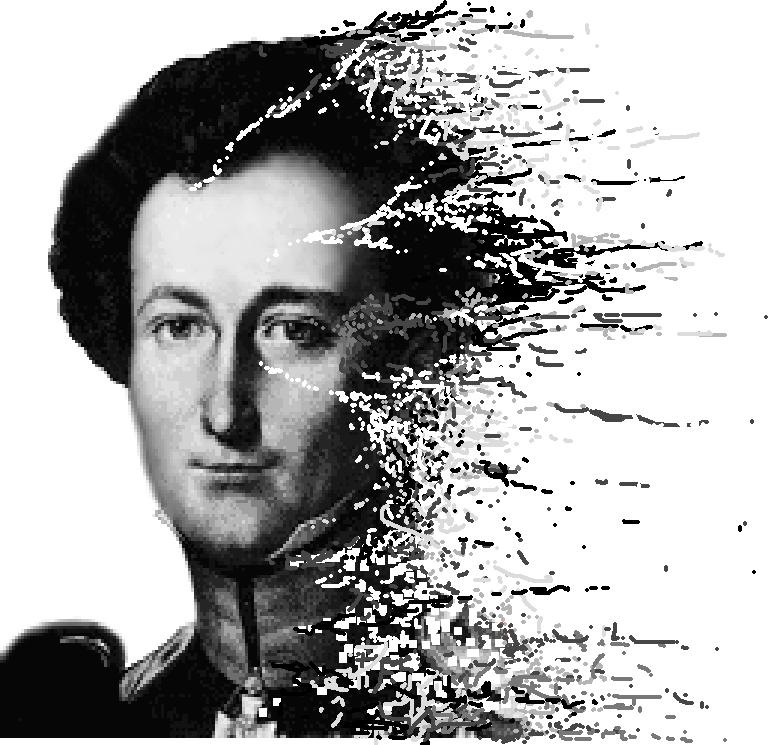
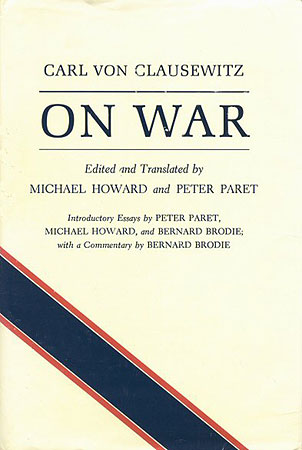
On War by Carl von Clausewitz has been the most influential book on strategy and war of all time.

We can say this because On War is the standard by which all other works of strategy are measured and only a few compared – notably Sun Tzu’s Art of War and The Peloponnesian War by Thucydides. The odd thing is that we can say this despite the fact that On War is more frequently shelved, cited or understood secondhand rather than read, even by military professionals. And furthermore, within the narrow demographic that reads Clausewitz seriously and critically, there can be heated dispute over what he meant, due to the difficulty of the text. Then there are the secondary effects, historical and military, of Clausewitz having been misunderstood, forgotten, ignored or at times, his strategic philosphy consciously rejected.

The shadow cast by On War is all the more remarkable given it’s circumstances of publication. Clausewitz died in 1831, at fifty-one, of cholera, having finally risen to a military post his talents merited. He had been writing On War since 1816 and it was far from completed or refined to his satisfaction and it is highly unlikely, in my view, that Clausewitz would have consented to it’s publication in the condition in which he left it. His determined and intellectually formidible widow, Marie von Clausewitz, further shaped the manuscript of On War, guided by her intimate knowledge of her husband’s ideas and was likely the best editor Clausewitz could have posthumously had.


Nevertheless, to my mind On War remains a magnificent unfinished symphony.

What would On War have looked like if Clausewitz had lived another twenty-five or thirty some years? Assuming continued good health, Clausewitz would have seen, perhaps commanded in, the First Schleswig War and at least studied the Crimean War from afar. He would have had another quarter-century of reading and mature reflection on his subject. Clausewitz, who had a keen understanding of history, would have also witnessed the grand European upheaval of liberal revolution in 1848 that rocked the Hohenzollern monarchy to it’s core. What new insights might Clausewitz have gleaned or expanded upon? Would his later chapters On War have evolved to equal the first?

Having outlived Marie (who died in 1836), would Clausewitz have become a deeply changed man?

What I find it difficult to believe is that Clausewitz, with his creatively driven and philosophically exacting mind,  would have been content to let the manuscript of On War rest where it stood in 1831. Or that we read today what Carl von Clausewitz ultimately intended.


Switch to our mobile site