
zenpundit.com » 20th century

Archive for the ‘20th century’ Category

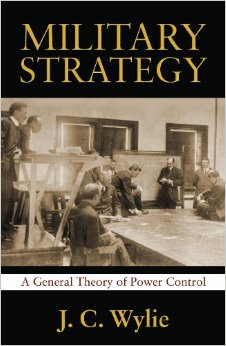
USNI Press to Rerelease J.C. Wylie’s Classic

Tuesday, October 29th, 2013

[by J. Scott Shipman]

Military Strategy, A General Theory of Power Control, J. C. Wylie

Mark your calendar; March 15, 2014, the USNI Press will rerelease J.C. Wylie‘s classic Military Strategy. A couple years ago I reviewed here.

If you have not read Wylie, I strongly recommend adding his little book to your list.

And a big “Thank You!” to the USNI Press!

POSTSCRIPT: A representative of the USNI notified me that an eBook will be forthcoming, too. 

The Myhrvold Report and Understanding Strategic Threats

Monday, October 7th, 2013

[by Mark Safranski, a.k.a. “zen“]

Several weeks ago, Cheryl Rofer wrote an important post analyzing the report “Strategic Terrorism: A Call to Action” by Microsoft billionaire, venture capitalist, theoretical mathematician and cookbook author, Dr. Nathan Myhrvold. I found Cheryl’s argument quite persuasive and would like to add a few points of my own; because while some of the concerns raised by Myhrvold are valid and his intent is no doubt well-meaning, the approach he suggests is, at times, problematic.

If in the past ten years you have been a serious student of terrorism studies, insurgency and COIN, national security, counter-terrorism policy, counter-proliferation policy,  intelligence community affairs and military theory, there is little that will be new for you in the first part of the report. Many of these problems had previously been raised (at least in part) by figures as disparate as Michael Scheuer, John Robb, Martin van Creveld, Thomas P.M. Barnett, William Lind,  Robert Bunker and dozens if not hundreds, of thinkers, practitioners and scholars. In addition, this ground was also covered by government agencies like the National Intelligence Council in its periodic Global Trends reports, and in classified analysis by the Office of Net Assessment and various three letter agencies. The blogosphere also had a lively discussion of catastrophic WMD terrorism, superempowered individuals, 4GW/5GW, apocalyptic Mahdism and related subjects throughout the mid to late 2000’s.  Diffusion of society-shifting power into the hands of small groups and individuals was a theme of Alvin and Heidi Toffler back in the 70’s and 80’s, so this is an old rather than new problem.

Dr. Myhrvold is a polymathic character, but his original area of specialization was mathematical research so it is not surprising that his approach to things “strategic” is dominated by scalar considerations. Namely, a threat taxonomy based upon potential magnitude of  disaster events up to the extinction of the human race (High M 10).  Wondering here, as the bibliographic references of this report are extremely scanty, if Myhrvold was influenced by Herman Kahns ideas on escalation or game theory based literature on deterrence or something else. Regardless, while there’s some merit to this definition – obviously if your civilization is destroyed or everyone is dead you have suffered the ultimate in strategic defeat – there are weaknesses too as the linear progression of destruction implies an apolitical environment and inevitable process. That’s not how things work with strategy in the real world, neither today nor back in the era of Cold War superpower nuclear brinksmanship. Even John Foster Dulles and Vyacheslav Molotov were more politically nuanced than that.

This is an important point. Myhrvold is focused on capacity alone rather than in conjunction with political purpose in defining strategic threats.  Capacity in bad hands is worth worrying about and Myhrvold is right when he criticizes the government for their obstinate refusal to develop a robust threat detection system for shipping to US ports of entry ( that’s boring, hard work with little payoff from a political perspective, but the NSA building a system for surveilling all Americans is fun and gives government bureaucrats great potential power to ruin anyone they wish); that said, outside of comic books and James Bond movies, people do not historically initiate violence on an epochal scale out of a Joker-like admiration of nihilism, not even terrorists. Instead, they have a political end in mind for which violence is a tool. This variable appears to be absent from Myhrvold’s thinking.

More troubling, Myhrvold’s solution to the potential threat of bioweapon terrorism would appear to be, as I infer it, even greater centralization of power in the hands of a national security surveillance state. As I expect Dr. Myhrvold is a great respecter of data-driven, probabilistic logic, he might want to consider that nearly every man-made, high magnitude, lethal event in the past century and a quarter years has been initiated by governments for reasons of policy, up to and including the auto-genocide of tens of millions of their own citizens. Most people on this planet are in far greater danger of harm at the hands of the state than they are as a result of terrorism or foreign attack and it would seem foolish, in light of such statistics, to increase our risk by delegating greater grants of power to the entity most likely to cause us harm. In the words of the late defense and security expert Dr. Fred Ikle, we would be risking Annihilation from Within.

Ikle anticipated years ago much of what Myhrvold wrestled with in his report and, in my view, prescribed better answers.

Dawn and Decadence, Innovation, & The Face of Battle — top 3

Friday, October 4th, 2013

[by J. Scott Shipman]

From Dawn to Decadence, 500 Years of Western Cultural Life, by Jacques Barzun

In a year where I’ve not been able to read as much as normal and with 89 days remaining in 2013, these three titles are the best so far. I’m not finished with Dawn, but it seems like the late Professor Barzun is an old friend (here is a video from 2010). Barzun’s opus was published when he was 93 and was almost ten years in the making. Dawn has been sitting on my shelves for four or five years and I’d started it two or three times only to get bogged down and lose interest. Well over half way finished and I’m pretty sure I’ll be rereading this title for years to come (co-blogger Lynn Rees reports he’s read it four times). Barzun’s scope covers the gamut: religion, literature, poetry, theater, painting, sculpture, philosophy, and the aristocracy/life at court. Since many of these topics are interconnected he uses an ingenious method to assist the reader in keeping up. He uses this: (<page number)(page number>) to direct the reader to something previously discussed or something he will cover later. In the text, he will recommend “the book to read is” “the book to browse is” in brackets. I’ve found this method distracting as I’ve read three books he referenced since I started… Barzun also provides generous lift quotes in the margins to give the reader a flavor for a particular writer or idea/example. If the book had a traditional bibliography, I dare say it would cover a couple hundred pages–at least. Dawn has been a pleasure I’ve been taking in small doses and am in no hurry to finish. This is the best book of the genre that I’ve read.

Men, Machines and Modern Times, by Elting Morison

Elting Morison’s Men, Machines is reviewed at Amazon by former House Speaker Newt Gingrich as “purely and simply one of the best books ever written on the process of innovation and the interaction of technology, culture, systems, and individual personalities.” I could not agree more. Morison’s book is a collection of essays dealing with change and man’s inherit but paradoxical reaction to it:

Yet, if human beings are attached to the known, to the realm of things as they are, they also, regrettably for their peace of mind, are incessantly attracted to the unknown and things as they might be. As Ecclesiastes glumly pointed out, men persist in disordering their settled ways and beliefs by seeing out many inventions…Change has always been a constant in human affairs…

From gunnery at sea to 19th Century railroads, Morison provides illustration after illustration of man, his institutions, and the almost universal resistance of both to change. Morison observes of inventors (real “disruptive thinkers’) [this was written in the early 1950’s]:

I once collected evidence on the lives of about thirty of these men who flourished in the nineteenth century. A surprising number turned out to be people with little formal education, who drank a good deal, who were careless with money, and who had trouble with wives or other women.

Morison devotes one essay to the characteristics and ills of a “bureau.” He describes the difficulty of getting anything accomplished within an average bureaucracy—largely because bureaucrats live for process and harmony. He says:

Taken together, a set of regulations provides a pattern of behavior for the energies bureaus are set up to regulate….Regulations are a way of keeping a system of energies working in harmony and balance…First it is easier to make a regulation than to abolish it.

Morison’s eighth and concluding essay provide Some Proposals for dealing with change and newness—in a word, solutions to many of the problems identified earlier. That said, only the most dedicated reader will complete the seventh (and longest) chapter, according the Morison, originally intended to be a book about the history of 19th Century American railroad innovation. Overall, I concur with Speaker Gingrich and highly recommend this title.

The Face of Battle, by John Keegan

A title needing no introduction at Zenpundit, I’ll only offer this title as one of the best books of the genre I’ve read. Keegan covers three battles across 500 years of history, Agincourt, Waterloo, and The Somme. In each, he brings alive the battlefield and provides the conditions faced by combatants—often up close and personal. Keegan’s scholarship, insight, and importantly, his humility in addressing a topic he admittedly had no first hand experience make this a must read for anyone in the profession of arms, and recommended for anyone seeking more insight into how we fight.

That’s a wrap, be back soon! 

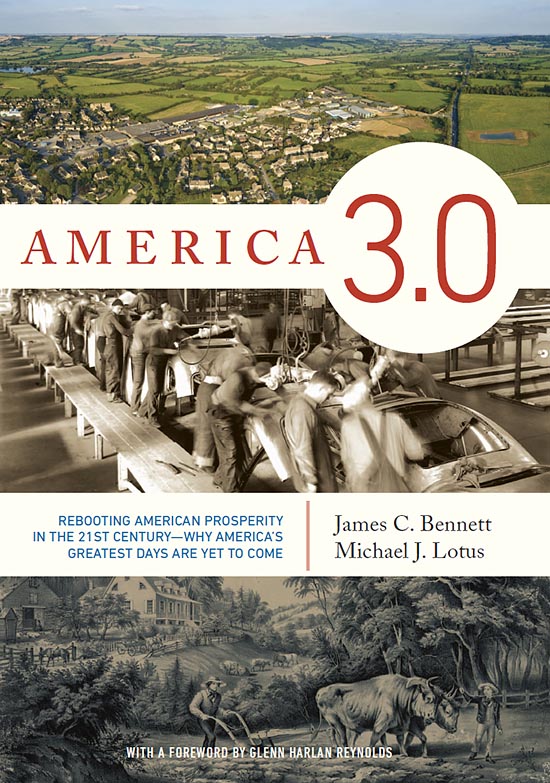
Ronfeldt’s In-Depth Review of America 3.0

Monday, September 23rd, 2013


 David Ronfeldt, RAND strategist and theorist has done a deep two-part  review of America 3.0 over at his Visions from Two Theories blog. Ronfeldt has been spending the last few years developing his TIMN analytic framework (Tribes, Institutions [hierarchical], Markets and Networks) which you can get a taste from here  and here or a full reading with this RAND paper.

David regards the familial structure thesis put forward by James Bennett and Michael Lotus in America 3.0 as “captivating”  and “compelling” for  “illuminating the importance of the nuclear family for America’s evolution in ways that, in my view, help validate and reinforce TIMN”. Both reviews are detailed and should be read in their entirety, but I will have some excerpts below:

America 3.0 illuminates significance of nuclear families — in line with TIMN (Part 1 of 2) 

….Bennett and Lotus show at length (Chapter 2, pp. 29-45) that the nuclear family explains a lot about our distinctive culture and society:

“It has caused Americans to have a uniquely strong concept of each person as an individual self, with an identity that is not bound by family or tribal or social ties. … Our distinctive type [of] American nuclear family has made us what we are.” (p. 29)And “what we are” as a result is individualistic, liberty-loving, nonegalitarian (without being inegalitarian), competitive, enterprising, mobile, and voluntaristic. In addition, Americans tend to have middle-class values, an instrumental view of government, and a preference for suburban lifestyles. 

As the authors carefully note, these are generally positive traits, but they have both bright and dark sides, noticeable for example in the ways they make America a “high-risk, high-return culture” (p. 38) — much to the bane of some individuals. The traits also interact in interesting ways, such that Americans tend to be loners as individuals and families, but also joiners “who form an incomprehensibly dense network of voluntary associations” — much to the benefit of civil society (p. 39). 

In sum, the American-style nuclear family is the major cause of “American exceptionalism” — the basis of our freedom and prosperity, our “amazing powers of assimilation” (p. 53), and our unique institutions:

“It was the deepest basis for the development of freedom and prosperity in England, and then in America. Further, the underlying Anglo-American family type was the foundation for all of the institutions, laws, and cultural practices that gave rise to our freedom and prosperity over the centuries.” (p. 52)The authors go on to show this for America 1.0 and 2.0 in detail. They also reiterate that Americans have long taken the nuclear family for granted. Yet, very different marriage and family practices are the norm in most societies around the world. And the difference is profoundly significant for the kinds of cultural, social, economic, and political evolution that ensue. Indeed, the pull of the nuclear model in the American context is so strong that it has a liberating effect on immigrants who come from societies that are organized around extended families and clans (p. 55) — an important point, since America is a land of immigrants from all over, not just from Anglo-Saxon nuclear-family cultures.

….As for foreign policy, the authors commend “an emerging phenomenon we call “Network Commonwealth,” which is an alignment of nations … who share common ties that may include language, culture and common legal systems.” (p. 260) Above all, they’d like to see the “Anglosphere” take shape. And as the world coalesces into various “global networks of affinity” engaged in shifting coalitions (p. 265), America 3.0 would cease emphasizing democracy-promotion abroad, and “reorient its national strategy to a primary emphasis on maintaining the freedom of the global commons of air, sea, and space.” (p. 263) [UPDATE: For more about the Network Commonwealth and Anglosphere concepts, see Bennett’s 2007 paper here.]

Read the whole thing here.

America 3.0 illuminates significance of nuclear families — in line with TIMN (Part 2 of 2)  

….Overlaps with TIMN themes and propositions

Part 1 discussed America 3.0’s key overlap with TIMN: the prevalence and significance of the nuclear family in the American case. This leads to questions about family matters elsewhere. Furthermore, it should be pointed out that there is more to TIMN’s tribal form than the nature of the family. I also spotted several additional thematic overlaps between America 3.0 and TIMN, and I want to highlight those as well. Thus, in outline form, this post addresses:

  • Seeking a fuller understanding of family matters beyond the American case.
  • Gaining a fuller understanding of the tribal/T form.
  • Anticipating the rise of the network/+N form.
  • Recognizing that every form has bright and dark sides.
  • Recognizing the importance of separation among the forms/realms.
  • Recognizing that balance among them is important too.
  • Cautioning against the exportability of the American model.

After these points, the post ends by summarily noting that America 3.0 is more triformist than quadriformist in conception — but a worthy kind of triformist plus, well worth reading.

My discussion emphasizes the T and +N forms. Bennett and Lotus also have lots to say about +I and +M matters — government and business — and I’ll squeeze in a few remarks along the way. But this post mostly skips +I and +M matters. For I’m more interested in how America 3.0 focuses on T (quite sharply) and +N (too diffusely). 

By the way, America 3.0 contains lots of interesting observations that I do not discuss — e.g., that treating land as a commodity was a feature of nuclear-family society (p. 105), and so was creating trusts (p. 112). Readers are advised to harvest the book’s contents for themselves.

….Caution about the exportability of the American model: TIMN sharpens — at least it is supposed to sharpen — our understanding that how societies work depends on how they use four cardinal forms of organization. This simplification leaves room for great complexity, for it is open to great variation in how those forms may be applied in particular societies. Analysts, strategists, and policymakers should be careful about assuming that what works in one society can be made to work in another. 

….In retrospect it seems I pulled my punch there. I left out what might/should have come next: TIMN-based counsel to be wary about assuming that the American model, especially its liberal democracy, can be exported into dramatically different cultures. I recall thinking that at the time; but I was also trying to shape a study of just the tribal form, without getting into more sweeping matters. So I must have pulled that punch, and I can’t find anywhere else I used it. Even so, my view of TIMN is that it does indeed caution against presuming that the American model is exportable, or that foreign societies can be forced into becoming liberal democracies of their own design.

Meanwhile, America 3.0 clearly insists that Americans should be wary of trying to export the American model of democracy. Since so much about the American model depends on the nature of the nuclear family, policies that work well in the United States may not work well in other societies with different cultures — and vice-versa. Accordingly, the authors warn,

“American politicians are likely to be wrong when they tell us that we can successfully export democracy, or make other countries look and act more like the United States.” (p. 24)

“A foreign-policy based primarily on “democracy-promotion” and “nation-building” is one that will fail more times than not, … .” (p. 254)TIMN is not a framework about foreign policy. But as a framework about social evolution, it may have foreign-policy implications that overlap with those of America 3.0. In my nascent view (notably herehere, and here), the two winningest systems of the last half-century or so are liberal democracy and patrimonial corporatism. The former is prominent among the more-advanced societies, the latter among the less-developed (e.g., see here). As Bennett and Lotus point out, liberal democracy is most suitable where nuclear families hold sway. And as I’ve pointed out, patrimonial corporatism is more attractive in societies where clannish tribalism holds sway. 

Read the rest here.

This discussion about America 3.0 and TIMN seems particularly appropriate in light of the need to process, digest and distill the lessons of more than a decade of COIN and counter-terrorism warfare in Iraq, Afghanistan, Pakistan, Yemen and – increasingly- Africa. One of the more difficult aspects of COIN operations has been for American military and diplomatic to decipher the layered relationships and interplay of family honor, tribe, political institution, emerging market and networks in a nation shattered by dictatorship and war like Iraq or to import modern institutions and  a democratic political system in Afghanistan where they had never existed.

Many of these aspects were opaque and were understood only through hard-won experience (frequently lost with new unit rotation) or still remain elusive to Americans even after ten years of fighting among alien cultures which were also permeated by the sectarian nuances and conflicts of Islam. A religion to which relatively few Americans adhere or know sufficiently about, yet is a critical psychological driver for many of our adversaries as well as our allies.

Arguably, the eye-opening response of people to America 3.0 indicates we do not even understand ourselves, much less others
Octavian Manea interviews T.X. Hammes

Saturday, September 7th, 2013

[by Mark Safranski, a.k.a. “zen“]

Octavian Manea and SWJ are on something of a roll lately. Colonel T.X. Hammes (ret.) PhD is the respected author of the excellent The Sling and the Stone. If you have never read it, you should.

The Fallacies of Big Expeditionary Counterinsurgency: Interview with T.X. Hammes

SWJ: How different is Mao’s people’s war compared with what you call 4GW (Fourth Generation Warfare)? Is 4GW an updated, evolved form of people’s wars? In the end, isn’t 4GW focused on people and minds, on influencing people and minds?

TX: Mao is a little bit different because (in China) it was a domestic insurgency and focused on wearing down the nationalists and changing the minds of the warlords who supported them. In the case of 4GW, the focus is overseas. People you can’t reach with force, you must reach with the message. 4GW is an evolved form of insurgency. It is also important to note that Maoism is a type of insurgency that essentially fits a hierarchical society, not a tribal one. It always ends with a conventional campaign to destroy the government’s army as the final step in overthrowing the government. You can’t run a Maoist insurgency in the mountains of Afghanistan, the society won’t tolerate that kind of structure.  Nor can you do it in Iraq. 4GW covers both because its objective is not the military defeat.  4GW does not focus on the destruction of the enemy’s armed forces, but on changing the minds of the enemy’s political decision makers. 4GW directly attacks the will of enemy decision makers.  Once the outside power has been ejected, the conflict can continue until resolution. 

SWJ: Tell us about the center of gravity in a 4GW.

TX: The center of gravity in a 4GW is the will of the policymakers of the other side. 4GW war uses all available networks – political, economic, social and military – to convince the enemy’s political decision makers that their strategic goals are either unachievable or too costly for the perceived benefit. 4GW is not necessarily targeted at the people.  If the war is small enough, it can run on for years like El Salvador.  In that case, the US commitment was small enough there was no major political cost to US decision makers to continue supporting the El Salvadorian government.

When you look at the counterinsurgent side, I am more and more convinced that as a foreign power you can only do indirect counterinsurgency. You can advise and assist.  But keep it small – the host nation has to make it work. We, the United States, have done this successfully a number of times. Admittedly, we have not created the perfect nations that the nation-builders want, but that wasn’t the goal. The goal was to achieve US strategic goals. And we achieved our strategic goals in the Philippines, El Salvador, Columbia and Thailand. In a 4GW, the insurgent is not trying to win over the people as a whole. But the counterinsurgent must do so. In a tribal society, you can do what Kilcullen refers to as wholesale COIN – if you persuade the tribal chief everybody flips. In a more democratic society, you have to convince the people. It is more of a retail operation. It is critical to understand the society you are in and tailor your counterinsurgency and insurgency accordingly. 

I would add, in the 4GW theme of reasoning with the “moral level of war”, that a foreign power supporting a host nation government with FID that faces an insurgency, can probably get away with “punitive raiding”  of the non-state actors from time to time, particularly in rapid response to some heinous action committed by rebels. A heavy in-country footprint though will change the political calculus for the population – it is too easy to look lie occupiers and stringpullers. Foreign troops are rarely welcome guests for long.

Read the rest here.


Switch to our mobile site

