The Tip of a Shadowy Spear
Wednesday, July 6th, 2011
Fight in Afghanistan to turn east: Petraeus
The outgoing commander of US and NATO forces in Afghanistan says the focus of the war will shift in coming months from Taliban strongholds in the south to the eastern border with Pakistan where insurgents closest to al-Qaeda and other militants hold sway.
With a new job pending as the CIA director, General David Petraeus said on Monday that by the northern autumn, more special forces, intelligence, surveillance, air power will be concentrated in areas along Afghanistan’s rugged eastern border with Pakistan….
Commander: Special operations forces under stress
….Senators pressed McRaven on the impact that the planned U.S. troop withdrawal from Afghanistan would have on special operations troops, asking whether Afghan elite forces would be able to step in.
McRaven said that right now U.S. forces need to continue to monitor and guide many of the Afghan special forces, but some units are highly trained and are increasingly taking on a larger role.
While the number of special operations forces has doubled to about 61,000 over the past nine years, the total of those deployed overseas has quadrupled. There are at least 7,000 special operators in Afghanistan and about 3,000 in Iraq. Those numbers can vary as units move in and out of the war zone, and often the totals don’t include the most elite of the commandos – special mission units such as Army Delta Force and Navy SEALs that may go in and out more quietly and quickly.
….In Afghanistan, special operations forces serve a number of roles. Not only do they mount an aggressive counterterrorism campaign across the country, but they also form teams to train or mentor Afghan forces. In one example, McRaven said that over the past 12 months, the task force he commanded conducted about 2,000 operations, roughly 88 percent of which were at night….
Supply and demand is an economic principle with universal application.
The demands of war have outstripped our supply of tax dollars, so elite units of speed, stealth and striking power are being substituted, in synergy with airpower, paramilitaries and on the spot analysts of the CIA, for whole divisions. In the drawdown from Afghanistan, FID will replace COIN , covert ops will replace surging, class will replace mass.
Mass in an AVF is very, very expensive (so is, incidentally, choosing grandiose political objectives to be achieved by military means). The shift that is happening in Afghanistan, partly by fiscal necessity, is going to become our default defense paradigm for at least the 2010’s. Highly mobile, extremely fast, networked, partially covert, backed by lethal high-tech firepower.
Rumsfeld’s revenge. And Wild Bill Donovan’s. And Art Cebrowski’s.
As a rule, I think recreating a modernized OSS-like community in all but name is a good idea that will pay dividends in terms of tactical and strategic flexibility. I fully expect the bureaucratic gravitational pull and sheer utility in fighting the murky, mutable, Islamist enemy to eventually draw in cyber elements of various agencies, elite law enforcement, DOJ, DARPA, Treasury and State Department personnel in to the mix, albeit sparingly. Such an interdependent and collaborative military and intelligence community is optimized as a striking force against our most immediate or proximate security threats – though definitely not all of our security threats (those who wish to disband all our armored units or unilaterally give up nuclear weapons can stop fantasizing now).
However, there are some caveats that need to be considered, in my view.
First, supply and demand applies here as well. There’s a high practical barrier to growing the size of our special forces, which are presently badly overstressed. The commonly cited figure for growth is 3-5 % annually, if we want something better in our special forces than the highly conditioned thugs that the Soviets used to roll out in large numbers in their SPETSNAZ divisions. That’s not much and it represents the max that is probably possible without returning to conscription, which theoretically would give the US military the pick of the litter of entire age cohorts, but in reality much less. You have to be highly motivated to become a Navy SEAL or want to jump out of a perfectly good Army helicopter. Unwilling conscripts won’t fit the bill. Right now we are “stretching” our special forces by mixing them with high quality regulars; a hidden cost to this practice is that most of these folk are essentially “officer material” and drawing out the most capable personnel systemically weakens the regular units of their natural leaders. The tip of this shadowy spear is always going to be small and difficult to replace and not something suited for waging total war (shades of Byzantium).
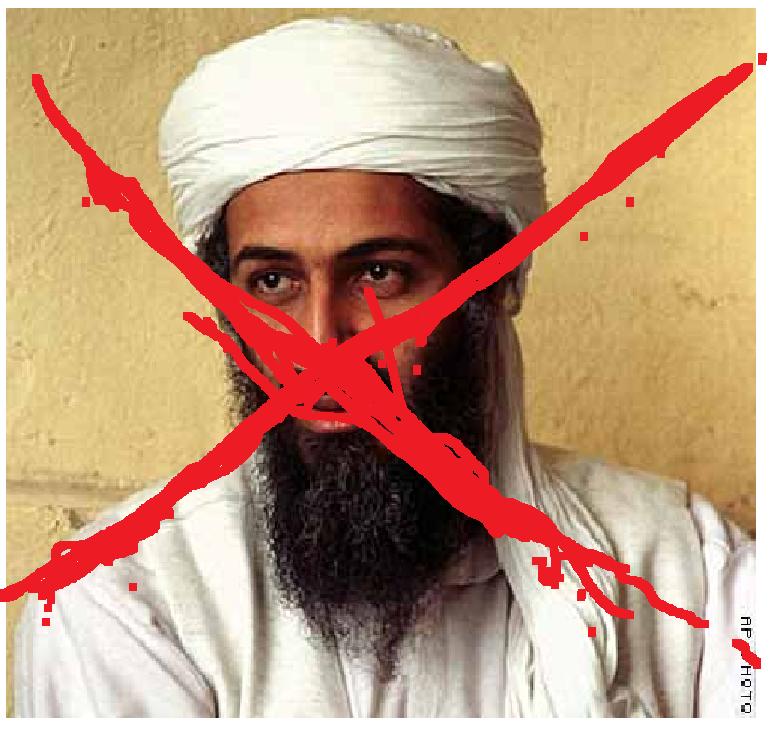
Secondly, normal use of this kind of force requires a political climate that keeps the antiwar and anti-American factions of the Left marginalized because many operations in the blurry realm between war, terrorism, crime and covert ops will legally require presidential findings to be reported to Congressional oversight committees. If the US Congress had the political composition of the 1980’s, with Vietnam era anti-war types being extremely vocal, especially in the House, much of what we are doing and have done in Afghanistan, Pakistan or Yemen would not be politically possible, including the raid that killed Osama bin Laden. It would require a considerable electoral turn, but friction in the form of modern day Boland amendments, special prosecutors, Church–Pike hearings and gratuitous leaks will make use of these forces impractical and highly risky for any president. Or for the military and intelligence personnel themselves who might face ex post facto prosecution due to the agitation of zealous leftist partisans in Congress and the media.
Thirdly, an emphasis on a special forces dominant force structure may have the unintended consequence of causing the executive branch civilian officials to move even further away from strategic thinking and incline them more toward reactive, tactical, retaliation. Misuse of special forces is the American historical norm. Special forces are so well suited for “emergency use” that they are frequently employed for every “priority” mission except those that are intended to have a strategic effect, even when a regular military unit of combat infantry is more than adequate for the task at hand (Or for that matter, using non-military options!) The mental focus and threat awareness starts to unconsciously migrate to those problems such a force structure is well-suited to solve and away from those that they are not. Unfortunately, those other security threats might ultimately be a lot more important in the long run to American interests.
America is headed into the Light Footprint Era, ready or not.