zenpundit.com » intellectuals

Archive for the ‘intellectuals’ Category

Ronfeldt’s In-Depth Review of America 3.0

Monday, September 23rd, 2013
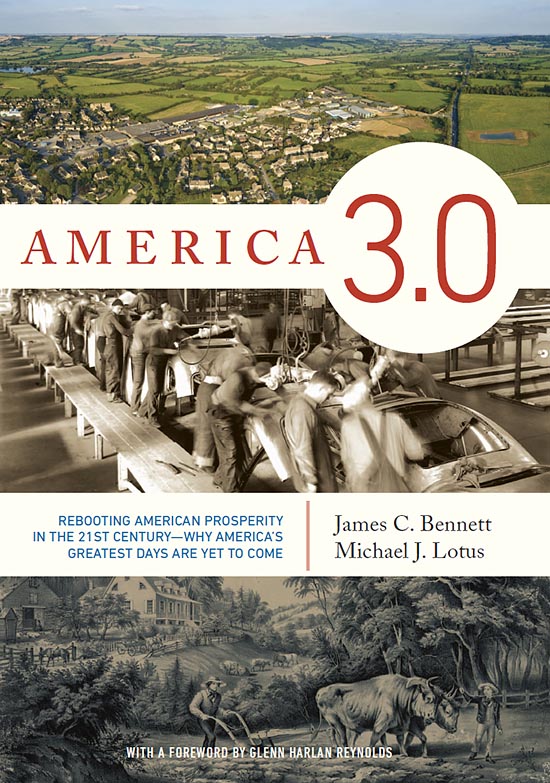
 

 David Ronfeldt, RAND strategist and theorist has done a deep two-part  review of America 3.0 over at his Visions from Two Theories blog. Ronfeldt has been spending the last few years developing his TIMN analytic framework (Tribes, Institutions [hierarchical], Markets and Networks) which you can get a taste from here  and here or a full reading with this RAND paper.

David regards the familial structure thesis put forward by James Bennett and Michael Lotus in America 3.0 as “captivating”  and “compelling” for  “illuminating the importance of the nuclear family for America’s evolution in ways that, in my view, help validate and reinforce TIMN”. Both reviews are detailed and should be read in their entirety, but I will have some excerpts below:

America 3.0 illuminates significance of nuclear families — in line with TIMN (Part 1 of 2) 

….Bennett and Lotus show at length (Chapter 2, pp. 29-45) that the nuclear family explains a lot about our distinctive culture and society:

“It has caused Americans to have a uniquely strong concept of each person as an individual self, with an identity that is not bound by family or tribal or social ties. … Our distinctive type [of] American nuclear family has made us what we are.” (p. 29)And “what we are” as a result is individualistic, liberty-loving, nonegalitarian (without being inegalitarian), competitive, enterprising, mobile, and voluntaristic. In addition, Americans tend to have middle-class values, an instrumental view of government, and a preference for suburban lifestyles. 

As the authors carefully note, these are generally positive traits, but they have both bright and dark sides, noticeable for example in the ways they make America a “high-risk, high-return culture” (p. 38) — much to the bane of some individuals. The traits also interact in interesting ways, such that Americans tend to be loners as individuals and families, but also joiners “who form an incomprehensibly dense network of voluntary associations” — much to the benefit of civil society (p. 39). 

In sum, the American-style nuclear family is the major cause of “American exceptionalism” — the basis of our freedom and prosperity, our “amazing powers of assimilation” (p. 53), and our unique institutions:

“It was the deepest basis for the development of freedom and prosperity in England, and then in America. Further, the underlying Anglo-American family type was the foundation for all of the institutions, laws, and cultural practices that gave rise to our freedom and prosperity over the centuries.” (p. 52)The authors go on to show this for America 1.0 and 2.0 in detail. They also reiterate that Americans have long taken the nuclear family for granted. Yet, very different marriage and family practices are the norm in most societies around the world. And the difference is profoundly significant for the kinds of cultural, social, economic, and political evolution that ensue. Indeed, the pull of the nuclear model in the American context is so strong that it has a liberating effect on immigrants who come from societies that are organized around extended families and clans (p. 55) — an important point, since America is a land of immigrants from all over, not just from Anglo-Saxon nuclear-family cultures.

….As for foreign policy, the authors commend “an emerging phenomenon we call “Network Commonwealth,” which is an alignment of nations … who share common ties that may include language, culture and common legal systems.” (p. 260) Above all, they’d like to see the “Anglosphere” take shape. And as the world coalesces into various “global networks of affinity” engaged in shifting coalitions (p. 265), America 3.0 would cease emphasizing democracy-promotion abroad, and “reorient its national strategy to a primary emphasis on maintaining the freedom of the global commons of air, sea, and space.” (p. 263) [UPDATE: For more about the Network Commonwealth and Anglosphere concepts, see Bennett’s 2007 paper here.]

Read the whole thing here.

America 3.0 illuminates significance of nuclear families — in line with TIMN (Part 2 of 2)  

….Overlaps with TIMN themes and propositions

Part 1 discussed America 3.0’s key overlap with TIMN: the prevalence and significance of the nuclear family in the American case. This leads to questions about family matters elsewhere. Furthermore, it should be pointed out that there is more to TIMN’s tribal form than the nature of the family. I also spotted several additional thematic overlaps between America 3.0 and TIMN, and I want to highlight those as well. Thus, in outline form, this post addresses:

  • Seeking a fuller understanding of family matters beyond the American case.
  • Gaining a fuller understanding of the tribal/T form.
  • Anticipating the rise of the network/+N form.
  • Recognizing that every form has bright and dark sides.
  • Recognizing the importance of separation among the forms/realms.
  • Recognizing that balance among them is important too.
  • Cautioning against the exportability of the American model.

After these points, the post ends by summarily noting that America 3.0 is more triformist than quadriformist in conception — but a worthy kind of triformist plus, well worth reading.

My discussion emphasizes the T and +N forms. Bennett and Lotus also have lots to say about +I and +M matters — government and business — and I’ll squeeze in a few remarks along the way. But this post mostly skips +I and +M matters. For I’m more interested in how America 3.0 focuses on T (quite sharply) and +N (too diffusely). 

By the way, America 3.0 contains lots of interesting observations that I do not discuss — e.g., that treating land as a commodity was a feature of nuclear-family society (p. 105), and so was creating trusts (p. 112). Readers are advised to harvest the book’s contents for themselves.

….Caution about the exportability of the American model: TIMN sharpens — at least it is supposed to sharpen — our understanding that how societies work depends on how they use four cardinal forms of organization. This simplification leaves room for great complexity, for it is open to great variation in how those forms may be applied in particular societies. Analysts, strategists, and policymakers should be careful about assuming that what works in one society can be made to work in another. 

….In retrospect it seems I pulled my punch there. I left out what might/should have come next: TIMN-based counsel to be wary about assuming that the American model, especially its liberal democracy, can be exported into dramatically different cultures. I recall thinking that at the time; but I was also trying to shape a study of just the tribal form, without getting into more sweeping matters. So I must have pulled that punch, and I can’t find anywhere else I used it. Even so, my view of TIMN is that it does indeed caution against presuming that the American model is exportable, or that foreign societies can be forced into becoming liberal democracies of their own design.

Meanwhile, America 3.0 clearly insists that Americans should be wary of trying to export the American model of democracy. Since so much about the American model depends on the nature of the nuclear family, policies that work well in the United States may not work well in other societies with different cultures — and vice-versa. Accordingly, the authors warn,

“American politicians are likely to be wrong when they tell us that we can successfully export democracy, or make other countries look and act more like the United States.” (p. 24)

“A foreign-policy based primarily on “democracy-promotion” and “nation-building” is one that will fail more times than not, … .” (p. 254)TIMN is not a framework about foreign policy. But as a framework about social evolution, it may have foreign-policy implications that overlap with those of America 3.0. In my nascent view (notably herehere, and here), the two winningest systems of the last half-century or so are liberal democracy and patrimonial corporatism. The former is prominent among the more-advanced societies, the latter among the less-developed (e.g., see here). As Bennett and Lotus point out, liberal democracy is most suitable where nuclear families hold sway. And as I’ve pointed out, patrimonial corporatism is more attractive in societies where clannish tribalism holds sway. 

Read the rest here.

This discussion about America 3.0 and TIMN seems particularly appropriate in light of the need to process, digest and distill the lessons of more than a decade of COIN and counter-terrorism warfare in Iraq, Afghanistan, Pakistan, Yemen and – increasingly- Africa. One of the more difficult aspects of COIN operations has been for American military and diplomatic to decipher the layered relationships and interplay of family honor, tribe, political institution, emerging market and networks in a nation shattered by dictatorship and war like Iraq or to import modern institutions and  a democratic political system in Afghanistan where they had never existed.

Many of these aspects were opaque and were understood only through hard-won experience (frequently lost with new unit rotation) or still remain elusive to Americans even after ten years of fighting among alien cultures which were also permeated by the sectarian nuances and conflicts of Islam. A religion to which relatively few Americans adhere or know sufficiently about, yet is a critical psychological driver for many of our adversaries as well as our allies.

Arguably, the eye-opening response of people to America 3.0 indicates we do not even understand ourselves, much less others

Octavian Manea interviews T.X. Hammes

Saturday, September 7th, 2013

[by Mark Safranski, a.k.a. “zen“]

Octavian Manea and SWJ are on something of a roll lately. Colonel T.X. Hammes (ret.) PhD is the respected author of the excellent The Sling and the Stone. If you have never read it, you should.

The Fallacies of Big Expeditionary Counterinsurgency: Interview with T.X. Hammes

SWJ: How different is Mao’s people’s war compared with what you call 4GW (Fourth Generation Warfare)? Is 4GW an updated, evolved form of people’s wars? In the end, isn’t 4GW focused on people and minds, on influencing people and minds?

TX: Mao is a little bit different because (in China) it was a domestic insurgency and focused on wearing down the nationalists and changing the minds of the warlords who supported them. In the case of 4GW, the focus is overseas. People you can’t reach with force, you must reach with the message. 4GW is an evolved form of insurgency. It is also important to note that Maoism is a type of insurgency that essentially fits a hierarchical society, not a tribal one. It always ends with a conventional campaign to destroy the government’s army as the final step in overthrowing the government. You can’t run a Maoist insurgency in the mountains of Afghanistan, the society won’t tolerate that kind of structure.  Nor can you do it in Iraq. 4GW covers both because its objective is not the military defeat.  4GW does not focus on the destruction of the enemy’s armed forces, but on changing the minds of the enemy’s political decision makers. 4GW directly attacks the will of enemy decision makers.  Once the outside power has been ejected, the conflict can continue until resolution. 

SWJ: Tell us about the center of gravity in a 4GW.

TX: The center of gravity in a 4GW is the will of the policymakers of the other side. 4GW war uses all available networks – political, economic, social and military – to convince the enemy’s political decision makers that their strategic goals are either unachievable or too costly for the perceived benefit. 4GW is not necessarily targeted at the people.  If the war is small enough, it can run on for years like El Salvador.  In that case, the US commitment was small enough there was no major political cost to US decision makers to continue supporting the El Salvadorian government.

When you look at the counterinsurgent side, I am more and more convinced that as a foreign power you can only do indirect counterinsurgency. You can advise and assist.  But keep it small – the host nation has to make it work. We, the United States, have done this successfully a number of times. Admittedly, we have not created the perfect nations that the nation-builders want, but that wasn’t the goal. The goal was to achieve US strategic goals. And we achieved our strategic goals in the Philippines, El Salvador, Columbia and Thailand. In a 4GW, the insurgent is not trying to win over the people as a whole. But the counterinsurgent must do so. In a tribal society, you can do what Kilcullen refers to as wholesale COIN – if you persuade the tribal chief everybody flips. In a more democratic society, you have to convince the people. It is more of a retail operation. It is critical to understand the society you are in and tailor your counterinsurgency and insurgency accordingly. 

I would add, in the 4GW theme of reasoning with the “moral level of war”, that a foreign power supporting a host nation government with FID that faces an insurgency, can probably get away with “punitive raiding”  of the non-state actors from time to time, particularly in rapid response to some heinous action committed by rebels. A heavy in-country footprint though will change the political calculus for the population – it is too easy to look lie occupiers and stringpullers. Foreign troops are rarely welcome guests for long.

Read the rest here.

American Caesar — a reread after 30 years

Wednesday, September 4th, 2013

[by J. Scott Shipman]

American Caesar, Douglas MacArthur 188-1964, by William Manchester

Often on weekends my wife allows me to tag along as she takes in area estate sales. She’s interested in vintage furniture, and I hope for a decent collection of books. A sale we visited a couple months ago had very few books, but of those few was a hardback copy of American Caesar. I purchased the copy for $1 and mentioned to my wife, “I’ll get to this again someday…” as I’d first read Manchester’s classic biography of General Douglas MacArthur in the early 1980’s while stationed on my first submarine. “Someday” started on the car ride home (she was driving), and I must admit: American Caesar was even better thirty years later. Manchester is a masterful biographer, and equal to the task of such a larger-than-life subject.

MacArthur still evokes passion among admirers and detractors. One take-away from the second reading was just how well-read MacArthur and his father were. When MacArthur the elder died, he left over 4,000 books in his library—both seemed to possess an encyclopedic knowledge of history and warfare. Highly recommended.

PS: I visited the MacArthur Memorial, in Norfolk, Virginia, recently while in town for business and would recommend as well.

Octavian Manea Interviews General David Petraeus

Monday, September 2nd, 2013

[by Mark Safranski a.k.a. “zen“]

Octavian Manea has had an excellent series of COIN  interviews at SWJ and this is one of the more important ones:

Reflections on the “Counterinsurgency Decade”: Small Wars Journal Interview with General David H. Petraeus

SWJ: In his recent op-ed published in the New York Times, “The Pipe Dream of Easy War”, General H.R. McMaster warned against the fantasy of “a new era of war”, and especially about the dangers in the blind faith in the transformative effects that technology promises to have on war. He argued that over the past counterinsurgency (COIN) decade we relearned a few lessons that we really should keep in mind as we head into the future: “American forces must cope with the political and human dynamics of war in complex, uncertain environments”. His warning reminds me of an article you wrote in 1986 with General John Galvin about “uncomfortable wars”. You warned to take into consideration “the societal dimension of warfare”. To what extent do you see that prophecy still holding true post Iraq and post Afghanistan?

General Petraeus: I think the essence of the article back in 1986 with General Galvin was frankly the importance of the human terrain in each particular situation, and the importance of understanding the terrain, having a very nuanced, detailed feel for the context of each situation, not just nationally, but sub-nationally and literally all the way down to each valley and each village. That kind of knowledge was achieved in Iraq and helped us enormously during the Surge. We had a greater understanding there, earlier than we did in Afghanistan, just because we had so many more forces on the ground, 165,000 American military alone at the height of the surge. In Afghanistan at the height of our deployment, we had 100,000 US troopers and about 50,000 coalitional forces, and we maintained that level for a relatively brief period of time. As I noted on a number of occasions, we never really got the inputs close to right in Afghanistan until late 2010.

So, noting the importance of human terrain, I believe, is a fundamental aspect of crafting a counterinsurgency campaign. In fact, it was the biggest of the big ideas when we launched the Surge in Iraq, and we knew that since the human terrain was the decisive terrain, we would had to secure it as our principal focus – and to do so by living with the people, locating forward operating bases/joint security stations in the neighborhoods and villages, and specifically right on the sectarian fault-lines across which the heaviest fighting was ongoing in the capital. We ultimately established 77 additional locations just in the Baghdad area of operations alone, and many dozens more elsewhere throughout the country. There were other big ideas to be sure:  e.g., that you can’t kill or capture your way out of an industrial strength insurgency, such as we faced, therefore you need to reconcile with as many of the insurgents as was possible, seeking to maximize the number of the reconcilables; correspondingly, we also needed to intensify our campaign of targeted operations against the irreconcilables. But I think, fundamentally, it comes back to this issue, that it is all about people, counterinsurgency operations are wars in, among, and, in essence, for the people. And the first task of any counterinsurgency campaign has to be to secure those people.

Read the rest here.

Bomb Syria?

Thursday, August 29th, 2013


[by Mark Safranski a.k.a. “zen“]

There is much ado about a prospective Western (i.e. American) aerial campaign to bomb the Iranian allied Alawite-Baathist dictatorship Syria over use of chemical weapons against primarily al Qaida allied Sunni Islamist extremist rebels.

To what end or how that end will be brought about by a surgical use of American air power, aided by token French and British contributions, well, no one is quite sure.

The driving insider force behind this astrategic call to arms are Susan Rice, Samantha Power and Anne-Marie Slaughter, the three Furies of R2P.  Slaughter writes on military intervention in Syria with her usual combination of moral certainty and operational magical thinking here. Rice angrily pontificates here while an unusually muted UN Ambassador Samantha Power just tweeted about it while on vacation from the emergency UN Security Council meeting on, uh, Syria.

The strategic argument about Syria is not about the normative qualities of the Assad regime, which is anti-American, brutal, terrorist supporting and fascistic. Or that the regime is committing atrocities. It is. It is about what political objective, if any, the use of military force against Syria can accomplish at what cost and with what probable outcomes. At a grand strategic level, there are also questions about how military intervention in Syria will impact great power relations and the shaping of international law.

I suspect many R2P advocates like Slaughter, Rice and Power are attracted to the idea of bombing Syria partly to garner a precedent to support doing similar things in the future, whether or not it has any positive effect on the Syrian civil war. That however, if true, is an extremely poor reason for military intervention anywhere. If bombing had some hope of changing the behavior of the Syrian regime or replacing it with something better, I would warm to the prospect but where is the evidence that is a likely outcome? Consider:

The Syrian rebels include armed groups as violent, lawless and squalid as the Assad regime. You know, the Beheading community of the third jihad international, with fringe support from the occasional cannibal commandos. If these Islamist lunatics come to power in Damascus they will cheerfully engage in ghastly pogroms of mass murder and torture that will make Assad’s goons look like the British Raj at tea time.

The Assad regime and the Alawite minority from whence it originates have their backs to the wall in a conflict that determines if they continue to rule Syria or are exterminated. Having no margin for maneuver or concession, America bombing them is irrelevant to whether in their calculus they can stop fighting their local enemies. The whole point of combining the threat of force with diplomacy – allegedly the reason given for bombing Syria – is to be able to make Assad an offer that he can’t refuse and not a threat that the Alawites can’t accept. Then, while blustering loudly and ominously we undercut our own bellicose posturing and announce that regime change was off the table. WTF?  Really?

The President should fire this unholy crew of incompetents and intellectual poseurs and hire some real foreign policy advisers with at least an undergraduate level grasp of how diplomacy, strategy and war have worked for the past 2000 years.

Failing that, a few poker players who can bluff without showing the entire table their cards.


Switch to our mobile site

