zenpundit.com » 21st century

Archive for the ‘21st century’ Category

The East Rising

Sunday, July 3rd, 2011

Gifts from a generous Meatball:


Hardcovers too. Nice.

The Party: The Secret World of China’s Communist Rulers by Richard McGregor

Monsoon: The Indian Ocean and the Future of American Power by Robert D. Kaplan

I have already dived a few chapters into the McGregor book and it is very good. What makes it good is that is running counter to the message of the herd in terms of popular Sinology, which is to emphasize that China is a) uniquely Chinese with deeply introspective Confucian civilizational traditions (that’s modern PC-speak for “inscrutable”) and b) the brave new world of liberal, globalized, capitalism with a benign technocratic face.

Now there’s important truths in both of the popular mass messages on China, incompatible as they can be with one another. The economic rise of China in a globalized economy is the most important story of the last quarter of the 20th century and the first quarter of the 21st ( collapse of the USSR is second; the Soviets were beaten before they imploded and imploded largely because they knew they were beaten). China is also not like America, not even when they imported stock options, blue jeans, McDonald’s and the American jobs that used to create all those things. China’s civilization is truly of a dizzying depth, complexity and scale that is best compared to Europe rather than a specific country. That in itself, is important because it points to how ignorant the average American policy maker is, never mind the average American, about what makes their Chinese counterpart tick.

[ Sidebar: Perhaps the Obama administration assembling a new senior “China/East Asia” diplomatic and national security team that does not include a single official with any professional knowledge of China was unwise? How is that better than the Bush II administration shunning Arabists during the run up to and occupation of Iraq? It is not that these diplomats and officers are poor, they are smart and experienced, but none of them are China specialists. Or Japan specialists, for that matter and only one has expertise in Korean affairs. These are the region’s great powers! This is like turning EU/NATO policy over to diplomats who speak Hindi and Swahili ]

What McGregor is doing in The Party that is important is reminding Westerners that the Soviet experience, particularly the Leninist Party model, is still deeply embedded in China’s political DNA. Not in an ideologically Marxist, Khrushchevian, shoe-pounding sense but in a functional sense. In a structural sense. In an instrumental governance sense. In a networking theory sense. And all these characteristics, which are largely innately hostile or indifferent to the values of liberal democracy, continue to shape Chinese policy, leadership succession, national security, defense strategy and geopolitical outlook to this day.

That doesn’t mean China is itching for a war with the United States, but it means they are playing a longitudinal strategic game where the first goal is to stay in power forever and the next is to advance one’s position relative to others.

We are the other.

China is not an enemy but she is no friend or ally of the United States either, yet it is the most important relationship the US has to manage for the next thirty years – and that relationship in a strategic context with rising India, Japan, South Korea and Australia.

It might help if America brought a team to the table that included people who could tell Han Fei Tzu from Mencius or spoke Chinese.

Former Defense Secretary Robert Gates

Friday, July 1st, 2011

Robert Gates took his leave of government service yesterday, awarded the Medal of Freedom by President Obama. Gates was to the point in his remarks to the men and women he led, as he was to their commanders and civilian superiors for whom he had responsibility as Secretary of Defense:

To the Men and Women of the United States Armed Forces: On 30 June 2011, I will retire as Secretary of Defense. It has been the greatest honor of my life to serve and to lead you for the past four and a half years. All of that time we have been engaged in two wars and countless other operations.

It has been a difficult time for you and for your families, from long and repeated deployments for those in all four services — and the associated long separations from loved ones — to the anguish of those of you who have lost friends and family in combat or those of you who have suffered visible and invisible wounds of war yourselves. But your dedication, courage and skill have kept America safe even while bringing the war in Iraq to a successful conclusion and, I believe, at last turning the tide in Afghanistan. Your countrymen owe you their freedom and their security. They sleep safely at night and pursue their dreams during the day because you stand the watch and protect them.

For four and a half years, I have signed the orders deploying you, all too often into harm’s way. This has weighed on me every day. I have known about and felt your hardship, your difficulties, your sacrifice more than you can possibly imagine. I have felt personally responsible for each of you, and so I have tried to do all I could to provide whatever was needed so you could complete your missions successfully and come home safely — and, if hurt, get the fastest and best care in the world.

You are the best that America has to offer. My admiration and affection for you is without limit, and I will think about you and your families and pray for you every day for the rest of my life. God bless you.

Hat tip to Great Satan’s Girlfriend

Robert Gates was a remarkable public servant and one of the best SECDEFS since the office was created after WWII. Perhaps the best. Here’s why, in a nutshell.

One of the things that made Gates different was his approach to leadership. He saw it as a privilige, rather than a mark of membership “in the club”. Commanders and civilian appointees who were derelict in their responsibilities or did not take care of the people under their authority were relieved of that authority by being fired by Secretary Gates. This was virtually unheard of in my lifetime, where a Washington culture flourished where there were one set of rules for the rank-and-file but for the elite, “mistakes were made” (passive voice).  Gates would have none of that.

Secondly, Gates was willing to make choices and fight for them. He didn’t need the job and attempted to retire when the Bush administration faded from the scene, so unlike many Cabinet secretaries, Gates was less inclined to equivocate, more apt to work for “the good of the team” than defend DoD turf and to speak rather than leak. Did Robert Gates win every battle? No, but he was in the arena at the elbow of two presidents of two different political parties and earned their trust and their respect.

Dr. Gates has also earned his retirement, but we can hope that he’ll be back.

Martin van Creveld on The Lebanon War

Monday, June 27th, 2011


Eminent and controversial military historian, Martin van Creveld, analyzes the 2006 Israeli-Hezbollah War in the latest issue of Infinity Journal. Some Excerpts:

The Second Lebanon War: A Re-assessment

….Though the decision to retaliate in force was inevitable, it also meant that the Israel Defense Force (IDF) was taken by surprise and did not have time to prepare properly. Of the entire vast order of battle, only five regular brigades were immediately available. Moreover, these brigades had spent years doing little but carrying out counter-insurgency operations in the Occupied Territories. As a result, they had almost forgotten how to fight a real enemy; he who fights the weak will end up by becoming weak. Some of the burden fell on the Israeli Navy which shelled Lebanon’s coast, imposed a blockade, and cut the country off from the world. In doing so, one of its modern ships was hit by an Iranian-built surface to sea missile, suffering damage and taking some casualties. Since this was the first time in thirty-nine years anything of the kind had happened, it was a considerable propaganda victory for Hezbollah. At the same time it proved how much the crew had underestimated the enemy, since they (perhaps acting on their superiors’ orders) had not even switched on the vessel’s electronic defenses.

….”Stark raving mad” (majnun, in Arabic) was, in fact, the way many people in Lebanon and the rest of the Arab world reacted to the Israeli attack. As the statements of several of Hezbollah’s top leaders indicated, they too were surprised by the strength of the Israeli reaction. None of the organization’s original objectives were achieved. Its fighters remain in prison; the Israeli “occupation” of Shaba Farm continues; and Jerusalem, which it set itself as its ultimate objective to liberate, remains as firmly in Israeli hands as it has been during the last forty-four years. What the war did do was to show that, in case of war, neither Syria nor Iran would necessarily come to Lebanon’s rescue. The country’s infrastructure was left in ruins. Thirty thousand dwellings were destroyed or damaged, and dozens of bridges, underpasses, and gas stations demolished. Hundred of thousands of people were forced to flee, and as many as 2,000 killed.

Free registration required to read the article.

This piece is heavily IDF-centric in the analysis, perhaps reflecting van Creveld’s established authority on command and logistics and his recent work on air power, but I was surprised by the lack of space devoted to Hezbollah’s operations, given the author’s deep influence on 4GW theory and the study of postmodern irregular and asymmetric warfare. That may reflect, in part, the thrust of Infinity as a publication or the need for brevity but there’s an almost Clausewitzian subtext in the conclusion.

The Profession

Saturday, June 18th, 2011

The Profession by Steven Pressfield 

My friend Steven Pressfield has a new novel out, one that touches on many themes and issues discussed here at ZP, SWJ Blog, Global Guerrillas, Feral Jundi and the rest of this corner of the blogosphere. Sometimes fiction can be a lot more fun 🙂

You can read the first chapter here.

Will have commentary and review at a later date.

In Search of Civilization, a review

Saturday, June 18th, 2011

 [by J. Scott Shipman]

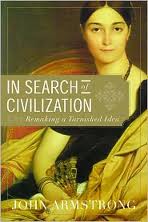
civilization.jpg

In Search of Civilization, by John Armstrong 

In Search of Civilization is a refreshing and erudite examination of civilization, how it developed in the past, negative present day connotations, and why it remains importance and relevant today. What follows is a detailed overview of Part One, and with any luck, the teaser will be enough to convince you to read this important book. For me, this is a truncated review. Normally, I would provide a 1200-1500 hundred word overview, but like Zen, I’ve been busy and wanted to share what I had with you. This books makes a nice foil for John Gray’s Black Mass, which I read recently but probably will not review.

Also, some books have wonderful finds in the bibliography. Back in the early 80’s I chased footnotes for about two years—and have no memory of what the original book was, but I went from one reference to another. Going forward, I’ll provide the titles from the bibliography that piqued my interest, which may also provide the you a little more insight on the works that influenced the author. Please let me know if this is or is not useful to you.

Part One Civilization as Belonging

Armstrong’s quest to define civilization began as he was reading a bedtime story to his son, and he advances that “with the possible exception of God, civilization is the grandest, most ambitious idea that humanity has devised.” From that introduction, Armstrong makes a compelling case for civilization.  He notes that it is difficult to get one’s mind around the concept since “civilization” touches everything. As a result, he offers that our ideas about “civilization tend to be rather messy and muddled.”

Armstrong goes on to frame civilization as “a way of living,” a level of political and economic development, “the sophisticated pursuit of pleasure,” and finally, “a high level of intellectual and artistic excellence.” Separately each of these, what I’ll call working definitions, made sense. But Armstrong rightly attempts to define, frame, contextualize civilization, not from historical perspective, but rather the philosophical in a way that is relevant to our times.

The actual word “civilization” is, according to Armstrong, not “fashionable” in our globalized world, particularly among those one would expect to be the “defenders.” He offers that civilization carries a “moral implication” whereby one society is somehow better than another, “fully human” or “superior.” And nations often advance the idea that they are better, more civilized, etc. Those defenders (in the arts and humanities) mentioned above have become “wary and negative” with respect to civilization. I’ll call this standard-less ambivalence based primarily on fear. Fear of “what,” you may ask. Fear of offending. Harvey Mansfield in City Journal made an excellent point with respect to political correctness:

“When there is no basis for what we agree to, it becomes mandatory that we agree. The very fragility of change as a principle makes us hold on to it with insistence and tenacity. Having nothing to conform to, we conform to conformism—hence political correctness. Political correctness makes a moral principle of opposing, and excluding, those of us who believe in principles that don’t change.”

Principles are a big part of civilization.A brief review of Samuel P. Huntington’s classic The Clash of Civilizations follows. Armstrong reminds of Huntington’s words: “In coping with an identity crisis, what counts for people are blood and belief, faith and family.” Armstrong recounts Huntington’s view of civilization a sense of “loyalty” and “shared identity.” Armstrong calls this an “organic conception of civilization;” witness the identity politics of the in the aftermath of 9/11 where it seemed the US, for once, stood as one. The phenomena can be found around the world, regardless race, religion, or ethnicity.  If there is a community of people, chances are there will be shared identities, but is this “sharing” civilization?

One of the strongest parts of the book is the emphasis he places on the “quality of relationships.” With the aforementioned “sharing” and “loyalty” Armstrong rightly asks about the quality of individual relationships and the impact on civilization. He compares the loyalty of religious believers to their faith to their loyalty to their civilization. Armstrong believes, and I agree, we share much more in common than one might, on first glance imagine. He says, “The rich achievements of any civilization are not in violent conflict, and in fact are on the same side in a clash between cultivated intelligence and barbarism. The irony is that such barbarism too often goes under the name of loyalty to a civilization.” Armstrong believes that a “true civilization is constituted by high-quality relationships to ideas, objects, and people.” In high quality relationships there is love and Armstrong sees civilization as “the life-support system for high-quality relationships.” Civilization sustains love; I like the implications.

The cultivation of high quality relationships tends to bring out the best in people.  He goes on to discuss the paradox of freedom—as we in the West live in cultural democracies. He asserts that vulgarity is “triumphant” because of our democratic ideals; the majority rules. Freedom comes with great responsibilities, greater responsibilities than living in a coercive state. At the level of the individual we make choices, satisfy appetites. “The civilizing mission is to make what is genuinely good more readily available and to awaken an appetite for it.”

Part Two Civilization as Material Progress, Part Three: Civilization as the Art of Living, Part Four: Civilization as Spiritual Prosperity 

References you may find of interest:

F.R. Leavis, The Great Tradition

C.P. Snow, a lecture “The Two Cultures and the Scientific Revolution

Matthew Arnold, Culture and Anarchy  A free online copy here.

 Kenneth Clark’s BBC television series Civilization

Bernard Berenson, The Florentine Painters of the Renaissance (1896)

T.S. Elliot, an essay called “Tradition and the Individual Talent


Switch to our mobile site