Counterinsurgency Warfare: Theory and Practice
SWJ Blog has been featuring Octavian Manea talking to COIN experts about counterinsurgency godfather David Galula:
Interview with Dr. John Nagl
“Counterinsurgencies are after all learning competitions.”
What is the legacy of David Galula for US Counterinsurgency doctrine? Is he an intellectual father?
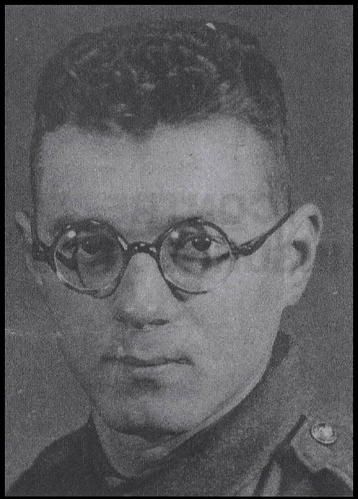
The most important thinker in the field is probably Mao whose doctrine of insurgency understood that insurgency is not a component or a precursor of conventional war but could by itself accomplish military objectives. The greatest thinker in my eyes in COIN remains David Galula who has the enormous advantage of having studied and seen the evolution of insurgency in France during WW2, then spending a great deal of time in Asia, and really having thought through the problem for more than a decade before he practiced COIN himself for a number of years. His book is probably the single biggest influence on FM 3-24, the COIN Field Manual. David Galula is the best COIN theoretician as Kennan was for containment.
Interview with Dr. David Ucko
What was the role of David Galula in shaping the mind of the US Army or the Army Concept? Could we see him as an intellectual founding father? And what specific beliefs do you have in mind when you assess his role in shaping the organizational culture of the US military?
As certain individuals and groups within the US military again became interested in counterinsurgency, this time as a  result of the persistent violence in ‘post-war’ Iraq, one of the more immediate reference points for how to understand this type of political violence were the scholars and theorists who had marked the US military’s previous ‘counterinsurgency eras’, during the 1960s primarily, but also during the 1980s. In the former camp, the thinkers of the 1960s, David Galula stands as an intellectual forefather to much that was finally included in the US Army and Marine Corps’ FM 3-24 counterinsurgency field manual; indeed I believe his book is one of the three works cited in the manual’s acknowledgements. I think it is fair to say far fewer people have read than heard of Galula, and it would be an interesting study to go through his writings more carefully and see to what degree they apply to our understanding of counterinsurgency today. Nonetheless, even at a cursory level, Galula has been extremely helpful in conceptualizing some of the typical conundrums, dilemmas and complexities of these types of campaigns: the civilian capability gaps in theater; the political nature of counterinsurgency; the importance of popular support, etc. These were issues that US soldiers and Marines were confronting in Iraq and struggling to find answers to; Galula’s seminal texts were in that context helpful.
In terms of influencing US counterinsurgency doctrine, perhaps one of Galula’s main contributions is the emphasis on the political nature of these types of campaigns, and – importantly – his concomitant warning that although the fight is primarily more political than military, the military will be the most represented agency, resulting in a capability gap. Galula’s answer to this conundrum is explicitly not to restrict military forces to military duties, a notion picked up on in US doctrine, which also asks the US military to go far beyond its traditional remit where and when necessary. In a sense, this line of thinking is one of the greatest distinctions between the Army’s first interim COIN manual in 2004 and the final version in 2006: in doctrine (if not necessarily in other areas, such as force structure), Galula’s view of military forces filling civilian capability gaps had been accepted. Of course, it should be added that all of this is much easier said than done, and perhaps some of the implications of involving military forces in civilian tasks (agriculture, sewage, project management) have not been thoroughly thought through – do the armed forces have the requires skills, the training, and how much civilian capability can one realistically expect them to fill? Also, the danger with following Galula on this point is that by doing what’s necessary in the field, the armed forces may also be deterring the development of the very civilian capabilities they reluctantly usurp.
How relevant is Galula’s “Maoist Model” of insurgency anymore?
It is certainly possible for a Maoist insurgency to be successful in today’s world under the right conditions. This was proved, ironically, by Maoists in Nepal who managed to shoot their way, if not into power, into a peace agreement with other Nepalese political parties who united with the Communists to topple Nepal’s monarchy in 2006. Conditions were nearly ideal for an insurgent victory: Nepal is a poor, isolated, landlocked nation which had an unpopular and tyrannical king who was, at best, an accidental monarch; and who lacked an effective COIN force in the Royal Army. Nor was India, which passed for the Royal Nepal goverment’s foreign patron, willing to consider vigorous military intervention or even military aid sufficient to crush the rebellion. For their part, the Maoists were highly disciplined with a classic Communist hierarchical system of political-military control and were relatively-self-sufficient as a guerrilla force.
How well does such a “Maoist Model” of revolutionary warfare reflect conditions of insurgency that we see today in Mexico, Afghanistan, Iraq, Somalia or Yemen? Or in central Africa?
Not very well at all.
For that matter, how relevant was “the Maoist Model” for Mao ZeDong in actual historical practice as opposed to retrospective mythologizing and theorizing that lightly sidestepped the approximately 4 million battlefield casualties inflicted on Chiang Kai-shek’s Nationalists at the hands of the Imperial Japanese Army? Prior to the invasion of China proper by Imperial Japan, Chiang Kai-shek’s “extermination campaigns” had a devastating effect on Mao’s forces and had Chiang been free to concentrate all his strength against the Communists, it is difficult to see how Mao’s revolution would have survived without significant Soviet intervention in China’s civil war.
If David Galula were alive today, I suspect he’d be more interested in constructing a new COIN model from empirical investigation than in honing his old one.


 by Thucydides, Robert B. Strassler (ed.)
 life in 5th century BC, but it will really help one develop an appreciation for the aspects of human nature that are unchanged through time.


