zenpundit.com » military

Archive for the ‘military’ Category

Guest Post: PRT and State Department Ignorance Fails Us All

Monday, March 21st, 2016

[by Mark Safranski / “zen“]

AnnSmed


Anne Smedinghoff

ZP is pleased to bring you a guest post by Pete Turner, co-host of The Break it Down Show and is an advocate of better, smarter, transition operations. Turner has extensive overseas experience in hazardous conditions in a variety of positions including operations: Joint Endeavor (Bosnia), Iraqi Freedom (2004-6, 2008-10), New Dawn (Iraq 2010-11) and Enduring Freedom (Afghanistan 2011-12).

PRT and State  Department Ignorance Fails Us All

by Pete Turner

Anne Smedinghoff and 5 others died when a Taliban car bomb, a.k.a. VBIED, attacked her patrol almost 3 years ago on April 6, 2013 in Qalat city Afghanistan, Zabul province.  The mission’s purpose was to get a photo opportunity while the US patrol handed out books to Afghan kids.  Their deaths were completely preventable.

Ignorance, arrogance and incompetence by the local Provincial Reconstruction Team (PRT), Anne and her Department of State (DoS) peers surely contributed to her death, and the death of multiple soldiers.  I know that statement is pretty inflammatory…and it’s part of the reason why I waited 3 years to tell the tale.  Please read the attached article for the required context.  Also, read Peter Van Buren’s (former DoS boss) HuffPo blog in which he also criticizes DoS competence in this tragedy.

I worked in the same area as Anne, but I’d left about a year prior to her arrival.  It’s unfortunate that my research partner and I didn’t get a chance to meet her.  If we had, she would have been armed with some information that could have saved her life.  It is also unfortunate that the knowledge we gained while working in Qalat left apparently left with us.

Before going any further, my partner, Dr. Ledet and I conducted research into improving education in the province.  Specifically, we were tasked with learning how the US should distribute learning materials to Afghans, and we did so by working with tribal, religious, and political leaders in the area.  Our report was distributed to the PRT, US military and the DoS working in the areas, and briefed to higher authorities. The senior Afghan Ministry of Education (MoE) representative for the province, and multiple leaders we consulted, provided us with the solution regarding how the US could help improve education.

Our Afghan partners clearly and forcefully stated, US elements were not, under any circumstances, to provide books directly to Afghan children.

Yet, Anne and the others died on a book delivery operation. WTF?

It’s critical to understand how bad this is, as not only did the DoS and PRT undermine the MoE directive, which was given with the consent of religious leaders and family elders; effectively the patrol’s objective undermined their authority as well, and created violence and more instability.

How does this happen?  Simply, our foreign policy theory doesn’t match our tactics.  We hire highly intelligent people to do complex work, but their personal intelligence and accomplishments often mean little in this environment.  Often, the people I encounter with fantastic resumes are not trained to listen and learn.  Our failings aren’t about individual brain power and desire.  Where we fail is in our overriding compulsion to help, coupled with our inability to make sure that “ground truth” knowledge is accurately passed on to our replacements when we redeploy.

When we as a nation, bring “help” it often harms locals but sounds great in our briefings or in a eulogy...These are John Kerry’s words the day following Anne’s death, “…Yesterday in Afghanistan, we had a different stealing of a young life. And I think there are no words for anybody to describe the extraordinary harsh contradiction of a young 25-year-old woman with all of the future ahead of her, believing in the possibilities of diplomacy, of changing people’s lives, of making a difference, having an impact, who was taking knowledge in books to deliver them to a school. “  

I have words to describe this, Mr. Kerry….and they are harsh.  THAT PATROL SHOULD HAVE NEVER HAPPENED!  Anne was not properly prepared, and it’s a failure of the existing DoS and PRT staff that should have known better.  It’s the failure of whoever disregarded that day’s threat assessment to send out a patrol on a photo safari.  Those photos only validate our ignorance, and do nothing to repair the damage of that day.

Mr. Kerry and Anne simply wanted to help the Afghans become educated, but in reality that patrol was indicative of the continued separation between the Afghans and US partners. That patrol also created another opportunity for the Taliban to show locals where their future interests lie.  Because we don’t learn, and continue to act as though our culture is superior to the Afghans, we fail to make the kind of progress necessary to create stability.

It’s one thing for me to criticize John Kerry and Anne…hang in there, when I post part 2, I’ll illustrate how Dr. Ledet and I were able to use culture to our advantage, and gain uncommon access to the Afghans while we learned the appropriate way to support the MoE.
Small Wars and Big Thoughts

Saturday, March 19th, 2016

[by Mark Safranski / “zen“]


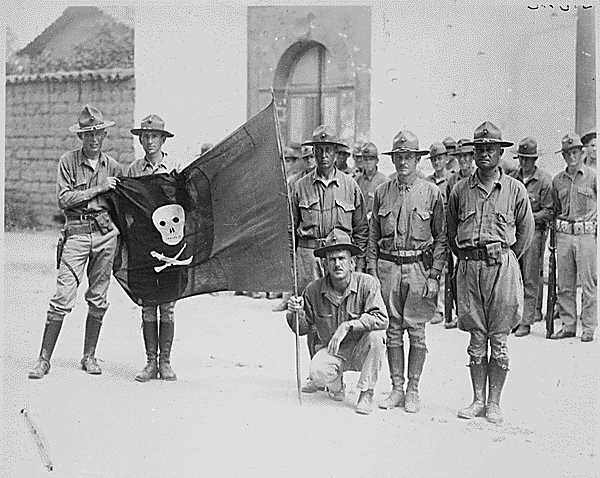
U.S. Marines display captured flag of Nicaraguan rebels led by Augusto Cesar Sandino

While pop-centric COIN may be dead, small wars and irregular warfare will always be with us. We might say they are in the fourth or fifth generation; are an open-source insurgency; or have become “hybrid“; or exist in some kind of mysteriousgray zone“. Whatever we call them, small wars are here to stay.

Two recent publications explore the topic.

The first is a taxonomic work from Robert Bunker at the Strategic Studies Institute:

Old and New Insurgency Forms

….Blood Cultist (Emergent). Strategic implications:  Limited to moderate. This insurgency form can be viewed as a mutation of either radical Islam and/or rampant criminality, as found in parts of Latin America and Africa, into dark spirituality based on cult-like behaviors and activities involving rituals and even human sacrifice. To respond to this insurgency form, either federal law enforcement or the military will be the designated lead depending on the specific international incident taking place. An all-of-government approach will be required to mitigate and defeat this insurgency form, which has terrorism (and narco-terrorism) elements that represent direct threats—especially concerning the Islamic State—to the U.S. homeland […]

I strongly agree with Bunker’s “dark spirituality” angle present in deviant religious-military movements. For example, ISIS, for all its protestations of ultra-orthodoxy in its Salafism exudes a spirit of protean paganism in its words and deeds.

The second is a book, Clausewitz on Small War by Christopher Daase and James W. Davis (Hat tip to Nick Prime). From a book review at the London School of Economics:

….The current generation’s trend in understanding Clausewitz is that of moving beyond On War – an analysis which Clausewitz himself considered incomplete and which was published posthumously. As part of this shift, 2015 alone saw the publication of a new account of his life, together with a biography of his wife and a comparison between Napoleon’s and Clausewitz’s ideas on war, to name a few.

Through Clausewitz on Small War, Christopher Daase and James W. Davis make a significant contribution to such efforts of contextualisation. Yet theirs is quite distinct from other works, in that they translate into English writings that were thus far accessible only to those with a reading knowledge of German. This is precisely where the value of the book lies, as well as being the editors’ primary aim: opening up Clausewitz through translating his own words, rather than in interpreting them. In doing so, they offer the tools through which future analyses can be better informed.

The editors nonetheless do set out a case in the introduction: Clausewitz’s writings on ‘Small War’ are testimony to his continuing relevance. To illustrate this, they offer four chronologically arranged texts – a journey of how his thinking on Small War evolved. Each text was written with a different frame of mind. The first is comprised of lecture notes on small-unit warfare that are informal and rather technical; the second and third are memoranda distributed to military reformers and through which Clausewitz passionately makes the case for militias; and the final is a chapter from On War, again on the arming of the people.

I would add that ZP contributor, Lynn Rees, also had a recent post on the role of Marie von Clausewitz in shaping “Clausewitz” and Clausewitzian thought.

That’s it.

Politics while in uniform: the No, Sir, and Yes of it

Saturday, March 19th, 2016

[ by Charles Cameron — trying out a new look for DoubleQuotes ]
.

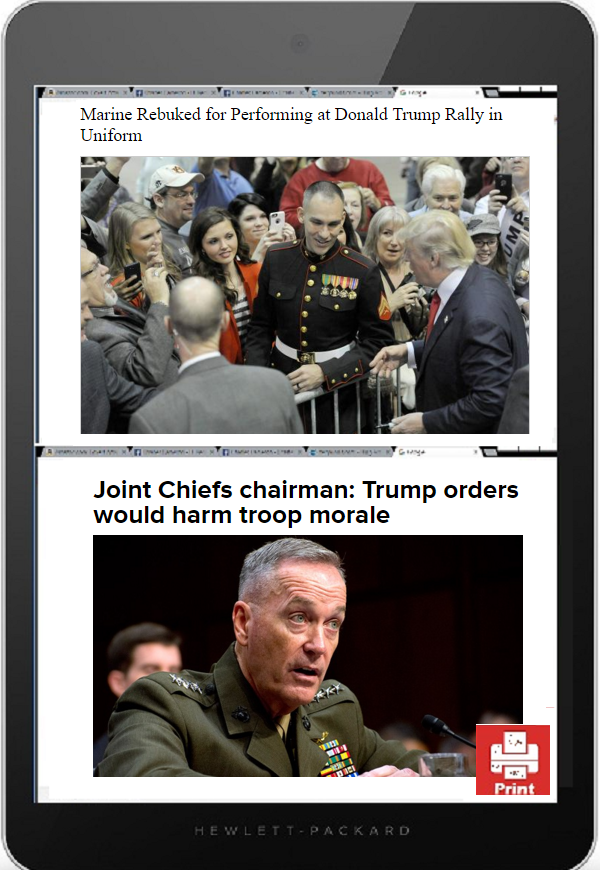
I’m aware that testifying under oath when questioned on a specific topic by Congress is different from promoting a presidential candidate at a campaign rally — but even so, the contrast strikes me as interesting:

tablet trump & politics in uniform

As for the question of orders to torture which Joint Chiefs of Staff Chairman Gen. Joseph Dunford was addressing, I personally am with him. My point here, however, is not to play politics, but to raise the issue of “justice” — in this case, “fair play” might be a better phrase — “not only being done, but being seen to be done”..

**

Sources:

  • Military.com, Marine Rebuked for Performing at Donald Trump Rally in Uniform
  • Thehill.com, Joint Chiefs chairman: Trump orders would harm troop morale
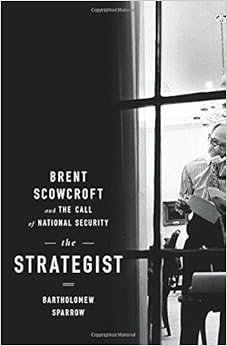
  • The Strategist: Brent Scowcroft and the Call of National Security

    Friday, March 4th, 2016

    [by Mark Safranski / “zen“]

    The Strategist: Brent Scowcroft and the Call of National Security by Bartholomew Sparrow

    In writing The Strategist, Bartholomew Sparrow has demonstrated that his talents as a biographer match his skill as a scholar. Cautious and careful, in telling the life and national security career of the highly regarded Brent Scowcroft, Sparrow never slips into hagiography, or gives Scowcroft a free pass in situations where it would be easy to do so. In retaining his critical eye, Sparrow has consequently permitted Scowcroft’s selfless character and frequently wise judgement to shine on their own merits in the historical record. The result is that The Strategist is a biography of remarkable power, like a great river, there are deep currents of insight below the gently moving surface.

    At a sprawling 716 pages, Sparrow had room to investigate Brent Scowcroft’s family heritage in Mormon Utah, his journey at West Point from student to professor, his intellectual and professional mentors (Herman Beukema, William T.R. Fox, George Lincoln, Richard Yudkin, Andrew Goodpaster) and Scowcroft’s unfailing devotion to his wife Jackie, who became an invalid in the years when Scowcroft’s career embraced its largest burdens. It is this context that helps explain the strong ethical core that Scowcroft demonstrated time and again as a military officer, strategist and statesman as he handled brilliant but brittle personalities at the center of national security and foreign policy.

    What Sparrow makes clear, time and again, was that it was Scowcroft’s unusually high emotional intelligence coupled with an amazing work ethic that provided Scowcroft with the high opportunities that allowed him to bring his talents as a strategist and manager of national security to bear. Quite simply, Scowcroft connected with people and his relentlessly consistent integrity in dealing with everyone – literally from interns to journalists to Presidents of the United States – was such that his word was regarded as being as good as gold. His equanimity too was almost as legendary as his ethics. ” I never heard Scowcroft get angry” is a frequent refrain of former colleagues. His detractors are few: Dick Cheney, who as Vice-President had a bitter break with Scowcroft over the Iraq War, had nothing but praise to say of his former friend’s integrity and judgement.

    Not only did Scowcroft forge an unusually close strategic partnership with two presidents (Ford and Bush I) but he managed to win the respect and trust of so paranoid and aloof a figure as Richard Nixon (it is far less clear that Scowcroft trusted Nixon). Scowcroft’s secret was that inside a Beltway where politics and personalities trended Machiavellian, he operated in a zone of trust. Even the Clinton and Obama administrations sought Scowcroft’s counsel because they were assured of his absolute discretion and impartial judgement.

    Asked to compare himself with his former boss, Henry Kissinger, Scowcroft demonstrated that he knew his strengths and his limitations. Sparrow writes:

    “….Scowcroft had his own well-developed sense of military strategy and world history. He was also brilliant at questioning and evaluating the merits of his new ideas and policy options as well as a superb bureaucratic operator who knew how to put concepts into practice. But unlike Kissinger, Scowcroft said he was better at reacting to and evaluating ideas than he was dreaming them up; that was why he liked to hire people smarter than himself. ‘I don’t have a quick, innovative mind’ he claimed. ‘I don’t automatically think of good new ideas. What I do better is pick out good ideas from bad ideas.”

    Was Scowcroft a good strategist?

    The first problem in answering this question, at least from reading Sparrow, is that Scowcroft’s rarely equaled skill as a manager of the NSC decision-making process tends to greatly overshadow and blur his record as a strategist.  Scowcroft’s National Security Council, which worked well under Gerald Ford when the greatest of Washington prima donnas, Henry Kissinger, reigned as Secretary of State, hummed like a machine under George H. W. Bush. One would have to go back to Eisenhower to see such a comparable example of smooth national security decision making. The key was the absolute trust Scowcroft established, as Sparrow records:

    “Bush, Baker, Scowcroft and other senior administration officials were able to establish relationships based on trust. ‘One of the reasons why the system worked was that Baker and Cheney totally trusted Brent to keep them informed and to fairly represent their views to the president,’ Gates said. ‘He was the only national security adviser in my view that was ever so trusted by the two other principals’ – and Gates had served under six US presidents at the time he wrote the above, before his time as defense secretary under George W. Bush and Barack Obama.

    Scowcroft’s management of the NSC process also worked well because of his creation of other interagency groups to expedite decision making. One of his key innovations (retained by subsequent presidential administrations) was the formation of the Principals Committee which included the Vice-President, the secretary of state, the secretary of defense, the director of central intelligence, the chairman of the Joint Chiefs of Staff, the White House Chief of Staff and the national security adviser – all meeting without the president.”

    Scowcroft achieved the holy grail of natsec policy – “whole-of-government” planning and execution. Part of the reason was that Brent Scowcroft was extraordinarily close to the elder President Bush, far closer than in the dysfunctional yet highly successful partnership between Richard Nixon and Henry Kissinger. That accounts for some of it, but Condi Rice was just as close to George W. Bush as Scowcroft had been to Bush’s father yet her tenure as national security adviser is given low marks, not least for being completely unable to rein in Secretary of Defense Donald Rumsfeld or Vice-President Dick Cheney who was virtually the prime minister of the administration in its early years. The difference may have been that Scowcroft could not only speak with the President’s unquestioned authority, he knew better when to do so than Rice and consequently, seldom needed to do it at all.

    The second problem in answering “was Scowcroft a good strategist” is that he clearly was not and never aspired to be a grand strategist in the manner of Richard Nixon, George Kennan or Otto von Bismarck.  Scowcroft never approached national security by attempting to reshape the geopolitical calculus despite the regrettable tagline of “new world order”. Instead, Scowcroft’s strategic philosophy was to manage risks as they emerged by peacefully integrating a collapsing rival state system piecemeal into the existing international community status quo at the lowest possible cost of disruption. Maximizing geopolitical opportunities or strategic gains was not his primary yardstick.

    This is why as Sparrow, relates, that Scowcroft and the senior President Bush strongly discouraged “triumphalism” in American rhetoric about the Cold War while trying to work with Mikhail Gorbachev to manage the Soviet collapse; and why the break up of Yugoslavia was viewed with such distaste (Scowcroft had served in the embassy in Belgrade under Kennan). Conversely, this is also why  Scowcroft was so eager to use American military force in Iraq, to defend and reinforce post-Cold War international legal norms from Iraqi aggression, but not to march to Baghdad and overthrow Saddam’s dictatorial regime. Brent Scowcroft deserved the credit for both his early insight that force would be required to remove Iraq from Kuwait and the wisdom of the Bush administration to wield overwhelming force with restraint and diplomatic finesse.  When the second Bush administration – an administration filled with his former colleagues – opted to march on Baghdad, it would have been a simple matter for Scowcroft to remain silent, but instead he offered counsel. When his advice was rebuffed, Scowcroft did the harder thing and made his case against the Iraq War public even though it cost him friendships and access to the President of the United States. A rare choice in Washington.

    Scowcroft is indeed a strategist by any reasonable measure and something greater, a statesman for whom the country and its national interest always came first.

    Strongly Recommended.

    New Book ! Global Radical Islamist Insurgency

    Friday, February 19th, 2016

    [by Mark Safranski / “zen“]

    Torn from the pages of Small Wars Journal…..

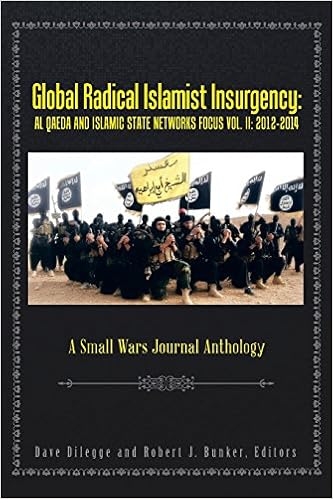
    Global Radical Islamist Insurgency: al Qaeda and Islamic State Networks Focus Vol. II 2012-2014  edited by Dave Dilegge and Robert Bunker

    New and looking to be very useful. Right up the alley for our own Charles Cameron and friends of ZP blog like Tim Furnish and Leah Farrell. Another one,  Daveed Gartenstein-Ross has written the foreword.

    From SWJ:

    ….This anthology-the second of an initial two volume set-specifically covers Small Wars Journal writings on Al Qaeda and the Islamic State spanning the years 2012-2014. This set is meant to contribute to U.S. security debates focusing on radical Islamist global insurgency by collecting diverse SWJ essays into more easily accessible formats. Small Wars Journal has long been a leader in insurgency and counterinsurgency research and scholarship with an emphasis on practical applications and policy outcomes in furtherance of U.S. global and allied nation strategic interests. The site is able to lay claim to supporting the writings of many COIN (counterinsurgency) practitioners. This includes Dr. David Kilcullen whose early work dating from late 2004 “Countering Global Insurgency” helped to lay much of the conceptual basis focusing on this threat and as a result greatly helped to facilitate the writings that were later incorporated into these Al Qaeda and Islamic State focused anthologies. This volume is composed of sixty-six chapters divided into sections on a) radical Islamist OPFORs (opposition forces) and context and b) U.S.-allied policy and counter radical Islamist strategies.

    The editors are well known to many ZP readers with Dave being SWJ Editor-in-Chief while Dr. Bunker is the Futurist in Residence for the Strategic Studies Institute. Somewhere along the line though, I somehow completely missed the roll-out for Volume I.  Guess my review copy was lost in the mail….cough 🙂 I will be ordering both.

    In all seriousness, I’m very glad to see the valuable work done by the editors and contributors at SWJ compiled into book form. Small Wars Journal is literally a national resource of military thinking, theory and open debate that operates on a shoestring and love of country ( consider making a tax deductible donation here).


    Switch to our mobile site