The Incredible Shrinking State Department must Evolve or Die
Thursday, October 15th, 2009A quick ‘think” post.
It is generally a bad sign for a SECSTATE so early in an administration to have to come out and deny that they have been marginalized by the White House, as Secretary Clinton felt compelld to do the other day. The denial itself serves as confirmation of the fact.
It is tempting to write this off as another example of traditional, politically-motivated, battles between White House staffers, determined to protect the authority of the POTUS over foreign policy and the bureaucracy at State. We have seen this struggle in the past with Al Haig, Cyrus Vance, William Rogers, Cordell Hull, Robert Lansing and other SECSTATEs who sooner or later found themselves sidelined and excluded from key foreign policy decisions by the president. However, this is not just a case of Obama insiders distrusting and attempting to “box in” the Clintons as political rivals, by using other high profile players ( though that has been done to Clinton).
Nor is it just that State is grossly underfunded relative to its responsibilities by the U.S. Congress, which it most certainly is. I’m pretty critical of State but to do everything they *should* be doing, and to do the job right, requires a sizable budget increase, perhaps upwards of 50 %. This cut off the nose to spite our foreign policy face niggardliness by the legislature is not new. Go back and read the memoirs of diplomats of a century ago. They wrestled with the same budgetary penury as State has to deal with today; even during WWII when you’d have thought money would be no object, Congress stiffed diplomats in hazardous, war-zone, postings on their food allowances. The foreign service was long the preserve of wealthy, well-connected, white men because back in the day, only they could afford to live on a State Department salary.
No, the hidden problem for the State Department is that in an age of failing, failed and fake states, diplomacy means less than it once did and accomplishes less in a greater number of places. You could replace Hillary Clinton with Talleyrand as SECSTATE and give him $ 100 billion to play with and he’d still be stuck with a collection of chaotic Gap states without effective internal governance, eroding sovereignty and multiplying non-state actors freebooting across international borders. The problem for State is the global evironment and their disinclination to adapt effectively to it as an institution. It’s foreign interlocutors frequently cannot deliver on any deals, even if they wanted to do so. When that is the reality, what role does diplomacy have in policy or strategy?
State needs to overhaul its personnel system and FSO culture to embrace the reality that interagency teamwork at the inception of policy planning is the only way the USG will be able to effectively advance its interests and nurture stability. The age of ambassadors or even mano-a-mano superpower summitry is over, even among great powers because State cannot execute policy across the DIME bureaucratic spectrum much less bring in the private sector on its own. It has neither the imagination nor the power to go it alone. For that matter, State is having enough trouble just managing its core functions plus public diplomacy and development aid ( the last two so poorly they should be hived off immediately).
SECSTATE Clinton would like to be the Mario Andretti of Obama ‘s foreign policy but what she’s driving amounts to an Edsel. State needs an engineer to re-design it, and an advocate who can pull in the funding, not an operator or manager of the status quo. If State does not change its culture and its structures in the next decade, it is just marking time until some catastrophe results in it being retired to the historical graveyard and replaced with a new agency better suited to the conditions of the 21st century.
 wants to hear from you. So please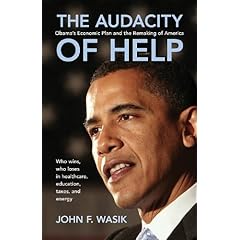
 by
by  influential readers). Nor am I an expert on business or finance issues, Wasik’s forte as a journalist and an area best judged from a position of extensive personal experience, which I do not have. John Wasik though, after I checked him out, impressed me as an evenhanded and experienced reporter, so I accepted.

