zenpundit.com » mideast

Archive for the ‘mideast’ Category

The al-Masri Dialogue

Tuesday, February 9th, 2010

Charles Cameron, in his latest guest post here, penned a beautiful essay regarding the ongoing exchanges between Australian counter-terrorism scholar Leah Farrall and Abu Walid al-Masri, an adviser to the Taliban and an experienced strategist of Islamist insurgency. Farrall has translated and posted this dialogue on her blog, All Things Counter Terrorism, which has received much attention, commentary and criticism in the blogosphere and on private listservs and quasi-official bulletin boards.

Generally, I leave this sort of subject to Charles, since he has the academic expertise to drill down to a granular level of Islamic theology and Islamist ideology, but al-Masri is an intriguing figure and his public conversation with Farrall is a novelty worth investigating. It would be hard to imagine during the Cold War, an open media debate between a Western CI official and a Soviet spymaster still engaged in espionage in the field ( Kim Philby hurled public jermiads it is true, but that was in retirement in Moscow and only after his long-suffering KGB handlers had managed to get his severe alcoholism under control). In that spirit, I want to offer a few observations.

While there is artifice present, as al-Masri is consciously speaking to a multiplicity of audiences in his remarks, the idea that we should therefore dismiss the dialogue with Farrall, as some suggest, is an error. There is also posturing in purely intra-Islamist-debates on which we eavesdrop and, frankly, within our own arguments inside government and out. We learn from what people do and do not do, from what they say and what is left unsaid. Being able to speak to multiple audiences is a constraint, as well as an advantage, as it shapes the parameters of the premises to be employed and the extent to which the underlying logic can be permissably extrapolated. To quote a Zen saying, if you wish to fence in a bull, give him a large meadow. 

The constraints, if correctly discerned, are illuminating and are analytically useful in constructing our own tactical responses and message strategy (assuming someone can convince the State Department bureaucracy that IO and public diplomacy are important and persuade Congressional leaders to fund such activities with more than pocket change). They are also useful in helping to understand the worldview and governing paradigms of our opponents in more complex and nuanced manner than reflexively saying “they hate our freedoms”. Well, many jihadi types do in fact, viscerally hate our freedoms or deny that democracy is a legitimate form of government in an abstract sense, much the same way they casually disparage Hindus as “cow worshippers” or Thais as “crazy Buddhists”; however those loose attitudes and spasms of hostility are not akin to operational principles or strategic doctrines.

For that, we have to dig deeper into the politico-religious motivations of violent Islamists and listen closely to what our enemies are saying – particularly when they are making an effort to speak to us directly, as al-Masri is doing, his determination to score propaganda points in his little elicitation dance with Farrall notwithstanding. Americans are not very good at listening and our elites are deeply uncomfortable with the entire subject of religion, tending to view pious expressions of Christianity with contempt and Islam as a completely taboo subject. There is a strong preference in government and academia for analytical models of terrorism or insurgency that dwell on DIME spectrum variables because these fit in the personal comfort zones and the educational, social and professional experiences of the American elite. This would be a perfect approach if al Qaida’s leadership were composed of Ivy League alumni and Fortune 500 CEOs.

Economics and military force are always factors in geopolitical conflict, the war of terror included, but until Islamist extremists oblige us by becoming secular Marxist revolutionaries waving little red books, it would behoove us to look with greater scrutiny at the curiously reified religious ideology with which they justify or eschew courses of action to themselves. Our own strategies might be more focused and effective if the operators across our intelligence, military, diplomatic and law enforcement agencies had something approaching a shared understanding of violent Islamism and if they could communicate this understanding along with the benefit of their experience and current intelligence to help political leaders shape American policy.
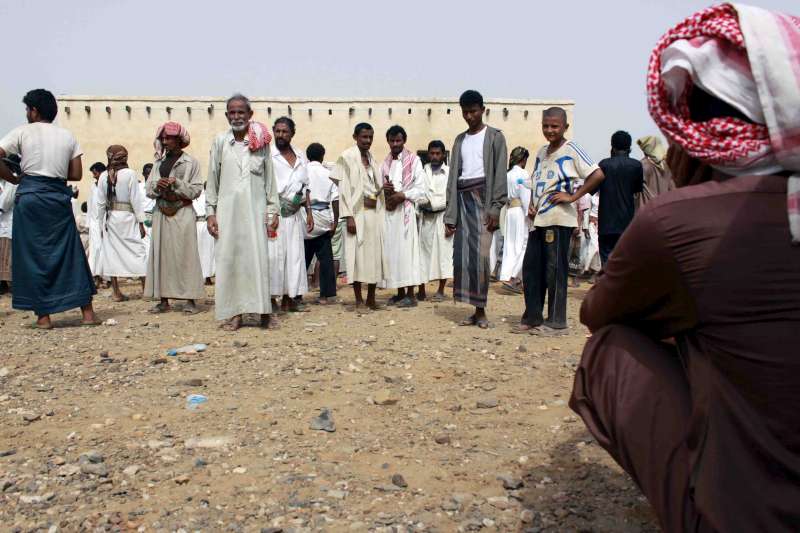

Battleground Yemen

Wednesday, January 27th, 2010

An informative post by Curzon at Coming Anarchy

Yemen: Geography Matters!

….The Saudis are guilty of aggravating and prolonging the conflict. Wary of taking too many losses on the ground and unable to do much by air and sea, they have recruited the Hashed, a local tribe, to fight against the Huthi, the tribe central to the Shia rebels. The Hashed have several incentives to continue fighting for as long as possible-they have a long-standing feud with the Huthi, and make a great deal of money from fighting for the Saudis, and may be coming up with schemes to prolong the conflict. According to a source of Al Jazeera:

If [the Hashed are] given the mission of taking a particular mountain, for example, they’ll call up the Huthi leaders and tell them: ‘We’re getting five million riyals to take the mountain. We’ll split it with you if you withdraw tonight and let us take over’… After the tribesmen take charge, they hand it over to the Saudis… The next day, the Huthi return and defeat the Saudis and retake the mountain… It’s been happening like this for weeks.

Guest Post: The Duel of Ali ibn Abu Talib with Amru ibn Abd Wudd

Monday, November 30th, 2009

Charles Cameron has been guest blogging here in a series on radical Islamism and terrorism. A former researcher with the Center for Millennial Studies at Boston University, his most recent essay, an analysis of the powerpoint presentation of Ft. Hood shooter Nidal Malik Hasan, appeared in the Small Wars Journal.

The Duel of Ali ibn Abu Talib with Amru ibn Abd Wudd:an old story of Muslim chivalry, told in refutation of today’s jihadists.

By Charles Cameron

*i*
 
Joseph Campbell was a comparative mythographer whose most celebrated book, *The Hero with a Thousand Faces*, famously provided George Lucas with the narrative stages found in the hero stories of the world’s cultures, and thus with the series of events that would forge a hero and Jedi warrior out of the raw material of young Luke Skywalker. In other books, he more than once tells the story of the samurai — a warrior with a precursor to the Jedi code — who was spat upon in battle:

His overlord had been killed, and his vow was, of course, absolute loyalty to this lord. And it was his duty now to kill the killer. Well, after considerable difficulties, he finally backs this fellow into a corner, and he is about to slay him with his *katana*, his sword, which is the symbol of his honor. And the chap in the corner is angry and terrified, and he spits on the samurai, who sheathes his sword and walks away. Now why did he do that? He did that because this action made him angry, and it would have been a personal act to have killed that man in anger, and that would have destroyed the whole event

It’s a powerful little nugget of a story, and in Campbell’s explanation of what was going on, we may even find a hint of where Lucas may have picked up the idea of the Force. Campbell writes:

This is a mythological attitude. You are acting not in terms of your individual, personal life but with the sense of yourself as the priest,so to say, of a cosmic power which is operating through you, which we all are in circumstances, and the problem is to balance yourself against that and have a personality at the same time

The thing is, Campbell may have been misremembering the source of his story. It’s true that such tales sometimes crop up in more than once culture, sometimes traveling the caravan routes from one place to another, or emerging perhaps, as Carl Jung suggests, from some dream logic deep in the heart of our humanity — but I have only seen thisstory told, and told repeatedly, within Islamic culture. It is in fact the story of the Duel of Ali ibn Abu Talib with Amru ibn Abd Wudd.
 
 
*ii*
 
In the month of Shawwal 7 AH / 627 CE, the Muslims fought in the Battle of the Trench against a confederation of tribes at war with them. During the battle, Ali ibn Abu Talib encountered one of the chiefs of Quraysh, Amru ibn Abd Wudd, renowned for his bravery and strength, as well as his reputation as a formidable wrester within Arabia; he was said to be the equivalent of a thousand horseman. When he managed to traverse the Trench with a party of men, he challenged the Muslims to a duel of swords. Ali asked Prophet Muhammad to permit him to accept the challenge, but Prophet Muhammad refused his offer, simply stating that he was the formidable Amru. With no one accepting Amru’s taunts to duel, Ali’s insisted for permission to duel for the third time. This time, the Prophet accepted, and gave him the famed sword, Dhul-Fiqar, and supplicated for his success. Ali asked Amru to accept Islam, but he refused and preferred to fight Ali.
 
Towering over his opponent, the more experienced and stronger Amru hammered blows on Ali’s shield and clashed with his sword. Ali then dropped his sword and shield to the ground; he leapt to grab Amru’s throat, and kicked him off balance. Amru crashed to the ground, with Ali now towering over him: “Know, O Amru, that victory and defeat depend upon the will of Allah. Accept Islam! Thus not only will your life be spared, but you will also enjoy the blessings of Allah in this life and the next.” At this suggestion, Amru spat into Ali’s face, fully expecting death. Ali rose calmly from Amru’s chest, wiped his face, and stood a few paces away, gazing solemnly at his adversary. “Know, O Amru, I only kill in the way of Allah and not for any private motive. Since you spat in my face, my killing you now may be from a desire for personal vengeance. So I spare your life. Rise and return to your people!”
 
For Amru, to live now would be to live as the vanquished after having tasted victory on the battlefield all his life. He lunged at Ali as he walked away. With enough time to lift his sword and shield, Ali prepared for the fresh assault. Amru’s devastating blow shattered Ali’s shield, inflicting a shallow cut to Ali’s temple. As the second blow rose, Ali swept Dhul-fiqar and decapitated Amru. The Muslims praised Allah. After killing of Amru ibn Abd Wudd, Imam Ali had the gap in the trench which Amru had breached blocked, and took his post at that point with the intention of confronting anyone who might try to cross the trench. They too, would encounter Amru’s fate should they have tried.
 
When Imam Ali returned from the battlefield, the Messenger of Allah received him and said: “The fighting of Ali ibn Abu Talib with Amru ibn Abd Wudd is greater in measure than the actions of my people until the Day of Resurrection.” Ali ensured that the precious chain of armour, adorned with hung-gold rings, which Amru had worn during their duel, was returned to Amru’s sister of the Bani Amir, so that it would not be thought that Ali had killed him in greed of this precious chain coat.
 
 
*iii*
 
I have drawn this telling of the tale from the Islamic think tank Ihsanic Intelligence’s remarkable work, “The Hijacked Caravan: Refuting Suicide Bombings as Martyrdom Operations in Contemporary Jihad Strategy“, which describes it as illustrating the importance of a chivalric code within Islam — the section in question begins, “The concept of chivalry [futuwwa] is at the forefront of Jihad” — with “the model of Imam Ali as constituting the prime example of chivalry”.

As the authors of “The Hijacked Caravan” note, this tale can be found in the *Mathnawi*, the great epic of the thirteenth century Sufi poet Rumi— himself born in the environs of Balkh, Afghanistan (it would have been Khorasan back then) — currently (somewhat paradoxically) America’s best-selling poet:
 

In a battle against the unbelievers Ali got the upper hand against a certain champion. He quickly raised his sword and was hurrying to kill him. But the man spat in Ali’s face, who was the pride of every prophet and every saint; He spat upon a face before which the beautiful face of the full moon bows low at the place of prostration. At that moment, Ali threw aside his sword and slowed down in his fight against him. That brave warrior … said, “You raised your sharp sword against me: for what reason did you throw it aside and quit fighting me? Ali said, Since a motive other than God entered my heart in the holy war, I deemed it right to sheathe the sword.

Mathnawi I: 3721 adapted

Ali comments on the struggle (jihad) in which he is engaged at the crucial moment, “The sword of my restraint has struck the neck of my anger” — identifying it as the “greater jihad” against one’s own evil
tendencies, which here (as in the well-known hadith) clearly supersedes the “lesser jihad” of the physical fight against the enemies of Islam.
 
 
*iv*
 
I have, however, also found this story in one other place where a Muslim is presenting a public case against the contemporary jihadist world-view.
 
The novelist and screenwriter Kamran Pasha was particularly delighted to join the writing team on the Showtime series, *Sleeper Cell*, because it would give him an opportunity to represent how mainstream Muslims scholars think about those verses in the Qur’an that are commonly used to support the actions of Al-Qaida — and about their version of Islam in general.
 
Kamran wrote the episode, “The Scholar”, and based the Islamic moderate scholar Sheikh Zayd Abdal Malik on the real-life figure of the Yemeni judge, al-Hitar, who challenges captured jihadists to a theological duel with the words “If you can convince us that your ideas are justified bythe Koran, then we will join you in your struggle — but if we succeed in convincing you of our ideas, then you must agree to renounce violence.”

At the beginning of the episode, Abdal Malik is spat upon by an imprisoned extremist. He calmly removes his glasses, wipes his face, replaces his glasses, picks up his copy of the Qur’an, kisses it reverently and begins his task of persuasion… Towards the end of the same episode, now on a lecture tour of America, he quotes the hadith about the greater and the lesser jihad:

The holy Prophet — sallallahu ‘alaihi wa sallam — said that war against the unbelievers is the lesser jihad. The greatest jihad is to battle your own soul, to fight the evil within yourself.

He is then asked, “So, who is a true holy warrior, then?” and replies,”The Prophet’s cousin Ali” – at which point he tells the story of the duel.
 
Kamran Pasha’s own wish in re-telling this story can be deduced from another comment placed in the mouth of his chivalric and heroic Islamic scholar, shortly before he is assassinated: “I will issue a fatwa against the murdering devils who have hijacked our beloved Islam.”
 
This episode is in some sense Pasha’s own unofficial fatwa, and the story of the duel of Ali ibn Abu Talib with Amru ibn Abd Wudd holds a central place in his argument, as it does in The Hijacked Caravan.

Kamran Pasha blogs. His post on Major Hasan and the Fort Hood shooting includes the comments of a friend of his, a recent Muslim convert also stationed at Fort Hood, who had prayed alongside Hasan at the mosque that morning. It is a post that repays reading. Kamran has received death threats for his stance against jihadist ideology, which he pillories in his novel Mother of the Believers while describing the Khawarij, extremists in the early days of Islam — one of whom assassinated Ali ibn Abu Talib.

Ali ibn Abu Talib, who forgave his killer. Ali ibn Abu Talib – whose blood flows in his direct descendant Kamran Pasha’s veins

Guest Post: Speak the Languages, Know the Modes of Thought

Wednesday, November 4th, 2009

Charles Cameron, who has appeared here before, is the former Senior Analyst with The Arlington Institute and Principal Researcher with the Center for Millennial Studies at Boston University. He specializes in forensic theology, with a deep interest in millennial, eschatological and apocalyptic religious sects of all stripes.

Charles will be doing a new series of posts here at Zenpundit that will drill down into the important but often elusive religious-cultural connections that impact American national security and foreign policy issues.

Very pleased to have him aboard:

SPEAK THE LANGUAGES, KNOW THE MODES OF THOUGHT:

by Charles Cameron

SSgt. David Flaherty, currently deployed as the Zabul Provincial Reconstruction Team’s public information officer, is to be congratulated on speaking Pashto. But Wireds Danger Room comment, “The fact that this is considered newsworthy and exceptional — a U.S. military officer speaks one of the official languages of Afghanistan! — doesn’t reflect well on the national commitment to Afghanistan” is also to the point.

A couple of other recent items in the news about languages and translation at home and abroad should concern us.A report from the US Department of Justice on the FBI’s Translation Project was less than enthusiastic, not only finding that significant quantities of material collected in the Bureau’s highest-priority counter-terrorism and counter-intelligence collection categories were never evaluated, but that the number of translators inn the FBI pool had diminished since a 2005 audit, that in 2008 the FBI met its hiring goals for linguists in only 2 of its 14 critical languages, that security clearance and language proficiency training for a new linguist took 19 months before hiring could take place, and that 70 percent of the FBI’s own linguists in the field offices tested did not attend the FBIs required training course.

And retired and renowned Marine colonel Thomas X. Hammes was quoted in a recent piece on CBC News about allegations of “botched” translations in the Afghan theater leading NATO troops to faulty conclusions as saying, “We’re willing to spend hundreds of millions of dollars to make sure ice cream and steak is there, and I would trade all of that for my entire tour if I could have one decent translator. Many times I’d trade body armor for a translator.”I want to suggest, though, that there is another aspect to this business. I was reminded of it when reading the FBI complaint against Luqman Ameen Abdullah and others connected with the recent events in Detroit. The complaint includes the phrase, “Abdullah also said that thegovernment plots and plans against them so they need to plot and plan in return”. The complaint doesn’t mention it, but that’s an echo of the words of the Qur’an, 8.30:

 “And when those who disbelieve plot against thee (O Muhammad) to wound thee fatally, or to kill thee or to drive thee forth; they plot, but Allah (also) plotteth; and Allah is the best of plotters.”

What this suggests to me is that we need to be able to speak / read not only spoken or written languages of our sources, suspects, informants and opponents — but also the language or underlying logic of their thought. A close reading of the Detroit complaint’s text in association with that of the Qur’an gives us an understanding that Abdullah views his plotting as aligned with Allah’s. This in itself may not seems surprising, but it suggests a manner of reading that may prove fruitful in other occasions, and that’s the point I want to make.

Whatever the merits of the particular case of Luqman Abdullah — and I note that some respected analysts have their questions about that — it will be found to hold true in general that jihadist thought moves along Qur’anic pathways as surely as jihadist behavior parallels the behavior of Mohammed. A keen awareness of both will thus allow us to understand where the touching of familiar chords is most apt to stir the hearts of fellow believers, and hence strengthen the bonds of community and dedication between them.

When bin Laden retreated to the caves of Tora Bora, he was following in his Prophet’s footsteps, as Lawrence Wright masterfully showed in *The Looming Tower*. His spoken words often follow Qur’anic precedent in much the same way.Bin Laden’s address to the US just before the 2004 elections was a case in point for me. I read three translations (CNN, MEMRI, Al-Jazeera), none of which included the Qur’anic citation that headed the whole thing, and figured out what it must be from the repeated echoes in the text, notably “and just as you lay waste to our Nation, so shall we lay waste to yours”.

That put me very strongly in mind of Qur’an 2.194:

“For the prohibited month, and so for all things prohibited, there is the law of equality. If then any one transgresses the prohibition against you, transgress ye likewise against him. But fear Allah, and know that Allah is with those who restrain themselves.”

Okay, I could figure out that bin Laden had this passage in mind as I read the transcripts of his address — but it wasn’t until I saw ABC’s transcript that I could confirm that Bin laden did indeed reference that verse directly.

Which powerfully reinforces the idea that bin Laden views his jihad against the US in terms of measured reciprocity — a notion which should give us pause every time we take an action which we would not choose to have taken against us…

And how good are we at this kind of “reading in parallel” — both abroadand at home?

To return to the Detroit affair, as UCLA’s Jean Rosenfeld pointed out, the NYT report on the event contained the phrase “a faction of a group called the Ummah, meaning the Brotherhood” — a completely misleading
translation which might suggest ties with the Egyptian “Muslim Brotherhood” — when the plain meaning of “Ummah” is the transnational community of Muslims. The New York Times is our newspaper of record.

The Times, in turn, was likely paraphrasing the FBI’s own press release, which speaks of “part of a group which calls themselves Ummah (‘the brotherhood’)”. It’s notable, though, that there is no mention of the
“brotherhood” in the entire 45 pages of the actual FBI complaint,
written by those more closely involved with the investigation.

What the complaint itself does say is that the name “Ummah” was used as a cover for the movement’s real name, the “Dar-ul-Islam Movement“.

Okay, that’s a beginning…

And still our transcriptions of jihadist messages all too often omit religious content. Indeed, when the Joint Forces Command asked Jim Lacey to edit abu Musab al-Suri’s massive Call to Global Islamic Resistance for publication in English translation, he (rightly) produced a condensed version, but (wrongly, IMO) “also removed most of the repetitive theological justifications undergirding” al-Suri’s project.

[ Zen  ed.  Note: copy released to general public as A Terrorist’s Call to Global Jihad: Deciphering Abu Musab al-Suri’s Islamic Jihad Manifesto by Jim Lacey]

Lacey’s work is still a significant contribution, as I intend to detail in an upcoming review. But the omission of almost all trace of al-Suri’s significant messianic-Mahdist content, as you’d expect, leaves me wincing.

We need to be able to “read” jihad — this really shouldn’t need saying, eight years after 9/11, ten after Nairobi and Dar — against its Islamic background.

Always.

Guest Post: Iran or Afghanistan? The Black Flags of Khorasan…

Thursday, September 17th, 2009

Returning as a guest-blogger, Charles Cameron, who is the former Senior Analyst with The Arlington Institute and Principal Researcher with the Center for Millennial Studies at Boston University. The topic is an update on Cameron’s previous cautionary post on the potential implications of an emerging strand of Mahdism among radical Islamists.

( Ed. There will be an update later with two supporting images when I resolve a minor technical issue….)

Iran or Afghanistan? The Black Flags of Khorasan… 

By Charles Cameron.

 i

A couple of days ago I saw a video, posted on YouTube September 12, 2009, titled “The Army Of Imam Mahdi”. It carries the subtitle: “Soon the Army of Imam Mahdi will start its march from Afghanistan towards The Holy Land( Palestine ) and liberate it from the claws of Israel”. I have embedded it for your viewing convenience at the bottom of this post.

This video suggests that I should follow-up on my previous post, “Mahdism in the News” at , in which I noted that the personal representative of Ayatollah Khamenei, the Supreme Jurisprudent of (Shi’ite) Iran, had issued a call to neighboring and sympathetic nations to a joint mobilization in preparation for the return of the Mahdi.

That was a Shi’ite affair: but Sunni Muslims also await the Mahdi’s arrival, though not as the returning Shi’ite Twelfth Imam — and this video correspondingly offers us an appropriate parallel to Ali Saeedi’s call — but IMO should not be confused or conflated with it.

ii

I would like to make this much clear at the outset.

It is roughly as likely that the Ayatollah Khamenei would accept a Mahdi from among Al Qaida or the Taliban as it is that Pope Benedict would accept a Christ who staged his Second Coming in support of the fiercely anti-Catholic Rev. Ian Paisley of the Free Presbyterian Church of Ulster.

That’s not a scholarly comparison, by the way — more of a powerful hunch. But I think it needs to be said.

The Imam Mahdi of the Shi’ites is himself their Twelfth Imam, who was born in 869 CE and then “occulted” — hidden from mundane sight — centuries ago, returning among us in the fullness of time. He is Shi’a of the Shi’a, Muhammad ibn Hasan ibn ‘Ali, the last and greatest in the great Shi’ite lineage of the Twelve Imams.

iii

It was Joel Richardson’s blog at that first alerted me to this video (hat-tip, Joel). He writes:

This is the first time that I have seen solid proof that al-Qaeda and the Taliban is thoroughly guided by Islam’s demonic eschatology. For those who claim that Mahdism is only held by Shi’a, take note that it is a Sunni group that has created this thoroughly Mahdist video and not Shi’a. Al_Qaeda and the Taliban literally views themselves collectively as the Mahdi’s army carrying the Black Flags that will march to Jerusalem to “liberate” it from the Jews. This is a full blown Al-Qaeda / Mahdi Army recruitment video.

I think that’s a bit of an overstatement. I’d say more cautiously that this is evidence that al-Qaeda and the Taliban can be construed in light of Sunni Mahdist expectation, and may view themselves as the Mahdi’s army — and definitely shows that a Mahdist current is at work in some Sunni circles.

The sheikh who is quoted in the video is from Trinidad.

In a more far reaching post at , Joel also claims that the video was ” released under the al-Sahab label” — the al-Sahab logo appears on some of the footage, but the video itself is not from al-Sahab as far as I can determine — and his subtitle, which may have been provided for him by a WND editor, claims the video contains “footage confirming unity of apocalyptic Muslims”. Given Joel’s reference in the same post to the recent Iranian “mobilization” call on which my own earlier post was also based, I think it is important to emphasize:

(a) that while Sunni and Shi’ite Muslims may both be in expectation of the Mahdi, and may indeed both (sometimes) draw on ahadith about his army coming with black flags out of Khorasan, this does not mean that the two streams of Mahdism can be lumped together as a single movement, and

(b) that this video appears to be a production of sympathizers with the Taliban, rather than an Al-Q / al-Sahab production.

iv

The key passage in the video is a discourse attributed to Sufi Shayk Imran Nazar Hossein, who says:

The true messiah will destroy the false messiah. And when that happens then a Muslim army will liberate the Holy Land. The Prophet said, when you see the black flags coming from the direction of Khurasan, go and join that army. That army has already started its march. They know it, and that’s why they demonize as a terrorist anyone, anyone who supports that army. That army will liberate every single territory in a straight line until it reaches Jerusalem said Muhammad (as). At the heart of Khorasan is Afghanistan, and that’s why they have occupied Afghanistan. When that army liberates every territory on its way to Jerusalem, there will be in that army Imam al-Mahdi, and so the liberation from oppression in the Holy Land is not going to come about through any negotiations…

This would appear to be the Islamic scholar Imran Nazar Hosein (to use the spelling of his name used on the website dedicated to his work ), and the video clip that shows him was very likely taken some years back.

His biography can be found here. He appears to have had a distinguished career, including a period spent as Director of Islamic Studies for the Joint Committee of Muslim Organizations of Greater New York, and is the author of Jerusalem in the Qur’an – An Islamic View of the Destiny of Jerusalem.

v

The video includes clips of various mujahideen firing weapons and practicing martial arts, including one with shots of riders with a black flag…

and an image of the Dome of the Rock in Jerusalem (Baitul Maqdas), which appears to be their final goal.

vi

The hadith about the “black flags of Khorasan” mentioned here are, as I understand it, not strongly supported in the hadith literature, but they are available for quotation by those who wish to suggest that the Mahdist army will come from the general area now known as Afghanistan — or Iran, for that matter — a suggestion that gains interest as Afghanistan — or Iran — gains in geopolitical prominence…

Some quick indicators:

Sheikh Salman al-Oadah — once imprisoned for criticizing the Saudi regime and now one of its approved religious spokesmen — writes:

The hadith about the army with black banners coming out of Khorasan has two chains of transmission, but both are weak and cannot be authenticated. If a Muslim believes in this hadith, he believes in something false. Anyone who cares about his religion and belief should avoid heading towards falsehood.

Some people have used this hadith to support their claim that the Mahdi is from the family of al-Abbas and that the Mahdi is from of the Abbasid dynasty. There were Abbasid Caliphs who went by the name al-Mahdi.

The banners of the Abbasid State were black. It is not hard to see how this weak hadith might have been fabricated or at least tampered with to support the Abbasid cause.

That’s the negative view, to be set against significant Sunni jihadist currents that find the hadith useful.

As David Cook notes in his Contemporary Muslim Apocalyptic Literature, p. 173-74), Abdullah Azzam, bin Laden’s mentor, “popularized the position of Afghanistan as the messianic precursor to the future liberation of Palestine” in his book, From Kabul to Jerusalem. Cook also quotes an Egyptian apocalyptic author, Amin Jamal al-Din, as identifying the Taliban with the black flags and the Mahdi’s awaited campaign.

And while Ali-Saeedi, the spokesman for Khamenei, did not mention the Khorasan and black flag hadith in his call for a general mobilization in preparation for the Mahdi’s coming, Cook notes that the hadith in question have earlier been applied to the Iranian revolution of the 1980s under the Ayatollah Ruhollah Khomeini.

Timothy Furnish, in his book Holiest Wars: Islamic Manhdis, Their Jihads, and Osama bin Laden, discusses the Khorasan (“today eastern Iran and western Afghanistan”) and “black flags” hadith together with various Western theses as to their historicity, concluding that “the mass of hadiths” in general functions like a marketplace in which there is “a saying of the Prophet available off the shelf as a legitimizing agent for just about any position”.

Combine that with the apocalyptic habit of associating apocalyptic texts with events in today’s news, and you have a field ripe for what millennial historian Richard Landes calls “semeiotic arousal”.

vii

The video itself:


Switch to our mobile site
