zenpundit.com » 9/11

Archive for the ‘9/11’ Category

The Hunt for KSM

Thursday, March 15th, 2012

The Hunt for KSM: Inside the Pursuit and Takedown of the Real 9/11 Mastermind by Terry McDermott and Josh Meyer

This courtesy review copy just arrived from Machette Book Group. The authors are investigative journalists, one of whom, Meyer, has extensive experience reporting on terrorism, while McDermott is also the author of the 9-11 highjackers book, Perfect Soldiers. Thumbing through the pages, I note the authors have little time and much contempt for the cherished DoD-State canard that the Pakistani government and the ISI are an ally of the United States, which has already given me a warm feeling.

The review copy index pages are blank, something I usually see only before a book has been finalized for mass printing. Odd.

I will be reading and reviewing this soon – Shlok advises that “it reads like a novel”

The Nine Eleven Century?

Sunday, September 11th, 2011

nineleven2.jpg

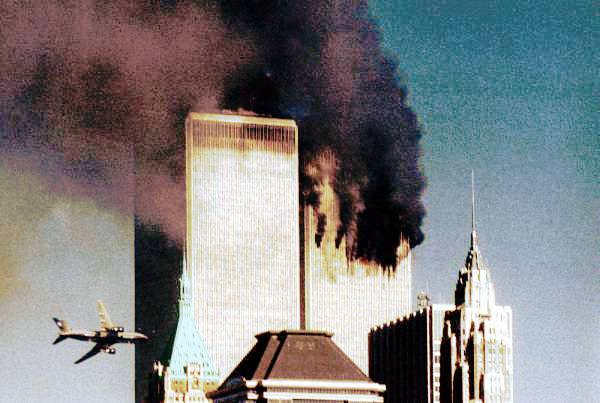
Ten years ago to this day, almost to the hour of which I am writing, commercial jetliners were highjacked by al Qaida teams armed with boxcutters, under the direction of Mohammed Atta, were flown into the towers of the World Trade Center and the Pentagon. A fourth plane, United Airlines Flight 93, believed to be headed to the US Capitol building, crashed in Pennsylvania when passengers led by Todd Beamer heroically attempted to stop the highjackers. The whole world watched – most with horror but some with public glee – on live television as people jumped out of smoke-engulfed windows, holding hands, to their deaths. Then, the towers fell.

From this day flowed terrible consequences that are still unfolding like the rippling shockwave of a bomb.

We look back, sometimes on the History Channel or some other educational program, at the grainy, too fast moving, sepia motion pictures of the start of World War I. The crowds wildly cheered troops with strangely antiquarian uniforms that looked reminiscent of Napoleon’s day, march proudly off to the war that gave Europe the Somme, Gallipoli, Passchendaele and Verdun. And the Russian Revolution.

After the armistice, the victors had a brief chance to reset the geopolitical, strategic and economic patterns the war had wrought and in which they were enmeshed. The statesmen could not rise to that occasion, failing so badly that it was understood even at the time, by John Maynard Keynes and many others, that things were being made worse. World War I. became the historical template for the short but infinitely bloody 20th century of 1914-1991, which historians in future centuries may simply describe as “the long war” or a “civil war of western civilization”.

There is a serious danger, in my view, of September 11 becoming such a template for the 21st century and for the United States.

On the tenth anniversary of 9/11, as we remember the fallen and the many members of the armed services of the United States who have served for ten years of war, heroically, at great sacrifice and seldom with complaint, we also need to recall that we should not move through history as sleepwalkers. We owe it to our veterans and to ourselves not to continue to blindly walk the path of the trajectory of 9/11, but to pause and reflect on what changes in the last ten years have been for the good and which require reassessment. Or repeal. To reassert ourselves, as Americans, as masters of our own destiny rather than reacting blindly to events while carelessly ceding more and more control over our lives and our livelihoods to the whims of others and a theatric quest for perfect security. America needs to regain the initiative, remember our strengths and do a much better job of minding the store at home.

The next ninety years being molded by the last ten is not a future I care to leave to my children. I can think of no better way to honor the dead and refute the current sense of decline than for America to collectively step back from immersion in moment by moment events and start to chart a course for the long term.

Trial of a Thousand Years, by Charles Hill—a review

Thursday, August 11th, 2011

 trial of thousand years

by J. Scott Shipman 

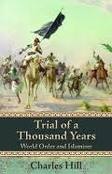
Trial of a Thousand Years, World Order and Islamism, by Charles Hill

Ambassador Charles Hill’s Grand Strategies, Literature, Statecraft, and World Order was the best book I read in 2010, so I had high expectations for this volume and was not disappointed. Ambassador Hill provides a 35,000-foot view of the relationships between the West and Islam in history focusing on the subtitle of his earlier work in the form of “world order.”

Unsurprisingly, as in Grand Strategies Hill goes back to the roots of modern order in the Treaty of Westphalia (1648). He provides a brief review of the world ushered in by the men who negotiated, and quotes another historian who said, “men who were laboring, each in his own way, for the termination of a terrible war. They had no idea of progress. The word “innovation” was anathema to them. The last thing on their minds was the creation of a new system of sovereign states…” Here we are 363 years later and “from the seeds sown at Westphalia” the system they set in place is has grown, but has been under siege many times from many fronts.

Westphalia was distinctive because it was “procedural, not substantive” and required a minimum number of procedures/practices to which to adhere and allowed disparate parties with different, “even mutually antagonistic, substantive doctrines and objectives” to work together. Hill points out four distinctions:

  • Religious arguments were not allowed in diplomacy.
  • The State was the fundamental entity.
  • Interstate/international norms and laws were encouraged, absent “divine sources” but based on mutually beneficial/positive agreements.
  • Use of professional military and diplomats with “its own set of protcols.” [Personal note: In another life, I was an arms control inspector enforcing the START I and INF Treaties—protocol was very serious and the true measure of the actual treaty language. There was also a strong and consistent application of reciprocity that made each party think before stretching protocol—this happened to my teams more than once.]

For Hill a central mission of the United States is the defense of the Westphalian world order. In less than 165 pages and six chapters, he outlines the origins of modern Western order and correspondingly covers Islamic order. From the beginning to the end Hill provides ample evidence of challenges to Westphalia, often from indigenous Western sources, but focusing mostly on our trials with Islam.

Hill sets the sources from whence the Western and Islamic world orders arose, where the West was grounded in Christianity, and the Islamic in the Caliphate. For two religions claiming Abrahamic roots, their worldviews were, and in many instances remain diametrically opposed. Central was the question of duality or unity. For the West, the State and religion were two complementary systems/powers—following the teaching of Christ ““Render unto Caesar the things which are Caesar’s, and unto God the things that are God’s” (St Matthew’s Gospel 22:21) For Islam there was no distinction, and the very thought was hateful to Islamists. Islam’s “unswerving devotion to monotheism” continues to this day among those groups and states using terror to upend existing world order.

I am sympathetic to Hill’s ideas; however recognize with globalization and the internet tweaks may be required. And I’ll take this segue to introduce an idea for consideration.

Westphalia’s removal of religion made trade possible among former religious enemies. Unambiguous rules for contracts and dispute resolution evolved. What if we could bridge the gap between Western jurisprudence and tribal, or non-Western legal systems? What if, instead of insisting our way or the highway we design a solution that would allow both sides to keep their respective legal processes and procedures, thereby opening untapped markets?

At least one person has already considered these alternatives. Michael Van Notten (1933-2002) was a practicing lawyer in the Netherlands and married into a Somali tribe. Van Notten used his legal training and insights gained as a member of his new family to design a method of contracting where tribal law and Western jurisprudence could peacefully and prosperously coexist. Van Notten recorded his ideas in a book called The Law of Somalis, A Stable Foundation for Economic Development in the Horn of Africa. I’ll not review this book, but wanted offer this as a teaser alternative.

After reviewing the history of the West and Islam, Hill identifies seven Clausewitzian centers of gravity for both: legal, military, the State, women, democracy, nuclear weapons, and values. Hill makes the distinction between the use of diplomacy by Islam and the Islamist (the fundamental variety). No surprises, to the Islamist a secular State is an “apostasy,” as is international law (Sharia being the single source), democracy and the rights of women.

Hill concludes, “Islamic civilization entered the international system under duress,” which he believes has contributed to the current situation of failing states and lagging economies that establish conditions where radicalized Islam can flourish. The radicalized elements reject the secular Westphalian world order, however Hill points out that some in Islam insist that sharia imposed by the state “cannot be the true law of Islam. It is not possible to apply sharia through the state; it can only be applied through acceptance by human beings (An-Na’im).” Another alternative is the Medina polity established by the Prophet (“later called the Pact—kitab—of Medina) “guaranteeing each tribe the right to follow its own religion and customs, imposing on all citizens rules designed to keep the overall peace, establishing a legal process by which the tribes settled purely internal matters themselves and ceded to Muhammad the authority to settle intertribal disputes…Although this document has been called the first written constitution, it was really more of a multiparty treaty” (Ansary).

Hill convincingly demonstrates that more often than not, rulers have co-opted Islam as a way to dominate the people (Iran comes to mind.). He quotes Professor L. Carl Brown of Princeton, “nothing exclusively “Islamic” about this Muslim attitude towards politics, any more than the politics of feudalism or of imperial Russia was distinctly “Christian.” It is the political legacy of Muslims, not the theology of Islam…”

For the Islamist, secularism is the booger man, but secularism in the Westphalian order has its own set of problems. Hill writes, “A new phenomena arose: wars motivated by religious convictions were replaced by wars driven by ideologies—surrogates for religion—each aimed to oppose, undermine, destroy and replace the Westphalian system. The greatest of these was international communism, the latest is international Islamism.”

In many respects, Trials is as good as Grand Strategies. Ambassador Hill is to be commended for his insight, courage, and conviction—this little book packs a big, enlightening punch. Strongest recommendation.

References you may find of interest (links to quoted authors above are links to the respective reference):

The Incoherence of the Philosophers, Abu Hamid Muhammed Al-Ghazali

The Crisis of Islamic Civilization, Ali A. Allawi

The Caliphate, Thomas W. Arnold

Sayyid Qutb and the Origins of Radical Islamism, John Calvert

Crimea: The Last Crusade, Orlando Figes —Figes’ The Whisperers was very good.

The Morality of Law, Lon L. Fuller

The Muqaddimah, Ibn Khaldun (Translated Franz Rosenthal)

The Clash of Empires: The Invention of China in Modern World Making, Lydia H. Liu

The Government of the Ottoman Empire in the time of Suleiman the Magnificent, Albert Lyber

Byzantine Civilization and The Fall of Constantinople, both by Steven Runciman

The First World War, Hew Strachan

Mozart and the Enlightenment; Truth, Virtue and Beauty in Mozart’s Operas Nicholas Till

Muslim Intellectual: A Study of Al-Ghazadi, W. Montgomery Watt

Dialectic of Enlightenment, Max Horkheimer and Theodor W. Adorno 


So….General Kayani….

Tuesday, May 3rd, 2011

In which ISI safe house do you have Zawahiri stashed, anyway?

None dare call Pakistan a Rogue State….until last night.

We’re going to be hearing it a lot more often, I think. Which is good because it is reality.

Perhaps it is time to look at al Qaida through a historical, analytical, lens that questions “To what degree was it always a state-sponsored terrorist organization?”

Recommended Reading on Bin Laden’s Death:

CNAS Experts Comment On Death Of Osama bin Laden

Lieutenant General David Barno, USA (Ret.), Senior Advisor and Senior Fellow: “The death of Osama bin Laden marks the most significant U.S. victory to date in the U.S war on terrorism.  Its full consequences will play out in the coming weeks and months, but it is not too early to characterize this event as a true ‘game changer’ in a decade-long conflict. Bin Laden’s influence came not from his daily command and control of al Qaeda cells around the world, but from the inspiration that his iconic leadership provided. His taunting image, his fiery words and his seemingly unstoppable videos have all served to sustain the motivation of a growing franchise of like-minded groups. Bin Laden’s death unravels that critical motivational thread, one that is unlikely to be replaced.  Al Qaeda as a brand built on one man’s personality and apocalyptic vision has just suffered a blow that, over time, may well prove lethal.  For now, it remains a deadly, diffused organization – but its end may now be more imaginable.”

Foreign Policy (Daveed Gartenstein-Ross) –Don’t Get Cocky, America

Essentially, bin Laden sat at the top of a major multinational organization during the Afghan-Soviet war. Its members included fighters, aid workers, and other volunteers. It enjoyed a significant media presence, external donors, and widespread support. And when al Qaeda later engaged in a global fight against America, bin Laden and his companions similarly understood the media and the struggle for sympathy and allegiance throughout the Muslim world as crucial battlefields. In a 2005 letter to al Qaeda in Iraq leader Abu Musab al Zarqawi, bin Laden’s deputy Ayman al Zawahiri noted that “more than half of this battle is taking place in the battlefield of the media.” Zawahiri said that when it comes to attaining the caliphate, one of al Qaeda’s overarching goals, “the strongest weapon which the mujahidin enjoy, after the help and granting of success by God, is popular support from the Muslim masses.”

Col. W. Patrick Lang –#Are we there yet?

Any notion that some portion of Pakistan’s military and security institutions did not know of UBL’s long term presence in the suburbs of Islamabad is just silly.  Abbotabad is the home of Pakistan’s West Point.  Many retired officers live in the town.  We are to believe that the Pakistan equivalent of the FBI did not take an interest in this big compound with no telecommunications connectivity?  We are supposed to believe that?  I have too much respect for the Pakistanis to believe that.  They knew.  This is part of the phenomenon of “distancing” from the US that we have discussed so thoroughly here at SST.  If we think the Pakistanis are “allies,” then we are fools.

SWJ Blog –Bin Laden News Roundup, Bin Laden’s Abbottabad Compound and Robert Haddick’s A really bad day for bin Laden – and for Pakistan

Most notable was Obama’s willingness to shatter America’s relationship with Pakistan in order to take a gamble on getting bin Laden. For this raid is a black day for Pakistan and its relationship with the United States. As the White House background briefing on the raid makes clear, the United States kept the raid completely concealed from the Pakistani government. Combine this with the fact that bin Laden was found in a highly protected compound in a wealthy town near Pakistan’s capital, and a stone’s throw from a Pakistani military academy. Americans will be right to conclude that Pakistan was bin Laden’s long-time friend and not America’s. What little support Pakistan still enjoys in Washington will now likely melt away. Pakistan will have to look to China, its last friend, for the support it will need to survive.

That’s it.

And Taking Names!

Friday, April 22nd, 2011

Ya Mullen Huzzah!  

About  goddamn  time ….


Switch to our mobile site