Back in 2008, Zen wrote of Michael Wilson‘s papers:
I’ve only just begun to look at these and I’m posting them here for those readers whose interests gravitate toward issues of intel analysis and futurism.
I checked recently, and most if not all of Michael’s papers are still available via the Internet Archive:
Osama bin Laden has a number of viable ‘role models’ from the history of the Middle East, including Saladin and the Assassins. For example, Saladin (the enormously successful commander during the Crusades) wrote in a letter to the Caliph in Baghdad that “European merchants supply the best weaponry, contributing to their own defeat.” This is similar to Lenin’s famous comment that “the Capitalists will sell us the rope with which we will hang them.”
Now there’s a DoubleQuote!
**
Here’s something I hadn’t seen before — a video of Michael speaking at DefCon 9, a couple of years after we met:
**
And here’s the .pdf vesion of the course I took with him, first online and then in person — if you read one piece of his, this should be the one:
[ by Charles Cameron — classification, impropriety, and a concept pretty much unique to Meister Eckhart ]
.
First, here’s what I call a DoubleTweet, juxtaposing two tweets for the resonance between them — and juxtaposing two thoughts for the resonance between them is about as simple a way of demonstrating the whole being greater than the sum of its parts as I can think of.
the uproar about the Clinton email server ignores the reality that, for very good reasons, the CIA and the State Department have different approaches to classification and classified information. These different approaches result from the different functions of the agencies.
The watchdog [IG] said it found a number of Clinton’s emails that currently contained “classified intelligence community information.” But the State Department has said it did not consider that language classified at the time those emails were sent.
Both sides can be correct, said several former officials.
And that’s enough hipbonish excitement for one post.
[ by Charles Cameron — in courtroom and intel agency, the same problem ]
.
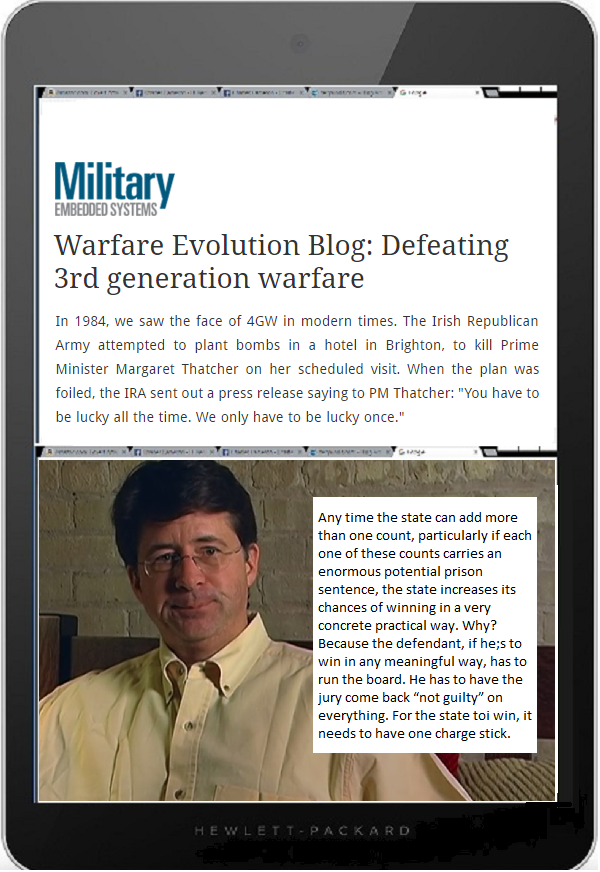
It’s an issue for the defense — both against criminal prosecution and terrorist attack — the defense needs to win 100%, the attack only needs to succeed once.
I’d seen the counterterrorism version quite a few times, though I didn’t know until today that it originated with a press release from the IRA — but this is the first time I’d seen the same sort of idea put forward by a defense lawyer, and again, the resemblance presented in this DoubleQuote shows me there’s a pattern I should be on the lookout for.
In the past, computers have won such games as Pong and Space Invaders:
Google’s AI system, known as AlphaGo, was developed at DeepMind, the AI research house that Google acquired for $400 million in early 2014. DeepMind specializes in both deep learning and reinforcement learning, technologies that allow machines to learn largely on their own. Previously, founder Demis Hassabis and his team had used these techniques in building systems that could play classic Atari videos games like Pong, Breakout, and Space Invaders. In some cases, these system not only outperformed professional game players. They rendered the games ridiculous by playing them in ways no human ever would or could. Apparently, this is what prompted Google’s Larry Page to buy the company.
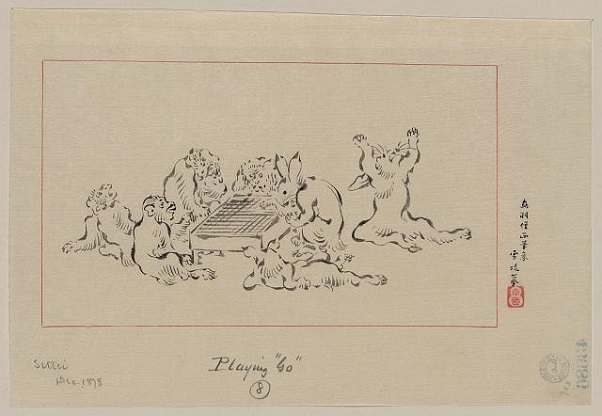
I can’t corral all the games they’ve played into a single, simple timeline here, because the most interesting discussion I’ve seen is this clip, which moves rapidly from Backgammon via Draughts and Chess to this last few days’ Go matches:
Jeopardy should dfinitely be included somewhere in there, though:
Facing certain defeat at the hands of a room-size I.B.M. computer on Wednesday evening, Ken Jennings, famous for winning 74 games in a row on the TV quiz show, acknowledged the obvious. “I, for one, welcome our new computer overlords,” he wrote on his video screen, borrowing a line from a “Simpsons” episode.
What’s up next? It seems that suggestions included Texas Hold’em Poker and the SAT:
Artificial intelligence experts believe computers are now ready to take on more than board games. Some are putting AI through the ringer with two-player no-limit Texas Hold’ Em poker to see how a computer fairs when it plays against an opponent whose cards it can’t see. Others, like Oren Etzioni at the Allen Institute for Artificial Intelligence, are putting AI through standardized testing like the SATs to see if the computers can understand and answer less predictable questions.
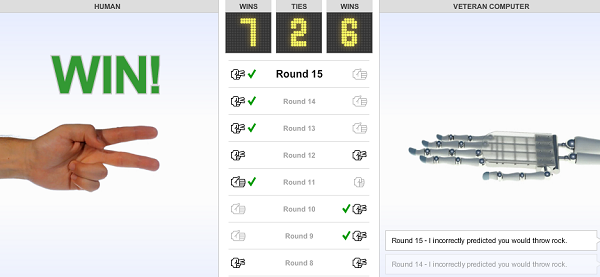
And of course, there’s Rock, Paper, Scissors, which you can still play on the New York Times:
**
Now therefore:
In a follow-up post I want to present what in my view is a much tougher game-challenge to AI than any of the above, namely Hermann Hesse‘s Glass Bead Game, which is a major though not entirely defined feature of his Nobel-winning novel, Das Glasperlenspiel, also known in English as The Glass Bead Game or Magister Ludi.
I believe a game such as my own HipBone variant on Hesse’s would not only make a fine challenge for AI, but also be of use in broadening the skillset of the analytic community, and a suitable response also to the question recently raised on PaxSIMS: Which games would you suggest to the US Navy?
As I say, though, this needs to be written up in detail as it applies to each of those three projects — work is in progress, see you soon.
At first, Fan Hui thought the move was rather odd. But then he saw its beauty.
“It’s not a human move. I’ve never seen a human play this move,” he says. “So beautiful.” It’s a word he keeps repeating. Beautiful. Beautiful. Beautiful.
The move in question was the 37th in the second game of the historic Go match between Lee Sedol, one of the world’s top players, and AlphaGo, an artificially intelligent computing system built by researchers at Google.
Zenpundit is a blog dedicated to exploring the intersections of foreign policy, history, military theory, national security,strategic thinking, futurism, cognition and a number of other esoteric pursuits.