zenpundit.com » arab world

Archive for the ‘arab world’ Category

Reflecting on Neo-COIN and the Global Insurgency, Part II.

Thursday, March 11th, 2010

Previously, I took a look at an academic paper by David Martin Jones and M.L.R. Smith that engaged in a critical analysis of COIN theory and found fault with its underlying premises. Now, I would like to examine the rebuttal offered by John Nagl and Brian Burton of CNAS.

David Martin Jones* and M.L.R. Smith**. “Whose Hearts and Whose Minds? The Curious Case of Global Counter-Insurgency”. The Journal of Strategic Studies. Vol. 33, No. 1, 81-121, February 2010.

*University of Queensland, Australia. ** King’s College London, UK.

John A. Nagl and Brian M. Burton. “Thinking Globally and Acting Locally: Counterinsurgency Lessons from Modern Wars – A Reply to Jones and Smith.  The Journal of Strategic Studies. Vol. 33, No. 1, 123-138, February 2010.

Center for New American Security (CNAS), Washington, DC, USA.

The rebuttal of Nagl and Burton, at a mere 15 pages including bibliography, was a more persuasive and focused argument than the COIN opus offered by Jones and Smith. Their tone was less academic and more practitioner-oriented, both in terms of policy shapers and soldiers in the field. Strategist Dr. Thomas P.M. Barnett, thought the entire debate was “too inside baseball” but nonetheless, that Nagl and Burton had the better of the exchange:

It is a sadly ghettoized argument–very inside baseball. And I am dismayed to see it happening in a sub-field that should be more inclusive than the usual war-discussed-within-the-context-of-war with the added dimension of the fight for political control in developing/failed economies (the whole national liberation bit, references to Maoism, etc.). So we’re still basically treated to two legs of the stool: security with the addition of politics/culture, but the economics remains a no-go-land that elicits the mention of jobs on occasion (the assumption usually being, public-sector financed with aid), but that’s it.

….I thought Nagl’s closing comment in response was fine: difference in degree but not kind. The first article reminded me of nuclear targeting theory, it was so esoterically wrapped around itself.

The intellectual insularity to which Tom complains arguably stems from COIN, an operational doctrine, being required to “pinch-hit” as a long-term strategy due to the abdication of responsibility by the civilian political elite to come to a strategic consensus among themselves on the war that would frame our global conflict with radicalized Islamist terror groups and insurgencies and enunciate the objectives we hope to achieve.

This unwillingness or inability of deeply divided USG civilian leaders to effectively, coherently and consistently articulate the nature of the war itself and our adversaries deprives our senior military leaders of appropriate policy guidance in designing campaigns and carrying out military operations. It is also a partial explanation for the determined resistance of COIN policy advocates like John Nagl and David Kilcullen to address the religious ideology dimension raised by Jones and Smith.

In “Thinking Globally and Acting Locally: Counterinsurgency Lessons from Modern Wars – A Reply to Jones and Smith”, Burton and Nagl firmly showcase “Neo-COIN’s” formidibile strengths as policy but cannot escape its’ enduring weakness. Here most concisely:

“Insurgencies, like other forms of armed conflict are better defined by methodologies than by ideologies. While causes change regularly, the fundamentals of insurgent strategy remain relatively constant”

A powerful throwing down of the theoretical gauntlet. It’s an appealing argument rooted in pragmatism, and to some degree, empiricism, becoming more true as one moves down to the level of small unit counterinsurgency and outward from jihadism’s core leadership toward insurgency’s marginal adherents of convenience, the “$10 a day Taliban” and Kilcullen’s “accidental guerrillas”. While it is the case that occasionally in COIN we have actions of “strategic corporals”, most of the warfighting concerns of NCO’s and junior officers will be tactical and eminently practical a majority of the time.

Earlier, Burton and Nagl expounded at greater length and specificity:

But this argument [by Jones and Smith] overemphasizes the superficial features of conflict. While specific characteristics of individual insurgencies have changed with local conditions and the technology of the day, the fundamental dynamics of insurgency remain largely the same. The essential competition remains between the existing power and the insurgents for influence and ultimately control over populations. The insurgent ’cause’, of which extremist religion can be a component, is generalized and malleable in order to mobilize the broadest possible base of followers.

….the fundamental dynamic of any insurgency is that, as David Kilcullen aptly describes, it needs the people to act in certain ways.[It] needs their sympathy, acquiescence and silence, or simply their reactions to provocation, in order to further [its] strategy

[Emphasis in original.]

There are pros and cons to this theoretical position. It is always a good idea to consider who an intended doctrine is written for; instrumentally, COIN doctrine is foremost for the soldiers who are expected to wage that kind of battle on the behalf of the rest of us. Only secondarily, is COIN doctrine intended as a kind of policy talisman for the government officials, politicians, journalists, academics and bloggers whom it has entranced or repelled. It is important to remember, it critiquing the evolving panoply that is USG COIN policy that the fundamental criterion of measurement is not theoretical niceties but real world results, which have been produced. Not perfection, not instantly, not everything we want plus a pony too, but progress in operational and tactical success. Even some strategic success if stabilization of an Iraqi government holds That weighs heavily on the pro side of the ledger.

The cons are of a different nature.

First, in terms of the Maoist paradigm, classical COIN theory is problematic because it extrapolates only from a very short period of Mao’s career as a guerrilla leader, mostly 1946 -1949 when the political dynamic in China’s civil war was a bilateral conflict between Chiang Kai-shek’s Nationalist government and Mao ZeDong Communist Party and Red Army. This was a period when Mao, courtesy of the Soviets, had suddenly inherited a great quantity of Japanese arms and could field divisions of semi-regulars to fight conventional battles in addition to insurgent units. Most of China’s long civil war was actually heterogeneously anarchic and Mao’s Communist armies were usually much inferior not only to those of the Kuomintang, but to those armies fielded by many provincial warlords and certainly inferior to the invading Imperial Japanese Army, which Mao strove to avoid fighting whenever possible. Much of Mao’s legend as a military genius is political myth constructed after the fact, and his ultimate success in China owed at least as much to Chiang, Hirohito, Stalin and Truman as it did to Mao’s real but frequently exaggerated political and military talent for insurgency.

Vietnam, another historical touchstone of COIN, acheived the bilateral conflict dynamic described in COIN theory only because initially the Vietcong, on the orders of Hanoi, tacitly supported Ngo Dinh Diem’s regime by eschewing military activities while Diem and Nhu systematically destroyed or weakened other potential military/political rivals to the Communists in South Vietnam. Namely, General Ba’s Hoa-Hao, the Binh Xuyen gangs and the Buddhist political clergy ( the Vietnamese Nationalist Party had previously been decimated by the French in 1930). Russia after WWI, Lebanon in the 1980’s, Somalia, Afghanistan and the Congo in the 1990’s are others examples of societies devolving into anarchic, social darwinian, violence before some became conflicts that are somewhat recognizable in COIN theory.

The heterodox Iraqi insurgency of the “surge”, where Neo-COIN found its proving ground, is really the recent historical rule and not the exception that classical Maoist COIN theory might lead you to believe. The theory in other words, is based upon flawed premises of a bilateral conflict. John Robb’sopensource insurgency” concept gets closer to the probable reality of future COIN wars.

Secondly, the strong dismissal of religious drivers by Nagl under his “Kilcullen Doctrine” is tailor made for “disaggregating” the accidental guerrillas at the tactical level, but it seriously misleads us in understanding or effectively countering the “professional guerrillas” at the strategic or the moral levels of war. Instead, it blinds us by projecting our own elite culture’s secular assumption of religion as merely a cynical and antiquated facet of politics on to adversaries for whom such thought is both fundamentally alien and entirely blasphemous. Such a position is what ideologists of  jihad  argue that they are taking up arms against in the first place.

Erasing the religious or ideological motivation makes incisive analysis of the adversaries strategic decision-making impossible because it removes the driver for which he left home, comfort, family for the danger and privation of war. How can we walk in our enemies shoes, get inside his head, if we deny what is in his head has any relevance?

This position makes no sense on the strategic level. Ignoring the influence of Islamism is a prescription for errors and missed opportunities. It is a politically comfortable position for COIN theorists because our political elite are deeply enamored of a PC ideology that provides an excuse to punish and destroy the careers of officials who challenge the orthodoxy of multiculturalism with frank discussion of facts. Avoiding the question of Islamism in front of politicians greases the skids for COIN. Have you heard many members of Congress make a robust defense of liberal, democratic, capitalist, open societies as a morally superior alternative to autocratic Islamism lately? No? Well now you understand why the COIN gurus are not doing it either. Powerful people in Washington and the media do not want to hear thart message.

Yet without confronting Islamism and the attraction of its call to a dissatisfied “pious middle class” in the Islamic world, we can hardly hope to bring the war to a satisfactory close, much less victory.

The al-Masri Dialogue

Tuesday, February 9th, 2010

Charles Cameron, in his latest guest post here, penned a beautiful essay regarding the ongoing exchanges between Australian counter-terrorism scholar Leah Farrall and Abu Walid al-Masri, an adviser to the Taliban and an experienced strategist of Islamist insurgency. Farrall has translated and posted this dialogue on her blog, All Things Counter Terrorism, which has received much attention, commentary and criticism in the blogosphere and on private listservs and quasi-official bulletin boards.

Generally, I leave this sort of subject to Charles, since he has the academic expertise to drill down to a granular level of Islamic theology and Islamist ideology, but al-Masri is an intriguing figure and his public conversation with Farrall is a novelty worth investigating. It would be hard to imagine during the Cold War, an open media debate between a Western CI official and a Soviet spymaster still engaged in espionage in the field ( Kim Philby hurled public jermiads it is true, but that was in retirement in Moscow and only after his long-suffering KGB handlers had managed to get his severe alcoholism under control). In that spirit, I want to offer a few observations.

While there is artifice present, as al-Masri is consciously speaking to a multiplicity of audiences in his remarks, the idea that we should therefore dismiss the dialogue with Farrall, as some suggest, is an error. There is also posturing in purely intra-Islamist-debates on which we eavesdrop and, frankly, within our own arguments inside government and out. We learn from what people do and do not do, from what they say and what is left unsaid. Being able to speak to multiple audiences is a constraint, as well as an advantage, as it shapes the parameters of the premises to be employed and the extent to which the underlying logic can be permissably extrapolated. To quote a Zen saying, if you wish to fence in a bull, give him a large meadow. 

The constraints, if correctly discerned, are illuminating and are analytically useful in constructing our own tactical responses and message strategy (assuming someone can convince the State Department bureaucracy that IO and public diplomacy are important and persuade Congressional leaders to fund such activities with more than pocket change). They are also useful in helping to understand the worldview and governing paradigms of our opponents in more complex and nuanced manner than reflexively saying “they hate our freedoms”. Well, many jihadi types do in fact, viscerally hate our freedoms or deny that democracy is a legitimate form of government in an abstract sense, much the same way they casually disparage Hindus as “cow worshippers” or Thais as “crazy Buddhists”; however those loose attitudes and spasms of hostility are not akin to operational principles or strategic doctrines.

For that, we have to dig deeper into the politico-religious motivations of violent Islamists and listen closely to what our enemies are saying – particularly when they are making an effort to speak to us directly, as al-Masri is doing, his determination to score propaganda points in his little elicitation dance with Farrall notwithstanding. Americans are not very good at listening and our elites are deeply uncomfortable with the entire subject of religion, tending to view pious expressions of Christianity with contempt and Islam as a completely taboo subject. There is a strong preference in government and academia for analytical models of terrorism or insurgency that dwell on DIME spectrum variables because these fit in the personal comfort zones and the educational, social and professional experiences of the American elite. This would be a perfect approach if al Qaida’s leadership were composed of Ivy League alumni and Fortune 500 CEOs.

Economics and military force are always factors in geopolitical conflict, the war of terror included, but until Islamist extremists oblige us by becoming secular Marxist revolutionaries waving little red books, it would behoove us to look with greater scrutiny at the curiously reified religious ideology with which they justify or eschew courses of action to themselves. Our own strategies might be more focused and effective if the operators across our intelligence, military, diplomatic and law enforcement agencies had something approaching a shared understanding of violent Islamism and if they could communicate this understanding along with the benefit of their experience and current intelligence to help political leaders shape American policy.

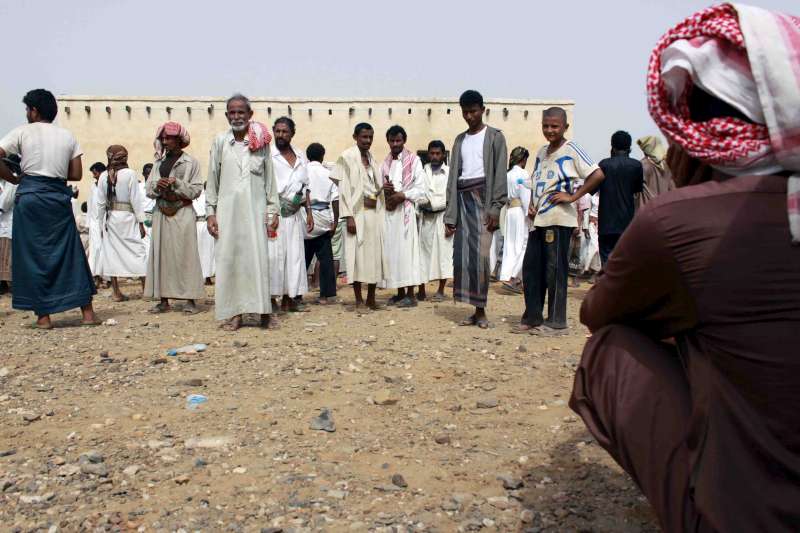
Battleground Yemen

Wednesday, January 27th, 2010

An informative post by Curzon at Coming Anarchy

Yemen: Geography Matters!

….The Saudis are guilty of aggravating and prolonging the conflict. Wary of taking too many losses on the ground and unable to do much by air and sea, they have recruited the Hashed, a local tribe, to fight against the Huthi, the tribe central to the Shia rebels. The Hashed have several incentives to continue fighting for as long as possible-they have a long-standing feud with the Huthi, and make a great deal of money from fighting for the Saudis, and may be coming up with schemes to prolong the conflict. According to a source of Al Jazeera:

If [the Hashed are] given the mission of taking a particular mountain, for example, they’ll call up the Huthi leaders and tell them: ‘We’re getting five million riyals to take the mountain. We’ll split it with you if you withdraw tonight and let us take over’… After the tribesmen take charge, they hand it over to the Saudis… The next day, the Huthi return and defeat the Saudis and retake the mountain… It’s been happening like this for weeks.

Guest Post: Charles Cameron on Khorasan – A Muslim Once and Future Kingdom

Tuesday, January 19th, 2010

 Charles Cameron, my regular guest blogger, is the former Senior Analyst with The Arlington Instituteand Principal Researcher with the Center for Millennial Studies at Boston University. He specializes in forensic theology, with a deep interest in millennial, eschatological and apocalyptic religious sects of all stripes.

Khorasan: A Muslim Once and Future Kingdom

by Charles Cameron

The title of an interview in a Taliban sponsored magazine with Hammam Khalil al-Balawi — the Jordanian jihadist physician and double-agent / informant who signed himself Abu Dujana al-Khorasani on jihadist forums, and carried out the recent CIA bombing in Khost — is intriguing in a self-referential, “Doug Hofstadter might like this” sort of way:

Interview with Brother Abu Dujanah al-Khorasani, a Well-Known Blogger in Jihadi Forums, and a Newcomer to the Land of Khorasan.

In his appearances on the web, al-Balawi / Abu Dujana had given himself the geographic cognomen “al-Khorasani” meaning “from Khorasan” — yet he was a Jordanian by birth, and the interview title calls him a “newcomer” to Khorasan, while the interviewer himself remarks, “Abu Dujanah al-Khurasani (sic) is actually now inside Khorasan, and the decision to travel to the lands of jihad is a divine blessing and a magnificent grace.”

The Khorasan that Abu Dujana “is actually now inside” is presumably Afghanistan on the literal, geographical level — but what of the Khorasan of the mind and heart to which, as his choice of handle indicates, Abu Dujana must have long aspired?

What is the significance of “Khorasan”?

It’s a bit like “Jerusalem” — only yesterday I was reading that Grand Rapids, Michigan is referred to as “Jerusalem” by some folk of Dutch extraction in the Pacific Northwest. I think we’ll get the sense of the idea if we call it of “Khorasan of sacred memory and present hope”.  As the UCLA scholar Jean Rosenfeld puts it (personal communication):

In any event, Khorasan refers to much more than a former region of the Islamic empires.  It has a mythical meaning that is being taken seriously as a “once and future kingdom” in the millennial mindset of al-Qaida.

The territory once called Khorasan — and the borders covered by that name shifted a great deal over the centuries — covered parts of what we now know as Iran (which still has a province named Khorasan), Turkmenistan, Uzbekistan, Afghanistan and NW Pakistan.  I’m finding references that suggest the name originally meant “the place where the sun rises” — the East, the Orient.

Rosenfeld suggests that Khorasan “is code in al-Qaida for the warrior sect itself” — “the army of the (future) caliphate in the mind of the International jihad” and thus, Al-Qaida in Fawaz Gerges’ broad sense.  My own reading ties it in with the ahadith about the “black banners of Khorasan” and the army which will sweep down from Khorasan to Jerusalem…

As I’ve noted before   there are many variant ahadith describing the army of the Mahdi.  Here is one commonly cited version:

If you see the black flags coming from Khurasan, join that army, even if you have to crawl over ice, for this is the army of the Caliph, the Mahdi and no one can stop that army until it reaches Jerusalem.”

Quite how we should align that with actual jihadist entities such as AQ core and or its subsidiaries or the various bodies called Taliban, however, I’m not sure. The clearest implication I can see is to the place of origin of the Mahdi’s army.

It is at least as much an eschatological as a geographic claim.

Since the imagery of Khorasan is closely tied to that of black flags, I would like to take a slight detour here.  We have seen that the black flags signify the army of the Mahdi, but what are its origins, and how widely is it used?

The Islamic Imagery Project at West Point Combating Terrorism Center lists “Black Flag” under the heading “Warfare Motifs“, saying:

The Black Flag (al-raya) traces its roots to the very beginning of Islam.  It was the battle (jihad) flag of the Prophet Muhammad, carried into battle by many of his companions, including his nephew ‘Ali ibn Abi Talib.  The flag regained prominence in the 8th century with its use by the leader of the Abbasid revolution, Abu Muslim, who led a revolt against the Umayyad clan and its Caliphate.  The Umayyads, the ruling establishment of the Islamic world at the time, were seen as greedy, gluttonous, and religiously wayward leaders.  The Abbasid revolution, then, was aimed at installing a new, more properly Islamic ruling house that would keep orthodox Islam at the center of its regime. Since then, the image of the black flag has been used as a symbol of religious revolt and battle (i.e. jihad).  In Shiite belief, the black flag also evokes expectations about the afterlife.  In the contemporary Islamist movement, the black flag is used to symbolize both offensive jihad and the proponents of reestablishing the Islamic Caliphate.

The flag is frequently identified with specific jihadist groups — thus Bill Roggio, writing in Long War Journal, refers to “the al rayah, the black flag of al Qaeda” in his 2007 article, “Musa Qala and the NATO offensive”.

Likewise, the Somalian president Abdullahi Yusuf Ahmed in 2006 is reported to have spoken in 2006 of “the ‘black flag’ of Al-Qaeda and the Taliban” — and as recently as this month, Al-Shabaab “vowed to replace the Somali flag with its (al-Shabaab’s) black flag”.

So the Black Flags or banners represent the Prophet as warrior at one end of Islamic history and the Mahdi’s army from Khorasan at the other — and have been adopted as symbols of jihad by different groups from the Abbasids to al-Shabaab. They are indeed indicative of jihad, but it is their association with Khorasan that gives them a specifically Mahdist reference.

The defeat of the Umayyads and establishment of the Abbasid caliphate, and hence also the golden age of Islamic culture, was strongly supported by forces raised in Khorasan, and David Cook in his Contemporary Muslim Apocalyptic Literature suggests that “the Abbasids sought to present their movement as the fulfillment of messianic expectations, and so they produced a great quantity of materials given in the form of hadith traditions to indicate that the Mahdi would come from this region.”

The tale lives on. As I’ve mentioned before, Cook notes that bin Laden’s mentor, Abdullah Azzam, made fresh use of this line of messianic tradition and “popularized the position of Afghanistan as the messianic precursor to the future liberation of Palestine” in his book, From Kabul to Jerusalem, while bin Laden refers to finding “a safe base in Khurasan, high in the peaks of the Hindu Kush” in his 1996 Declaration of Jihad.

The spiritual geography, then, is clear: Khorasan is that place in the east, somewhere in the general region including eastern Iran and northern Afghanistan, from which the Mahdi’s army will come — and it is very plausibly also a place the jihadist might need to “crawl over ice” to reach.

I think Rosenfeld is right in suggesting that al-Balawi’s geographic cognomen is a significant one, as is “Abu Dujana” — the name of a particularly valiant companion of the Prophet, as I discussed in a previous post.

But which of the various jihadist forces currently deployed in Afghanistan and nearby might be the nucleus of the Mahdi’s forces? The army with black flags from Khorasan has been identified with the Abbasids, with the Iranian revolutionaries, and with the Taliban. Bin Laden would presumably wish for it to be with al-Qaida, and Cook also says, this time in Understanding Jihad:

Since Afghanistan, as Khurasan, has powerful resonance with many Muslims because of the messianic expectations focused on that region, this gave the globalist radical Muslims associated with al-Qa’ida under the leadership of Bin Ladin additional moral authority to proclaim jihad and call for the purification of the present Muslim governments and elites.

In Jordan via the jihadist web forums, al-Balawi signaled his identification with the victorious army of the coming Mahdi and with jihadists in Afghanistan by his choice of the cognomen “al-Khorasani” — but the name alone does not tell us which particular jihadist group he might have been thinking of, and that may not even have been an question he felt the need to resolve at that time.

  Once in Khorasan itself, al-Khorasani left us two “media” items, a magazine interview and a video, and we might hope that they would add to our understanding of the more literal, geographical meaning his name carried, for they clearly indicate his associations.

According to Flashpoint-Intel, who provided the version of the interview I’ve seen, al-Khorasani’s interview was given to “Vanguards of Khorasan” which they describe as “a well-known Taliban propaganda magazine” and released by the Al-Fajr Media Center, which they term “the official online logistical arm of Al-Qaida”. SITE refers to “Vanguards” as “the … magazine of al-Qaeda in Afghanistan”. Others more familiar with the logistics may want to clarify the point.

The video, then, seems to give the clearest indication. Al-Khorasani was taped sitting next to Hakimullah Mehsud, the head of the Terik- i-Taliban Pakistan or TPP (whose death in a drone strike is reported but unconfirmed at the time of writing), and indicated his allegiance with the words, “We will never forget the blood of our emir Baitullah Mehsud” — referring to Hakimullah’s predecessor.

In general, “Khorasan” doesn’t appear to function as code for a particular jihadist organization, but as a more general symbol for victorious jihad — coming from the East, faithful to the truth, unstoppable, ushering in the Caliphate, serving the cause of the Mahdi, and thus heralding the End of Days.

I’m intrigued to note that the Australian analyst / scholar Leah Farrall at All Things Counter Terrorism blogged on Abu Dujana today  (after I’d “completed” this post) and closed her post with an aside. I’ll quote the whole paragraph for context, but it’s the last point that ties in here:

Another point of interest is Khorasani’s  internet history circa 2001- 2003. Despite what Khorasani said in his interview in the Taliban magazine ( I think it was the Taliban mag if memory serves), one does not get to be a forum administrator overnight. I watched another person rise through the ranks this way and he had direct contact with  a mid-level AQ commander. It still took him 18 months or so. This brings me back to my question about Khorsani’s early internet history and possible real world history. As an aside, back then, in the early days you didn’t write Khorasani, Kandahari etc unless you had been there. It was used as an identifier. This has changed in recent years but I do wonder about this with him too.

Leah’s curiosity on this point reminds me that along with the general symbolism of Khorasan, which I have tried to explore here, there are intriguing aspects to the particular use Abu Dujana made of the name.

I look forward to any further thoughts she may have.

Grateful thanks to Jean Rosenfeld for our very helpful conversations around this and related topics, and for the comment that gave me its title.

Guest Post: The Duel of Ali ibn Abu Talib with Amru ibn Abd Wudd

Monday, November 30th, 2009

Charles Cameron has been guest blogging here in a series on radical Islamism and terrorism. A former researcher with the Center for Millennial Studies at Boston University, his most recent essay, an analysis of the powerpoint presentation of Ft. Hood shooter Nidal Malik Hasan, appeared in the Small Wars Journal.

The Duel of Ali ibn Abu Talib with Amru ibn Abd Wudd:an old story of Muslim chivalry, told in refutation of today’s jihadists.

By Charles Cameron

*i*
 
Joseph Campbell was a comparative mythographer whose most celebrated book, *The Hero with a Thousand Faces*, famously provided George Lucas with the narrative stages found in the hero stories of the world’s cultures, and thus with the series of events that would forge a hero and Jedi warrior out of the raw material of young Luke Skywalker. In other books, he more than once tells the story of the samurai — a warrior with a precursor to the Jedi code — who was spat upon in battle:

His overlord had been killed, and his vow was, of course, absolute loyalty to this lord. And it was his duty now to kill the killer. Well, after considerable difficulties, he finally backs this fellow into a corner, and he is about to slay him with his *katana*, his sword, which is the symbol of his honor. And the chap in the corner is angry and terrified, and he spits on the samurai, who sheathes his sword and walks away. Now why did he do that? He did that because this action made him angry, and it would have been a personal act to have killed that man in anger, and that would have destroyed the whole event

It’s a powerful little nugget of a story, and in Campbell’s explanation of what was going on, we may even find a hint of where Lucas may have picked up the idea of the Force. Campbell writes:

This is a mythological attitude. You are acting not in terms of your individual, personal life but with the sense of yourself as the priest,so to say, of a cosmic power which is operating through you, which we all are in circumstances, and the problem is to balance yourself against that and have a personality at the same time

The thing is, Campbell may have been misremembering the source of his story. It’s true that such tales sometimes crop up in more than once culture, sometimes traveling the caravan routes from one place to another, or emerging perhaps, as Carl Jung suggests, from some dream logic deep in the heart of our humanity — but I have only seen thisstory told, and told repeatedly, within Islamic culture. It is in fact the story of the Duel of Ali ibn Abu Talib with Amru ibn Abd Wudd.
 
 
*ii*
 
In the month of Shawwal 7 AH / 627 CE, the Muslims fought in the Battle of the Trench against a confederation of tribes at war with them. During the battle, Ali ibn Abu Talib encountered one of the chiefs of Quraysh, Amru ibn Abd Wudd, renowned for his bravery and strength, as well as his reputation as a formidable wrester within Arabia; he was said to be the equivalent of a thousand horseman. When he managed to traverse the Trench with a party of men, he challenged the Muslims to a duel of swords. Ali asked Prophet Muhammad to permit him to accept the challenge, but Prophet Muhammad refused his offer, simply stating that he was the formidable Amru. With no one accepting Amru’s taunts to duel, Ali’s insisted for permission to duel for the third time. This time, the Prophet accepted, and gave him the famed sword, Dhul-Fiqar, and supplicated for his success. Ali asked Amru to accept Islam, but he refused and preferred to fight Ali.
 
Towering over his opponent, the more experienced and stronger Amru hammered blows on Ali’s shield and clashed with his sword. Ali then dropped his sword and shield to the ground; he leapt to grab Amru’s throat, and kicked him off balance. Amru crashed to the ground, with Ali now towering over him: “Know, O Amru, that victory and defeat depend upon the will of Allah. Accept Islam! Thus not only will your life be spared, but you will also enjoy the blessings of Allah in this life and the next.” At this suggestion, Amru spat into Ali’s face, fully expecting death. Ali rose calmly from Amru’s chest, wiped his face, and stood a few paces away, gazing solemnly at his adversary. “Know, O Amru, I only kill in the way of Allah and not for any private motive. Since you spat in my face, my killing you now may be from a desire for personal vengeance. So I spare your life. Rise and return to your people!”
 
For Amru, to live now would be to live as the vanquished after having tasted victory on the battlefield all his life. He lunged at Ali as he walked away. With enough time to lift his sword and shield, Ali prepared for the fresh assault. Amru’s devastating blow shattered Ali’s shield, inflicting a shallow cut to Ali’s temple. As the second blow rose, Ali swept Dhul-fiqar and decapitated Amru. The Muslims praised Allah. After killing of Amru ibn Abd Wudd, Imam Ali had the gap in the trench which Amru had breached blocked, and took his post at that point with the intention of confronting anyone who might try to cross the trench. They too, would encounter Amru’s fate should they have tried.
 
When Imam Ali returned from the battlefield, the Messenger of Allah received him and said: “The fighting of Ali ibn Abu Talib with Amru ibn Abd Wudd is greater in measure than the actions of my people until the Day of Resurrection.” Ali ensured that the precious chain of armour, adorned with hung-gold rings, which Amru had worn during their duel, was returned to Amru’s sister of the Bani Amir, so that it would not be thought that Ali had killed him in greed of this precious chain coat.
 
 
*iii*
 
I have drawn this telling of the tale from the Islamic think tank Ihsanic Intelligence’s remarkable work, “The Hijacked Caravan: Refuting Suicide Bombings as Martyrdom Operations in Contemporary Jihad Strategy“, which describes it as illustrating the importance of a chivalric code within Islam — the section in question begins, “The concept of chivalry [futuwwa] is at the forefront of Jihad” — with “the model of Imam Ali as constituting the prime example of chivalry”.

As the authors of “The Hijacked Caravan” note, this tale can be found in the *Mathnawi*, the great epic of the thirteenth century Sufi poet Rumi— himself born in the environs of Balkh, Afghanistan (it would have been Khorasan back then) — currently (somewhat paradoxically) America’s best-selling poet:
 

In a battle against the unbelievers Ali got the upper hand against a certain champion. He quickly raised his sword and was hurrying to kill him. But the man spat in Ali’s face, who was the pride of every prophet and every saint; He spat upon a face before which the beautiful face of the full moon bows low at the place of prostration. At that moment, Ali threw aside his sword and slowed down in his fight against him. That brave warrior … said, “You raised your sharp sword against me: for what reason did you throw it aside and quit fighting me? Ali said, Since a motive other than God entered my heart in the holy war, I deemed it right to sheathe the sword.

Mathnawi I: 3721 adapted

Ali comments on the struggle (jihad) in which he is engaged at the crucial moment, “The sword of my restraint has struck the neck of my anger” — identifying it as the “greater jihad” against one’s own evil
tendencies, which here (as in the well-known hadith) clearly supersedes the “lesser jihad” of the physical fight against the enemies of Islam.
 
 
*iv*
 
I have, however, also found this story in one other place where a Muslim is presenting a public case against the contemporary jihadist world-view.
 
The novelist and screenwriter Kamran Pasha was particularly delighted to join the writing team on the Showtime series, *Sleeper Cell*, because it would give him an opportunity to represent how mainstream Muslims scholars think about those verses in the Qur’an that are commonly used to support the actions of Al-Qaida — and about their version of Islam in general.
 
Kamran wrote the episode, “The Scholar”, and based the Islamic moderate scholar Sheikh Zayd Abdal Malik on the real-life figure of the Yemeni judge, al-Hitar, who challenges captured jihadists to a theological duel with the words “If you can convince us that your ideas are justified bythe Koran, then we will join you in your struggle — but if we succeed in convincing you of our ideas, then you must agree to renounce violence.”

At the beginning of the episode, Abdal Malik is spat upon by an imprisoned extremist. He calmly removes his glasses, wipes his face, replaces his glasses, picks up his copy of the Qur’an, kisses it reverently and begins his task of persuasion… Towards the end of the same episode, now on a lecture tour of America, he quotes the hadith about the greater and the lesser jihad:

The holy Prophet — sallallahu ‘alaihi wa sallam — said that war against the unbelievers is the lesser jihad. The greatest jihad is to battle your own soul, to fight the evil within yourself.

He is then asked, “So, who is a true holy warrior, then?” and replies,”The Prophet’s cousin Ali” – at which point he tells the story of the duel.
 
Kamran Pasha’s own wish in re-telling this story can be deduced from another comment placed in the mouth of his chivalric and heroic Islamic scholar, shortly before he is assassinated: “I will issue a fatwa against the murdering devils who have hijacked our beloved Islam.”
 
This episode is in some sense Pasha’s own unofficial fatwa, and the story of the duel of Ali ibn Abu Talib with Amru ibn Abd Wudd holds a central place in his argument, as it does in The Hijacked Caravan.

Kamran Pasha blogs. His post on Major Hasan and the Fort Hood shooting includes the comments of a friend of his, a recent Muslim convert also stationed at Fort Hood, who had prayed alongside Hasan at the mosque that morning. It is a post that repays reading. Kamran has received death threats for his stance against jihadist ideology, which he pillories in his novel Mother of the Believers while describing the Khawarij, extremists in the early days of Islam — one of whom assassinated Ali ibn Abu Talib.

Ali ibn Abu Talib, who forgave his killer. Ali ibn Abu Talib – whose blood flows in his direct descendant Kamran Pasha’s veins


Switch to our mobile site
