Sunday, June 12th, 2011
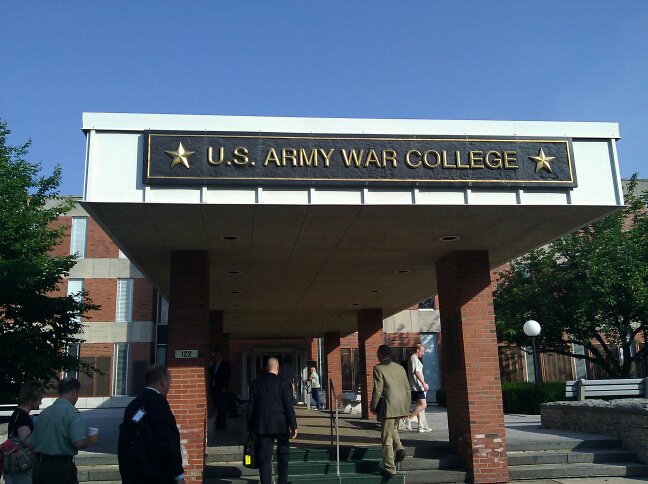
As noted previously, I was fortunate to attend the National Security Seminar at the the US Army War College this year and wanted to relay my impressions while they were still fresh.
First, in terms of reception and cordiality, I have rarely experienced such an extensive and personal outreach as was demonstrated by the War College staff, faculty, administration and students. Every new member had a “sponsor” – a student, usually a colonel or Navy captain, who acted as a liason and personal guide from the time their plane touched down until the moment they returned to the airport. My sponsor, the former commander of the Wolfhounds, Colonel Richard “Flip” Wilson, whom I consider a friend, really extended himself on my behalf, making me feel welcome and a full member of Seminar Group 20. Most of the students have multiple tours of duty in Iraq and Afghanistan under their belt and many can report the same for the first Gulf War, Panama, Bosnia or Kosovo.
The War College, the Commandant and the Seminar Group all hosted receptions and dinners designed to get students and civilian new members to mix and further discuss issues raised in the seminar sessions or lectures. At these events I had the opportunity to meet and talk to the leadership of the Army War College including the Commandant Major General Gregg Martin, the Deputy Commandant for International Affairs, Ambassador Carol Van Voorst, the Executive Director of the Army Heritage Foundation, Mike Perry, the Director of SSI, Dr. Douglas Lovelace, the Chief of Staff and numerous faculty and seminar members. The New Members such as myself were exceedingly well fed at these events as I suspect the Army was attempting to prove that it really does march on it’s stomach.
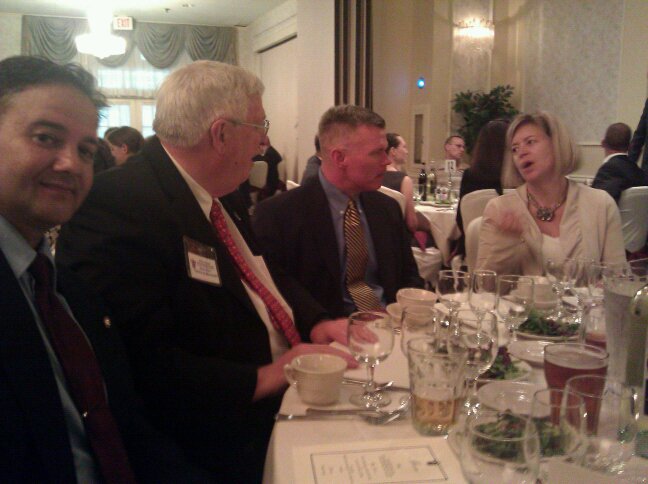

The serious business of the National Security Seminar was divided into two segments, the talks given by distinguished speakers to the entire class of 2011 and the New Members and the Seminar Group sessions of approximately twenty students, New Members, academics and foreign visitors. We received a brief on the war in Afghanistan from the ISAF Chief of Staff, who was standing in last minute for General Petraeus who was called to meet with senior adminstration officials; and a very interesting concluding talk by Foreign Affairs Editor Gideon Rose, author of How Wars End, which covered issues of strategy, grand strategy and the disconnect with policy.
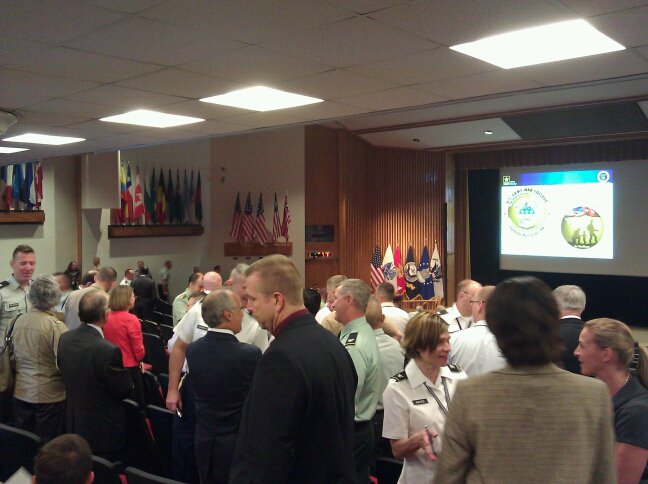
The National Security Seminar is run strictly on a non-attribution basis, in order to encourage candor and frank exchange of views, which handicaps my ability to discuss specifics here. I can say that my views on Pakistan ( which I compared to “North Vietnam” ) riled more than a few people – Pakistan is the only country in the world given 2 exchange student slots at the Army War College at the request of the most senior leadership of the US Army – and several students and faculty members took the time, outside of seminar sessions, to make certain I heard countervailing POV regarding Pakistan’s value as an ally. Other topics included, but were not limited to:
Defense budget cuts and force structure
Narco-cartels in Mexico: Insurgency or No?
Civil-Military Relations
Repeal of DADT
AfPak War
al Qaida and GWOT/US Strategy
COIN
Critical thinking and Leadership
Logistics
Libya and NATO
AWC Strategy Curriculum/Program
What the US public expects from their military
China as a peer competitor
Effects of ten years of war on officer corps/military
Illegal combatants and international law
PTSD
Battle of Gettysburg and Grand Strategy
Cyberwar
Differences in Armed Services strategy, command climate, discipline, leadership
The Arab Spring
US Global leadership and Economics
Interagency Operational jointness
Most of the discussion took place in the seminar groups, with Q&A periods in the mass sessions with featured speakers. I came away deeply impressed with the seriousness and insights as practitioners that AWC students brought to the table. The AWC strategic studies program seeks to broaden students who are assumed to arrive with tactical expertise and prepare them for higher command that carries operational, strategic and even policy responsibilities (at least in terms of interpreting and executing within policy guidelines). Many students were articulating ideas associated with Thomas P.M. Barnett, the “mission order” and “commander’s intent” style of leadership or Clausewitzian strategic premises during debates and discussion.
The National Security Seminar Week was for me, an enlightening and exceptionally enjoyable experience, one I would highly recommend to readers who may have such opportunities in future years.
Posted in 19th century, 2011, 20th century, 21st century, 3 gen gangs, 4GW, academia, Afghanistan, Air Force, al qaida, America, army, barnett, Clausewitzian, cognition, COIN, counterinsurgency, Cyberwar, defense, DIME, diplomacy, diplomatic history, education, Epistemology, foreign policy, government, historians, history, ideas, insurgency, intellectuals, intelligence, leadership, metacognition, military, military contractor, military history, military intelligence, military reform, national security, Network-centric Warfare, organizations, security, social science, strategist, strategy, Strategy and War, Tactics, theory, war, warriors | 12 Comments »
Sunday, May 29th, 2011


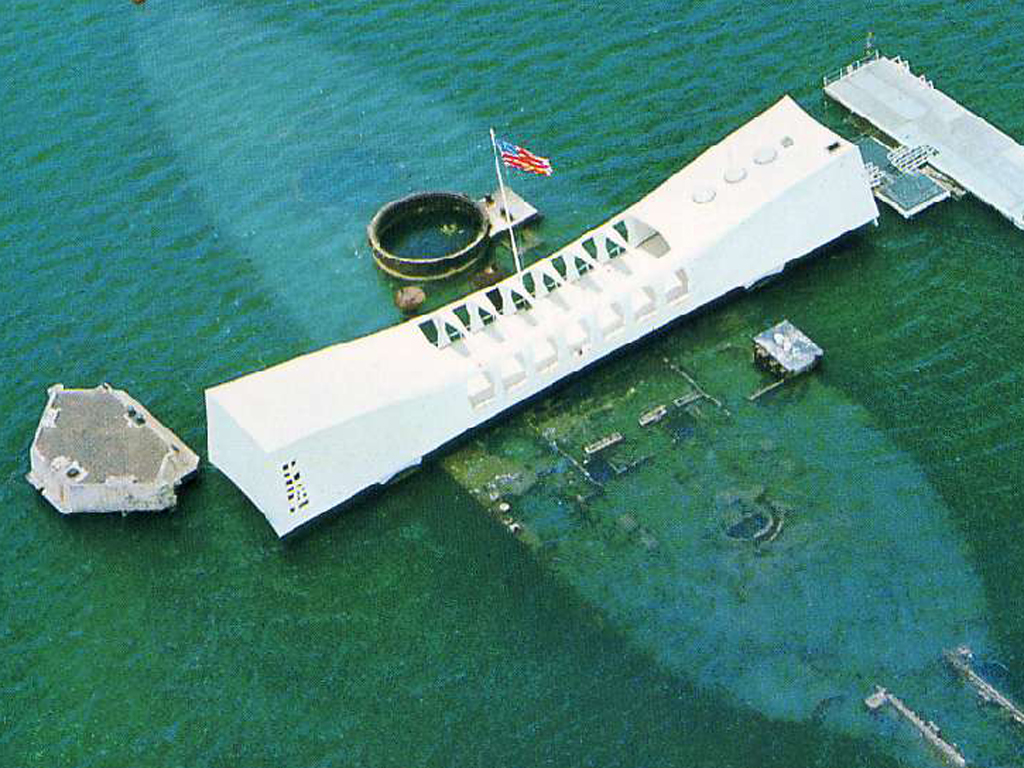
“…They went with songs to the battle, they were young,
Straight of limb, true of eye, steady and aglow.
They were staunch to the end against odds uncounted;
They fell with their faces to the foe.They shall grow not old, as we that are left grow old:
Age shall not weary them, nor the years condemn.
At the going down of the sun and in the morning
We will remember them.”
For the Fallen
– Laurence Binyon
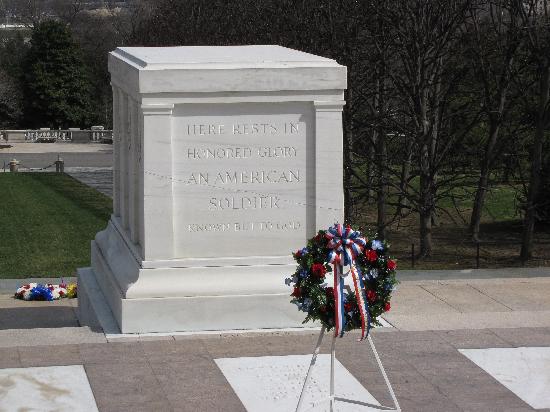
We might have a stronger Republic, a more civil society, a more robust democracy, if we gave more frequent thought to what we owe those who made the supreme sacrifice on our behalf as Americans.
MEMORIAL DAY, 2011
Posted in America, history, memorial day, Memoriam, military, military history | 2 Comments »
Tuesday, May 3rd, 2011
[ by Charles Cameron ]
.
Okay, you may groan and skip quickly to the next post or perhaps read with bemused interest every time I post here about Islamic eschatology — but in either case you might have hoped that the death of bin Laden would have no apocalyptic resonance whatsoever.
Sadly enough, Anjem Choudary — co-founder with Omar Bakri Muhammad of the UK’s Islamist group al-Muhajiroun – has a press release posted on his website today titled May Allah grant Sheikh Usama Martyrdom. It begins:
The announcement this morning of the death of Sheikh Usama Bin laden has been met with joy in the United States and by other enemies of Islam and Muslims. I would like remind everyone that someone much better and much more significant then Sheikh Usama Bin laden passed away in the past, namely the Messenger Muhammad (saw) and that this never stopped the Jihad nor the spread of Islam to the East and West. Indeed the Messenger Muhammad (saw) said that the day of judgement will not come until a group of Muslims conquer the White House.
The hadith in question comes from Sahih Muslim, Book 19, On Government (Kitab Al- Imara) 4483, and reads as follows:
Narrated Jabir ibn Samurah:
.
It has been narrated on the authority of Amir ibn Sa’d ibn AbuWaqqas who said: I wrote (a letter) to Jabir ibn Samurah and sent it to him through my servant, Nafi’, asking him to inform me of something he had heard from the Messenger of Allah (peace_be_upon_him). He wrote to me (in reply): I heard the Messenger of Allah (peace_be_upon_him) say on Friday, the day on which al- Aslami was stoned to death (for committing adultery): The Islamic religion will continue until the Hour has been established, or you have been ruled by twelve Caliphs, all of them being from the Quraysh. I also heard him say: A small force of the Muslims will capture the white palace, the palace of the Persian Emperor or his descendants. I also heard him say: Before the Day of Judgment there will appear (a number of) imposters. You are to guard against them. I also heard him say: When God grants wealth to any one of you, he should first spend it on himself and his family (and then give it in charity to the poor). I heard him (also) say: I shall be your forerunner at the Cistern (expecting your arrival).
I suppose I should apologize, but “until the Hour has been established” and “Before the Day of Judgment” are both clear “end times” references.
A poster on SunniForum quotes this hadith from Muslim, one of the two hadith collections regarded as most reliable and given the epithet “sahih” (authentic), and follows it with another, citing Al-Tabarani, Al-Mu’jam al-Kabeer 2.198:
Jabir b. Samura said: I heard the Messenger of Allah (may peace be upon him) say on Friday evening, the day on which Ma’ez al-Aslami was stoned to death (for committing adultery): A small force of the Muslims will capture the white house. I said: Kisra? he replied Kisra.
Be it noted that while “white palace” or “white house” would both be appropriate translations of the term used, Kisra clearly refers not to the house of the US President in Washington DC, but to the palace of Khosrau (Chosroes) I of Persia in Ctesiphon (now an impressive ruin in Iraq).
*
I expect I found the Anjem Choudary press piece following a lead from Aaron Zelin, and if so I owe him double thanks – because he also pointed me to this quote from a member of the Ansar Forum:
al-Qaeda are the people of the Victorious Sect, which recognizes the last of the banner to the Mahdi
The victorious sect is the one sect of Islam out of very many that holds fast to the Prophet’s teaching, see the hadith collected here. As UCLA historian Jean Rosenfeld noted in a comment on the al-Sahwa blog:
Al-Qaida took the Salafi myth of the Saved Sect and the Victorious Group and applied it to themselves. This is in line with the need for converts to see themselves as heroes carrying out a transcendent purpose.The Saved Sect was turned into an eschatological myth by bin Ladin and his compatriots. It is a group of warriors who sacrifice themselves for the Din, the Land, and the people. The members of the Sect are a vanguard and they are few. Not only are they attacked by their opponents, but fellow Muslims may persecute them. Thus, if the group remains small and is regarded as practicing fitnah and is denounced, that only validates the group’s certitude that it is the Saved Sect. Only this sect — out of “72 sects” (note: this is probably a symbolic number meaning “many”) — will attain paradise at the end time.
*
A couple more clear instances of end-times associations in the (Sunni) jihadist current…
Posted in analytic, bin laden, Charles Cameron, cultural intelligence, extremists, history, iran, iraq, islamist, Religion, terrorism, Theology | Comments Off on Bin Laden’s death and a White House or Palace
Friday, April 29th, 2011
[ by Charles Cameron ]
.
Blog-friend Cameron Schaefer has a piece up at Small Wars Journal today in which he quotes Boyd (writing that his approach “incorporated science, but more closely approximated the often chaotic, creative impulses of art”) and Mahan (“art, out of materials which it finds about, creates new forms in endless variety”), and concludes:
Approaching strategy in an indirect fashion, as more of an art than science may make some uneasy, specifically those who find safe haven in the concreteness of checklists and formulas. Yet, the nature of strategy reflects the nature of the world. It is infinitely complex, it is always changing and it is filled with humans that often do irrational things. Literature (see Charles Hill) and psychology have as much of a place at the strategy table as military history… as do mathematics, physics, political science and technology. So, when asking, “what must one study to be a great strategist?” the answer seems to be, “everything else.”
Okay, so that (and Hill‘s work, which Zen reviewed recently) gives us the significance of the arts in strategic thinking which, one hopes, is practiced before going in to battle, and may indeed give one second thoughts about it…
*
Literature and the arts are also important after battle, though – and the US Military and DARPA have clearly been thinking about that side of things:
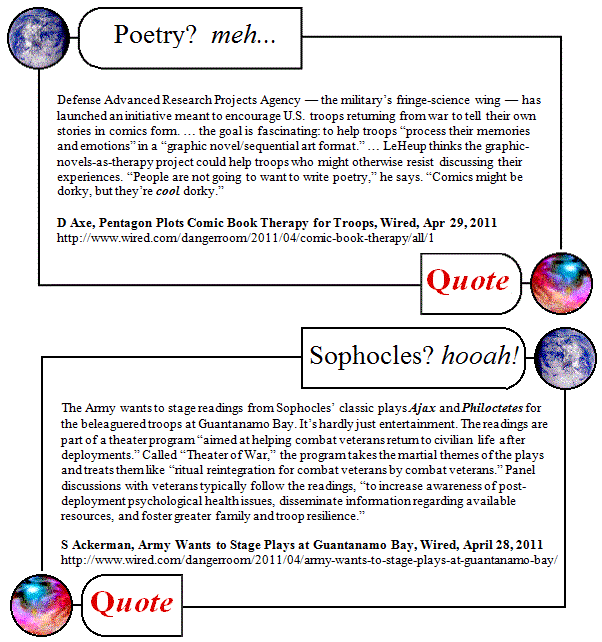
Sources: Comics – Plays
Poetry? meh… Sophocles? Chlanna nan con thigibh a so’s gheibh sibh feoil!
*
Lionel Tiger and Robin Fox in The Imperial Animal characterize modern health care as the “bureaucratization of mercy” and propose that for comparison, we set it beside:
the Greek ideal of the hospital as the place with the best food, the finest furnishings and paintings, and the most skilled musicians and comedians.
The greatest healing center in ancient Greece was the Asclepion at Epidavros / Epidaurus, which housed an amphitheater that could seat more than ten thousand people for dramatic and musical performances without amplification.
At Epidavros, patients would be healed by watching those same dramas of Sophocles to which the US Army is now turning for therapeutic relief in Guantanamo — for as Tiger and Fox (what a pair of names) go on to argue:
It is not the healthy, but the sick who most vitally needed such agreeable and re-creative stimuli; and the resources the community had were most beneficially and sanely used in helping them ease their personal disarray and feel encouraged by this display of their community’s careful concern.
*
It’s also interesting to note that the graphic novel Silver Shields mentioned in Axe‘s piece as a precursor to DARPA’s “Online Graphic Novel/Sequential Art Authoring Tools for Therapeutic Storytelling” project is “set during the ancient Greek invasion of Afghanistan more than two millenniums ago” as a metaphor for America’s current situation…
Posted in Afghanistan, analogy, ancient history, anthropology, Charles Cameron, complexity, cultural intelligence, education, framing, guantanamo, history, insight, john boyd, myth, psychology, strategy, swj blog, Uncategorized | 1 Comment »
Tuesday, April 19th, 2011
[ by Charles Cameron ]
*
I thought I’d back-track a little, and drag in two blog posts that I made elsewhere back in March of 2008, which may help to explain my basic outlook on the sorts of issues that analysts face.
.
I. The version of the idea as poetry:
I am Charles
.
My concern is the human mind in service
to an open heart, and my problem
is that the heart picks issues rich in ambiguity
and multiplicity of voices, tensions
and torsions tugging not one way but
in many directions, even dimensions, as does
a spider’s web weighed down with dew –
to clarify which a mind’s abacus is required
.
equal in subtlety to subtlety itself, while
in all our thinking and talking, one
effect follows one cause from question
to conclusion down one sentence or white
paper — whereas in counterpoint,
Bach’s fugal voices contain their dissonance.
.
II. The same idea presented in prose — as I say, a few years back — with graphical illustration:
Spiders and dewdrops
Spiders and dewdrops do a pretty convincing job of portraying a certain level of complexity in this node-and-edge diagram of the global situation.

When, say, Castro hands over power to his brother, or Musharraf has to give up control of the Pakistani army, it’s like snipping a couple of threads in that spiders web — and the droplets fall this way and that, carom into one another, the fine threads they’re on swing down and around until a new equilibrium is reached…
But try thinking that through in terms of Cuba and Pakistan before breakfast one morning if you’re Secretary of State, with a linear Cold War mind, Russia going through its own changes, and al-Qaida and associates training and recruiting in the background…
Well, those two instances have been and gone, and the new configurations are now the tired old same old configurations we believe we’ve figured out — until another dewdrop slips, and a thread breaks, and all things are once again new…
.
Funnily enough, I think this spider’s web of mine ties in with the Hokusai quote I posted in response to Zen‘s quote from Steven Pressfield yesterday, and with a piece I read today about intelligence analysts — Martin Petersen, What I Learned in 40 Years of Doing Intelligence.
It’s the web of tensions that constitutes the “complexity” that must somehow be grasped by the analyst, the writer, the historian…
And Hokusai, watching across the years how grasses bend in the winds, reach for sunlight, bow under the weight of dew — and spring back when released — may finally have a mind that’s attuned to that kind of complexity — to a degree that linear thinking will never reach…
Posted in al qaida, analogy, analytic, Charles Cameron, CIA, counterintuitive, creativity, education, framing, geopolitics, history, horizontal thinking, insight, intelligence, networks, steven pressfield, Uncategorized, visualization | 9 Comments »


