zenpundit.com » history

Archive for the ‘history’ Category

Government by Assassination

Monday, March 7th, 2011

Pakistani Islamist militants, with the political support of the ISI and some of Pakistan’s higher military leadership, are trodding down a path we have seen before. Assassinations of democratic or tolerant political figures at odds with Islamist extremists and the military elite has become de facto “normalized” in Pakistan.

And popular among many Pakistanis.

Bhatti Killing Should Alarm Pakistan’s Minorities

The murder last week of Shahbaz Bhatti, Pakistan’s minority affairs minister and the only Christian in the cabinet, is a reminder of how dangerous it can be to voice one’s opinion in violence-riddled Pakistan. Bhatti was a liberal who spoke often against Pakistan’s blasphemy laws and their narrow-minded application.

His murder comes just weeks after the assassination of Punjab Governor Salman Taseer, another prominent moderate. Both men were targeted by Islamic extremists because of their calls to reform the blasphemy laws. The purpose of their murders — besides depriving moderates of some of their most courageous leaders — is to frighten moderates and minorities into silence and submission.

What Salman Taseer’s assassination could mean for Pakistan

Experts believe the outpouring of praise for the killer of Salman Taseer, the former governor of Punjab who was slain by his own security detail in Islamabad on Tuesday, reflects deep support for religious intolerance and will have a chilling effect on reform-minded public figures.

“It’s highly dangerous for these religious scholars to say things that do not fit into the legal context of [an] issue. Are they saying Taseer was guilty of blasphemy simply by criticizing a law? In that case, hundreds of thousands are guilty. This is a clear incitement to violence,” says Badar Alam, editor of Pakistan’s Herald magazine and an expert on Islamist groups.

Pakistan’s Bhutto assassinated – World news – South and Central …

NAUDERO, Pakistan – The body of Pakistan opposition leader Benazir Bhutto arrived in her family village for burial on Friday, hours after her assassination plunged the nuclear-armed country into one of the worst crises in its 60-year history.

Enraged crowds rioted across Pakistan and hopes for democracy hung by a thread after the former prime minister was gunned down as she waved to supporters from the sunroof of her armored vehicle.

The death of President Pervez Musharraf’s most powerful opponent threw the nation into chaos just 12 days before elections and threatened its already unsteady role as a key fighter against Islamic terror.

A cadre of military leaders manipulate and orchestrate civilian fanatics to methodically murder and intimidate civilian officials and radicalize the larger society, where have we seen this before? Oh, yes:

Pakistan is a Muslim version of 1930’s Japan.

US policy has hitched itself to a dangerously evolving and increasingly Fascist leadership class in Pakistan that is steadily veering away from any pretense of civilized conduct or partnership with the US, reifying a witch’s brew of Islamist extremism, militarism and anti-Indian and anti-American nationalism.  We need to disengage from and de-fund this monstrosity that bends most of it’s efforts against our interests and values. 

Pakistan is a strategic black hole of an “ally” that is going to blow up in our face someday.
The Sociobiological Origins of Beauty

Sunday, March 6th, 2011


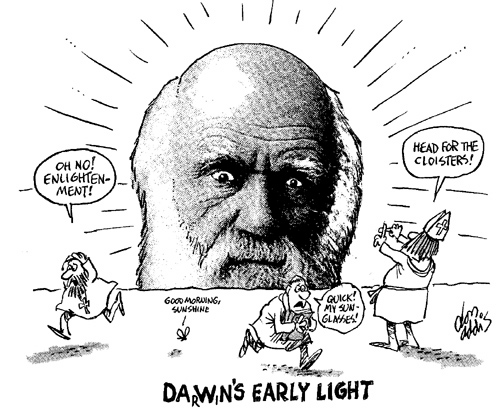
Great multidisciplinary talk by Dr. Denis Dutton on the possible evolutionary origins on culturally universal concepts of aesthetic beauty.

Marginalia

Sunday, March 6th, 2011


The New York Times, which I read on my iPad, particularly the non-political news sections of the paper where the obnoxious spin is reduced and the content quotient is higher, had an article that I think will ring a bell with ZP readers:

Sam AndersonWhat I Really Want Is Someone Rolling Around in the Text’

One day in college I was trawling the library for a good book to read when I found a book called “How to Read a Book.” I tried to read it, but must have been doing something wrong, because it struck me as old-fashioned and dull, and I could get through only a tiny chunk of it. That chunk, however, contained a statement that changed my reading life forever. The author argued that you didn’t truly own a book (spiritually, intellectually) until you had marked it up.

….All of which means I’ve been feeling antsy over the last five years, as I’ve watched the inexorable rise of e-readers. I sympathize with the recent wave of public teeth-gnashing about the future of marginal notes. The digital book – scentless, pulp-free, antiseptic – seems like a poor home for the humid lushness of old-fashioned marginalia. You can’t even write by hand in an e-book – at least not comfortably, not yet. As John Dickerson recently put it on Slate, describing his attempt to annotate books on an iPad: “It’s like eating candy through a wrapper.” Although I’ve played with Kindles and iPads and Nooks, and I like them all in theory, I haven’t been able to commit to any of them. As readers, they disable the thing that, to me, defines reading itself. And yet I’ve continued to hope that, in some not-too-distant future, e-reading will learn to take marginalia seriously. And it looks as if that might be happening right now.

According to the marginalia scholar H. J. Jackson, the golden age of marginalia lasted from roughly 1700 to 1820. The practice, back then, was surprisingly social – people would mark up books for one another as gifts, or give pointedly annotated novels to potential lovers. Old-school marginalia was – to put it into contemporary cultural terms – a kind of slow-motion, long-form Twitter, or a statusless, meaning-soaked Facebook, or an analog, object-based G-chat. (Nevermind: it was social, is my point.) Samuel Taylor Coleridge, the undisputed all-time champion of marginalia, flourished at the tail end of this period, and his friends were always begging him to mark up their books. He eventually published some of his own marginalia, and in the process even popularized the word “marginalia” – a self-consciously pompous Latinism intended to mock the triviality of the form.

Incidentally, How to Read A Book is by Mortimer J. Adler. A classic 

Marginalia is of critical importance to biographers and historians studying controversial figures. We know far more about such disparate figures as John Adams and Joseph Stalin because they enthusiastically marked up their books and documents with sharp and brutally frank opinions, revealing the true feelings often masked to contemporaries. Stalin, who sometimes used a crayon, would mark certain passages with “ha ha!” which, far from being a sign of the dictator’s amusement indicated rage toward the author – sometimes with lethal consequences. Stalin’s rival and equally deadly disciple, Mao ZeDong scrawled erudite literary, scholarly, sometimes poetical, comments about philosophy and Chinese history that belied his taste for the maniacal ruin of a classical Confucian culture in which he was deeply versed.

Richard Nixon, who clinked toasts of maotais with Mao and Zhou ( mostly Zhou as Mao was seriously ill) during Nixon’s historic visit ran his semi-isolated presidency via marginalia he methodcally wrote on news clippings, memos and yellow legal pads all day long, which he sent to his “Lord High Executioner” H.R. Haldeman, who like Henry Kissinger, discreetly ignored Nixon’s angrier, stranger and more ill-considered notations while carrying out Nixon’s incisive or at least harmless instructions. Harry Truman, known for employing blistering profainity in private, was also capable of the searing marginal commentary favored by John Adams.

It isn’t just e-readers, iPads and PCs that have reduced marginalia. The culture of literacy is in a general decline in America and the “gotcha” nature of modern politics and the criminalization of policy differences have caused political figures to adopt a strategy of eschewing diaries, journals, letters and email on the advice of attorneys. Statesmen are following the old rule of Chicago alderman, “Don’t write it down when you can say it, don’t say it when you can nod, don’t nod when you can wink”. It’s a loss to history. We will know far more about Teddy Roosevelt’s true interior life or Richard Nixon’s than we will of Barack Obama’s. Very little that is recorded will not be, in part, artifice and marginalia is a poor strategy for artifice designed to craft an image or advance an argument.

As part of the diminishing cadre of marginalians, I like to mark up books with colored, ultra fine point, sharpies. Generally lighter hues so it won’t bleed heavily through the page. Occasionally, for especially important passages, maybe one or two a book, a highlighter is used so that in the future, I can lazily pull the book from the shelf and quickly flip to the paragraph in question. I tend to do a lot of underlining and bracketing; when I was younger, I “argued” more with the authors in the margins. Older now, I expand on their points whether I agree with them or not. The Kindle has the capacity to type in notes, but I have not used the function much because most of the books I have read on it are fiction.

What do you do with the margins of your books?

Question……

Thursday, February 24th, 2011

We have been hearing a great deal about the “leaderless” Libyan resistance to Gaddafi. To a lesser degree, we heard similar things about Egypt when protestors failed to coalesce behind Elbareidi as Egypt’s national savior, but it was muted, perhaps due to the prominence of Wael Ghonim, an influential figure to whom western reporters and audencies could relate. Ghonim, however, was not a “leader” in the same sense as say, Nehru, Walesa or Yeltsin.

Are these revolts really of a different political character or do their “leaders” in this panopticonic global environment just have the sense to stay the hell out of sight?

History as a Gen Ed Credit for Engineering Students Aspiring to Naval Leadership

Tuesday, February 15th, 2011

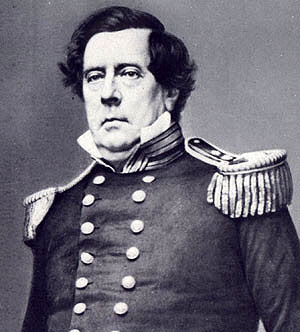
Commodore….errr….what’shisnameagain???

As a rule, I generally do not write about US Navy affairs because it is not an area of expertise for me and I think Galrahn covers that territory admirably well without my poor help. Every so often though, an item from our sea-roving friends catches my eye that I am qualified to speak about and today is one of those days.

Teaching naval history has become an inconvenience to those entrusted with training our nation’s future captains and admirals because they need to get the budgetarily “sexy” topic of “cyber warfare” into the US Naval Academy curriculum. Yes, that’s right. Because someday, in the midst of battle, the combatant commander of PACOM will be furiously barking out HTML code at the bridge of the Eisenhower, above the cries of wounded men.

Gentlemen, gentlemen….in matters of education, fundamentals come before esoterica!

I strongly recommend this post by LCDR Benjamin “BJ” Armstrong, historian, pilot and Navy officer who tackled this subject with an enviable grace and eloquence at the USNI blog:

HH104, WWATMD…

….More than policy or naval strategy, Mahan believed in teaching officers the best ways to approach the challenges of command.  He saw his job as a Naval War College plankowner in those terms, about teaching command, and to do so he turned to history.  But, it wasn’t just senior officers who needed grounding in our naval past.  He wrote in his very first published article, winning third place in “Proceedings” annual essay contest, that history was also a key foundation for learning at the Naval Academy.

When he said that history “lies at the foundation,” it wasn’t just a convenient turn of phrase.  He believed that before subjects like gunnery, engineering, or even cyber-warfare, could be taught a Midshipman needed to know why he was learning them.  Why did any of it matter?  The best way to show a student why hitting the target in gunnery class was important was to teach him the history that showed what happened when crews weren’t drilled properly.  Perhaps he would teach the Midshipman about Captain James Lawrence sailing Chesapeake out of Boston harbor with a green and undrilled crew in 1813 to face HMS Shannon, a short time later uttering his final command, “Don’t give up the ship” just before he succumbed to his wounds and the British boarding party swarmed aboard in victory.  Maybe the Midshipman would recognize the words…from the battle flag bearing the phrase in Memorial Hall that was flown at the Battle of Lake Erie.  Mahan felt that once a Midshipman understood the importance of mastering the craft, of studying their trade, a subject like weapons systems engineering would become important even to the lowly humanities major.

The second part of Mahan’s statement is also important, “all sound military conclusions and practices.”  In our age of checklist leadership and officers educated as engineers there is a desire to approach leadership challenges as equations where certain inputs are guaranteed to give you the desired results.  But Mahan doesn’t say all “correct” military conclusions and practices, he says “sound.”

Mahan recognized that both naval strategy (conclusions) and combat leadership (practices) were art, not science.  In his book “Naval Strategy: Compared and Contrasted with the Principles and Practice of Military Operations on Land,” published in 1911, Mahan compared naval officers to artists.  He wrote that artists had to learn certain techniques, mediums and certain skills, but that wasn’t what made their artwork great.  In the end “art, out of materials which it finds about, creates new forms in endless variety,” artists take those foundation basics and then mix and match them based on inspiration and experience to create a masterpiece.  History helps us understand that frequently there are no right answers to military questions of strategy or leadership.  There are only “sound conclusions,” which are drawn from understanding basics and history.  Demonstrating this great truth to Midshipman early in their education, say as a Plebe before they have taken three years worth of engineering classes that teach them there is always an equation and a correct answer, is much more valuable than having them learn it after years of service.

Bravo!

This decison is wrong on so many levels it amounts to pedagogical malpractice. It should be reversed.

What kind of mind do we want our Navy officers to have in the moment of decision?  An admiral in command of a carrier task force has more destructive power at his disposal than any man on earth except for the ruler of Russia and the President of the United States. At a crisis point, it is too late to roll back the clock to gain the benefit of a career of professional reading, discussion and reflection on the lessons of naval warfare, strategy and statesmanship. EE courses are good things, and demonstrably useful, but they do not inculcate the same habits of mind as does the learning of history.

Historically, the US Navy was the plenipotentiary service of the United States with it’s admirals and commodores assuming extremely sensitive diplomatic or even proconsular duties alongside their responsibilities of military command. The careers of Farragut, Perry, Dewey, Leahy, King, Nimitz and others of lesser rank attest to how naval command has always been deeply entwined in American history with statesmanship and keen political insight. The 21st century will be no different.

The lessons of history are a sword and shield.


Switch to our mobile site