zenpundit.com » Afghanistan

Archive for the ‘Afghanistan’ Category

Prophecy, Poetry and Prediction

Tuesday, July 17th, 2012

[ by Charles Cameron — personal preference, gangs, Chicago, insurgency, Afghanistan, and admitting the uncomfortable ]
.

Albrecht Durer, The Blessed Virgin enthroned on the crescent moon

**

Poetry, on the whole, has a liking for prophets. Thus Sylvia Plath writes:

By the roots of my hair some god got hold of me.
I sizzled in his blue volts like a desert prophet.

There’s an undeniable affinity there, the sense of giving voice to a lightning strike. Or as Randall Jarrell puts it:

A good poet is someone who manages, in a lifetime of standing out in thunderstorms, to be struck by lightning five or six times; a dozen or two dozen times and he is great.

**

Okay. I’m a poet, I think, partly because I have such a damnably literal mind that I need to break out in metaphor the way athletes break out in a sweat.

And the trouble with prophecy, from my point of view, is that it’s all too often read in damnably literal-minded ways, as though:

And there appeared a great wonder in heaven; a woman clothed with the sun, and the moon under her feet, and upon her head a crown of twelve stars

wasn’t clearly poetry. Let me clarify: it is.

And it is because prophecy (not “false prophecy”) is all too often read literally that the end of the world is so regularly promised, without once having come to pass thus far.

Even though the scriptures proclaim, But of that day and hour knoweth no man, no, not the angels of heaven

**

I suppose it goes along with being a poet rather than a statistician that I’m far more interested in qualitative than in quantitative approaches to modeling — or understanding, as we used to call it.

There are times, though, when it’s advisable to acknowledge the approaches most different from one’s own — for they too have their moments.

**

A Reporter’s Notebook entry yesterday on Fox News titled Chicago gang database intends to predict and prevent further violence tells us “One shooting sets the next shooting in motion.” That’s poignant even if a tad banal. But what comes next is interesting:

In an attempt to predict the next violent act, Chicago police are turning to technology. They have established a database that includes information on more than 100,000 known gang members. Even the lowest members of the gangs are entered as soon as police become aware of them. Their arrest records and affiliations are all entered and cross-referenced and available to the cop on the street. This is the kind of information a good beat cop would keep in his head; now it’s available to every cop on every beat. Sgt. Tom Ryan is in the gang unit on the South Side. “This is just a great way that we can look at all the information gathered because it is hard for the detectives to talk to all the different units. This is a good way of filtering down data through the departments to each other.

Probably of greatest use to the officers, when a guy gets shot, police see who his buddies are. “We can make predictions about where retaliations might be likely to happen,” says Commander Jonathan Lewin.

**

And I bring this to your attention because today I ran across an article in Wired’s Danger Room with the headline Study: WikiLeaked Data Can Predict Insurgent Attacks which resonated with yesterday’s Chicago gang report:

Insurgencies are amongst the hardest conflicts to predict. Insurgents can be loosely organized, split into factions, and strike from out of nowhere. But now researchers have demonstrated that with enough data, you might actually predict where insurgent violence will strike next. The results, though, don’t look good for the U.S.-led war.

And they’re also laden with irony. The data the researchers used was purloined by WikiLeaks, which the Pentagon has tried to suppress. And the Pentagon has struggled for years to develop its own prediction tools.

That data would be the “Afghan War Diary,” a record of 77,000 military logs dated between 2004 and 2009 that were spilled onto the internet two years ago by WikiLeaks. In a paper published Monday by the Proceedings of the National Academy of Sciences, a team of researchers used the leaked logs to (mostly) accurately predict violence levels in Afghanistan for the year 2010. (Behind a paywall, alas, but a summary is available for free in .pdf.)

**

I’m focused on minds and hearts, as the saying goes — but I’ll admit that mines and HK417s are also significant.

If the quant side of the house can reduce casualties, I’m all for that.
Mali: a tale of two tweets

Tuesday, July 3rd, 2012

[ by Charles Cameron — Timbuctu, Bamiyan, iconoclasm, dissolution of the monasteries, conceptual mapping, ethics, aesthetics, Venice ]
.

credit: Alidade, see below


.

Zen called the Ansar al-Din “The Taliban of the Mahgreb” today, pointing to an article on the destruction of the Bamiyan Buddhas, and that’s an equation of a sort: destruction of the Sufi shrines in Mali compares with and in some ways equates to destruction of the Buddhas of Bamiyan.

The similarity lies in the destruction by Islamic zealots of images considered idolatrous — and as Curtis reminded us, a Chritian expression of the same concept also motivated the Iconoclastic movement in Orthodoxy.

To some extent, the dissolution of the monasteries in Henry‘s England under Thomas Cromwell carries a similar resonance.

Which brings me to two tweets I received in my Twitterfeed today.

**

Here’s Tweet Number One, as Dr Seuss might have said:

And Tweet Number Two:

**

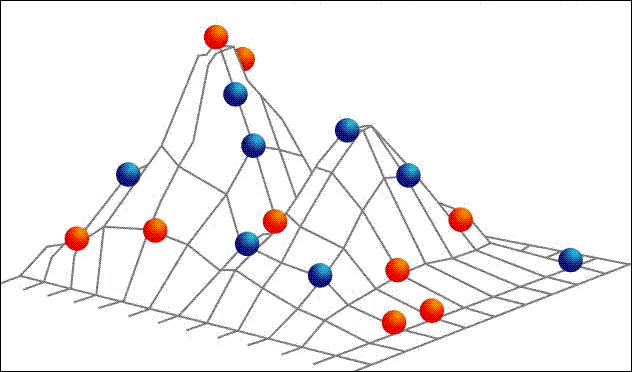
Between the two of them, and with an eye to Zen’s remark, I get the idea that there’s a style of mental mapping that I can just about see out of the corner of my eye — a mapping that would interest me if I could figure out more about how to take it from being implicit and verbal and make it graphical and visible.

In this mapping, we would lay out the manner in which things presumed equal are treated differently.

I suspect the mapping might initially look something like the graphic at the head of this post — which I’ve borrowed from the materials on an interesting “Co-Revolutionary War Game” devised by Alidade in 2003 or thereabouts.

**

Arguably the publication of blasphemous cartoons of the Prophet upsets many Muslims more than does the destruction of Sufi shrines. Likewise, the publication of Salman Rushdie‘s Satanic Verses upsets many Muslims more than does the fatwa calling for Rushdie’s death. The burning of Qur’ans seems to upset many Afghans more than the deaths of nine Afghan children… And likewise, the loss of human lives in Mali seemingly pales in comparison to the loss of the Timbuctu shrines of saints in the eyes of the western press.

Throw in the Bamiyan Buddhas, and you have a first cluster of data-points that might be mapped in terms of public outrage — Christian, Buddhist, Muslim, cultural, political. the peaks and valleys will differ according to the perspectives chosen, and mapping the differences too would be of considerable interest.

**

The question has become something of a classic among ethicists, I believe: whether to rescue an unknown human child — who may if saved, as they say, grow into a Mao or a Michelangelo — or a great masterpiece of painting, if both are swirling past you in the same Venetian flood…

My instinct is with the child, but oh! — my temptation goes towards the painting…

William Lind on the Taliban’s Operational Art

Friday, June 29th, 2012

Adam Elkus directed my attention today on Twitter to a new piece by William S. Lind, “the Father of 4th Generation Warfare” at The American Conservative:

Unfriendly Fire 

….The Soviet army focused its best talent on operational art. But in Afghanistan, it failed, just as we have failed. Like the Soviets, we can take and hold any piece of Afghan ground. And doing so brings us, like the Soviets, not one step closer to strategic victory. The Taliban, by contrast, have found an elegant way to connect strategy and tactics in decentralized modern warfare.

What passes for NATO’s strategy is to train sufficient Afghan forces to hold off the Taliban once we pull out. The Taliban’s response has been to have men in Afghan uniform— many of whom actually are Afghan government soldiers or police—turn their guns on their NATO advisers. That is a fatal blow against our strategy because it makes the training mission impossible. Behold operational art in Fourth Generation war.

According to a May 16 article by Matthew Rosenberg in the New York Times, 22 NATO soldiers have been killed so far this year by men in Afghan uniforms, compared to 35 in all of last year. The report went on to describe one incident in detail—detail NATO is anxious to suppress. There were three Afghan attackers, two of whom were Afghan army soldiers. Two Americans were killed. The battle—and it was a battle, not just a drive-by shooting—lasted almost an hour.

What is operationally meaningful was less the incident than its aftermath. The trust that existed between American soldiers and the Afghans they were supposed to train was shattered. Immediately after the episode, the Times reported, the Americans instituted new security procedures that alienated their native allies, and while some of these measure were later withdrawn,

Afghan soldiers still complain of being kept at a distance by the Americans, figuratively and literally. The Americans, for instance, have put up towering concrete barriers to separate their small, plywood command center from the outpost’s Afghan encampment.

Also still in place is a rule imposed by the Afghan Army after the attack requiring most of its soldiers to lock up their weapons when on base. The Afghan commanding officer keeps the keys….

Lind has lost none of his skill for zeroing in on which buttons to push that would most annoy the political generals among the brass.

However, I think Lind errs in ascribing too much credit to the Taliban here. A much simpler explanation is that the usually illiterate ANA soldier is a product of the same xenophobic cultural and religious environment that created the Taliban, the Haqqanis, vicious Islamist goons like Gulbuddin Hekmatyar or the Afghan tribesmen who slaughtered the retreating garrison of Lord Elphinstone in 1841.

While the Taliban have infiltrators, it remains that many of the “Green on Blue” killings are just as easily explained by personal grievances, zealous religious bigotry, indiscipline, mistreatment by American advisers or Afghan superiors and sudden jihad syndrome. While it is impolitic to emphasize it, Afghan betrayal and murder of foreign allies (generally seen as “occupiers”) is something of a longstanding historical pattern. The Taliban capitalize on it politically but they are not responsible for all of it.

New Article: The Coming National Defense Crack-Up

Wednesday, June 27th, 2012


I have been asked to contribute foreign policy and defense pieces to IVN – The Independent Voter Network. The emphasis at IVN  is on well-supported brevity to inform a general audience of prospective voters for 2012 and not to entertain the legions of doctorate-seeking war nerdom with iterations of mutant 4GW, hybrid neo-Clausewitzian, counter-counter-insurgency theoretical castles in the sky 🙂 Different readership there.

Here is my first article:

The Coming National Defense Crack-Up

….Despite a major speech on defense issues given at the Citadel in 2011, Governor Romney’s strengths as a candidate are not associated with national security, while President Obama’s staff prefer to emphasize to the administration’s many successes in counterterrorism operations instead of the accumulation of serious issues faced by the Department of Defense, the armed services and America’s returning veterans.

This lack of debate is problematic because the next president will require a mandate for his solutions to the Pentagon’s laundry list of problems if they are to have a hope of passing the Congress in tight budgetary times. Some of the national defense problems are structural while others constitute a legacy of ten years of war in Afghanistan, Iraq and in remote lawless regions, but the political capital needed to fix them will be substantial:

  • Never has the Pentagon’s system for acquiring weapons and supplies been so dysfunctional or so ruinously expensive. Most of the major weapons systems of the past decade have been cancelled or halted in scandal at a cost of billions, including the Future Combat System, theF-22 Raptor , the next generation Destroyer, the Crusader, the Comanche helicopter, theExpeditionary Fighting Vehicle and the Littoral Combat Ship. The desk-bound military bureaucracy bitterly fought against the deployment of the life-saving MRAP while outfitting troops in uniforms that made it easier for the enemy to shoot them.
  • The Obama administration is attempting a “strategic pivot” toward Asia by focusing shrinking military resources in the Pacific, but the United States Navy will be extremely hard-pressed to carry out offshore balancing of a rising China with a reduced fleet of only 285 aging ships, the lowest number in a century. Nor do we have any regional allies with operational aircraft carriers – Japan has only a helicopter carrier, Britain is losing it’s last carrier in 2014, Australia and South Korea have no carriers and New Zealand barely has enough ships to constitute a functioning navy. Naval expansion would require a significant investment and several decades to complete…..

Read the rest here.

Taliban: religiosity vs pragmatism

Wednesday, June 27th, 2012

[ by Charles Cameron — a question of priorities ]
.


photo credit: Omar Sobhani/Reuters
.

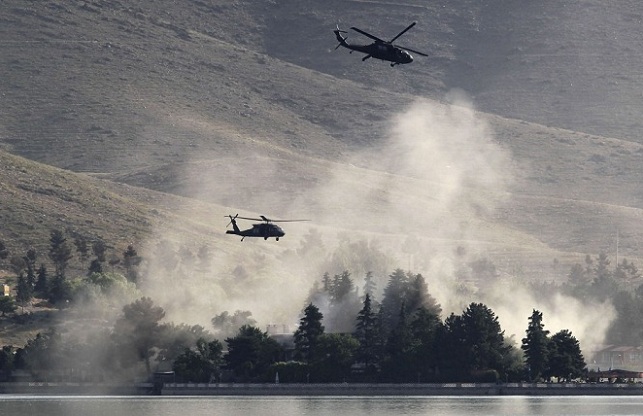
The attack in Qargha was not about liberating one’s own people from an occupying power, but about imposing one’s religious morality on compatriots who do not share one’s enthusiasm. Or to put that another way: at times, war is the continuation of religiosity by other means.

Offered without further comment, from The attack in Kargha: Return of the Taleban Puritans? by Thomas Ruttig of Afghan Analysts Network:

For the first time in many months, the Taleban have attacked a target that is almost exclusively used by Afghan civilians, while statements by their leader Mulla Muhammad Omar and their code of conduct (the layha, see an AAN report about it here) suggested a desire to protect civilians as much as possible. In the past, when causing civilian casualties, Taleban spokesmen often argued that they had actually been attacking a military target (like a convoy, a checkpost or another military installation) and that they had not planned to harm civilians. This time, such an excuse would have sounded ridiculous. Instead, in a statement under the name of their spokesman Zabihullah Mujahed they called the hotel a ‘hub of obscenity and vulgarity frequented by the lusty foreign and local top-level military and officials to satisfy their impure lust especially on Thursday nights’ and where ‘anti-Islamic meeting are usually being held’ (sic).

Equally ridiculous was their claim that it was mainly foreigners who had been targeted at Kargha. In the statement already quoted they claimed that their fighters had killed and wounded ‘several dozens of the top-level foreign diplomats and military figures and high-ranking puppets’. But everyone in Kabul knows that many foreigners are not even allowed to go to most of the restaurants in the city centre, particularly ‘top-level diplomats’. Kargha, well outside the city, is off limits for all foreigners except those few who do not have strict security rules. Instead, Kargha, with its little restaurants (which Afghans tend to call ‘hotels’), ice cream parlours and even cottages furbished in Swedish style and a few pedalo boats to rent, is a typical weekend retreat for Kabulis from all walks of life, from the young and well-off to rather ordinary people who enjoy the only accessible lake in the vicinity of the capital. To target such an area is not only a clear deviation from recent stated Taleban policy, if not practice, it is also an outrage.

That the Taleban tried to justify their attack by claiming that it was a venue of ‘anti-Islamic’ behaviour also shows that the old puritan tendency in their movement is alive and kicking, to which all kind of temporal amusement are anathema, especially if men and women are attending without being strictly separated.


Switch to our mobile site