zenpundit.com » Afghanistan

Archive for the ‘Afghanistan’ Category

Wylie’s Military Strategy

Saturday, July 23rd, 2011

 by J. Scott Shipman

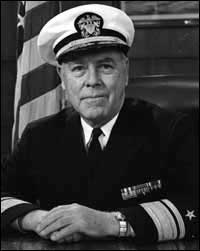
Wylie

Military Strategy, by Rear Admiral J.C. Wylie, Jr., USN (1911-1993)

This is a very brief review and recommendation for a book that I discovered recently. Admiral Wylie’s short Military Strategy (about 85 pages in the original edition) was published in 1967, but written in the mid-fifties while Wylie was “at sea in a single-screw low-speed amphibious cargo ship.” He remarked these ships were “not demanding  of a captain’s attention as is, for instance, a destroyer.”My copy was published in 1989 by the  Naval Institute Press  as part of their Classics of Seapower series and has an excellent preface by John B. Hattendorf that will give those unfamiliar with Wylie’s life experience a good foundation. This copy also has a postscript written by Wylie “twenty years later” and three related essays published previously in Proceedings magazine.

Given Military Strategy’s brevity, I’ll resist the urge to provide long quotes. Wylie and an associate’s search for articulating the relevance of the navy in the never-ending budget battles brought them in contact with the famed mathematician John von Neumann of Princeton. Wylie used a paraphrase of von Neumann as a starting point: “With respect to strategy as a subject of study, its intellectual framework is not clearly outlined, and its vocabulary is almost nonexistent. These two primary tasks are badly in need of doing…” He sets out to do just that and does a nice job.

Wylie defines strategy as: “A plan of action designed in order to achieve some end; a purpose together with a system of measures for its accomplishment.” He discusses the military mind and strategy, and how often the military focuses on principles to the exclusion of real strategy. Wylie outlines methods of studying strategy that are simple and well thought-out. Wylie makes a compelling case for a general theory of strategy. He says: “A theory is simply an idea designed to account for actuality or to account for what the theorist thinks will come to pass in actuality. It is orderly rationalization of real or presumed patterns of events.” Further, he continually stresses the importance of assumptions being based in reality, and not wishful thinking or the last war/battle.

His chapter on existing theories is worth the price of the book. He provides a type of Cliff’s Notes overview of the four theories he sees as core: the maritime, the air, the continental, and the Maoist. Of the last, he masterfully lifted sections from Mao’s On Guerilla Warfare, Che Guevera on Guerilla Warfare, and Vo Ngugen Giap’s People’s War People’s Army. He observed of the later, “these books are not only theory, the portray a hard reality of contemporary warfare.” To our people in uniform, in particular, unfamiliar with these books, Wylie provides an accessible and informative introduction to the type of war being waged by Islamic jihadists and how they attempt shape the battle field.

He develops a brilliant point that destruction doesn’t necessarily translate into control, and that often destruction is driven more by emotion than strategy.

Wylie goes on to provide a general theory of strategy that, using his words, has “substance and validity, and practicality.” As Seydlitz89 said in a recent comment thread here: “Wylie is amazing.  So many ideas in such a small book!  He misread Clausewitz and overrated Liddell Hart – which are probably connected, but overall?  He comes up with some very basic ideas about strategic theory which are ever sooooo useful.  I’ve re-read his small book several times and always come up with something that either I’d forgotten or that I had missed earlier.  Wylie’s basic approach to theory is as a practitioner, not as an academic, much like Clausewitz before him.”

Indeed, Wylie provides a nice scaffold for any type of strategy, military or business. For me his approach was refreshing in a genre where, more often than not, dogma and ego walk hand-in-hand.  Time and again, he offers that his ideas may be wrong and encourages readers to think and wrestle with the concepts provided. Wylie writes in his postscript: “As far as I know, no one as ever paid attention to it [the book]. I don’t know whether this is because it is so clear and obviously valid that no one needs to, or because it is of no use at all. I suspect it could be the latter, but I really do not know.”

This little book comes with my highest recommendation. If you’re in uniform and just getting started with strategic concepts/thinking, this is an excellent place to start.

Interesting referenced titles:

Military Concepts and Philosophy, Henry E. Eccles 

The Military Intellectuals in Britain, 1918-1939, Robin Higham 

An Introduction to Strategy, General Andre Beaufre 
Theory of Games and Economic Behavior, John von Neumann 

Strategy in Poker, Business and War, John McDonald 

Plus ça change II

Wednesday, July 20th, 2011

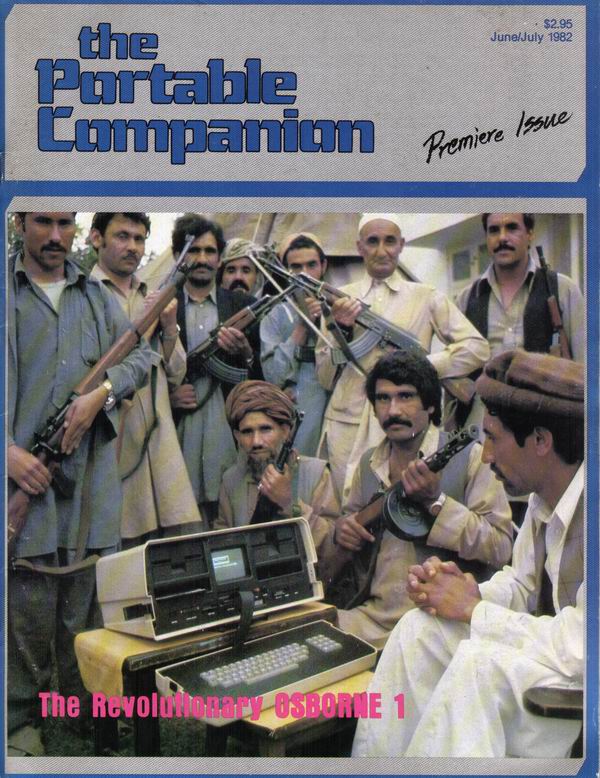
[ by Charles Cameron — jihadist computing, reminiscence ]

.

portablecompanionv1n1.jpg

!!

My first computer, back in 1982, was an Osborne like the one depicted here — I have fond memories… it had no hard drive, just a 512k floppy, the CP/M operating system, WordStar word processing, green letters on a tiny black screen, no internet hookup — and I managed to co-write a book on the thing!

Carl Prine’s Rebuttal to “Be honest: Who actually read FM 3-24?”

Wednesday, July 13th, 2011

My amigo and SWJ News co-columinst Crispin Burke recently put forth a very interesting and provocative jeremiad “Be honest: Who actually read FM 3-24?” and one of his targets, journalist and Iraq war veteran Carl Prine, has been duly provoked, Prine has responded in great detail yesterday at Line of Departure:

Starbuck is wrong

Starbuck is wrong.

And in his drive to keep getting it wrong, he’s trying to rewrite FM 3-24, the military’s chief doctrinal publication on counterinsurgency.

But that just makes him more wrong.

He’s wrong about me.  He’s wrong about what I believe.  He’s wrong about the literature that informs FM 3-24.  He’s wrong about what the manual says and he’s wrong about what it left out.  He’s wrong about historiography.  He’s wrong about how a caste of top officers and diplomats came to understand “strategy” in the wake of the occupation of Iraq.

Let’s help get him right.  Or, at least, less wrong.  He’s a good man.  We need to turn him and ensure he quits taking shots at me I don’t deserve!

….The problem to anyone who studies Malaya, however, is that since the publication of the memoirs of exiled communist leader Chin Peng a dozen years ago, we now know that the civic, military and political policies under the British “hearts and minds” approach didn’t defeat the revolution.

Instead, the revolt was irreparably broken by brutal operations against the guerrillas, then a most coercive “screwing down the people” phase that dispossessed or killed thousands of Chinese, followed by draconian “population control” measures that, as Peng put it, starved the guerrillas in the bush because they snapped their rat lines and cut off their rice.

The “hearts and minds” initiatives designed to bring medical care, education, social welfare and other aid to the resettled Chinese and woo them to the colonial government’s side from 1952 – 1954 didn’t crack the back of the insurgency, a point now pretty much beyond dispute.

Why?  Because the previous “hearts and minds” claptrap as the cause of pacification in Malaya was contradicted by the Malayan Chinese, most especially those guerrillas who took up arms against the British regime!

You know, the people targeted by a population-centric counterinsurgency.  The people most counter-insurgents in their pop-centric fantasies almost never discuss except as abstractions, the human yarn wefted and warped by their long needles of war.

One finds “Hearts and Minds” prominently mentioned 11 times in Dr John Nagl’s valentine to Templer and colonial Malaya, Eating Soup with a Knife; to Nagl it’s the stuff of police services and economic development and whatnot with the psychology of the people being the center of gravity those reforms are meant to snatch.

And Nagl would like the best burglar of hearts and minds to be a learning, nimble and evolving military-political institution such as the U.S. Army.  It’s no small wonder, then, that Nagl became a dominant voice in FM 3-24 and that many of this thoughts in Eating Soup came to dominate the manual, too.

Or, as the introduction to FM 3-24 echoes soupily, “by focusing on efforts to secure the safety and support of the local populace, and through a concerted effort to truly function as learning organizations, the Army and Marine Corps can defeat their insurgent enemies.”

This is mere euphemism and wasn’t worth the ink that it cost taxpayers to print it.  But it sets the stage for the rest of FM 3-24, which follows a hearts and minds template that Starbuck doesn’t apparently realize is borrowed from mid-century….

Ouch. Note to self: if I ever decide to square off against Carl, I will make sure to do my homework. Read the rest here.

First, I would point out to readers here for whom some of this in both essays is inside baseball, that the tone is less harsh and the substantive distance between Burke and Prine less great in  the comments sections of both blogs than it first appears in reading their posts. It is a healthy, no-holds barred exchange and not a flame war.

Secondly, it is an important exchange, tying together COIN disputes over theory, historiography, empirical evidence, operational and tactical “lessons learned”, strategy, policy (Clausewitzian sense), politics (colloquial sense) and personalities that have raged for five years across military journals, think tanks, the media, the bureaucracy and the blogosphere. In some ways, these essays can serve as a summative of the debate. I say “some ways”, because what is the most important element or effect of America’s romance with COIN will differ markedly depending on whom has the floor. My own beef is not with doing COIN, it is with not doing strategy.

As Crispin and Carl’s vignette about General Creighton Abrams demonstrated, American historians are still having savagely bitter arguments about the war in Vietnam. For that matter, everyone who lived through the era did and still does. It is a wound that never seems to heal and has crippled our politics to this day, even as the veterans of Vietnam now turn to gray.

The 21st century COIN wars have not ripped American society apart down to the soul the way Vietnam did. As with the Korean War, the soldiers and marines in Afghanistan and Iraq fought bravely, at times desperately, to a general and mild approbation back home that sometimes looked a lot like indifference. Even the anti-war protestors mostly made a point of stating they were not against the troops, the venemous public malice of the 1960’s New Left radicals in the 2000’s was a property only of the lunatic fringe.

But COIN itself will be a historical argument without end.

Possible Shifts in AfPak

Tuesday, July 12th, 2011

afpak.jpg

On Pakistan policy, credit where credit is due: the Obama administration has found the stones to respond to evidence of systemic and brazen bad faith on the part of our Pakistani “allies” and show their displeasure by witholding $ 800 million dollars in aid from Islamabad. There are already squeals of Pakistani unhappiness at this modest decrease of aid that all too frequently gets diverted to preparing to make war on India or, for that matter, on American soldiers and Marines. Former dictator General Pervez Musharraf, who cannot go back home to Rawalpindi for fear his brother officers will assassinate him, told a well appointed crowd in Houston that the aid cut “will be disastrous….if Pakistan is weakened, how will it fight terrorism?“.

Cynics might note that we could replace “fight” with “fund” in the former Pakistani ruler’s question and achieve greater historical accuracy.

On Afghanistan, it might be advisable for the new American commander, Lieutenant General John Allen, in carrying out his extremely difficult mission of “Afghanization” and “punitive raiding” the Taliban, to first ponder history and  “Remember Herat“.

In 1979, before the Soviet invasion of Afghanistan, the entire garrison of Soviet advisers in Herat was slaughtered, including the dependent women and children, by an angry mob that was aided by the local Afghan Communist Army units who, led by Ismail Khan, conveniently revolted and turned on their Russian allies. If British military history is more to Lt. General Allen’s taste, the Afghans massacred British garrisons in Kabul twice in the 19th century, Major Cavagnari’s in 1878 and that of Sir William McNaghten and Sir Alexander Burnes in 1841, though most of the British died to all but the last man on the retreat to Jalalabad in 1842.

The cape wearing, election-stealing, lotus-eater whom we thanklessly prop up, may be more incompetent than Nur Mohammed Taraki and less legitimate a client than Shah Shuja, but he has a demonstrated talent for inciting anti-western violence exceeded only by his enterprise in looting aid money. Is crazy Karzai above lighting a match to a tense situation the US military itself has already described as a “rapidly growing systemic threat“? Not in my view.

When the American drawdown begins in earnest, General Allen will need to watch the backs of his troops

ADDENDUM:

Ahmed Wali Karzai, the notorious fixer and feared enforcer of the Afghan regime and the brother of President Hamid Karzai was assassinated today. The Taliban claimed credit, but AWK has too many enemies to be certain yet.

The Tip of a Shadowy Spear

Wednesday, July 6th, 2011

300.jpg

Fight in Afghanistan to turn east: Petraeus

The outgoing commander of US and NATO forces in Afghanistan says the focus of the war will shift in coming months from Taliban strongholds in the south to the eastern border with Pakistan where insurgents closest to al-Qaeda and other militants hold sway.

With a new job pending as the CIA director, General David Petraeus said on Monday that by the northern autumn, more special forces, intelligence, surveillance, air power will be concentrated in areas along Afghanistan’s rugged eastern border with Pakistan….

Commander: Special operations forces under stress

….Senators pressed McRaven on the impact that the planned U.S. troop withdrawal from Afghanistan would have on special operations troops, asking whether Afghan elite forces would be able to step in.

McRaven said that right now U.S. forces need to continue to monitor and guide many of the Afghan special forces, but some units are highly trained and are increasingly taking on a larger role.

While the number of special operations forces has doubled to about 61,000 over the past nine years, the total of those deployed overseas has quadrupled. There are at least 7,000 special operators in Afghanistan and about 3,000 in Iraq. Those numbers can vary as units move in and out of the war zone, and often the totals don’t include the most elite of the commandos – special mission units such as Army Delta Force and Navy SEALs that may go in and out more quietly and quickly.

….In Afghanistan, special operations forces serve a number of roles. Not only do they mount an aggressive counterterrorism campaign across the country, but they also form teams to train or mentor Afghan forces. In one example, McRaven said that over the past 12 months, the task force he commanded conducted about 2,000 operations, roughly 88 percent of which were at night….

Supply and demand is an economic principle with universal application.

The demands of war have outstripped our supply of tax dollars, so elite units of speed, stealth and striking power are being substituted, in synergy with airpower, paramilitaries and on the spot analysts of the CIA, for whole divisions. In the drawdown from Afghanistan, FID will replace COIN , covert ops will replace surging, class will replace mass.

Mass in an AVF is very, very expensive (so is, incidentally, choosing grandiose political objectives to be achieved by military means). The shift that is happening in Afghanistan, partly by fiscal necessity, is going to become our default defense paradigm for at least the 2010’s. Highly mobile, extremely fast, networked, partially covert, backed by lethal high-tech firepower.

Rumsfeld’s revenge. And Wild Bill Donovan’s. And Art Cebrowski’s.

As a rule, I think recreating a modernized OSS-like community in all but name is a good idea that will pay dividends in terms of tactical and strategic flexibility. I fully expect the bureaucratic gravitational pull and sheer utility in fighting the murky, mutable, Islamist enemy to eventually draw in cyber elements of various agencies, elite law enforcement, DOJ, DARPA, Treasury and State Department personnel in to the mix, albeit sparingly. Such an interdependent and collaborative military and intelligence community is optimized as a striking force against our most immediate or proximate security threats – though definitely not all of our security threats (those who wish to disband all our armored units or unilaterally give up nuclear weapons can stop fantasizing now).

However, there are some caveats that need to be considered, in my view.

First, supply and demand applies here as well.  There’s a high practical barrier to growing the size of our special forces, which are presently badly overstressed. The commonly cited figure for growth is 3-5 % annually, if we want something better in our special forces than the highly conditioned thugs that the Soviets used to roll out in large numbers in their SPETSNAZ divisions. That’s not much and it represents the max that is probably possible without returning to conscription, which theoretically would give the US military the pick of the litter of entire age cohorts, but in reality much less. You have to be highly motivated to become a Navy SEAL or want to jump out of a perfectly good Army helicopter. Unwilling conscripts won’t fit the bill. Right now we are “stretching” our special forces by mixing them with high quality regulars; a hidden cost to this practice is that most of these folk are essentially “officer material” and drawing out the most capable personnel systemically weakens the regular units of their natural leaders.  The tip of this shadowy spear is always going to be small and difficult to replace and not something suited for waging total war (shades of Byzantium).

Secondly, normal use of this kind of force requires a political climate that keeps the antiwar and anti-American factions of the Left marginalized because many operations in the blurry realm between war, terrorism, crime and covert ops will legally require presidential findings to be reported to Congressional oversight committees. If the US Congress had the political composition of the 1980’s, with Vietnam era anti-war types being extremely vocal, especially in the House, much of what we are doing and have done in Afghanistan, Pakistan or Yemen would not be politically possible, including the raid that killed Osama bin Laden. It would require a considerable electoral turn, but friction in the form of modern day Boland amendments, special prosecutors, ChurchPike hearings and gratuitous leaks will make use of these forces impractical and highly risky for any president. Or for the military and intelligence personnel themselves who might face ex post facto prosecution due to the agitation of zealous leftist partisans in Congress and the media.

Thirdly, an emphasis on a special forces dominant force structure may have the unintended consequence of causing the executive branch civilian officials to move even further away from strategic thinking and incline them more toward reactive, tactical, retaliation. Misuse of special forces is the American historical norm.  Special forces are so well suited for “emergency use” that they are frequently employed for every “priority” mission except those that are intended to have a strategic effect, even when a regular military unit of combat infantry is more than adequate for the task at hand (Or for that matter, using non-military options!) The mental focus and threat awareness starts to unconsciously migrate to those problems such a force structure is well-suited to solve and away from those that they are not. Unfortunately, those other security threats might ultimately be a lot more important in the long run to American interests.

America is headed into the Light Footprint Era, ready or not.


Switch to our mobile site