zenpundit.com » games

Archive for the ‘games’ Category

Wargame boards, from chess to hexagons

Sunday, August 9th, 2015

[ by Charles Cameron — who can’t even reach the 7 monute mark in a Stallone movie without seeing a DoubleQuote ]
.

Wargame boards, from chess to hexagons — when the map becomes the territory:
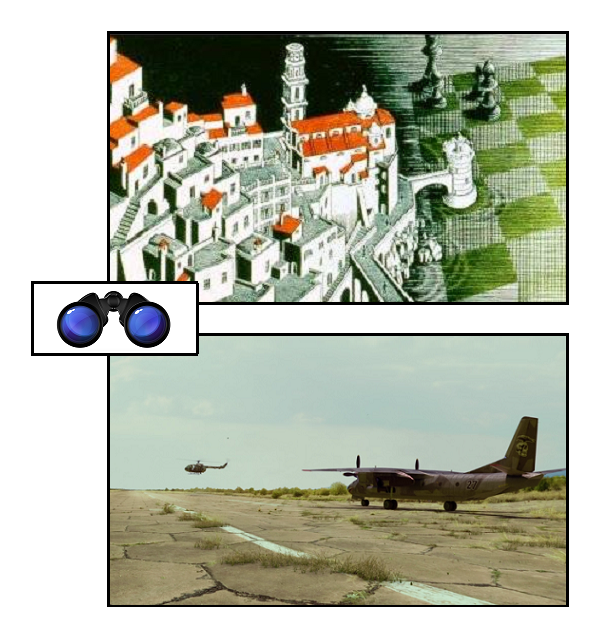
SPEC DQ   hexagons

**

Contemplating..

  • Korzybski: the map is not the territory
  • Lao Tzu: the path that can be mapped is not the pathless path
  • and that second translation is one to set beside my other loose versions after Lao Tzu:

  • The pronounceable name isn’t the unpronounceable name.
  • The flow that can be capped isn’t the overflowing flow.
  • The quantity that can be counted is not the unaccountable quality.
  • The verbal formulation of x is not the x itself.
  • No way the way can be put into words.
  • The problem that can be described isn’t our actual situation.
  • More I grasp you, baby, more you disappear…
  • — which i posted here at Zenpundit in one of the posts that has sadly disappearedc, but which can be found — together with some interesting other commentary — on our emergency site, Zenpunditry.

    **

    At times, the map becxomes the territory, the gameboard becomes the world.

    The upper image in the DoubleQuote above is a teling detail from Maurits Escher‘s great work, Metamorphosis II. The lower image is a screencap of one of the opening shots from The Expendables 3.

    The things I do for science!

    When win-win games get gamed

    Monday, August 3rd, 2015

    [ by Charles Cameron — a paradox I’m currently chewing on, courtesy of Richard Landes]
    .

    I want to take something that Richard Landes has been saying, abstract it from those conflicts to which Richard applies it, simplify it by removing one technical term that’s part of his detailed breakdown, and present it in as bare-bones a manner as I can manasge. You can see two of Richard’s own versions of the issue below.

    **

    The basic question, as I understand it, is this:

    How does a non-zero-sum move look to a zero-sum player, and vice versa?

    Let’s suppose your entire background and upbringing revolves around the idea of zero-sum, you-win-I-lose games. If you see any sign of your adversary gaining an advantage in a negotiation, that’s proof positive that you’ve been bamboozled: somehow, you must have lost. Your job is to make no concessions — to be the winner in a winner-takes-all contest.

    Now suppose your background and upbringing have revolved around the idea of non-zero-sum, win-win games, in which both sides of a negotiation make some concessions so that both can emerge as winners. You offer concessions in good faith, and in return you expect similar concessions.

    What happens when a zero-sum game player and a non-zero-sum game player meet in play?

    It’s Landes’ suggestion that any generosity on the part of a win-win player offering his winner-take-all opponent a concession will be taken as evidence of weakness,. and the opponent, far from making a corresponding compromise, will press on and demand more — making further nmoves which will offer so little that the win-win player will be at a loss to explain why such a promising start to bnegotiations fell apart so badly.

    A further supposition: so-called honor-shame societies are geared for zero-sum, winner-takes-all gameplay, while societies which rely on an innocence-guilt reading of human behavior will be no less inclined toeards playing non-zero-sum, win-win games.

    That’s the idea expressed in game-theoretic terms, as simply as I can put it. To my mind, these game considerations are worth thinking through in their own right, absent the specifics to which Richard Landes brings them.

    **

    Here is Landes making the same point, in the context of Israeli relations with the Palestinians, the Arab and Muslim worlds, and European liberalism –all of the above broadly speaking:

    And a text version, Cognitive Egocentrism, for those who find words fly home faster in print…

    **

    Help me think this through.

    Sunday surprise: on Matrioshka cartography

    Monday, August 3rd, 2015

    [ by Charles Cameron — an enclave within an enclave within an enclave within a state no more! ]
    .

    You know my obsession with form — and that one form of particular interest to me is the world within a world, the play within a play, or that potentially infinite regression of dolls we know as Matroshka?

    Dahala Khagrabari

    Dahala Khagrabari, the Washington Post informs us, was “a part of India, surrounded by a Bangladeshi enclave, which was surrounded by an Indian enclave, which was surrounded by Bangladesh”.

    No more, it’s not.

    India and Bangladesh have swapped out various enclaves, 160 of ’em in all, and Dahala Khagrabari is no longer “the only third-order enclave in the world – an enclave surrounded by an enclave surrounded by an enclave surrounded by another state.”

    **

    But all is not lost, nor won. At least for fictioneers, there still remain the Groaning Hinges of the World of which RA Lafferty informed us:

    Eginhard wrote that the Hinges of the World are, the one of them in the Carnic Alps north of the Isarko and quite near High Glockner, and the other one in the Wangeroog in the Frisian islands off the Weser mouth and under the water of this shelf; and that these hinges are made of iron. It is the Germanies, the whole great country between these hinges that turns over, he wrote, after either a long generation or a short generation. The only indication of the turning over is a groaning of the World Hinges too brief to terrify. That which rises out of the Earth has the same appearance in mountains and rivers and towns and people as the land that it replaces.

    We all know how dire the result can be when that happens.

    **

    Back to the enclaves — there’s a games angle there too. Again via the Washington Post:

    Old stories say that the enclaves were the end result of a chess game between the Maharaja of Cooch Behar and the Faujdar of Rangpur many centuries ago, or the result of a drunk British colonial spilling ink on a map, both apocryphal stories but a good indication of how arbitrary the borders seemed.

    Chess, a game of skill. Spilled ink, a game of chance. Is that what this post is? A game of virtual spilled ink?

    Multiculturalism in play?

    Wednesday, July 22nd, 2015

    [ by Charles Cameron — multiculturalism in play — or, what’s the name of the game? ]
    .

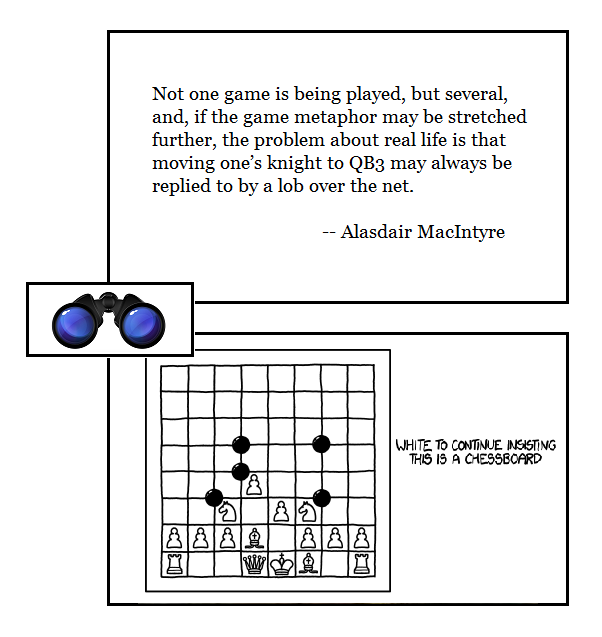
    It is getting to be quite a theme: When games collide.

    SPEC DQ MacIntyre xkcd

    I’ve used the MacIntyre quote before [1, 2, 3], but the wonderful xkcd visual presentation is new to me — many thanks to Tanner Greer for turning me onto it.

    **

    What’s the name of the game?

    Nomic?

    Squaring the circle, with a side of nostaligia?

    Thursday, June 25th, 2015

    [ by Charles Cameron — CIA, Osama, gaming, and I ]
    .

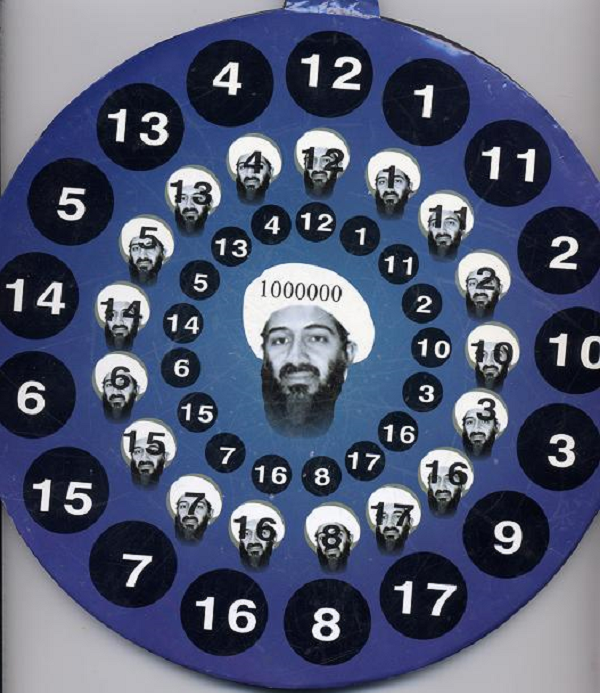
    What I have in my collection, somewhere:

    OBLdart

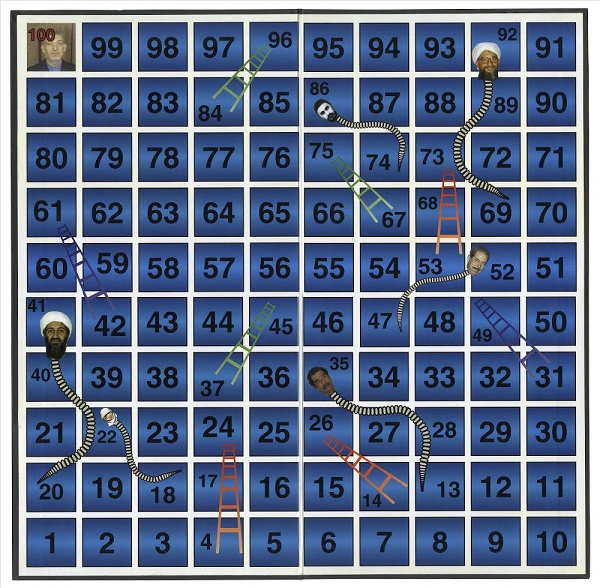
    and what CIA has in theirs:

    bin-laden-board-game

    **

    In search of our respective lost childhoods? À la recherche du temps perdu?

    To be honest, I think the gameplay in mine’s a bit more visceral.


    Switch to our mobile site