zenpundit.com » Oligarchy

Archive for the ‘Oligarchy’ Category

On Socrates and his Legacy, Part II: Stone, Socrates and Religion

Tuesday, March 26th, 2013

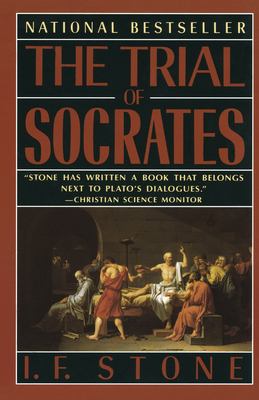
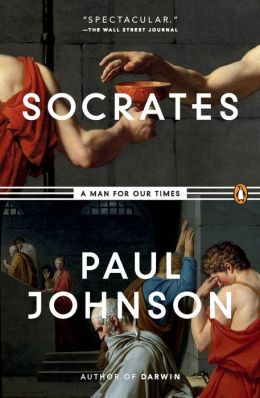
This is the second in a series of posts regarding Socrates and his modern legacy that began with a discussion of the books and authors involved – The Trial of Socrates by I.F. Stone and Socrates: A Man for Our Times by Paul Johnson . We are also getting some direction from a foremost academic authority on Socrates and Plato, the late Gregory Vlastos in the form of  his last book,  Socrates: Ironist and Moral Philosopher

The greatest divergence between Johnson and Stone is on the matter of Socrates and religion. This is is some importance because one of the charges leveled at Socrates by his accusers Anytus and Meletus was not believing in “the gods of city”and introducing new ones.

The sincerity of this specific charge is an interesting question. As both authors indicated, the century of pre-Socratic philosophers in Athens laid the cornerstone of empirical and rational thought about nature that were the forerunners of both materialism as well as science in the form of natural philosophy. This coincided with the rise of Athens to greatness and empire and a possible change in Athenian civic culture, not so much a secularization but an emphasis on humanism over mysticism in political affairs. This point Johnson was at pains to emphasize as the core nature of “the cultural revolution” wrought by “the Periclean regime” , where Protogoras was prominent sophist. Stone regards the transition to one where religion was “demoted…reduced to venerable fables and metaphorical personifications of natural forces and abstract ideas” which renders the religious question at Socrates’ trial a “distraction”.  The primitive awe in which the Greek gods were held during archaic times, gave way to a more ritualistic and cultural reverence in the classical period, or so this line of argument goes.

I am not certain this interpretation is correct to that exaggerated degree. It strikes me far more likely as a representation of the beliefs of  educated elite Athenians at the time than those of the middle classes or the thetes, or of Greeks from other cities. Pagan folk religion probably retained the same influence over public and private life in Athens as Christianity does in America in our own times. That is to say there were likely differences in religiosity between the aristocratic elite and the masses in democratic Athens and between political factions (democratic, moderate and extreme oligarchic).

Some contrasting examples: Nicias, whose political reputation with the Assembly was anchored in trust of his admirable piety, brought final disaster upon the Sicilian Expedition and himself with his obstinate, superstitious, deference to religious signs and soothsayers when the path of escape still remained open. Xenophon, in delicately rebuffing calls to accept rulership over the 10,000 in The Anabasis of Cyrus used pious arguments with the soldiers that he himself probably viewed with some degree of cynicism because they were an effective excuse to pass the leadership to a Spartan. Speaking of the Spartans, they were known in this time as “the craftsmen of war” not because of battle art but because of their zealous adherence to military religious ceremonials and divination of sacrificial animals to discern the will of the gods.

That does not sound much like a people for whom Zeus and Apollo were merely enjoyable campfire fables for children, figures of comic sport in the theater or convenient metaphors for chance or the weather.

Stone argued that Athenian religion had been “demoted” but did so for purposes of rebutting the claim of Socrates that decades of comic poets lampooning him in their plays (like The Clouds, by Aristophanes) had prejudiced the jury against him. Stone was also writing  The Trial of Socrates after the time when standards of  “traditional morality” had been challenged culturally and theologically during the sixties and seventies and were rejected by a significant part of the Baby Boom generation:

….As for not believing in gods, the Athenians were accustomed to hearing the gods treated disrespectfully in both the comic and the tragic theater. For two centuries before Socrates, the philosophers had been laying the foundations of natural science and metaphysical inquiry. Their gigantic pioneering in free thought still awes us as we pore over the fragments of these so-called pre-Socratics. Almost all the basic concepts of science and philosophy may be found there in embryo. They first spoke of evolution and conceived the atom. In the process the gods were not so much dethroned as demoted and bypassed. They were reduced to venerable fables or metaphorical personifications of natural forces and abstract ideas.

These philosophers were rationalists and rarely bothered with what we call “theology”. The very term was unknown to them. Indeed it does not appear in Greek until the century after Socrates. The word theologia – talk about gods – turns up for the first time in the Republic when Plato is explaining what the poets in utopia will not be allowed to say about the divine powers. In his ideal society a Socrates would have indeed been punishable for deviating from the state-sanctioned theologia, but not in Athens.

….Polytheism was, by it’s pluralistic nature, roomy and tolerant, open to new gods and new views of old ones. It’s mythology personified by natural forces and could be adapted easily, by allegory, to metaphysical concepts. These were the old gods in a new guise, and commanded a similar but fresh reverence.

Atheism was little known and difficult for a pagan to grasp because he saw divinity all about him, not just on Olympus but in the hearth and boundary stone, which were also divinities though of a humbler sort…..

….It was the political, not the philosophical or theological views which finally got Socrates into trouble. The discussion of religious views diverts attention from the real issues. 

Stone develops this theme further in his explanation of how Socrates might have won acquittal, had the old philosopher not been determined to antagonize his jury:

The indictment’s two counts are equally vague. No specific acts against the city are alleged. The complaints are against the teaching and beliefs of Socrates. Neither in the indictment – nor at the trial – was there any mention of any overt act of sacrilege or disrespect to the city’s gods or any overt attempt or conspiracy against it’s democratic institutions. Socrates was prosecuted for what he said, not for anything he did.

In other words, the charges against Socrates were of a very different character than the ones which had been made during the Expedition to Syracuse against the close associate and student of  Socrates, the ambitious demagogue Alcibiades. The latter had been charged with sacrilege, specifically defaming and vandalizing the Eleusinian Mysteries, forcing his recall as joint strategos over the expedition and summoning him back to Athens for trial. This ill-fated and poorly timed indictment may or may not have been false, but it had certainly been politically motivated and was the catalyst for the subsequent treason of Alcibiades and the military disaster in Sicily, both so damaging to Athens. That charge, unlike the one against Socrates however, was based upon real acts that had taken place, whether Alcibiades had been the culprit or not.

….on the impiety charge, Socrates is as vague as the indictment. He never discusses the accusation that he did not respect or believe in – the Greek verb used, nomizein, has both meanings – the gods of the city. Instead, he traps the the rather dim-witted Meletus into accusing him of Atheism, a charge he easily refutes. But there was no law against atheism in ancient Athens either before or after the trial. Indeed, the only place we find such a law proposed is in Plato’s Laws. In this respect, Plato was the exception to the tolerance that paganism showed to diverse cults and philosophic speculation about the gods.

….it was monotheism that brought religious intolerance into the world. When the Jews and Christians denied divinity to any god but their own, they were attacked as atheos or “godless”. This explains how – to borrow Novalis’s characterization of Spinoza – a “God-intoxicated” Jew and Christian like St. Paul could be called an “atheist” by pious and indignant pagans.” 

We will see later that Johnson takes a normatively very different, but logically complementary view to Stone on “Socratic monotheism”, who concludes:

By trapping Meletus into calling him an atheist, Socrates evaded the actual charge in the indictment. It did not accuse him of disbelief in Zeus and the Olympian divinities, or in gods generally. It charged disbelief in ‘the gods of the city”.

This was in the ancient Greek sense, a political crime, a crime against the gods of the Athenian polis. This is a crucial point often overlooked.

In Athens, Democracy was itself deified and personified, at least to the extent of having it’s own ritual priest in the annual theater of Dionysus – and what was old Socrates in the view of Stone but the teacher of antidemocratic and antipolitical doctrines in a city where the Democracy had been overthrown by the Thirty?

End Part II.

On Socrates and His Legacy, Part I.

Thursday, February 14th, 2013

Recently, I finished two books on the iconic ancient Athenian philosopher Socrates, both of which pointed me to a third. The books were of a very different character and quality, yet together raised an important dichotomy about a man who lived 2400 years ago, whose intellectual legacy contributed to the shaping of Western civilization. The Stoics and Cynics looked back to Socrates as their forerunner; Socrates’ greatest student Plato became the most influential philosopher of the written word of all time, rivaled only by his own protege, Aristotle. So definitive was the influence of Socrates and his inexhaustible store of questions that all the Greek philosophers who came before him are reckoned “the pre-Socratics“. Yet he was put to death by the Democracy that had proudly boasted of being the “the school of Hellas“.

Who then, was the historical Socrates?

Socrates shares, to a lesser degree, the enigmatic quality of Buddha, Jesus and his own near contemporary, Confucius; we know more about Socrates than we do the others, but as with the others, it is all secondhand. Having written nothing himself, we must rely on the apologia of his disciples, the barbs of his critics, some statuary relics and the commentary of philosophers and historians from later in antiquity who had access to sources now lost to tell us of Socrates.

Here are the books:


The Trial of Socrates by I.F. Stone

Socrates: A Man for Our Times by Paul Johnson  

Both authors were splendid prose writers, otherwise they are a study in contrasts. The late I.F. Stone was a famous radical, an antifascist, an investigative, “muckraking” journalist of the mid twentieth century and, for a time,  a Soviet agent during the “Red decade” of the Thirties. Stone, who was noted for his diligence with using government documents as a reporter, unearthing scoops everyone else had missed, became, in his retirement, a scholar of antiquity who read deeply in the classics in the original ancient Greek.

Paul Johnson began his career as a prolific writer and popular historian on the British Left with The New Statesman and over time shifted rightward to become a leading Anglo-Catholic conservative public intellectual, an adviser to Margaret Thatcher and an author of 40 books. Johnson is most known for his best-sellers that tackled panoramic and encompassing subjects – The Birth of the Modern, Intellectuals and The History of the Jews, often written from a highly idiosyncratic, as well as a conservative, perspective.

Of the two books, Stone’s  The Trial of Socrates is by far the most substantive. Stone relies heavily, though not exclusively, upon primary sources in the original Greek to build his argument, which is that Socrates was executed because of his militant, arch-reactionary, “antipolitical” opposition to self-government, especially in the form of the Democracy; and further, that Socrates’ actions at his trial were perversely designed to inflame the jury which might easily have acquitted him.  Socrates:A Man for our Times by Johnson is based on English translations of primary sources and secondary sources, is lighter in tone and much closer to being an essay. Johnson is evaluating the importance of Socrates in a broad, civilizational, context while Stone trying to tell what really happened while simultaneously judging Socrates culpability.

One point on which both authors have agreement is the mendacity and artistry with which Plato has made this task more difficult. I.F. Stone generally sees a “sneering” antidemocratic political continuity between Socrates and all of his disciples Plato, Xenophon, Charmides, Critias, Antisthenes and Alcibiades but even Stone cannot stomach Plato’s casual misuse (or abuse) of Socrates in his later dialogues to vent petty gripes and snobbish airs. Writing of an insulting passage in The Republic:

….Plato put this into the mouth of Socrates many years after the latter’s death. There is no evidence that the historical Socrates ever spoke so unkindly or pretentiously. Otherwise Socrates could not have had the lifelong affection of his oldest disciple, the “low-born” Antisthenes; his mother was a Thracian, hence he was twitted for not being of pure Attic blood (Diogenes Laertes, 6.1). Several scholars believe this was Plato’s slur against his fourth century rival – and Socrates’ old friend – Isocrates.[255]

Paul Johnson goes much further; attributing much that scholars regard as negative in Socrates’ reputation to the machinations of Plato using his late master as “a ventriloquist’s dummy”, a caricature Johnson calls “PlatSoc” to add authority to his own views and theories in which Socrates never believed or more likely, never even had heard:

….As an intellectual he [Plato] began to formulate his own ideas. As an academic he quickly merged them into a system. As a teacher he used Socrates to spread and perpetuate it. In his earlier writings Plato presented Socrates as a living breathing, thinking person, a real man. but as Plato’s ideas took shape, demanding propagation, poor Socrates whose actual death Plato had so lamented, was killed a second time, so that he became a mere wooden man, a ventriloquist’s doll, to voice not his own philosophy but Plato’s.

….So the act of transforming a living, historical thinker into a mindless, speaking doll – the murder and quasi-diabolical possession of a famous brain – became in Plato’s eyes a positive virtue. That is the only charitable way of describing one of the most unscrupulous acts in intellectual history. Thus Plato, with no doubt the best of intentions, created like Frankenstein, an artificial monster-philosopher [11]

There are other sources of information regarding Socrates than Plato, of course.  Xenophon, also wrote an apologia; Aristophanes and other comic poets satirized Socrates in their plays, the philosopher being a “public figure” in Athens as much as was Pericles or Cleon (Socrates apparently could take a joke much better than the litigious and bloodthirsty demagogue Cleon); Aristotle had informed speculations regarding Socrates based on his long (and one suspects trying) tutelage under Plato and there are Roman writers such as Cicero who had access to sources now lost, but Plato remains the most prolific.

This is important, because the central thesis in The Trial of Socrates is that Socrates is not merely an “antidemocratic” gadfly in Athens, but an arch-reactionary teacher of “antipolitical” doctrines. That is to say that Stone argued that Socrates and his followers rejected the concept of the self-governing “polis” itself, oligarchy as much as democracy, that men were a “herd” fit only for a shepherd, an absolute Homeric ruler defined by Socrates as “the One who Knows”. Stone argues, with accuracy, that Socrates disciples, despite differences in personality and philosophy, shared a common disdain for democratic politics and furthermore, that Socrates teaching repeatedly led to cohorts of aristocratic, pro-Spartan,”Socratified youth” who twice supported the overthrow of the Democracy. In short that Socrates was tried because his activities, his “examinations”, were ultimately politically subversive to the state in a time of danger and instigated civil strife.

This means, to judge Stone’s argument requires that we discern Socrates from Plato that in turn requires some expertise on Plato. This need to sift Platonic dialogues explains why both Johnson and Stone, despite Stone’s ability to work with the primary texts in the original Greek, turned to the scholarship of Gregory Vlastos for guidance. Vlastos was a seminal figure in the field of Platonist philosophy whose work is described by other scholars as “transformative” and having “a vast influence” who best parsed Socrates from his artfully prolix disciple. Because of Stone and Johnson, I have picked up what is regarded by many as “the best book on Socrates” – Socrates: Ironist and Moral Philosopher by Gregory Vlastos.

Vlastos, in this final book, ultimately came closer to Johnson’s position in the sense that some of what  moderns find disagreeable in Socrates and what Stone criticizes in particular – the harsh antidemocratic edge – is more a product of Plato’s literary handiwork than the philosophy of the historical Socrates. Vlastos writes:

I have been speaking of a “Socrates” in Plato. There are two of them. In different segments of Plato’s corpus two philosophers bear that name. The individual remains the same. But in different sets of dialogues he pursues philosophies so different that they could not have been depicted as cohabitating in the same brain throughout unless it had been the brain of a schizophrenic

The early Socrates of the Elenctic Dialogues is the most genuine in the view of Vlastos.

End Part I.

America the Home of the Brave?

Sunday, February 3rd, 2013

An excellent op-ed in the Washington Post by Small Wars Journal editor and author of War, Welfare and Democracy,  Peter J. Munson 

An America Cramped by Defensiveness by Peter J. Munson 

….Since I returned home, a darkness has grown in me as both I and our nation have failed to live up to the sacrifices of these young men and women. I had no expectation of “victory” in Afghanistan or Iraq, whatever that would mean. Nor did I expect some epiphany of strategic insight or remorse from the nation’s brain trust.

I just found that I could not square the negativity, pettiness and paranoia in the discourse of our country’s elders with the nobility and dedication of the men and women I had seen and served with in Afghanistan.

Over time, as I listened to the squabbling, I realized that about the only thing Americans agree on these days is gratitude bordering on reverence for our military. It troubled me that the sum total of consensus in our discourse is deference toward the defenders of our nation.

Eventually, it dawned on me that the focus on defense was the root of our problem.

After the Sept. 11, 2001, attacks, the United States sent its military off to war and fretted about post-traumatic stress disorder — but paid little attention to the fact that America itself was traumatized. Americans became angry and withdrawn. We are fearful and paranoid because after a strike on our nation we chose to focus on defense rather than the resilience and vitality that made America great. In our defensive mind-set, we bristle at every change in a world undergoing an epochal transformation.

We have little reason to be so negative. Certainly the rest of the world is gaining on us, but this represents the success of explicit U.S. policies. After World War II, the United States sought to create a world of economic interdependence and prosperity, hoping to banish the malaise that helped precipitate a global conflict. The prospect of rapid growth in the developing world was not viewed as a threat but rather offered the promise of robust markets for American goods and ingenuity. We were confident and focused on the positive tasks of expanding our economy rather than fearing change…..

If you go back and look at news coverage of September 11, you will be struck by the calmness of ordinary citizens in New York in the face of carnage, their lack of panic and firm determination to help. The bravery and sacrifice of firefighters, EMT and police, the dogged resolution of rescue workers digging for victims, the sheer heroism of the passengers of  United Airlines Flight 93 who, led by Todd Beamer, stopped the al Qaida hijackers from ramming another plane into another skyscraper or perhaps the Capitol Building.

All of the security theater, the attacks on liberty, the surveillance state machinations, creeping normalization of government thuggery, bureaucratization, centralization and paternalism that have since been justified in the name of 9/11 were not needed on that day nor wanted by the overwhelming mass of American citizens afterwards.  It was wanted by our “leaders” – who were largely irrelevant to events on September, 11 – because it conformed to their worldview and overweening personal need for “control” of a democratic citizenry they would prefer to be less autonomous and more passive, docile, compliant and disengaged.

We need to revive the American spirit and the first steps are rolling back much of the illiberalism of the past decade.

“Sustaining” your Way to Serfdom as a Grand Strategy

Monday, January 14th, 2013

Friend of the blog, commenter L.C. Rees, likes to point out that one of the most important part of a grand strategy, particularly one that is maintained despite evidence of being a geopolitical failure, are the domestic political effects that work to the advantage of the faction supporting it.  In my view, grand strategy usually has a political or cultural evolutionary component and, human nature being unchanging, Rees’s cynical observation has merit.

Last year, a couple of JCS aides/field grade officers wrote a grossly overpraised paper that was pushed by Anne-Marie Slaughter, Thomas Friedman and assorted worthies, that purported to be about a new grand strategy with which America could navigate the world. Mostly it centered on a preference for an America being run by a vaguely EU-like, technocratic, regime under the rubric of “sustainment”, in which the authors wisely folded in a number of  shibboleths popular with the corporate-liberal upper class who write large donation checks to think tanks or make their living in public policy and academia.

The talk of this nature died down when the election cycle began, but the themes were recently revived by the New America Foundation’s Grand Strategy Project whose director had an op-ed in Foreign Policy to reintroduce this agenda to the chattering classes now that the pesky voters are out of the way until 2014:

A New U.S. Grand Strategy 

….Walkable communities: The first pool of demand is homegrown. American tastes have changed from the splendid isolation of the suburbs to what advocates are calling the “five-minute lifestyle” — work, school, transit, doctors, dining, playgrounds, entertainment all within a five-minute walk of the front door. From 2014 to 2029, baby boomers and their children, the millennial generation, will converge in the housing marketplace — seeking smaller homes in walkable, service-rich, transit-oriented communities. Already, 56 percent of Americans seek this lifestyle in their next housing purchase. That’s roughly three times the demand for such housing after World War II.
If only Bismarck had included some “walkable communities” for Prussia, Europe might have avoided the tragedy of World War I.
.
Incidentally, all of this argument from assertion is unsupported rubbish keyed to a preexisting anti-suburban agenda the Obama administration brought with them into office in 2009. As Joel Kotkin explained:

….Whenever possible, the Clintons expressed empathy with suburban and small-town voters. In contrast, the Obama administration seems almost willfully city-centric. Few top appointees have come from either red states or suburbs; the top echelons of the administration draw almost completely on big city urbanites—most notably from Chicago, New York, Los Angeles, and San Francisco. They sometimes don’t even seem to understand why people move to suburbs.

Many Obama appointees—such as at the Departments of Transportation and of Housing and Urban Development (HUD) and at the Environmental Protection Agency (EPA)—favor a policy agenda that would drive more Americans to live in central cities. And the president himself seems to embrace this approach, declaring in February that “the days of building sprawl” were, in his words, “over.”

Not surprisingly, belief in “smart growth,” a policy that seeks to force densification of communities and returning people to core cities, animates many top administration officials. This includes both HUD Secretary Shaun Donovan and Undersecretary Ron Sims, Transportation undersecretary for policy Roy Kienitz, and the EPA’s John Frece.

Transportation Secretary Ray LaHood revealed the new ideology when he famously declared the administration’s intention to “coerce” Americans out of their cars and into transit. In Congress, the president’s allies, including Minnesota Congressman James Oberstar, have advocated shifting a larger chunk of gas tax funds collected from drivers to rail and other transit.

In addition, the president’s stimulus—with its $8 billion allocation for high-speed rail and proposed giant increases in mass transit—offers little to anyone who lives outside a handful of large metropolitan cores. Economics writer Robert Samuelson, among others, has denounced the high-speed rail idea as “a boondoggle” not well-suited to a huge, multi-centered country like the United States. Green job schemes also seem more suited to boost employment for university researchers and inner-city residents than middle-income suburbanites.

Suburbanites may not yet be conscious of the anti-suburban stance of the Obama team, but perhaps they can read the body language. Administration officials have also started handing out $300 million stimulus-funded grants to cities that follow “smart growth principles.” Grants for cities to adopt “sustainability” oriented development will reward those communities with the proper planning orientation. There is precious little that will benefit suburbanites, such as improved roads or investment in other basic infrastructure.

Kotkin nails it. Mr. Doherty is simply trying to find some national security window dressing for an elite preference that ordinary people will be much easier to manage, monitor and fleece if they are concentrated in high-density urban housing and prevented from voting with their feet by a network of punitive, anti-development, anti-mobility, Federal  regulations. The research paper, if you can call it that, justifying this authoritarian agenda can be found here. Judge for yourself.
.
However, this is no idle pipe dream, it has been done before. The  Japanese pursued a similar national “grand strategy” after WWII with the blessing of Washington to reconstruct defeated Japan: the old, independent,  Japanese business empires called zaibatsu were transformed by SCAP into submissive keiretsu that would take “administrative guidance” from the Ministry of International Trade and Industry and the Ministry of Finance. In return, the keiretsu were heavily subsidized by the government, which kept Japanese “salarymen” to an artificially low “middle-class” standard of living with macroeconomic policies that forced the Japanese to have an extremely high level of savings. A docile work force penned into tiny apartments, governed by a de facto one-party autocracy of the Liberal Democratic Party that kept the rent-farming machinery in place for big business for fifty years. It isn’t a great model, it is not what Walter Lippmann would have called “a good society” but it did work.
.
Mexico under the PRI dictatorship was a more backward version of this paradigm, as was Chicago under Mayor Daley.
.
Now back to our own grand strategy of walkable communitarianism:

…..Every continental-scale economic region must embark on a decisive sustainability strategy without delay. Working within existing norms of the World Trade Organization and the United Nations, America will lead the partnership of major economies to refashion the global economic system around eight or nine economic blocs, each boasting the scale necessary to support mature industrial ecosystems. This will mean promoting and strengthening regional economic blocs such as the Association of Southeast Asian Nations, the Union of South American Nations, the African Union, the Commonwealth of Independent States, and the Organization of Islamic Cooperation.

This part is literally nonsensical.

Say what you want about Osama bin Laden’s powers of rhetoric: he may have failed to convince his fellow Muslims to unite the ummah into a Caliphate but he evidently convinced a lot of people at The New America Foundation that Islam is an economy.

And as aside, why the hell is pushing political unification of South America or Africa under top-heavy, transnational bureaucracies in American interest? It sure isn’t in the interest of poor Africans or campesinos. For that matter, how can Africa unify if a third of their states will be in the OIC? WTF? Does Foreign Policy use editors or is it just a blog?

However, all that was simply geopolitical fantasizing over matters about which the United States has little control and would be unlikely to come off even under the best of circumstances. The next part I suspect is intended much more seriously. It certainly reflects a worldview that is pernicious and apparently more widespread among our elite than we realized, for which they are now testing the waters, to see if their fellow citizens are the herd they imagine us to be and if they can get away with it.

….Just as America would never fight a 21st-century war with Korean War-era weapons, it should not govern today with institutions devised for a bygone era. The Founding Fathers established a constitution that allows for the adaptation of the institutions of government to the knowledge, threats, and opportunities confronting each generation. Americans should make use of that foresight. Under this strategy, the country will adapt the institutions of its federal government to execute this grand strategy and invest in the American people to ensure that they receive the opportunities they need to be informed and engaged citizens. 

This is a tentative call, in milquetoast, coded, language, to find legal stratagems to gut the Bill of Rights and euthanize American democracy, or at least render it comatose, as a mere facade for a new paternalist technocracy that treats citizens as wards or children while we are rent-farmed for the benefit of a small elite. Certainly when we are all marooned in our government-regulated, high-density, housing, disarmed and without private transportation or much disposable income it will be too late for us to raise our voices in protest.  Doherty is correct about one aspect, such a society is probably “sustainable”; feudalism after all lasted more than a thousand years.

In plain English, the strategy of “sustainment” is a long term policy for postmodern serfdom with most of us intended to be walking behind the oxen when we are not wearing the yoke ourselves. Despite the nervous, thin-lipped, smiles and hasty reassurances, these people truly wish us and our children ill.

The good news is that none of this can come to pass without our consent. The U.S. Constitution is both sword and shield, if you are willing to pick it up. Speak, write, organize, litigate and vote out of office would-be authoritarians no matter what party label they wear. The best antidote for our creeping oligarchy is electing and appointing to office a large number of people outside of this exceedingly insular, geographically and intellectually narrow, social circle of graduates of  a handful of universities and last few percentage points of socioeconomic status who have in the last 15 years grabbed control of our government.

Really, we’re Americans – our talent pool is 315 million strong. We can easily do better.

Guns and The New Paternalism

Thursday, December 27th, 2012

New York City Mayor Michael Bloomberg      Photo credit: The New York Times 

Longtime reader and blogfriend Eddie Beaver sent me a link to an article by NYT columnist, Ross Douthat. In my view, Douthat has written a fairly important observation of a political dynamic that is broader than the simply the new push by the elite for new and stringent gun control legislation:

Bloomberg, LaPierre and the Void

FOR a week after the Newtown shooting, the conversation was dominated by the self-righteous certainties of the American center-left. In print and on the airwaves, the chorus was nearly universal: the only possible response to Adam Lanza’s rampage was an immediate crusade for gun control, the necessary firearm restrictions were all self-evident, and anyone who doubted their efficacy had the blood of children on his hands.

The leading gun control chorister was Michael Bloomberg, and this was fitting, because on a range of issues New York’s mayor has become the de facto spokesman for the self-consciously centrist liberalism of the Acela Corridor elite. Like so many members of that class, Bloomberg combines immense talent with immense provincialism: his view of American politics is basically the famous New Yorker cover showing Manhattan’s West Side overshadowing the world, and his bedrock assumption is that the liberal paternalism with which New York is governed can and should be a model for the nation as a whole.

….Unfortunately for our country, the Bloomberg versus LaPierre contrast is basically all of American politics today. Our society is divided between an ascendant center-left that’s far too confident in its own rigor and righteousness and a conservatism that’s marched into an ideological cul-de-sac and is currently battering its head against the wall.

….The establishment view is interventionist, corporatist and culturally liberal. It thinks that issues like health care and climate change and immigration are best worked out through comprehensive bills drawn up by enlightened officials working hand in glove with business interests. It regards sexual liberty as sacrosanct, and other liberties — from the freedoms of churches to the rights of gun owners — as negotiable at best. It thinks that the elite should pay slightly higher taxes, and everyone else should give up guns, SUVs and Big Gulps and live more like, well, Manhattanites. It allows the president an entirely free hand overseas, and takes the Bush-Obama continuities in foreign policy for granted.

Douthat’s criticism of a reflexively angry but unimaginative and politically inept Right is correct, but class trumps mere Left-Right distinctions regarding gun control, with celebrity pundit Fareed Zakaria and conservative press baron Rupert Murdoch aligning with fellow Manhattan West Side billionaire and gun control zealot, Mayor Michael  Bloomberg  and various worthies in calling for UK style “gun bans”.

Britain of course, does not have a 2nd Amendment or, for that matter, a written Constitution that acts as a bar to government curtailment of civil liberties and both Parliament and British courts have different views on the limits of basic rights of free speech, self-defense (not just with guns), property and other liberties than the American norm. In light of the  2nd Amendment and District of Columbia vs. Heller, that sort of draconian legislation that makes gun ownership a privilege of the very few, would be obviously unconstitutional. If Illinois, for example must comply with a Federal Appellate Court order to permit citizens under new legislation to carry concealed guns, it is rather unlikely the Federal courts will entertain a confiscatory national gun control law that would trample not only the 2nd Amendment, but the 4th, 5th and 14th along the way. Nor would the governors of a majority of American states be on board for this, nor most Congressmen from rural states or the high tens of millions of Americans who own guns and reside in zip codes outside of Georgetown and Manhattan.

However, a healthy disregard for the strictures of Constitutional law and the liberties of ordinary citizens is a hallmark of the New Paternalism of our increasingly oligarchic elite, composed of superwealthy billionaires, hedge fund managers, Fortune 500 CEOs and the technocratic-political-legal class sporting ivy league pedigrees. They are even worse on the 4th Amendment and individual privacy than on gun rights look disapprovingly at the First, which constrains their ability to censor and punish unenlightened opinions or political criticism. Outside of gay marriage and abortion, I am hard pressed to think of a single individual liberty our elite holds in unqualified esteem or at least in as much esteem in their own presumed competence to rule.

As Douthat noted, this not merely about guns, but of this small group having a searing contempt for the way the majority of Americans live their lives and a manifest, bipartisan, desire to regulate them for their own good in matters great and small. To decide how other Americans should educate their children; whether they should go to college and if so, what they should be permitted to study;  how much and what kind of food they should be allowed to eat or drink; whether their religion should be treated with deference in public policy or dismissed for the greater good; where they should live and how far back their “middle-class” living standards should be cut or pensions reduced, transformed or eliminated for the benefit of those whose incompetently  mismanaged companies, banks and   equities firms were so recently bailed out by taxpayers and the Federal Reserve.

It would be one thing, of course, if these high minded New Paternalists intended to live under the laws they eagerly want to impose on the rest of us, but largely they intend a different set of rules for themselves. They are ardent gun-control advocates who pack heat, public pension reformers who loot their employee’s pensions to enrich themselves, ed reformers who send their kids to posh private schools , crusaders against obesity who love junk food, zealous environmentalists with giant carbon footprints and advocates of tax reform whose corporations pay no taxes. Their mismatch between words and deeds is so vast as to almost be admirable – say what you like about this cabal’s lack of humility or sense stewardship, they hit the jackpot when it came to chutzpah.

If Hubris mated with Hypocrisy, their offspring would look much like the present American leadership class.


Switch to our mobile site