zenpundit.com » Oligarchy

Archive for the ‘Oligarchy’ Category

When Does Conflict Become “War”?

Tuesday, May 22nd, 2012

When does mere conflict end and war begin?

Great philosophers of strategy and statecraft did not treat all conflict as war but regarded war as a discernably distinct phenomenon, different from both peace and other kinds of conflict. War had a special status and unique character, glorious and terrible:

“Hence to fight and conquer in all your battles is not supreme excellence; supreme excellence consists in breaking the enemy’s resistance without fighting. “

    -Sun Tzu

“When the Corcyraeans heard of their preparations they came to Corinth with envoys from Lacedaemon and Sicyon, whom they persuaded to accompany them, and bade her recall the garrison and settlers, as she had nothing to do with Epidamnus. If, however, she had any claims to make, they were willing to submit the matter to the arbitration of such of the cities in Peloponnese as should be chosen by mutual agreement, and that the colony should remain with the city to whom the arbitrators might assign it. They were also willing to refer the matter to the oracle at Delphi. If, in defiance of their protestations, war was appealed to, they should be themselves compelled by this violence to seek friends in quarters where they had no desire to seek them, and to make even old ties give way to the necessity of assistance. The answer they got from Corinth was that, if they would withdraw their fleet and the barbarians from Epidamnus, negotiation might be possible; but, while the town was still being besieged, going before arbitrators was out of the question. The Corcyraeans retorted that if Corinth would withdraw her troops from Epidamnus they would withdraw theirs, or they were ready to let both parties remain in statu quo, an armistice being concluded till judgment could be given. “

-Thucydides 

“Thus, therefore, the political object, as the original motive of the war, will be the standard for determining both the aim of the military force, and also the amount of effort to be made. This it cannot be in itself; but it is so in relation to both the belligerent states, because we are concerned with realities, not with mere abstractions. One and the same political object may produce totally different effects upon different people, or even upon the same people at different times; we can, therefore, only admit the political object as the measure, by considering it in its effects upon those masses which it is to move, and consequently the nature of those masses also comes into consideration. It is easy to see that thus the result may be very different according as these masses are animated with a spirit which will infuse vigour into the action or otherwise.”

– Carl von Clausewitz 

We see from the above that war was not regarded as the same as either the political conflict which precipitated it or even, in the case of the Corcyraeans, the violence done against their interests in Epidamnus by the Corinthians, which did not yet rise to be considered war in the eyes of either Corcyra or Corinth. Instead the occupation of Epidamnus was something we would recognize today as coercion.  Like war itself, coercion operates by a calculus that is only partially rational; not only is the psychological pressure of coercion subject to passions of the moment, our reactions to the threat of violence -and willingness to engage in it – may be rooted in evolutionary adaptations going back to the dawn of mankind. Coercion, or resistance to it, usually is the midwife of war.

Prehistoric man lived a life that archaeology increasingly indicates, contrary to philosophical myth-making, was endemic in it’s violent brutality. Whether the violence between or within tiny paleolithic hunter-gatherer bands constituted private murder or warfare is a matter of debate, but the existence of the violence itself is not. Earliest firm evidence of a possible large skirmish or massacre dates back to 14,000 BC and definitive evidence for large-scale, organized battle dates to the end of the Neolithic period and dawn of the Bronze Age in 3500 BC.  Lawrence Keeley, in War Before Civilization, describes primitive man as being hyperviolent in comparison with those noted pacifists, the ancient Romans:

….For example, during a five and a half month period, the Dugum Dani tribesmen of New Guinea were observed to participate in seven full battles and nine raids. One Yanomamo village in South America was raided twenty-five times over a fifteen month period…. 

The high frequencies of prestate warfare contrast with those of even the most aggressive ancient and modern civilized states. The early Roman Republic (510-121 BC) initiated war or was attacked only about once every twenty years. During the late Republic and early Empire (118 BC -211 AD), wars started about once every six or seven years, most being civil wars and provincial revolts. Only a few of these later Roman wars involved any general mobilization of resources, and all were fought by the state’s small (relative to the size of the population) long-service, professional forces supported by normal taxation, localized food levies and plunder. In other words, most inhabitants of the Roman Empire were rarely directly involved in warfare and most experienced the Pax Romana unmolested over many generations. [Keeley,33] 

Simple, prestate societies probably waged “war” – a violent and deliberate conflict with rival groups and in alliance with rival groups against more distant interlopers – but the degree to which archaic and prehistoric humans culturally differentiated between this and their everyday, casual, homicidal violence remains unknown. Moreover, many academics would not accept the thesis of neolithic societies being “warlike”, much less, waging “war” as we understand the term until they rose to levels of social and political complexity generally denoted as chiefdoms, kingdoms and empires (“political” societies).

There’s something to that argument; a certain element of cultural identity is required to see the world in distinctly  “us vs. them” terms instead of an atomized Hobbesian “all vs. all” but I suspect it is far more basic a level of communal identification than the level of cultural identity typical of sophisticated chiefdoms like Cahokia or ancient Hawaii. Cultural and communal identity would tend to focus violence toward outsiders while increasingly complex political and social organization could “shape” how violence took place, molding it into recognizable patterns by regulation, ritual, taboo and command of authority. Once there is enough societal complexity for a leadership to organize and direct mass violence with some crude degree of rational choice and control, not only is war possible but strategy is as well.

Once a society is sophisticated enough to employ violence or the threat of violence purposefully for diplomacy or warfare, it is making a political decision to separate mundane and nearly chronic “conflict” and “war” into different categories. This would appear to be a primitive form of economic calculation distinguishing between conflict that generates acceptable costs and manageable risks and those conflicts that pose unacceptable costs or existential risks. This would give the relationship between primitive tribes the character of bargaining, an ongoing negotiation where the common currencies were violence and propitiation, until one party vacated the area or ceased to exist, most wars then having an innate tendency to escalate toward genocide (our current limitations on warfare, such as they are, derive from greater social complexity and political control over the use of violence).

If an economic calculus is indeed the root of the political decision to recognize some conflicts as “war”, that raises some interesting questions about modernity and advanced  states. What happens  when a conflict occurs with a state sufficiently complex that the ruling elite see their class interests as distinct and superceding those of the state? The calculus and what is considered “acceptable” costs or risks in a conflict vice those mandating “war” shift dramatically away from what might be considered “rational” state interest.

In a society at such an end-state, seemingly intolerable conflict might be tolerated indefinitely while full-fledged wars could be waged over what would appear to be mere trivialities to the national interest.

ADDENDUM:

In addition to some already excellent and extensive comments in the thread, I would like to turn your attention to an interview post at The Last Word on Nothing recommended byZack Beauchamp:

Horgan, Hayden, and the Last Word on Warfare 

Ann:  I understand both of you have written authoritative and charming books on war — John’s, just out, is called The End of War; and Tom’s is Sex and War — and that you’vediscussed these matters before.  I also understand you disagree about war.  How could you not agree?   I mean, war is just nasty stuff and we shouldn’t do it, right?

Tom: Ann, you’re poking the hornet’s nest right off the bat! I don’t think John and I disagree about war, but rather about peace. Don’t get me wrong: we both prefer the latter to the former, by a wide margin. And there are many things we do agree on, I think, such as the substantial observed decrease in the frequency and lethality of war over the past several centuries, and the idea that culture is an important part of the balance between war and peace. But I think we do have a difference of opinion about the attainability of peace (John) versus the inevitability of war (me). I think this makes John a better person than me, and certainly a more optimistic one. And I really, really hope he’s right. In my mind it comes down to an argument about human nature, and whether the impulses and behaviors of war are inborn or acquired. Or at least, that’s my take. John, what’s yours? [….]
Educating Divided Minds for an Illiberal State

Friday, May 4th, 2012

Adam Elkus had well-constructed argument about the Thomas Friedman-Andrew Exum exchange:

Education and Security

Andrew Exum’s has a useful critique of Thomas Friedman’s recent piece. In a nutshell, Friedman makes the old argument that the US could buy friendship and allegiance by giving Middle Easterners more education and scholarship opportunities. To this, Exum has a rather terrific rejoinder:

“I am a proud graduate of the American University of Beirut, but do you know who else counted the AUB as their alma mater? The two most innovative terrorists in modern history, George Habbash and Imad Mughniyeh. U.S. universities and scholarship programs are nice things to do and sometimes forge important ties between peoples and future leaders, but they can also go horribly wrong and do not necessarily serve U.S. interests. There is certainly no guarantee a U.S.-style education leads to greater tolerance or gender and social equality.”

Habbash and Mughniyeh are hardly alone. Diego Gambetta and Steffen Hertog famously observed an distinct overrepresentation of scientists, engineers, and other highly educated professionals in both violent and nonviolent groups with illiberal ideologies. Gambetta and Hertog make an argument that the black-and-white mindset of certain technical groups correlate well with extremist ideologies, but I am unfamiliar with how this has been academically received so I won’t endorse their claims. To be sure, a look at 20th century history would also reveal a significant confluence of intellectuals in the humanities and social sciences being involved in either state or non-state illiberal movements. 

Indeed, the problem here may be the imbalance of educational systems that produce divided minds, where lopsided cultures of thought interact with enough disturbed individuals with a will to power. Stalin demonstrated what Communism looked like when a former Orthodox seminarian presided over a police state run by engineers; Mao one-upped him with Communism as the mystical rule of an all-powerful poet.

One of the more unfortunate trends among many bad ideas currently advertised as “education reform” is the denigration of the humanities and the reduction or elimination of the arts and history in public schools in favor of excessive standardized testing of rote skills and reasoning at the lowest levels of Bloom’s taxonomy, mostly due to Federal coercion. That this has become particularly popular with GOP politicians (though many elitist Democrats echo them) would have appalled erudite conservatives like William F. Buckley and Russell Kirk or old school libertarians who would have seen nationalization of k-12 education policy as worse than the status quo.

In an effort to appear genuinely interested in improving education, some politicians couple this position with advocacy for STEM, as the teaching of science has also been undermined by the NCLB regime and a grassroots jihad by religious rights activists against the teaching of evolution in high school biology classes. While STEM in and of itself is a good thing and better science instruction is badly needed, STEM is no more a substitute for teaching the humanities well than your left hand is a substitute for your right foot.

The modes of thinking produced by quantitative-linear- closed system-analytical reductionist reasoning and qualitative-synthesizing-alinear-imaginative -extrapolative are complementary and synergistic. Students and citizens need both. Mass education that develops one while crippling the other yields a population sharing a deeply entrenched and self-perpetuating lacunae, hostile and suspicious of ideas and concepts that challenge the veracity of their insular mental models. This is an education that tills the soil for intolerance and authoritarianism to take root and grow

Education should be for a whole mind and a free man.

Supporting Our Troops by Treating them as Children and Drunkards

Friday, March 16th, 2012

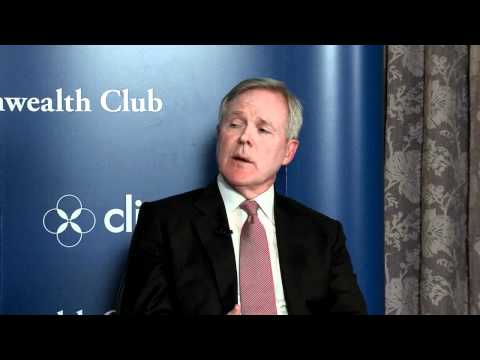
Secretary of the Navy, Ray Mabus

This is one of the more inane, disrespectful and lavishly wasteful ideas to come out of the Federal government in some time.

Secretary of the Navy Ray Mabus, who should have more sense, has proposed in his “21st Century Sailor and Marine Initiative” the idea of normalizing a breathalyzer test (!) for Sailors and Marines reporting for duty. Yes, that’s correct. Showing up for duty is going to be regarded as probable cause for drug testing, as if our AVF were composed primarily of skid row derelicts.

Nice move Mr. Secretary. Stay classy.

That this is yet another example of the demeaning, exploitative, contempt towards normal Americans by our Creepy-state bipartisan elite goes without saying, but the reaction of those so insulted is worth noting:

Best Defense (guest post):

….This is among the most paternalistic, professionally insulting concepts I’ve seen in all my years of service, and I’m not sure I will submit. Yes, I know my options, and I just may exercise them and go right over the side the first time the duty blowmeister shoves a plastic tube in my face and treats me like a drunk driver for daring to report for duty. To the CNO, CMC, CMC of the Navy, and SgtMaj of the Marine Corps, here’s my question:  At what point will one of you four exercise your duty to tell the Secretary of the Navy, “Hey, Boss, WTF, over?” and that he really ought to fire whichever clown came up with this idea to screen everyone to identify serial alcohol abusers who are readily identifiable through other means.  One or more of you needs to find the moral courage to recommend relegating this part of the initiative to the dustbin of really bad naval ideas.

USNI Blog (BJ Armstrong):

….Recently a string of new policies and programs have washed over the decks of our Navy. We’re told they are designed to address everything from the surge in CO firings, to alcohol abuse, to the identified need to increase “diversity.” Training, trackers, new layers of bureaucratic offices, and new ways of testing/identifying the “bad apples” are all in the works. Some of the initiatives appear more connected to reality than others. The issues, like sexual assault and substance abuse, are serious and are challenges that our Navy should be addressing. In many cases, however, we are attempting to install programmatic and bureaucratic solutions to what are essentially humanistic problems. These are problems of leadership, character, and integrity and must be addressed with wisdom as much as programs and bureaucracy.

I suspect, if we were to scrape away the insincerely saccharine and frankly deceptive rhetoric offered by Mabus for this kind of a camel’s nose in the tent program, we will see old fashioned venality at work.  Off the shelf commercial breathalyzers are not exactly cheap and testing 500,000 active duty personnel who make up the Navy and Marine Corps daily,(!) the DoD civilian contractor support for counseling and “training” program development, supplemental extensions for testing the reserves and so on, will represent lucrative paydays in the billions for somebody.

Will those “somebodies” be friends of the current administration? Let’s place our bets now.

[ Sidebar: Let’s also guess how long before this initiative is extended elsewhere, in the civilian world, with results, recorded, tracked and shared without your consent by your employer. Can’t happen here? Oh, Really? I bet you once never expected to have government employees demand to take nude pictures of you at the airport either]

The diversion of resources this proposed insanity represents from warfighting, acquisition, real military training or PME, medical care for our wounded or a thousand other authentic needs of the Navy or Marine Corps would be a scandal in an earlier era.  But we do not live in an earlier era, and the defense budget is just another pile of seed corn to eat as far as the beltway boomer oligarchy are concerned.

Arthur Wellesley, the Duke of Wellington, Great Britain’s greatest military hero, when asked about his soldiers, described them as “The scum of the Earth, enlisted for drink”.  Winston Churchill, over a century later, said the culture of the Royal Navy was based upon “Rum, sodomy and the lash”. This encapsulates an aristocratic worldview of rulers toward their servants and comprises a long military tradition in whose footsteps Navy Secretary Mabus is following.

It just isn’t an American military tradition.

The Era of the Creepy-State is Here

Tuesday, March 6th, 2012

George Orwell was more right than he knew….

Congress passed a law – by unanimous consent in the Senate and by a suspension of rules in the House – to permit the Federal government to arbitrarily arrest and imprison for up to ten years members of the serf class (formerly known as “American citizens”) whose presence annoys or offends specally designated members of the elite and foreign dignitaries. A list that will no doubt expand greatly in future legislation to include very “special” private citizens.

Think about that, future “Joe the Plumbers” or Cindy Sheehans, before you ask an impertinent question of your betters or wave your handmade cardboard sign. Is ten seconds of glory on your local ABC affiliate news at 5 o’clock worth that felony arrest record and federally funded anal exam?

No? Then kindly shut your mouth, sir. Learn your place.

Two nebbish Representatives, one Republican and one Democrat, distinguished only by their lack of legislative or political importance, sponsored the bill on behalf of the big boys who fast-tracked it under the radar (they learned from the SOPA debacle). Forget ideology or boasts about carrying a copy of the Constitution in the breast pocket of their suit, whether you are in an archconservative Congressional district or an ultraliberal one, almost every member of Congress voted “aye” to trash multiple amendments in the Bill of Rights.

Almost every one.

This is an accelerating trend in recent years and in particular, a bipartisan theme of the 112th Congress, which views Constitutional rights of nobodies as an anachronistic hindrance to the interests (or convenience) of their powerful and wealthy political supporters. Our elected officials and their backers increasingly share an oligarchic class interest that in important matters, trumps the Kabuki partisanship of  FOXnews and MSNBC and inculcates a technocratic admiration for the “efficiency” of select police states.

It is from this demographic-cultural root of incestuous corruption that our creeping – and increasingly creepy – manifestations of authoritarianism in American life springs. The SOPA/PIPA internet censorship bills, naked scanners at airports, Stasi-like expansion of expensively wasteful TSA security theater, proposed 24/7 monitoring of  every American’s online activities, migration of police powers to unaccountable private firms, replacement of elected municipal governments with “emergency managers” (favoring financiers over taxpayers), Federal agencies monitoring political critics , the Department of Justice retro-legalizing corporate racketeering, fraud, perjury and conspiracy on a national scale, plus other infringements of liberty or gross corruption that I could list, ad nauseum.

We have reached the point where we as Americans need to stop, step back from moment by moment fixation on nonsensical, “white noise” fake political issues like “contraception” ginned up to keep the partisans distracted and become seriously involved in determining the direction in which our nation is headed. Our elite are telegraphing their strong preference for a “soft dictatorship” but we still have time to check their ambitions and rein in their looting.

It is almost quaint these days to pick up Friedrich von Hayek’s classic,  The Road to Serfdom and thumb through it. The libertarian antistatists of the 20th century were so focused on the clear and present dangers of totalitarianism that the idea of a weak state that endangered liberty through a mixture of corruption and regulatory capture eluded them. The Westphalian state at it’s apex was so overweening that the enemy of free societies, after foreign monsters like Hitler and Stalin, could be ambitious intellectual pygmies like Harold Laski or Tom Hayden. The state was so omnipotent that even it’s efforts at benevolence, to build a “Great Society” of the Welfare State were injurious to individual freedom because the expanse of statism crowded and weakened civil society , the market and private life. The argument gained political traction because, to varying degrees, it was true and looked prophetic when the Welfare-state began to crash economically in the 1970’s on stagflation.

Give the Welfare-state liberals and Social Democrats of the past their due though, their intentions by their own lights were benign. They wanted to make a safer, more secure, more equal, more just life through a more powerful state (whether that was a good idea or a realistic endeavor was the central political question between right and left). The current elite in comparison is so inferior in moral character and overconfident in their abilities that they may soon make us yearn for the former’s return.

What have now in our ruling class,  are the  builders of a Creepy-state and their intentions are not benign, except toward themselves, for as long as the looting of the American economy can last.

Unlike the Welfare-state, the Creepy-state, shot through with corruption, is  not omnipotent  because it is to be the servant and gendarme of the emerging oligarchy and not their master – but it is to be omniscient and omnipresent, constantly watching, monitoring, investigating, recording, interrogating, coercing, sorting, muzzling, gatekeeping and shearing the sheep on behalf of the shepherds.

Or the wolves.

The Creepy-state is not there to protect you or give you a higher standard of living or ensure justice or democracy, but to maintain a hierarchical public order from “disruption” (formerly known as “politics” or “democracy”). If the classical liberal ideal was the night watchman state, this state is the shadowy and ill-disposed watcher in the night.

The American political elite, Democrat and Republican, Conservative and Liberal, are in are largely in consensus that the government should, in regard to the American people:

Read your email
Listen to your phone calls
Track your movements on GPS
Track your online activity
Track your spending
Track your political activity
Read your medical records
Read your financial records
Scan your body
Scan your house
Scan your DNA
Keep you under video surveillance in public
Detain you at random in public places for security checks
Close off public spaces for private use
Seize private property for private use
Censor your speech
Block your access to judicial relief
Determine your educational and career path
Regulate your diet, place of residence, lifestyle and living standards (ever downwards)
Charge you with secret crimes for breaking secret regulations
Share or leak information about you at will

Is this the America we wish for our children or grandchildren? One that epitomizes the values of our Constitution or Declaration of Independence, or is it some kind of tawdry and shameful dime store fascism of a small Latin American country? Perhaps life is finally imitating fiction?

Fortunately, it is not too late. Irrevocable changes in the constitutional order have yet to be engineered. Our politicians are followers, not leaders here. They are a small and cowardly lot for the most part and will recoil in fear from this authoritarian ethos if a sufficiently large number of elected officials are thrown out of office at once. We can still roll this back – at least the most egregiously anti-American aspects – if we get sufficiently angry come November.

Self-interest is their only lodestone.

Recommended Reading – Articles

Sunday, January 22nd, 2012

Three articles suitable for an election year where our elite embraces a variety of oligarchic policies because they benefit themselves personally and despite evidence that these policies are inefficient, socially harmful, anti-democratic and corrupting of the body politic.

Charles Murray –The New American Divide 

America is coming apart. For most of our nation’s history, whatever the inequality in wealth between the richest and poorest citizens, we maintained a cultural equality known nowhere else in the world—for whites, anyway. “The more opulent citizens take great care not to stand aloof from the people,” wrote Alexis de Tocqueville, the great chronicler of American democracy, in the 1830s. “On the contrary, they constantly keep on easy terms with the lower classes: They listen to them, they speak to them every day.”

Americans love to see themselves this way. But there’s a problem: It’s not true anymore, and it has been progressively less true since the 1960s.

…..Similarly large clusters of SuperZIPs can be found around New York City, Los Angeles, the San Francisco-San Jose corridor, Boston and a few of the nation’s other largest cities. Because running major institutions in this country usually means living near one of these cities, it works out that the nation’s power elite does in fact live in a world that is far more culturally rarefied and isolated than the world of the power elite in 1960.

And the isolation is only going to get worse. Increasingly, the people who run the country were born into that world. Unlike the typical member of the elite in 1960, they have never known anything but the new upper-class culture. We are now seeing more and more third-generation members of the elite. Not even their grandparents have been able to give them a window into life in the rest of America.

Pete Kofd – Rise of the Praetorian Class 

….The Praetorian Class includes members of the Armed Services, federal, state and local law enforcement personnel as well as numerous militarized officials including agents from the DEA, Immigrations, Customs Enforcement, Air Marshalls, US Marshalls, and more. It also includes, although to a lesser extent, various stage actors in the expanding security theater such as TSA personnel. The main mission of the Praetorian Class is to keep the order of the day. This requires displaying an intimidating presence in their interactions with the Economic Class.

As the Praetorian Class ascends, the clear, albeit unstated, message that emerges is that actions and events in the Economic Class only occur with its tacit consent. Whether driving on roads, traveling in the air, visiting public land, walking down the street or even living in your own home, every action you take is predicated on its permission. By preconditioning the populace to enforcement of its edicts, most of which are completely arbitrary, the Praetorian Class sets itself up for a high degree of autonomy in its actions. This is confirmed by the fact that consequences for malfeasance within the Praetorian Class are almost never observed, and when it happens, it typically becomes a grotesque spectacle in which one of their own is sacrificed as an example, so as to keep appearances of effective internal controls. 

Daron Acemoglu –Why Do Nations Fail?

….That got me onto a path of research that has been trying to understand, theoretically and empirically, how institutions shape economic incentives and why institutions vary across nations. How they evolve over time. And the politics of institutions, meaning, not just economically which institutions are better than others, but why is it that certain different types of institutions stick?

What I mean by that is, it wouldn’t make sense, in terms of economic growth, to have a set of institutions that ban private property or create private property that is highly insecure, where I can encroach on your rights. But politically, it might make a lot of sense.

If I have the political power, and I’m afraid of you becoming rich and challenging me politically, then it makes a lot of sense for me to create a set of institutions that don’t give you secure property rights. If I’m afraid of you starting new businesses and attracting my workers away from me, it makes a lot of sense for me to regulate you in such a way that it totally kills your ability to grow or undertake innovations.

So, if I am really afraid of losing political power to you, that really brings me to the politics of institutions, where the logic is not so much the economic consequences, but the political consequences. This means that, say, when considering some reform, what most politicians and powerful elites in society really care about is not whether this reform will make the population at large better off, but whether it will make it easier or harder for them to cling to power.

Walter Russell Meade – Establishment Blues 

….The American people aren’t perfect yet and never will be — but by the standards that matter to the Establishment, this is the best prepared, most open minded and most socially liberal generation in history.  Unsatisfactory as the American people may be from the standpoints of Georgetown and Manhattan, this is as good as it gets.  Abraham Lincoln, Teddy Roosevelt and Harry Truman could only dream of the kind of sophisticated and cosmopolitan understanding that folks in Peoria have now compared to the old days.

The American people are less prejudiced, more globally aware and more willing to meet other cultures and societies halfway than ever before.  Minorities today are better protected in law and more fairly treated by the public than ever in our history.  No previous generation has been as determined to give women a fair chance in life, or to attack the foul legacy of racism.  The American people have never been as religiously tolerant as they are today, as concerned about the environment, or more willing to make sacrifices around the world to promote the peace and well being of humanity as a whole.

By contrast, we have never had an Establishment that was so ill-equipped to lead.  It is the Establishment, not the people, that is falling down on the job.

Here in the early years of the twenty-first century, the American elite is a walking disaster and is in every way less capable than its predecessors.  It is less in touch with American history and culture, less personally honest, less productive, less forward looking, less effective at and less committed to child rearing, less freedom loving, less sacrificially patriotic and less entrepreneurial than predecessor generations.  Its sense of entitlement and snobbery is greater than at any time since the American Revolution; its addiction to privilege is greater than during the Gilded Age and its ability to raise its young to be productive and courageous leaders of society has largely collapsed. 


Switch to our mobile site

