zenpundit.com » Oligarchy

Archive for the ‘Oligarchy’ Category

We Need Pitchforks and Torches

Monday, October 18th, 2010

Top Billing! The Daily CallerTheDC OP-ED: One nation, under fraud

Tomorrow, a bank-not your bank, but any bank-could evict you from your home. Even if you didn’t know the bank was foreclosing. Even if your mortgage is paid off. Even if you never had a mortgage to begin with. Even if the bank doesn’t hold a single piece of paper that you signed. And major banks not only know this fact, but have spent millions of dollars to defend it in court. Why? The answer starts with a Jacksonville homeowner named Patrick Jeffs.

In 2007, Deutsche Bank sued Jeffs for his home, which is a necessary step in the process of foreclosing on a homeowner in the state of Florida. Curiously, despite the fact that he immediately hired a law firm to defend his property when he found out about the foreclosure, neither Jeffs nor his attorneys were at the trial. That’s because it had already happened. Deutsche won by default because Jeffs wasn’t able to travel backwards in time to attend, even though the trial featured a signed affidavit indicating that he had been served his court summons.

The only problem with the summons Jeffs supposedly received was that it had been conjured out of thin air.

In June of this year, a Florida court ruled that the document was fraudulent, as the person who was supposed to make sure Jeffs was served had mysteriously received a copy of the summons before the lawsuit had even been filed, and Jeffs never even saw the copy. The text of that ruling was posted on various financial news websites in September. The lawyers that Jeffs hired to defend his case say that fraud such as this is not uncommon. It’s a widespread problem, and it has cost countless families their homes.

“I think it’s safe to say that 95% of the foreclosure cases in Florida involve some form of fraud on the part of the bank,” David Goldman of Apple Law Firm, PLLC told The Daily Caller in a phone interview. “It’s probably closer to 99%. And the court system is helping them get away with it.”

Banksters should not only be going to prison for intentionally destroying the lives of people who are not only NOT in default on their mortgages, but have never transacted a mortgage with the institutions attempting to illegally seize their property, these guys should be made to face an angry mob composed of the people they have defrauded.

This is the Oligarchy in action. They intend to hollow this country out and move their loot offshore just like in Russia during the 1990’s

Hat tip to Ron Beasley at Newshoggers.com who also found this gem:

COUNTERPOINT ADDENDUM:

Blogfriend Fabius Maximus, who often blogs on economics, would like to offer a counterpoint and i have agreed to let him put up his perspective here and some excerpts:

  A briefing about the foreclosure fraud crisis: its origin and impacts.
 

….The real estate title system in the US is complex, with safeguards protecting debtor and creditor (for details see this by Barry Ritholz).  It’s also local (rules and data are not national).  This system worked well for generations, but collapsed during the housing boom.

  • Loan volume accelerated, overloading key parts of the system.  Appraisals were often corrupted, as loan originators routed business to compliant appraisers.
  • Massive securitization of mortgages ignored these constraints, and erected a pseudosystem on top of it that cheaply processed the high volume of both mortgage origination and securitization (e.g., the Mortgage Electronic Registration System – a faux version of security clearing corporations; see this explanation).  Securitization also broke the link between the originator and end owner, with many ill consequences.  Among other things, this put great pressures on the servicing firms to lower costs.
  • During the RE boom years recoveries on foreclosed mortgages were zero or positive, which meant a low rate of foreclosures (homes could be sold by the owner rather than default on the mortgage).  So the institutional apparatus for foreclosures atrophied.

The the default bust hit.  Massive flow, overwhelming the system – which was never configured for such an event.  Remember, experts believed home prices never decline for more than a calendar year.  The worst scenario considered by the most experts was flat prices for 3 years.

The servicers (sometimes the bank originating the mortgage, often not) reacted by cutting corners (seethis Reuters story).  Finding the original loan documents was too expensive, so they used lost document procedures designed for extraordinary circumstances (e.g., fire, flood, or misfiling – see this at Calculated Risk and here at Reuters).  Some servicers hired law firms set up as foreclosure mills (e.g., FL), processing incredible numbers of foreclosures.  It’s not clear how, but clearly proper procedures were not followed.

As a result there have been many claims that foreclosure notices were never served (an easy way to make serving a high-margin profit center).  Employees have admitted under oath in depositions to fraudulently signing thousands of notarized affidavits.

This took place in the 23 states with judicial foreclosures only with the cooperation of Judges.  A few Judges protested when shown that their banks and their agents were committing perjury.  But the process ran smoothly for the past few years.  Now the wheels are coming off.  This might be difficult for the financial sector to conceal or mitigate, despite their de facto control over the government’s regulatory machinery.

A situation report about two headine issues – and a more serious problem

….Despite the oft-hysterical analysis, there is as yet insufficient public information about the scale of the problem.  Quite likely even key players (e.g., banks, their law firms, government regulators) lack the necessary information.  Deliberately, as all prefered to “see no evil.”  But now that the problem has erupted into the daylight, this leaves them ill-prepared to respond.  Especially as any adequate response will reveal their incompetence and malfeasance in creating the situation.  (Here are Wells Fargo’s procedures regarding creditors’ complaints; nothing available for their procedures to debtors’ complains).

Political factors, not legal or economic, probably will control the evolution of this crisis.  Hence the likelihood of modest impact to the national economy.  More than the small impact expected by Wall Street; less than expected by the increasingly rabid doomsters.   Over a longer horizon, a year or more, the economy will affect the political dynamics.  For a good analysis of the current political situation see “Congress Taking Cautious Approach with Foreclosure Mess“, American Banker, 14 October 2010.  The Republicans, as usual, eagerly support the banks – despite any violations of the law, despite the interests of the American people.

The economic impact looks to be minimal and probably less than the political effects.  New home sales are unaffected by this crisis.  The title problems are solvable.  New home finance is unaffected, and in any case are now 90% government financed or guaranteed.  Interruptions in sales of existing homes will have severe effects for those affected, but little for the overall economy (despite the massive attention to the volume of existing home sales, they have minimal economic effect).

What could change this forecast? A second dip would radically change the situation, as more links in US and global economy “unexpectedly” break.   As would a long foreclosure moratorium, although this is unlikely under the current political regime.  It could happen as part of system change, of such magnitude that the moratorium would be one of the lesser results.

Moral Decay and Civilizational Rebirth

Wednesday, October 13th, 2010


John Robb at Global Guerrillas:

JOURNAL: Moral Decay?

Moral decay is often cited as a reason for why empires/civilizations collapse.  The slow failure of the US mortgage market, the largest debt market in the world and the shining jewel of the US economic/financial system, is  a good example of moral decay at work.  

Why is this market failing?  It’s being gutted — from wholesale fraud and ruthless profiteering at the bank/servicer level to strategic defaults at the homeowner level — because a relatively efficient and effective moral system is being replaced by a burdensome and ineffective one.  What shift?  Our previous moral system featured trust, loyalty, reputation, responsibility, belief, fairness, etc.   While these features were sometimes in short supply, on the whole it provided us with an underlying and nearly costless structure to our social and economic interactions.  

Our new moral system is that of the dominant global marketplace.  This new system emphasizes transactional, short-term interactions rather than long-term relationships.  All interactions are intensely legalistic, as in: nothing is assumed except what is spelled out in the contract.  Goodness is solely based on transactional success and therefore anything goes, as long as you don’t get punished for it.  

In this moral system, every social and economic interaction becomes increasingly costly due to a need to contractually defend yourself against cheating, fraud, and theft.  Worse, when legalistic punishment is absent/lax, rampant looting and fraud occurs.  

Given the costs and dangers of moral decay, it’s not hard to see why it can cause a complex empire/civilization to collapse.

John is drawing on an intellectual tradition goes back to Gibbon, Ibn Khaldun, Polybius, Confucius and Mencius  but is mashing it up with modern concepts of social complexity, such as is found in Joseph Tainter’s The Collapse of Complex Societies. This makes sense; when members of a ruling class start to behave in an unethical manner, there is a natural reaction by morally vigilant members of the ruling class to check future abuses of power by dividing administrative authority, increasing regulations, creating new watchdogs and erecting balancing countermeasures. This is an increase in complexity that decreases rather than improves efficiency. Society pays more for the same level of effective governance and the creep of corruption will soon require another “re-set” and yet another no-value added  increase in complexity as the elite multiplies and seeks their own aggrandizement.
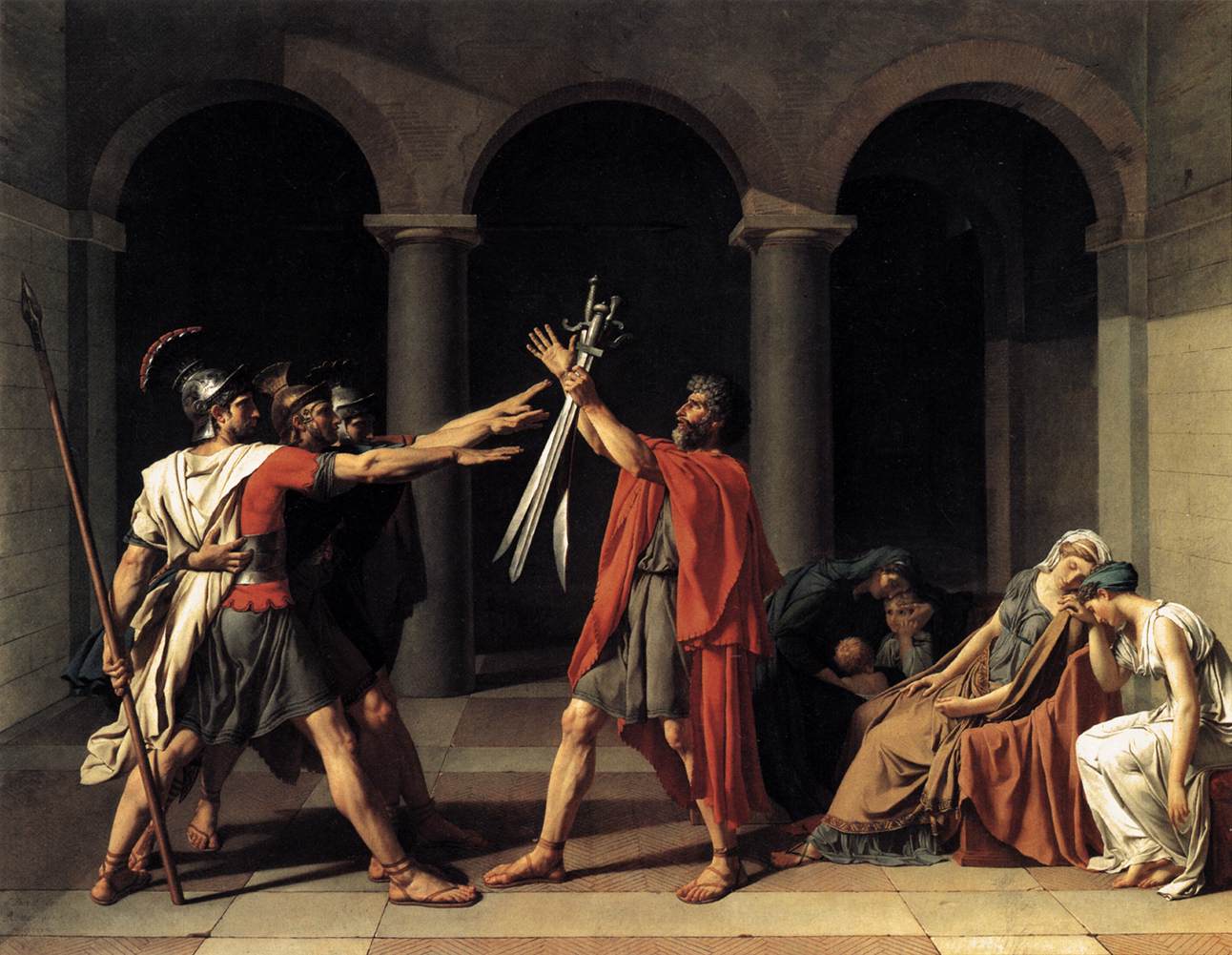
When Robert Wright wrote of “ossifying” societies unable to stand the test of barbarians in the ancient and medieval worlds, in Nonzero:The Logic of Human Destiny, he was explicit that a moral critique often correlated with economic/darwinian fitness. Rome, for example, eschewed adaptive technological innovation due to it’s heavy reliance on inexpensive slave labor. Oligarchic societies fit the moral decay theory because oligarchies focus on the zero sum game of extracting existing wealth from the population instead of creating and accumulating it. The extraction process requires an expensive social architecture of control and this is subject to diminishing returns. At a certain point, any system reaches the tipping point on adding the next level of non-productive complexity and begins to unravel.

What if the historical ratchet could be reversed?

What if the excess complexity could be systemically pared back along with the opportunities for corruption and self-aggrandizement that required countermeasures?

Societies are occasionally capable of moral and political renovation, cases in point, the Glorious Revolution and the Meiji Restoration, both of which tied ancient ideals to new political forms while sweeping away a corrupt elite. The American Revolution period, through the adoption of the US Constitution would be another example of societal transformation. These successes, which involve constitutional reforms and a rejuvenated political economy are essentially of a social contractual nature and are rare. Failure is more common, as with Sulla’s bloody reforms that temporarily got rid of bad actors and rebooted the Roman Republic to an older, more virtuous model but failed to address the fact that the structural flaws of the Republic itself were the problem, not the ambition of Marius.

Things are not yet too far gone. There is much that is wrong with the United States but we have a more resilient and coherent foundation upon which to reconstruct than did the Romans of the 1st century BC. 

America has many Mariuses but a better Republic.

Enter Stage Right

Tuesday, September 28th, 2010

Good friend and co-author Michael Lotus, a.k.a. “Lexington Green has a feature article as he debuts at The RIGHTNETWORK. Congrats Mike!

The Insurgency

Mass political movements often begin with a single, striking event. The Insurgency began in the fall of 2008, when President Bush, Senator Obama, and Senator McCain appeared together to endorse the TARP bailout.  At that moment the lights came on for many Americans. It was glaringly obvious that both political parties jointly operated the system, and the system existed to protect the well connected at the expense of everyone else. The public opposed the TARP bailouts; the banks got their money anyway. The Insurgency, long brewing, began.

The Insurgency is a movement of citizens directed against unsustainable government taxation and regulation, and spending, both of which benefit insiders rather than ordinary people. The target of the Insurgency is a leviathan in Washington, D.C. that will ruin us all if it is not dismantled. 

The Insurgency is part of a long tradition of mass political movements in our history. It has the potential to make a fundamental change in American life-for the better.

….2.  What is the Insurgency? Why now?

For now the Tea Party movement, ignited by Rick Santelli’s “Rant Heard Round the World,” is the dominant component of the Insurgency; Glenn Beck‘s gathering of hundreds of thousands of people in Washington, D.C. is another, overlapping one. The people who have gathered around Governor Sarah Palin form yet another part of the Insurgency, as do the libertarian-minded citizens who read blogs like Instapundit. Many of Rush Limbaugh‘s, Sean Hannity‘s, and Mark Levin‘s listeners are part of it. Various long-established conservative groups that have always opposed big government are now parts of the Insurgency.

There are appear to be three factors that have caused the rise of the Insurgency now, and the particular form it is taking: 1) technology, 2) a new, heightened awareness of the problem, and 3) the shock of the current crisis.

First, new technology allows massive, decentralized and horizontal organizations to form quickly. The Tea Party is the best current example: There is coordination, but no central direction. There is no one in charge, giving orders, but rather many people and groups cooperating. This is only possible due to current technology. 

“[Technology] enabled the Insurgency,

but it did not cause it.”

Technology, however, cannot by itself explain the rise of the Insurgency. After all, the political Left actually pioneered in this area: MoveOn was a highly effective internet-based organization, for example. It does seem odd, in retrospect, that a tech-savvy Left would cast its lot with a top-down, government-centric political culture. And there may be some overarching affinity between libertarian-style thinking and the new technology. But that technology is ultimately neutral. It enabled the Insurgency, but it did not cause it.

Read the rest here.

UPDATED:

Michael has published the second part of his essay: 

The Insurgency, Part II

….Mass political movements have come along several times in American history.  Some have transformed the country, and others have fizzled out. 

The movement that elected Andrew Jackson, against the vicious opposition of the existing establishment, swept through all levels of American government, rewriting state constitutions and extending the franchise to all adult White males. Jacksonian democracy caused a permanent and irreversible change in American life.  

The Populist movement looked like it would have a similar impact.  Led by the charismatic outsider William Jennings Bryan, this movement held gigantic rallies and seemed like a revolution in the making. It provoked fear and a hostile response from the establishment of its day, in both political parties. Yet the Populists ultimately failed to make a significant impact on national policy, and were absorbed into the Democratic Party. 

Today’s Insurgency could go either way. Success is not inevitable. 

The Coming of the Quantum Economy

Friday, September 17th, 2010


From FT.com:

Computers set for quantum leap

A new photonic chip that works on light rather than electricity has been built by an international research team, paving the way for the production of ultra-fast quantum computers with capabilities far beyond today’s devices.

Future quantum computers will, for example, be able to pull important information out of the biggest databases almost instantaneously. As the amount of electronic data stored worldwide grows exponentially, the technology will make it easier for people to search with precision for what they want.

An early application will be to investigate and design complex molecules, such as new drugs and other materials, that cannot be simulated with ordinary computers. More general consumer applications should follow.

I bet.

I’m no computer geek, but I know a bit about economics. Quantum computing represents a moment of comparative advantage for the nation(s) that pioneers it akin to Great Britain being first with the Industrial Revolution. The first use for the world’s first lab functional quantum computer is to apply it’s power in other fields where innovation is stymied by previously intractable math problems, thus permitting a burst of patentable breakthroughs or discoveries that lead to applied scientific and commercial uses. The second use of the quantum computer’s power will be put towards solving problems related to optimizing quantum computing itself, both in terms of refining the systems and assembling arrays.

Advantages of this nature tend to be self-reinforcing and synergistic. The state that accrues these downstream spillover benefits of quantum computing in rapid succession could potentially leapfrog over everyone else to a degree not seen in centuries.

Jeremy O’Brien, director of the UK’s Centre for Quantum Photonics, who led the project, said many people in the field had believed a functional quantum computer would not be a reality for at least 25 years.

“However, we can say with real confidence that, using our new technique, a quantum computer could, within five years, be performing calculations that are outside the capabilities of conventional computers,” he told the British Science Festival, as he presented the research

The upside of holding this kind of technological  advance back from the commercial domain in order to “lock in” comparative advantage until the nearest quantum computing rival has gotten close, but not yet reached, operational use, will be overwhelming.

Don’t you feel great that the corporatist Bush administration was indifferent to venture capital start-ups, explicitly hostile to basic science research and xenophobic toward top-notch H1-B and foreign grad student talent while the Obama administration is explicitly hostile to start-ups and enamored of pouring scarce billions into rustbelt legacy industries, outdated infrastructure projects and oligarchic Wall Street paper shufflers instead of the high tech and VC sectors?

A**holes.

The Mob of Virtue

Sunday, August 1st, 2010


Small “r” republican virtue, to be precise.

A wise man once told me that a weakness of our Constitutional system was that the Framers implicitly presumed that people of a truly dangerous character, from bullies to bandits to political menaces to the community, would primarily be dealt with in age-old fashion by outraged neighbors whose rights had been trespassed and persons abused one time too many. They did not prepare for a time when communities would be prohibited from doing so by a government that also, as a whole, had slipped the leash. Indeed, having read LockeMontesquieuCicero, Polybius, Aristotle and Plato, they expected that such a state of affairs was “corruption” of the sort that plagued the Old World and might happen here in time. A sign of cultural decadence and political decay. They gave Americans, in the words of Benjamin Franklin, “A republic, if you can keep it”. It remains so only with our vigilance.

It is happening now.

We have forgotten – or rather, deliberately been taught and encouraged to forget – the meaning of citizenship.

We have let things slip.

Joseph Fouche superbly captures this implicit element, the consequences of the loss of fear of  informal but very real community sanction, in his most recent post:

People Like Us Give Mobs a Bad Name

….A classic American mob could exhibit any or all of these strategies. It could be a saint inciting a mob to attack others who deviated from a shared narrative. It could be a knave in saint’s clothing inciting an attack on personal rivals. It could be a moralist inciting a mob against the local knaves. The one constant is that an American mob was an expression of communal self-government by moralists seeking to punish what they saw as deviant, even if its manifestation was frequently unpleasant. It was a sign the local people were engaged.

Samuel Adams was the Lenin of the American Revolution. He conceived a hatred for the British Empire and a desire for American independence well before anyone else did. Adams skillfully used mobs alongside legal pretense to incrementally spread his agenda. Others followed his example. In the Worcester Revolution of 1774, the local population shut down the normal operations of royal government in west and central Massachusetts and drove royal officials out of those regions (the book to read is Ray Raphael’s The First American Revolution: Before Lexington and Concord). The British crown lost control of inland Massachusetts before Lexington and Concord were even fought.

However, eleven years later, when many of the same local residents attempted to do the same thing in protest of the policies of a now independent Massachusetts, the state government put down their rebellion with Samuel Adams’s strong support. The difference? An apocryphal remark attributed to Adams captures some of the truth behind his attitude: “the man who dares to rebel against the laws of a republic ought to suffer death”. Mobs protesting the actions of an unrepresentative government like the British Parliament, Adams argued, were valid. Mobs protesting the actions of a representative government like Massachusetts’s state government, on the other hand, were treasonous. This doctrine, supported by other Revolutionary leaders, especially the cabal behind the Order of the Cincinnati, was eventually enshrined as the higher law of the land in the slow motion coup d’etat that overthrew the Articles of Confederation and replaced it with the more authoritarian United States Constitution in 1787-1788.

While mobs continued to combine, they were gradually neutered by the conscious agenda of American elites who sought to replace informal norms enforced by communal censure with formal norms applied under the professional supervision of “wiser heads”. This was a collusion between saints and knaves against moralists. Saints got purer standards that were not reliant on the whims of moralists who got stirred up in unpredictable ways that might violate the saints’ prevailing narrative while knaves got credentials that allowed them to entrench their positions and agendas under the cover of serving a higher good. The same sense of community morality and punishment that gave nineteenth century self-government its vigor and occasional excess was weakened as moralists were tuned out by saints embedded in holy isolation and knaves concerned only with advancing personal priorities. Moralists saw the knaves getting away with free riding off of them and began to opt out, leaving room for more knaves to free ride. For a little formal pretense, the returns on rent seeking were enormous.

The ideal went from a citizenry engaged in self-government to a system designed to advance the best and brightest. Meritocracy sounds good in theory and has some positives in reality. However, a perfect meritocracy is a perfect tyranny. All of the leaders are on once side and all the followers are on the other. This tendency toward the separation of the best from the rest may only be checked by the tendency of those on the ascendant to favor their own children, whatever their merit, over strangers that are more meritorious. This will force some aspiring meritocrats to side with the followers and bring about a rotation of elites. But the transition may take a while and its best to start before you have a meritocratic problem….

Read the whole post here.

Today’s circumstances, with the elite determinedly crafting rules for the mass but not for their class, have an ominous portent for the future of America as a democratic republic, but violence is not yet required.

Political engagement is.


Switch to our mobile site