Archive for the ‘Tactics’ Category
Wednesday, November 16th, 2011
[by J. Scott Shipman]
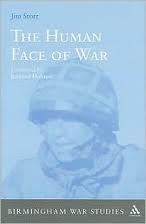
The Human Face of War by Jim Storr
[Zen reviewed this book earlier here. I had forgotten that I wrote a rather long review at Amazon after finishing in January 2010. Perhaps Storr will gain a wider audience as a result.]
Mr. Storr’s The Human Face of War will be I predict, a book studied by military professionals (and smart policy makers) for years to come. Using straightforward prose, Mr. Storr seeks to provide a philosophical approach to war—as he says, “In practice we are concerned so much with war as with waging it.” Storr goes on to differentiate between war and warfare; where war is an “issue” with history and warfare dedicated to methods/methodology. Storr rejects notion that war is art or science, and prefers instead to embrace pragmatism and limited empiricism. He points out correctly: “Pragmatism has obvious application to warfare. A significant aspect of warfare is `a process of trial and error; seeing what wins and exploiting it.” Storr continues that “empiricism is not just trial and error: it is a logical process based on structuring observed facts.” What “works” will suggest a way ahead.
Storr uses broad themes of what has worked and what has not worked in military history by explaining the nature of combat and tools and models available to the practitioner. He uses Clausewitz’s “dialectic of aims and means” in conjunction with Systems Theory to describe the holistic nature of military units; where effective/efficient output is dependent on input—where a good outcome is “winning” (as Storr repeatedly observes throughout the book, armies aren’t paid to come in second). Hence, organization of military units is fundamental; efficient/effective organizations are more likely to succeed. He observes: “Cohesion and collective performance indicate the whole is greater than the sum of the parts. There is a systemic effect, and we should see armed forces as systems.”
Storr is a proponent of forcing decision making to the folks on the ground using brief and succinct communications. His chapter on Commanding the Battle is excellent. Storr advocates lean command staff’s and dispersed decision making. “We should employ the best brains in small groups, rather than try to assemble a collective brain.” He points out that “when staff numbers are reduced, the effectiveness of HQ improves.” “Reducing staff numbers would increase speed with which they could get things done.” [Amazingly, Storr quotes a work from 1998 that reports a typical Western division commander has 600 people supporting!—and that number has, I’m sure increased in 10 years.] He concludes this excellent chapter making a distinction between technology and the human factor: “…the future is not digital: it’s human. What is needed is things that bind talents together as a team, not more bandwidth…given time, resources, open minds and not much money we could revolutionize land tactical command. The key problems are human, cultural and institutional.”
Storr asserts that successful modern commanders are most likely intuitive thinkers and possess the ability to learn from experience. He suggests further the “tendency to learn is more critical. It implies a tendency to reflect on experience and to learn from it, to maximize the benefit of the experience.” This tendency is key to the development of “skills”. He encourages a “permissive man-management regime that allows those who can learn rapidly from their experience to do so.” At the opposite end, Storr makes clear the unsuitability of many leaders who use bullying tactics and fear to motivate.
Storr concludes by observing that “institutional conservatism” inhibits armed forces from improving significantly during times of peace; that “the current size and shape of Western armies reflect issues that are not primarily related to warfighting effectiveness.” He insists that doctrine should be explicit, relevant,(descriptive and where appropriate, prescriptive), coherent, and practical. The short tours common in western armies harm team integrity—which is “huge”. Innovation is vital, and in many cases military members aren’t with a unit long enough to have the experience necessary to truly innovate. Storr advocates “experience is the best way to achieve practical coordination and overcome the fog of war, as long as the experience gained is positive.” He discourages the common use of lieutenant-colonels in jobs where a captain or major could function/thrive/learn; as these junior officers will have less experience when they are promoted and will have probably developed the habit of “referring decisions upwards, and hence develop little initiative.”
According the Storr, the “human” aspect of war should take prevalence over technology. He acknowledges the utility of technology, but asks the reader to “…pause and look for a moment at the Vietnam War, which suggests that superior technology is not always the deciding factor.” [9-11 is illustrative of this point on the “terror” side; determination and box cutters wreaked havoc.]
My review does not do justice to the wealth of information, insight, and counsel in Storr’s book and I quote him frequently because his style is better than a summary. This book was aimed at a narrow audience, hence the high price. When I began, I was concerned about Storr’ opinions concerning John Boyd’s OODA loop; but in late 2009 I rejected Boyd’s deterministic underpinnings of OODA—Storr’s pragmatic and partial empiricism makes more sense. OODA remains, in my humble opinion, a valuable and versatile methodology in both the military/law enforcement and business arenas.
This book is highly recommended; particularly for junior officers and NCO’s—the price is high, but what you will gain will be worth the cost.
UPDATE 11.17.2011: Jim Storr contacted me and confirmed the issue of a paperback for about $40.
Posted in 21st century, army, Clausewitzian, complex systems, J. Scott Shipman, john boyd, leadership, military, military reform, national security, recommended reading, strategist, strategy, Strategy and War, synthesis, Tactics, Uncategorized, uncertainty, war, warriors, Zen | 9 Comments »
Thursday, November 10th, 2011

Storming the World Stage: The Story of Lashkar-e-Taiba by Stephen Tankel
PRAGATI, India’s National Interest Review magazine has published my review of Dr. Stephen Tankel’s book on Lashkar-e-Taiba, titled Storming the World Stage. The article is not yet online (I will add the link when it is released) but the issue digest PDF version is below:
pragati-issue56-nov2011-communityed.pdf
“Jihad for all seasons”
….Carnegie and RAND scholar Stephen Tankel has endeavored to demystify and deconstruct LeT in his meticulously researched book, Storming The World Stage: The Story of Lashkar-e-Taiba and bring into the light the complex relationships that entwine LeT with the Pakistani state and the subterranean universe of radical jihadi politics. Conducting extensive interviews with Islamist militants, Western and Indian intelligence officials, Pakistani politicians and ISI officers and buttressing his narrative with sixty-three pages of end-notes, Tankel has produced a portrait of Lashkar-e-Taiba that is accessible to the layman while remaining a methodical work of scholarship.
…. An organisation that, like Hezbollah, is state-sponsored but not controlled, Lashkar-e-Taiba is suited for waging what military analyst Frank Hoffman terms “Hybrid War”, but how LeT would play that role in an Indo-Pakistani War is left to the reader’s inference. LeT also demonstrated in Mumbai a fluid tactical excellence in its use of off-the-shelf technology, small arms and mobility to reap an enormous return-on-investment by attacking soft targets, much along the asymmetric lines advocated by warfare theorist John Robb. Tactics that are a critical threat to any open society by forcing it to take preventive measures which are ruinously expensive and contraindicated to keeping society free and democratic….
Will update post as matters develop.
Posted in 21st century, 4GW, academia, analytic, authors, book, extremists, foreign policy, geopolitics, ideas, illegal combatants, India, insurgency, intellectuals, islam.insurgency, islamic world, islamist, media, non-state actors, organizations, pakistan, primary loyalties, security, state terrorism, Tactics, terrorism, transnational criminal organization | 7 Comments »
Thursday, November 3rd, 2011

I don’t think of STRATFOR as a cyber shop, generally, but this is worth a look.
Posted in 3 gen gangs, 4GW, 5GW, analytic, Cyberwar, extremists, futurism, gangs, IO, Mexico, non-state actors, organizations, Stratfor, Tactics, war | 2 Comments »
Monday, October 31st, 2011

An interesting new blog. An operator type, an Iraq and Afghan vet, quesopaper blogging from AfPakland on situational awareness and much later in the post, on leadership:
Running To Contact
….I thought we’d cover danger in Afghanistan again by examining, “When Insurgents attack.”
A quick aside…over the years one develops a sense for explosions. Some are “ours”…outgoing mortars, rounds from a gun or controlled detonations. We learn the sounds of different weapon systems. A helicopter followed by a high pitched drone and several whooshes is an Apache firing it’s main gun and rockets. Whomp Whomp Whomp is an M60/M240. Ma duece says Bum Bum Bum. Artillery is LOUD and has a pointy sound when outgoing. Incoming is more spherical.
We also develop a sense of distance and direction for the booms…it’s all part of our survival mechanism. Another aspect is awareness of our surroundings. We constantly scan and consider what to do if we are attacked …where is the nearest bunker or where is the closest safest place?
This sounds frightening, but we all do this. Motorcycle riding is a good analog. When riding we have to be aware of spacing. Scanning for threats and escape routes saves a rider’s life.
The sound that puts me face first on the ground are mortars wobbling towards me. They make a unique sound that I can’t quite describe. Sort of of a frantic flutter…the closest sound I can come up with is the rattle of a door stop when accidentally brushed. Rockets and their vibrating engine sound are also unnerving. If you can hear them flying, they are too damned close…
Very relevant to past blog discussions of fingerspitzegehful and the OODA Loop – a good descriptive narrative, in fact, of OODA working correctly. Theory is not the interest of the quesopaper gent, but his firsthand observations of COIN in Afghanistan are intriguing, for those interested in military policy or theory. Ideas that are often great on a whiteboard or ppt slide but may not seem quite as great once they collide with reality.
Another post from quesopaper, in the vein of theoretical rubber meeting the practitioner road:
What do they Need?
….indulge me while I inject some confusion into our clarity regarding Afghans. This is a paraphrased version of a Benedictine Grima tale from her field work. If one desires knowledge about AfPak, particularly the female’s role, Ms Grima is THE source.
The tale….Two men travel to village 1. While there, they commit robbery and murder. These crimes are detected by local police. The police debate their response, and decide to chase the perpetrators.
They enter the criminal’s village (village 2) where locals set upon the police and kill them. These villagers for whatever reason don’t appreciate nor require police involvement in their affairs. Villages 1 and 2 are content to solve crimes of any type within their own system of justice. In response to the police incursion, village 2 blocks outside access to the road preventing further police/outsider interference. Up the road a bit, the next village (village 3) hears of this incident. The road blockage makes them fighting mad. A village 2 v. village 3 mini-war occurs; people die. Why? Village 3 needs that road to survive or, shoot-some other reason. We don’t and honestly; we can’t know.
The point isn’t “should we” or “shouldn’t we” be here; that’s a different blog…Fact is we are here.
So let’s do this…Let me take you to a village. You comment below on how we are going to help….maybe we’ll all learn something….
Read the rest here.
Posted in 21st century, 4GW, Afghanistan, blogging, blogosphere, COIN, counterinsurgency, cultural intelligence, DIME, ideas, insurgency, military, Perception, security, Tactics, terrain, tribes, war, warriors | 1 Comment »
Sunday, October 30th, 2011
This SSI monograph by Dr. Andrew Mumford should stir some robust debate in the COIN community:
Puncturing the Counterinsurgency Myth: Britain and Irregular Warfare in the Past, Present, and Future
Most of Mumford’s points are valid criticisms but I need to quibble with Myth # 1 The British Military is an Effective Learning Institution:
MYTH #1: THE BRITISH MILITARY IS AN EFFECTIVE LEARNING INSTITUTION
According to John Nagl, the British succeeded in Malaya-in contrast to the American failure in Vietnam-because the British army had an organizational culture akin to a so-called “learning institution,” whereby the army quickly adapted to COIN conditions and changed tactics accordingly.2 The array of operational activity, ranging from limited to total war, that the British army has experienced has arguably led to a greater degree of pragmatism in its military outlook. A dogmatic adherence to rigid military doctrine has been absent, which, when compared to the generation-long postmortem on the failure of U.S. strategy in Vietnam, perhaps explains more than most other factors why an almost mythic reputation has descended upon the British. However, this does not explain, nor should it obscure, the languid application of appropriate irregular warfare tactics and the absence of swift strategic design. When it comes to COIN, the British are slow learners.
The early phases of nearly every campaign in the classical era were marred by stagnancy, mismanagement, and confusion. The military was 2 years into the Malayan Emergency before it conceived of a cohesive civil-military strategy in the form of the Briggs Plan. The crucial early years of the troubles in Northern Ireland were marked by displays of indiscriminate force and an inability to modulate the response.3
The Director of the United Kingdom (UK) Defence Academy also concedes that, in relation to Northern Ireland, “[I]t is easy in the light of the later success . . . to forget the early mistakes and the time it took to rectify them.”4 As Lieutenant General Sir John Kiszely rightly observes, the Malayan Emergency was, “a much lauded counterinsurgency campaign, but often overlooked is the fact that in the early years . . . the British Army achieved very little success.” In COIN terms, therefore, the British have been consistently slow to implement an effective strategy and achieve operational success. Moreover, the vast body of campaign experience has not translated into a cogent COIN lesson-learning process within the British military. The very need to re-learn COIN in the post-September 11, 2001 (9/11) conflict environment has undermined assertions as to the British military’s being an effective learning institution. Such amnesia has created an imperative for the armed forces now to hone their lesson-learning abilities while simultaneously adapting to the intricate challenges of sub-state and transnational post-Maoist insurgent violence in the third millennium.
What sort of time frame is reasonable for “organizational learning” – that is, transforming a large, hierarchical, bureaucratic entity’s conceptualization and understanding of a situation and reforming and adapting it’s practices in light of experience? How fast can this really happen? An org is not an individual, two years while under fire does not seem slow to me. Am I missing something in Mumford’s argument?
Furthermore, I infer from the third paragraph that Mumford expects evidence of learning were for the Brits to have arrived in Basra good-to-go on COIN doctrine. Learning, whether in a person or org, is not represented by doctrine (lessons frozen in time) but rather a capacity to adapt to new circumstances. Mumford is on firmer ground criticizing British general officers for their blind assumption that they had all the answers on counterinsurgency while the ragtag Mahdi Army bullied and ran circles around British units.
A monograph worth reading.
Hat tip to Lexington Green and SWJ Blog)
Posted in 21st century, academia, analytic, army, britain, COIN, cold war, counterinsurgency, counterpoint, ideas, insurgency, intellectuals, military, military reform, myth, Perception, reform, SSI, strategy, Strategy and War, Tactics, war | 3 Comments »



