zenpundit.com » CIA

Archive for the ‘CIA’ Category

Creativity in the IC – Or the Lack of It

Sunday, March 28th, 2010

A great article in World Politics Review by Josh Kerbel, a 14-year veteran of the U.S. Intelligence Community ( Hat tip to Col. David Maxwell)

For the Intelligence Community, Creativity is the New Secret

It’s no secret that the increasing complexity of the international system — and in particular, its growing interconnectedness, integration, and interdependence — is eroding the fundamental business models of an ever-growing range of industries. Nowhere is this more evident than in the information industries, such as journalism, broadcasting, publishing, music and film, among others. More than a few entities have been swept to the brink of, or in some cases over, the precipice of irrelevance. And every information industry, it seems, is in some peril.

The U.S. intelligence community’s traditional model is similarly threatened by these transformations, but like so many cia.jpgother besieged industries, the IC is hesitant to deviate from it. In general terms, the IC’s model is a secret “collection-centric” one that:

– prizes classified data, with classification often directly correlated to value and significance;
– is driven by data availability, while analytical requirements remain secondary;
– is context-minimal, with analysis staying close to the collected data and in narrow account “lanes”;
– is current-oriented, since there are no collectable facts about the future;
– is warning-focused, emphasizing alarm-ringing;
– is product-centered, measuring success relative to the “finished intelligence” product provided to policymakers, rather than its utility or service.

This model ends up being highly “reductionist,” since secret collection leads to classification, compartmentalization and, inevitably, reduced distribution. Such a system, in which everything is constantly subdivided, was designed for the “complicated” — but not really “complex” — strategic environment of the Cold War. In that more linear environment, it was possible to know exactly where to look — namely, the USSR; access was severely restricted, making secret collection vital; the context of hostile intent and opposing alliances was well-understood; and the benefits of being forewarned, especially of imminent military action, was paramount.

Today’s complex strategic environment is vastly different. Now, there is no single focal point, as a threat or opportunity can emerge from almost anywhere; access is largely unrestricted, since the world is wide-open and information-rich; and context is much more ambiguous, because intent and relationships are fluid. In this more dynamic, non-linear strategic environment, reductionist approaches are, by themselves, a veritable recipe for systemic (i.e., strategic) surprise.

In practical terms, this means that it is no longer sufficient to just reactively collect data on how certain parts of the international system are acting in order to extrapolate discrete predictions. Rather, it’s crucial that such reductionist approaches be complemented by more “synthetic” approaches that proactively think about how the various parts of the larger system could interact, and consider how the synthesized range of possible threats and opportunities might be respectively averted or fostered. In other words, it is no longer enough to just monitor already identified issues. It is also necessary to envision potentially emergent ones. In short, it is time for the IC to use its imagination.

Read the rest here.

Comments, in no particular order of importance:
 
First, the underlying root problem is “political”. The IC is “collection-centric” primarily because the key “customers” for IC products have an implicit expectation of good intel as a higher level analytical journalism, just salted with some real-time “secrets” outside normal public purview. And some of them – George Schultz when he was SECSTATE is an example – want to be their own analyst, and are quick to complain about speculative,”edgy” analysis that clashes with their preconceptions. So IC senior managers are inclined to give the customer what they demand – current information which has a short shelf-life in terms of value. Educate the intel-consumer class of what the IC might be able to do given different tasks and they might start asking that new tasks be done.
 
Secondly, if the IC employed more programs that involved an investment in long-term “clandestinity” – it would both collect information of strategic, long-term value and offer the US opportunities to shape the responses of others through established networks of agents of influence. This is where imagination, speculation and synthesis would have greater play because of the need to create and seize opportunities rather than placing a premium on mitigating risk and avoiding failure.
 
The problem with analytical-reductionist culture in hierarchical institutions ( anywhere, not just the IC) runs deeper than a top-down, enforced, groupthink. Perceptive members of the org, even when compelled to parrot the party line “officially”, will often mock it privately and exchange more authentic critiques informally. The real problem is the extent to which this risk-averse, paralyzing, culture is psychologically  internalized by individual analysts to the point of creating lacunae. As individuals rise in the org they carry their lacunae with them and begin actively imparting them authoritatively upon their subordinates.
 
Ideally, a quality liberal education would be imparting a reflexive skepticism, a tolerance for uncertainty and a greater meta-cognitive self-awareness that would check the excessive certainty generated by an excessive reliance on the methodology of analytical-reductionism. Unfortunately, the emphasis upon academic specialization has been pushed down so hard in undergraduate and even high quality secondary public school education ( AP courses are the worst offenders) that generating good, insightful, questions is a cognitive skill that has been abandoned in favor of deriving “right answers” using “approved methods”.
 
Scenario-building
is an  effective tool for breaking  analytical-reductionist  frameworks and freeing up our ability to synthesize and construct solutions. However, to be useful, scenarios require at least an internal logic or realism even if they represent improbable “blue sky” or “black swan” outcomes and they require more cognitively diverse inputs ( from “outsiders”, “amateurs” and “heretics”) to challenge what data the received culture considers significant.
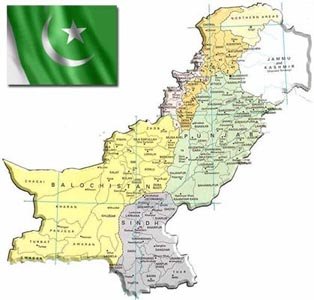

None Dare Call it a Rogue State

Wednesday, December 9th, 2009


Reader Isaac, points to an excellent analytical overview of Pakistan’s national nervous breakdown at Dawn.com, by Nadeem F. Paracha. It is a lengthy but stupendous post with some 200 + comments:

Little monsters

There is nothing new anymore about the suggestion that over a span of about 30 odd years, the Pakistani military and its establishmentarian allies in the intelligence agencies, the politicised clergy, conservative political parties and the media have, in the name of Islam and patriotism, given birth to a number of unrestrained demons which have now become full-fledged monsters threatening the very core of the state and society in Pakistan.

A widespread consensus across various academic and intellectual circles (both within and outside Pakistan), now states that violent entities such as the Taliban and assorted Islamist organisations involved in scores of anti-state, sectarian and related violence in the country are the pitfalls of policies and propaganda undertaken by the Pakistani state and its various intelligence agencies to supposedly safeguard Pakistan’s ‘strategic interests’ in the region and more superficially, Pakistan’s own ideological interest.

….The 1980s and the so-called anti-Soviet Afghan jihad is colored with deep nostalgic strokes by the Islamists and the military in Pakistan. Forgetting that the Afghans would have remained being nothing more than a defeated group of rag-tag militants without the millions of dollars worth of aid and weapons that the Americans provided, and Zia could not have survived even the first MRD movement in 1981 had it not been due to the unflinching support that he received from America and Saudi Arabia, Pakistani intelligence agencies and its Afghan and Arab militant allies were convinced that it was them alone who toppled the Soviet Union.

The above belief began looking more and more like a grave delusion by the time the Afghan mujahideen factions went to war against one another in the early 1990s and Pakistan was engulfed with serious sectarian and ethnic strife. But the post-1971 narrative that had now started to seep into the press and in many people’s minds, desperately attempted to drown out conflicting points of views about the Afghan war by once again blaming the usual suspects: democracy, secularism and India.

Many years and follies later, and in the midst of unprecedented violence being perpetrated in the name of Islam, Pakistanis today stand more confused and flabbergasted than ever before.

The seeds of the ideological schizophrenia that the 1956 proclamation of Pakistan being an ‘Islamic Republic’ sowed, have now grown into a chaotic and bloody tree that only bares delusions and denials as fruit.

Read the rest here.

There has been an ocean of ink spilled about the Obama administration’s Hamlet-like deliberation over a war strategy for Afghanistan and on the implications of agreeing to 30,000 rather than the 40,000 new troops for the “Afghan Surge”, as Gen. McChrystal had originally requested. The 10,000 difference in boots is not the salient strategic point, though it is the one that excites political partisans on the Right, Left and anti-war Far Left. It also distracts us from debating our fundamental strategic challenge.

The horns of our dilemma is that our long time “ally” whom we have hitched ourselves to in a grand war effort against revolutionary Islamist terrorism is not our ally at all, but a co-belligerent with our enemy. By every policy measure that matters that causes the United States – justifiably in my view – to take a tough stance against North Korea and Iran, applies in spades to Islamabad. Yet none dare call Pakistan a rogue state.

It is the elephant in our strategy room – if the elephant was a rabid and schizophrenic trained mastodon, still willing to perform simple tricks for a neverending stream of treats, even as it eyes its trainer and audience with a murderous kind of hatred. That Pakistan’s deeply corrupt elite can be “rented” to defer their ambitions, or to work at cross-purposes with Pakistan’s perceived  “interests”, is not a game-changing event. Instead, it sustains and ramps up the dysfunctional dynamic we find ourselves swimming against.

We play a bizarre game, our leaders being more concerned about Pakistan’s “stability” than Pakistan’s own generals and politicians who egg on, fund and train the very militant Islamist groups spreading death and chaos inside Pakistan and beyond its borders. Why can we not find Osama bin Laden or Mullah Omar ? Because they are high value clients of the ISI which is no more likely to give them up than the KGB was to hand over Kim Philby.  

Until America’s bipartisan foreign policy elite grapple with the fact – and it is an easily verifiable, empirical, fact – that Pakistan’s government is in chronic pursuit of policies that destabilize Central Asia, menace all of Pakistan’s neighbors, generate legions of terrorists and risk nuclear war with India, no solutions will present themselves.

A strategy will only have a chance of success when it is grounded in reality.

Dems Proposing Bad Covert Ops Oversight Rules to Make Leaking Easier

Saturday, July 11th, 2009

The left wing of the left wing of the Democratic Party has long been hostile to America’s intelligence community, a position that goes back to the Cold war and is rooted in political opposition to American foreign policy, particularly anticommunist policies. The latest feuding between Speaker Nancy Pelosi and the CIA are the distracting and meaningless atmospherics that cover the substantive manuvering that goes on behind closed doors over the direction of American foreign policy.

Democrats are now moving, through the use of proposed changes to the technical language on the statute governing executive branch notification of covert operations, to tie the hands of the president and move that power to every member of the two intelligence committees ( vastly enlarging the number of people who know the details of highly sensitive, ongoing, covert operations). This proposal was initiated by Chairman of the House Permanent Select Committee, Rep. Silvestre Reyes (D-TX), a close political ally of Speaker Pelosi: 
Sensitive Covert Action Notifications: Oversight Options for Congress

Legislation enacted in 1980 gave the executive branch authority to limit advance notification of especially sensitive covert actions to eight Members of Congress-the “Gang of Eight”-when the President determines that it is essential to limit prior notice in order to meet extraordinary circumstances affecting U.S. vital interests. In such cases, the executive branch is permitted by statute to limit notification to the chairmen and ranking minority members of the two congressional intelligence committees, the Speaker and minority leader of the House, and Senate majority and minority leaders, rather than to notify the full intelligence committees, as is required in cases involving covert actions determined to be less sensitive.In approving this new procedure in 1980, during the Iran hostage crisis, Congress said it intended to preserve operational secrecy in those “rare” cases involving especially sensitive covert actions while providing the President with advance consultation with the leaders in Congress and the leadership of the intelligence committees who have special expertise and responsibility in intelligence matters. The intent appeared to some to be to provide the President, on a short-term basis, a greater degree of operational security as long as sensitive operations were underway. In 1991, in a further elaboration of its intent following the Iran-Contra Affair, Congressional report language stated that limiting notification to the Gang of Eight should occur only in situations involving covert actions of such extraordinary sensitivity or risk to life that knowledge of such activity should be restricted to as few individuals as possible.In its mark-up of the FY2010 Intelligence Authorization Act, the House Permanent Select Committee on Intelligence (HPSCI) eliminated the Gang of Eight statutory provision, adopting instead a statutory requirement that each of the intelligence committees establish written procedures to govern such notifications. According to Committee report language, the adopted provision vests the authority to limit such briefings with the committees, rather than the President. In approving the provision, the Committee rejected an amendment that would have authorized the Committee Chairman and Ranking Member to decide whether to comply with a presidential request to limit access to certain intelligence information, including covert actions. The rejected provision stipulated that if the Chairman and Ranking Member of each of the intelligence committees were unable to agree on whether or how to limit such access, access would be limited if the President so requested. (Emphasis added by AT)

With Congress considering a possible change, this memorandum describes the statutory provision authorizing Gang of Eight notifications, reviews the legislative history of the provision, and examines both the impact of such notifications on congressional oversight as well as options that Congress might consider to possibly improve oversight.

[emphasis mine] 

The point behind this move is to deter the executive branch from using overt ops in the first place, which suits the objectives of members of Congress philosophically opposed to the IC and historic US foreign policy, but it does not actually *improve* Congressional oversight of the IC. The recent and future loud charges by House Democrats against the CIA are designed to justify this quiet power grab.

These proposed changes are designed to create a situation of arbitrary, conflict-ridden, uncertain yet expanded oversight of covert operations as the House and Senate Committees are likely to write different rules for their members and to disagree on breadth of notification. More people would have knowledge of very sensitive operations (we have to add staffers and key aides told by MoC against disclosure rules) with far less of the accountability for leaks by keeping notification to the “gang of eight”.

It will be much easier for any one member to kill any operation they disapprove of by leaking it with little fear of being caught and needing to make a political defense of their position on the covert operation. Even if a member of Congress is identified as having leaked information about a secret intelligence operation, the chances of being disciplined by the House or Senate are minimal unless the member is highly unpopular with their own party leaders or is enmeshed in another scandal and, thus, disposable. Forget being prosecuted, that will never happen.

No good intentions here, which is why this change was shrouded in committee obscurity by liberal Democratic House leaders rather than shouted by them at a high profile press conference.

Hat tip to AnalyticType.

CIA Clandestine Operatives: Horizontal Thinkers or Just in Need of Ritalin?

Friday, March 20th, 2009

Jeff Stein of Spy Talk had a fascinating interview with Dr. David Charney, a CIA psychiatrist specializing in treating professional spooks. The whole article is interesting but the following caught my eye:

….But for case officers at the tip of the CIA’s spear, he said, the problem tends to be A.D.D., Adult Attention Deficit Disorder
“They seem to be highly functional A.D.D.’s,” Charney said. “You might think a person with ADD can’t tie their shoelaces, but quite the opposite.” To them, “boredom equals death,” 
Charney says, not really joking. 

“They’re energetic, restless, people who have to physically keep moving. Lock them to a desk, and they can’t deal with it. They can’t stand to be bored…” 

But A.D.D. can be an asset, too.  “They have the ability to absorb things from 360 degrees,” Charney marvels. 

“Contrast that with people who are linear, like your book-keeper or accountant, who chug along in a channel and get things done by going from one thing to another. But A.D.D. minds tend to be very synthetic. They reach out and pull things out of the air, or through other persons who are not linked in any way. They see patterns that other people don’t see. They can gather together unusual elements and bring them together into a whole that is a brilliant synthesis of things that would be lost on other people.  

“They have a sensitivity to ambient thoughts going on that a good case officer needs to pick up, little nuances, little hues, little things said that let you know if the agent you’ve recruited is telling the truth, or which is partly the truth … which buttons to push to manage the person, how to absorb material and put it into a whole. And the good ones have that ability.”

This is classic horizontal thinking with an emphasis on connections, patterns and synthesis driven by an internal “restlessness” – the kind of persona seen in such disparate occupations as fighter pilots, inventors, physicists and artists. There has long been a comparative and to an extent correlative association of ADHD or “hyperactivity” with creativity, high levels of intelligence and depression though of course not everyone with ADHD is creative, intellectually gifted, depressed or working for an intelligence agency. The correlation though has also been noted in MRI brain scan studies of children so it would appear to have a physiological basis that might explain why the CIA needs to have its own psychiatrists for reasons beyond the stress generated by a career in intelligence work – self-selection bias in people who apply to become employees.

(Hat tip to….one of my twitteramigos….I can’t find the tweet, damn it!) 

Panetta as CIA Director

Wednesday, January 7th, 2009

I will have an op-ed up tomorrow at Pajamas Media on Leon Panetta’s nomination to be the Director of the CIA. For now here are some other views:

Lewsis Shepherd – Swap Panetta and Blair: A Modest Proposal

My puzzlement, though, is at the placement of Panetta and Blair in those two particular jobs. 

I believe a more effective arrangement would be to appoint Panetta as the DNI and Blair as head of CIA.  I wager to say that if those appointments had been announced at first, there would have been no “uproar” over Panetta’s role.

Here’s a quick cut at my own rationale:

  • The DNI was created to whip the intelligence community into shape and break down the insular, agency-focused stovepipes.  Having “the high-profile Panetta at CIA and the low-key Blair at DNI” (that’s a characterization by David Ignatius in an op-ed this morning) seems to fly in the face of that critical reform, and might actually retard the effort to have the “community” live up to that moniker.
  • The main argument which Panetta backers make for him is his general managerial excellence – presumably he’ll whip CIA into shape through budgetary wizardry and management practices, learned in his OMB days. But ODNI is supposed to be exercising community-wide budget authority, and the reform movement to get tight-fisted central control over individual agency budgets could be subverted, not helped, by putting a crafty budgeteer in place leading one agency.

Larry Johnson ( No Quarter)Inspired Choices for DNI and CIA? » and  More Reactions to Panetta

The ideal candidate is someone who is smart, who is not looking to feather his or her nest to reap economic benefits, and who understands that the President needs an honest broker. Look at the Clinton choices-Jim Woolsey, John Deutch, and George Tenet. Horrible choices and a terrible legacy. And George Bush did no better-George Tenet, Porter Goss, and Michael Hayden. Hayden is awful because he has perpetuated the militarization of the intelligence community. Goss played politics. And Tenet? Two words. SLAM DUNK! Enough said about that clown.

Josh Marshall ( TPM )Really a Mystery

Marshall quotes a retired military senior member of the IC:

“….I think there is a lot more here than is being said. I believe that Feinstein did not want someone like Panetta who has a large and independent power base and network. If you get a career guy they are a lot easier to isolate and move around. Panetta has been around for a long time and has his own network. I actually think that it is a good choice. He knows how intelligence needs to be presented to the President – that is the critical issue here.

…. We need a significant re-orientation away from tactical support by CIA and other National agencies and back to their primary mission – direct intelligence support to the President. The last 15 years have seen an explosion of tactical intelligence capability with the advent of UAVs (which DoD fought against for so long due to the fighter pilot mentality). National systems need to be re-oriented to national priorities and away from tactical or operational desires of the warfighter. “

More later.


Switch to our mobile site
