….We have approached this research paper as an initial net assessment of how social software interacts with government and security in the broadest sense.1 The analysis looks at both sides of what once might have been called a “blue-red” balance to investigate how social software is being used (or could be used) by not only the United States and its allies, but also by adversaries and other counterparties. We have considered how incorporation of social software into U.S. Government (USG) missions is likely to be affected by different agencies, layers of bureaucracy within agencies, and various laws, policies, rules, and regulations. Finally, we take a preliminary look at questions like: How should the Department of Defense (DOD) use social software in all aspects of day-to-day operations? How will the evolution of using social software by nations and other entities within the global political, social, cultural, and ideological ecosystem influence the use of it by DOD? How might DOD be affected if it does not adopt social software into operations?
Saw this a day or two ago. Just finished reading the intro. Read the rest here.
Being a wingnut after an election victory that eventually causes acute moral retardation? She sounded a whole lot like Mel Gibson’s father talking about “the Jews”.
As usual, Dave Schuler will co-host. We’ll be joined tonight by Raymond Pritchett, who blogs under the pseudonym Galrahn at Information Dissemination and the United States Naval Institute Blog. We’ll talk about the Somali pirates, the state of the U.S. Navy, and the Tea Party Protests.
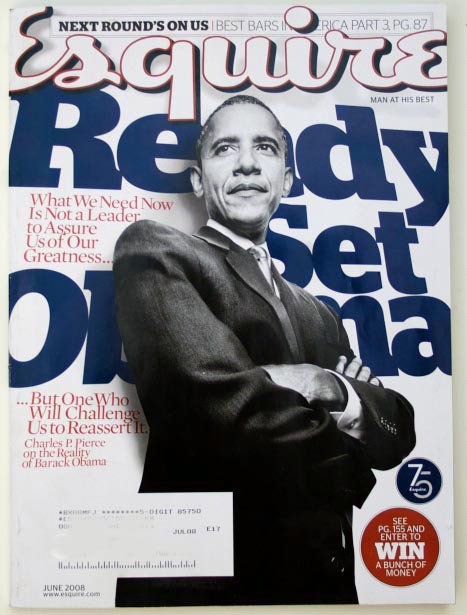
Tom Barnett has a muscular op-ed piece up in Esquire Magazine that is making some waves:
….When it came to selling that paradigm shift, Gates didn’t need to convince the military itself – the ascendant Army and Marine corps have suffered enough casualties to have learned it the hard way. And quite honestly, Gates needn’t worry about the defense industry’s willingness to follow the money, because Lockheed Martin and L-3 have been snatching up enough blue-chip companies to prove they can spot the Pentagon’s future funding spigots.
Turns out you can find Gates’s biggest antagonists in the halls of Congress, where the battle cry of “Jobs, jobs, jobs!” echoes the military’s growing embrace of funding for the manpower that’ll keep this counter-insurgency movement as successful as it’s become. So even amidst all this fighting and dying – neither of which is likely to slow down any time soon – the American military’s newest struggle seems to come down to one question: whose economic stabilization package matters more?
Tom’s 100 % correct. The folks pushing this, who include conservative Republican elder statesmen who know better, if they succeeded, would breathe new life into great power war ( our last round, WWII, cost 60 million dead) and give a huge edge to dictators who could produce a small arsenal of atomic bombs in secret.
….Then there is a third war being waged in Mexico, though because of its nature it is a bit more subdued. It does not get the same degree of international media attention generated by the running gun battles and grenade and RPG attacks. However, it is no less real, and in many ways it is more dangerous to innocent civilians (as well as foreign tourists and business travelers) than the pitched battles between the cartels and the Mexican government. This third war is the war being waged on the Mexican population by criminals who may or may not be involved with the cartels. Unlike the other battles, where cartel members or government forces are the primary targets and civilians are only killed as collateral damage, on this battlefront, civilians are squarely in the crosshairs.
There are many different shapes and sizes of criminal gangs in Mexico. While many of them are in some way related to the drug cartels, others have various types of connections to law enforcement – indeed, some criminal groups are composed of active and retired cops. These various types of criminal gangs target civilians in a number of ways, including, robbery, burglary, carjacking, extortion, fraud and counterfeiting. But of all the crimes committed by these gangs, perhaps the one that creates the most widespread psychological and emotional damage is kidnapping, which also is one of the most underreported crimes. There is no accurate figure for the number of kidnappings that occur in Mexico each year. All of the data regarding kidnapping is based on partial crime statistics and anecdotal accounts and, in the end, can produce only best-guess estimates. Despite this lack of hard data, however, there is little doubt – based even on the low end of these estimates – that Mexico has become the kidnapping capital of the world.
….Between these extremes there is a wide range of groups that fall somewhere in the middle. These are the groups that might target a bank vice president or branch manager rather than the bank’s CEO, or that might kidnap the owner of a restaurant or other small business rather than a wealthy industrialist. The presence of such a broad spectrum of kidnapping groups ensures that almost no segment of the population is immune from the kidnapping threat.
Colombia went through a similar cycle, opportunistic criminal gangs taking advantage of the accelerating civil war between the Colombian government, FARC and ELN in order to kidnap 25,000 + people per year. We can speculate that this state of affairs, where the civilian population was being chronically terrorized, was a precursor to the formation of the AUC Loyalist paramilitaries by the small businessmen and big landowner class, and promptly began clearing rural areas and small towns of rebels, rebel sympathizers, habitual criminals and family members of the same by savagely killing them off.
I will wager that Mexico is going to hit this phase in less than a year.
Zenpundit is a blog dedicated to exploring the intersections of foreign policy, history, military theory, national security,strategic thinking, futurism, cognition and a number of other esoteric pursuits.

 and Marine corps have suffered enough casualties to have learned it the hard way. And quite honestly, Gates needn’t worry about the defense industry’s willingness to follow the money, because Lockheed Martin and L-3 have been snatching up enough blue-chip companies to prove they can spot the Pentagon’s future funding spigots.



