zenpundit.com » 2011 » March

Archive for March, 2011

Currently Reading…

Monday, March 14th, 2011

Making an effort this week to finish up books I have picked up or been sent to me by publishers, PR folks and authors, so I can review them….and two books pulled from the ominous antilibrary.

 Here’s what is currently on my desk and nightstand:

Reading and taking notes:


Grand Strategies by Charles Hill
Narcos Over the Border
by Dr. Robert J. Bunker (Ed.)
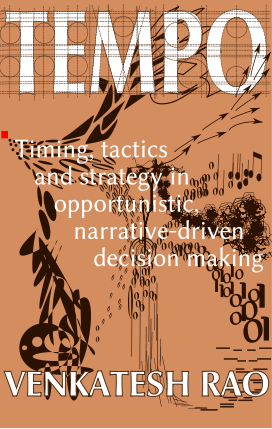
TEMPO
by Dr. Venkat Rao
Mind Wide Open
by Steven Johnson

This would be an interesting group of authors to put on a panel for a strategy-related question, such as – “How can we fix our AfPak policy?” – as you would get a high-level practitioner-policy wonk-cognition expert mix.

TEMPO is not yet available for sale, but Dr. Rao was kind enough to send me a PDF of his manuscript, which I am reading on my iPad along with another author’s manuscript and a screenplay, both of which are embargoed. I’m enjoying them all but reading most of them for review is slower going than just reading one for my own interest. I frequently end up taking detours because the authors bring up so many intriguing points. For example, Charles Hill has a section on Grand Strategies on Montaigne, the brilliant intellectual diplomat of the politically tumultuous French Renaissance and Father of the literary essay. Hill made a number of assertions, so I stopped, pulled a copy of The Essays ( which I have never read) off a shelf, flipped it open to a page, and started reading for and discovered that a) Hill was right and b) it will be a profitable use of my time to go back and read The Essays some day.

Next Up in the Queue:


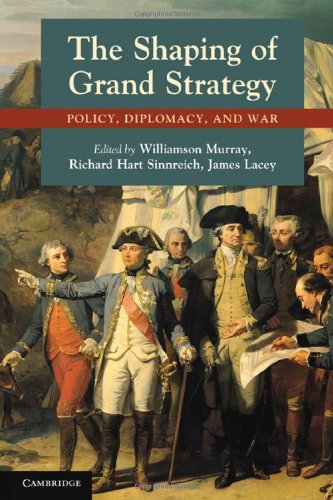
The Shaping of Grand Strategy: Policy, Diplomacy, and War by Drs. Williamson Murray, Richard Hart Sinnreich and James Lacey (Ed.)
Counterinsurgency by Dr. David Kilcullen

The first book I mentioned recently, the second is one I have had sitting unread for quite a while but I need to read for an article I started writing. Among practitioners and policy makers, Colonel Kilcullen is the George Kennan of COIN.

What are you reading?

The Oligarchs and Public Debt

Sunday, March 13th, 2011

Shlok hits it on the head:

The Rise of the Corporate State

In order to preserve the portfolios of bondholders, Michigan is ramrodding this legislation:

The new law would allow emergency managers to terminate labor contracts, strip local ordinances, hold millage elections, dissolve a government with the governor’s approval, and merge school districts.

It would allow managers to remove pension fund trustees or become a sole trustee if a pension fund is less than 80% funded. It allows managers to recommend that a local government file for Chapter 9 bankruptcy, but leaves the final decision to the governor.

State legislatures, the bush leagues of American politics, can often be bought up by a special interest for less than one million dollars in campaign contributions. Governors are slightly to moderately more expensive ( a good bit more expensive in large states). A fantastic ROI when it yields control of billions of tax dollars. Better than anything comparable in the private sector except, perhaps, the illegal drug trade.

Acquisition and divestmentment of public debt under what terms by municipalities, counties and local government entities are political decisions. The Republican governor of Michigan, Rick Snyder, has whored himself out to the oligarchy to thwart the ability of local, elected, governments from making smart and perfectly legal business decisions – as contracting parties in a bond market – regarding their public debt so that the taxpayers of Michigan can be farmed as long as possible and at the highest rates, for the benefit of the financial oligarchy. No risk for them but serfdom for you.

This is about as anti-democratic, pro-big government,  pro-high taxes and anti-free market as it gets and it is being promoted by a Republican. 

We need a new major political party if liberty and democracy are to have anyone to speak for them.

Systemic Curricular Choices Shape National Cognitive Traits

Thursday, March 10th, 2011

A brief point.

AFJ has a feature article by General Martin Dempsey on the need for the Army in it’s professional military education system to build future leaders who are critical thinkers:

Building Critical Thinkers

….The Army Leader Development Strategy identifies three critical leadership attributes for all Army leaders: character, presence and intellect. In addition to those three foundational attributes, we assert that strategic leaders must be inquisitive and open-minded. They must be able to think critically and be capable of developing creative solutions to complex problems. They must be historically minded; that is, they must be able to see and articulate issues in historical context. Possessed of a strong personal and professional ethic, strategic leaders must be able to navigate successfully in ethical “gray zones,” where absolutes may be elusive. Similarly, they must be comfortable with ambiguity and able to provide advice and make decisions with less, not more, information. While all leaders need these qualities, the complexity of problems will increase over the course of an officer’s career and require strategic leaders to develop greater sophistication of thought….

Read the rest here.

The nation is currently undergoing a debate about public education, of sorts. I say “of sorts” because the debate has largely been very dishonest on the part of proponents of certain kinds of “reforms” in which they hope to have a future financial interest, if radical changes can be legislatively imposed that will a) drastically lower labor costs and b) permit a “scalable” curriculum, to use the grammar of certain equity investor CEOs and lobbyists. The former does not concern this topic as much as the second, though the two will work in unison to create a profitable business model for a for-profit management company desiring to contract with local and state governments to run school systems.

“Scalability” builds upon Bush era NCLB legislation that emphasized standardized testing in basic math and reading skills, with punitive accountability measures for schools and districts failing to make “adequate yearly progress”. Due to the penalties and escalating standards, public schools have frequently narrowed their curriculums considerably, reducing instructional time for history, science, complex literature and the arts to put greater emphasis on basic skill drill instruction in just two subjects.

The net effect is that American public school students, roughly 88 % of all school children, spend a greater proportion of their day at concrete level cognitive activities than they did five or ten years ago and far less time on higher-level “critical thinking” like analysis or synthesis, making evaluative judgments, inquiry based learning or problem solving.

 “Scalability” means expanding on this dreary and unstimulating paradigm with digitally delivered, worksheet-like exercises to comprise the largest percentage of the instructional time for the largest number of children possible. It will be a low-cost, high-profit system of remedial education for would-be contractors, provided students are not able to “opt out”, except by leaving the public system entirely.

But only if their parents can afford it.

The US military relies upon the public schools to deliver the initial k-12 education of the overwhelming majority of their officer corps, to say nothing of the enlisted ranks. The soldiers, sailors, marines and airmen who went to Andover or similar private institutions before enlisting are very, very few. Today some public schools are excellent, some are failing and the rest are in-between. Most make an effort to challenge students of all ability levels, from those needing extra help to those in AP courses and gifted programs. There is systemic resiliency in a diversity of experiences.

What will be the effect on  the military leadership in the future if critical thought is methodically removed from public education by a nationally imposed, remedially oriented, uniform, “scalable” curriculum that is effectively free of science, history, literature and the arts? What kind of cognitive culture will we be creating primarily to financially benefit a small cadre of highly politically connected, billionaire-backed, would-be contractors?

Can inculcating critical thinking really be left entirely to universities and, in the case of the military, mid-career education?

What kind of thinkers will that system produce?

Better?

Or worse?

“What we think, we become” – Buddha

Wikistrat’s First Grand Strategy Competition

Tuesday, March 8th, 2011

A $10,000 prize to the winning team is not too shabby.

Grand Strategy Competition – Wikistrat

Wikistrat is gearing up for an exciting International Grand Strategy Competition.

Select teams representing leading academic institutions from around the world are invited to participate in the first ever wiki-based grand strategy competition. Managed by Dr. Thomas PM Barnett, this competition will provide participants with the opportunity to test their skills with global counterparts and network within that community. Participants can demonstrate their capacity for strategic thought to agencies, institutions and firms seeking to recruit up-and-coming analytic talent.

We are currently reviewing applications by groups representing top Universities and Think Tanks worldwide. There are still open spots available for this exciting event.

To nominate a team, or to see if you institute has been invited, contact us HERE.

Participation is free, and winner team will get a $10,000 prize.

Some of the issues we will cover in the Competition include (Download the full PDF OUTLINE:

1. Global Energy Security

2. Global Economic “Rebalancing” Process

3. Salafi Jihadist Terrorism 

4. Inevitable Sino-American Special Relationship

5. Southwest Asia Nuclear Proliferation

Some of the Scenarios explored will include:

1. Major Biological Terror Attack

2. “2.0 Revolutions” in Arab World

3. + Additional Surprise Shocks

Honor killings

Monday, March 7th, 2011

[ by Charles Cameron — cross-posted from ChicagoBoyz ]

*

I had occasion today to give myself a quick refresher course on honor killings, one form of which is already present in the Torah as of Leviticus 21.9:

And the daughter of any priest, if she profane herself by playing the whore, she profaneth her father: she shall be burnt with fire.

and found myself once again noting that there is a substantial swathe of regions of the world where honor killings are found, and that where it is found (including in immigrant communities from those parts of the world) the practice is not confined to any one religious group.

Hence this DoubleQuote:

I think it is appropriate to consider honor killing a form of religious violence when the claim is made by those who do the killing that they are acting in the name of their religion — but that it is also important to distinguish such acts committed in a cultural context in which they are practiced across religions from acts that are the exclusive province of one religious tradition.

There are examples of honor killings which are performed in the name of Islam, and/or advocated by Islamic scholars — and the same could no doubt be said of other religious traditions — but honor killing as a genre is fundamentally more cultural than religious.

Sources: Brandeis studyBBCSydney Morning Herald

The analytic point:

From my point of view as an analyst, it is important to note and compare both religious and cultural drivers — neither avoiding mention of the one out of “correctness” — nor overlooking the other for lack of comparative data.


Switch to our mobile site