[ by Charles Cameron — what’s true of hex maps is true of all mental models ]
.
There’s a certain let-your-hair-down quality to play.
It appears that one Tausendsassa Friedensreich Regentag Dunkelbunt Hundertwasser said or perhaps wrote, muttered, whispered, shouted, or simply thought out loud, “the straight line is a godless line” — at any rate, someone noticed and recorded the phrase, and now it’s scattered across the net and difficult to track to its source.
**
But we do love order, don’t we?
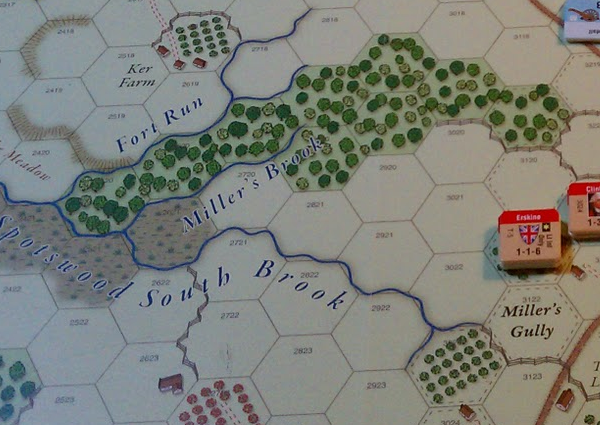
And so the rivers on our hexagonal maps all too easily follow the hexagons..
when they’d more realistically cross over them, following their own courses:
and note how easily even our efforts to bring natural variety to our hexagonal mappings conform more to hexagons than to variety.
A traditional Vietnamese Zen garden is very different from a Japanese Zen garden. Our Zen gardens, called hon non bo, are wild and exuberant, more playful than the formal Japanese gardens with their restrained patterns. Vietnamese Zen gardens are seriously unserious. For us, the whole world is contained in this peaceful place. All activities of life unfold in true peace in the garden: in one part, children will be playing, and in another part, some elderly men will be having a chess game; couples are walking; families are having picnics; animals are free to wander around. Beautiful trees are growing next to abundant grasses and flowers. There is water, and there are rock formations. All ecologies are represented in this one microecology without discrimination. It is a miniature, peaceful world. It is a beautiful living metaphor for what a new global ethic could bring.
**
Here is the wrestling of a tree with such angels as gravity, sun, wind and rain:
Here is the wild calligraphy of the Rio Mamoré across the forests of the Amazon basin:
….What shines through in the story is how truly weird and brittle Nixon had become in dealing with other human beings by the time he had reached the presidency. It is very difficult to reconcile the Richard Nixon of The Last of the President’s Men who had paralyzing anxiety attacks over working with – or even meeting- new staff with the Nixon who wrangled with lawyers, FBI agents and fellow Congressmen in investigating Alger Hiss, who forcefully debated Nikita Khrushchev or who remained steady when his limousine was attacked by a Communist mob in Venezuela. Perhaps Nixon grew worse with age or perhaps as president, Nixon finally had the means to keep unwanted people – and that would be nearly everyone – at bay. The portrait painted by Woodward of Richard Nixon is of a desperately lonely, misanthropic figure, inept at and pained by normal social relations to such an extent that he kept even his wife and children at a strange remove.
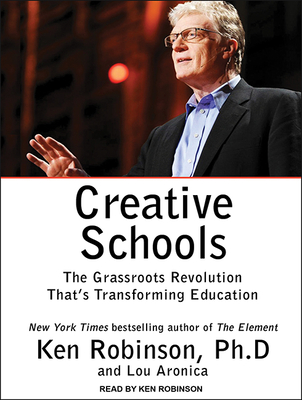
Some repeat names in this batch; I have long been a fan of creativity theorist Sir Ken Robinson and eminent historians Simon Sebag Montefiore (Russia, USSR) and Martin van Creveld (War, Strategy) and own many of their other titles. These were easy choices – I’m curious to see how Montefiore’s Romanovs stacks up against the book of the same title by the late Russia scholar, W. Bruce Lincoln.
Some of these titles are outside my normal genres and political dispositions, but if you don’t read things that you might disagree with you’ll never learn anything new. The Vitalis book on the influence of African-American scholars on the evolution of international relations came highly recommended to me by DanielNexon so I thought I’d give it a go. The Shanker book I thought was interesting because Al Shanker was not only instrumental in shaping the teaching profession and unionism, he was a “Cold War liberal” and tough anti-communist of the kind the often bloody trade-union wars between the democratic Left and the pro-Soviet Communists in mid-century produced.
[ by Charles Cameron — how Bill Benzon and Will Shakespeare lead me to Angus Wilson and Ruth Ozeki ]
.
Comments are now closed on my fairly recent post, Triangulation: Hoboken, Ramesses II, Ozymandias, so I can’t add there to the strand of the discussion that dealt with Shakespeare‘s language becoming barnacle-encrusted with time and our lack of knowledge, but today was something of a red-letter day for me, so I’ll start from there…
OSF is commissioning 36 playwrights and pairing them with dramaturgs to translate 39 plays attributed to Shakespeare into contemporary modern English between now and December 31, 2018. By seeking out a diverse set of playwrights (more than half writers of color and more than half women), we hope to bring fresh voices and perspectives to the rigorous work of translation. Each playwright is being asked to put the same pressure and rigor of language as Shakespeare did on his, keeping in mind meter, rhythm, metaphor, image, rhyme, rhetoric and emotional content. Our hope is to have 39 unique side-by-side companion translations of Shakespeare’s plays that are both performable and extremely useful reference texts for both classrooms and productions.
I’m not sure, but as we decolonialize and globalize culture (world music, eg), I suspect that English adds national streams from Barbados, Mumbai, Brooklyn, Adelaide, Louisiana and hiphop to its already rich mix, and that a Shakespeare using the spectrum of the language available in London today as keenly as Wm S used the spectrum available in London in his own day would appear no less neologistic and extraordinary than his older namesake. And then throw in an oligarch’ daughter speaking Russian, as Katherine speaks French in Henry V III.2, explaining as Katherine does, “I cannot speak your England”…
**
That’s “past is prologue”. Today, blog-friend Bill Benzon posted a brief squib that ties in with this — and here my advanture begins:
McWhorter has argued that Shakespeare’s language is so difficult that it should be “adjusted” into modern English for modern readers and theatre-goers. I’m sympathetic. Yesterday I started watching the Zeferelli movie version of Hamlet, with Mel Gibson in the title role and Glenn Close as Gertrude, and at times the language just lost me. Here’s a podcast where he discusses the subject with John Lynch.
And he explains something of what we are missing, in Hamlet for instance:
“Give thy thoughts no tongue, / Nor any unproportion’d thought his act.” First of all, thought to Shakespeare meant “plan,” not just mental activity. Thus “Give thy thoughts no tongue” meant “Don’t show your hand,” not just “button up.” “Nor any unproportion’d thought his act” – whose act? Who does the his refer to? To a modern listener this is the sort of opaque little splotch we must just let by, which in combination with the thousands of others over three hours leaves us yearning for a drink or a pillow. Actually, his could refer to things as well as men in earlier English. And act meant “execution”: the phrase meant “Do not act on your intentions until they are well proportioned, i.e. completely thought out,” not just “Don’t be a silly-billy.”
At the end, the famous “Neither a borrower or a lender be, / “For loan oft loses both itself and friend, / And borrowing dulls the edge of husbandry.” Did Shakespeare suppose that the reason one shouldn’t borrow is because it interferes with the raising of livestock? Actually, husbandry meant “thrift” at the time. It will say that in the footnotes of a Hamlet book; but at the theatre, you don’t have that with you.
**
All that led me to Kent Richmond, and I wanted to hear his voice, which gives Miranda in The Tempest these lines:
If through your magic, dearest father, you’ve
Made the wild waters roar, now let them rest.
The sky looks set to pour down stinking tar,
But then the sea, climbing the cheeks of heaven,
Dashes the fire out. O, I have suffered
With those that I saw suffer! A splendid vessel,
Which no doubt had some noble creature in her,
Dashed all to pieces! O, their cries knocked hard
Against my heart itself! Poor souls, they perished.
Had I the power of a god, I would
Have sunk the sea beneath the earth before
It could have swallowed up the good ship and
The souls that were her cargo.
Intelligible, yes, in a way that Shakepeare’s version may no longer be, and way better than a crude “version” for students of study notes — but not something that encourages me to see Richmond’s version of the play.
**
But wait — McWhorter’s title doesn’t mention Richmond, it merntions August Wilson, and his piece opens:
Reading the deserved critical huzzahs for the current production of August Wilson’s Joe Turner’s Come and Gone has me thinking about a bee always in my bonnet.
I don’t know Wilson, and I hold much of modern “poetry” in disrespect, but I go searching with little hope in my back pocket, and lo —
It is August in Pittsburgh, 1911. The sun falls out of heaven like a stone. The fires of the steel mill rage with a combined sense of industry and progress. Barges loaded with coal and iron ore trudge up the river to the mill towns that dot the Monongahela and return with fresh, hard, gleaming steel. The city flexes its muscles. Men throw countless bridges across the rivers, lay roads, and carve tunnels through the hills sprouting with houses.
From the deep and the near South, the sons and daughters of newly freed African slaves wander into the city. Isolated, cut off from memory, having forgotten the names of the gods and only guessing at their faces, they arrive dazed and stunned, their hearts kicking in their chest with a song worth singing. They arrive carrying Bibles and guitars, their pockets lined with dust and fresh hope, marked men and women seeking to scrape from the narrow, crooked cobbles and the fiery blasts of the coke furnace a way of bludgeoning and shaping the malleable parts of themselves into a new identity as free men of definite and sincere worth.
Foreigners in a strange land, they carry as part and parcel of their baggage a long line of separation and dispersement which informs their sensibilities and marks their conduct as they search for ways to reconnect, to reassemble, to give clear and luminous meaning to the song which is both a wail and a whelp of joy.
My God, the language! The warmth and depth of voice!
Since the virtues of the mountain are high and broad, the spiritual power to ride the clouds is always mastered from the mountains, and the marvelous ability to follow the wind is inevitably liberated from the mountains.
Here’s Ozeki, herself a zen priest — skip the beginning intros, start at around the 9’35” point, or at 11’17” where her actual reading from the book begins:
**
Again, such a voice! Two such voices in one day, new to me! Today I consider the world with fresh and thankful eyes.
Zenpundit is a blog dedicated to exploring the intersections of foreign policy, history, military theory, national security,strategic thinking, futurism, cognition and a number of other esoteric pursuits.