zenpundit.com » al qaida

Archive for the ‘al qaida’ Category

Osama and the flute of the devil

Wednesday, May 9th, 2012

[ by Charles Cameron — curiosity and classical music leads me on a merry chase from Bach and bin Laden via LastFM and Chorus Angelus to the heraldry of the Afridi, a Forsane Alizza video and the death of Superman ]
.
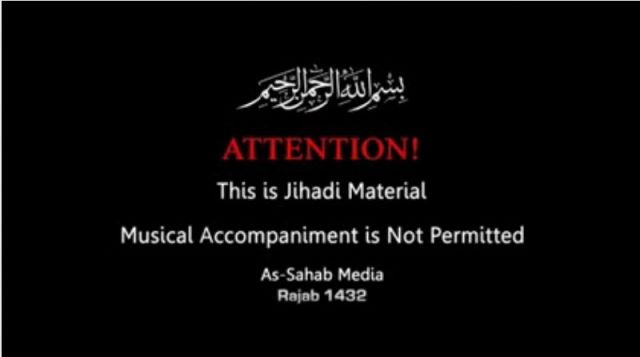
I’m grateful to JM Berger (@intelwire) and Chris Anzalone (@ibnsiqilli) for their encouragement and help with this post. JM provided the screengrab above, which shows a title card from a recent al-Zawahiri video — I suspect it may have been the one he mentioned here [text now mildly updated]:

Back in the day, when Adam Gadahn was just getting started as guru to Al Qaeda’s media operations, he released a couple of fairly slick videos designed to appeal to Western audiences by mimicking Western documentaries — up to and including the presence of a musical soundtrack.

It is therefore interesting to note that the latest release from As-Sahab (which Gadahn basically runs at this point) opens with a short disclaimer. “ATTENTION: We do not permit musical accompaniment with our productions.” One second later, a nasheed (religious song) fired up, but I guess that doesn’t count.

I’m guessing this is due to input from one of Gadahn’s Al Qaeda overseers. It’s interesting that these guys can rationalize away visits to strip clubs but they can’t handle a light orchestral score.

Chris tells me that Tehrik-i Taliban Pakistan has included similar notes in some of its videos. Indeed as JM put it in a tweet yesterday, “The odd thing is most of these guys would not be cool with music” — while as Chris noted, “Opposition to music with instruments, it should be said, isn’t unique to jihadis.”

So that’s the context: here’s the thing that interests me.

*

I can appreciate using the Old Master’s portrait of Christ that’s on the album cover to accompany a YouTube video of Bach’s B Minor Mass performed by Philippe Herreweghe (left), I can understand using a series of “nature scenes” for the Diego Fasolis performance (middle), I can even bite my lip and remain silent when someone lays a cute graphic of a wide-eyed young thing with a white rabbit (right) on top of Ton Koopman‘s version —

But my eyes simply bug out when I find someone has posted not one but four versions of Bach’s great Mass on YouTube, on not four but 42 separate videos, with bin Laden talking — silently, his lips moving — on each one.
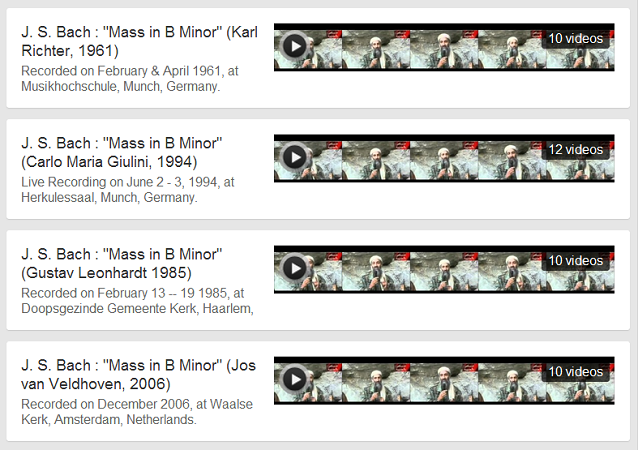
Amazingly enough, that’s what someone calling themselves SOMALIAAFGHANISTAN has done.

*

Look, people, this is strange.

Lawrence Wright quotes Osama bin Laden [link, at p 167] as saying “Music is the flute of the devil”.

I was doing some research for this post on Google, and ran across this:

Fair enough, I thought, and went to Last.FM, where I found this artist featured:

Bullet for my bloody valentine.

I kid you not.

*

See, this all started because I was looking to play myself some Bach organ music and ran across a video of Marie-Claire Alain performing Bach’s BWV 767, which is pretty terrific — Alain is a great organist, it’s a remarkable work, etc etc — and found myself staring at this:

I mean, that’s not from the Bach part of my life, that’s from the part of my life that tracks jihadist utterances and theology…

*

As my friend Chris Anzalone, whose posts on jihadist graphics I always read with interest, pointed out to me, this particular video has an extensive explanation of its heraldic significance attached:

Coat of Arms Of The Famous Afridi Pashtun Afghan Pathan Tribe

Flag of the Afghan Tribe – The Afridi.

Made from historical Texts & references.

Main Circle/Islam Symbolism:

White circle: Unified, unbroken & Islam 4 stars: 4 sons of Qis/Kesh/Qais Abdur Rashid Crown: Representation of Qis/Kesh/Qais Abdur Rashid & his Bani Israel lineage which is from the Ancient Royal House of Israel Lion with Flag: The Lion of Judah/The Bravery of the Afghans & the emblem of many Afghan Kingdoms Olive Tree: Descent from the House of Israel/Bani Israel Black Background: The world in troment, pain & ignorance, showing the messianic dedication of Afghans that spread Islam through kings and Sufis throughout India.

Tribal Symbolism on Coat of Arms:

Babe Khyber/Fort: Defending the borders of Afghanistan for centuries and masters of siege warfare. They successfully held the mountain passess of Afghanistan against the counter attack of many Indian Armies. Bolt Rifle: One of the first among Afghans to master the art of local Rifle and small arms making. They were famous for their sniper marksmen skills with the 3 not 3 or .303. Camel Caravan: Afridis are skilled businessmen. AK 47: Every Afridi child is given one before passing into adulthood.
Red Background: The Traditional color of the Afridis.

Reference Material:

* The Pathans 55O B.C.-A.D. 1957 By Sir Olaf Caroe
* History of the Afghans by Bernhard Dorn
* History of the Afghans Original by Neamet Ullah (active 1613-30) in the court of the Mughal emperor Jahangir (1569-1627)
* Tareekh i Farishta
* History of the Afghans edition X by Fut’h Khan in 1718
* The Works of the Pashto Academy Peshawar University and The Pashto Dept. Islamia College Peshawar through countless publications, both online and offline, and may writers including Dr. Yusafzai, much of which you can find at Khyber.org
* History of Kohat -Gazetteer of the Kohat District
* History of Peshawar -Gazetteer of the Peshawar District
* Afghan Poetry: Selections from the poems of Khush Hal Khan Khattak., Biddulph, C.D., Saeed Book Bank, Peshawar, 1983 (reprint of 1890 ed.)
* A Grammer Of The Pukhto, Pushto: Or Language Of The Afghans, Raverty, H.G., London, 1860
* Poems from the Diwan of Khushâl Khân Khattak, MacKenzie, D.N, London, Allen & Unwin, 1965
* Notes on the Tarikh-e-Murassa, Plowden, Maj.
* Settlement Report of Bannu, Thorburn

This text, in turn, comes from a Wikipedi page on the Afridi Tribal Flag posted by a user named Afghan Historian. Who has an enviable library.

Sadly enough, Wikipedia notes “The factual accuracy of this description is disputed” — although it’s not clear by whom.

*

There are interesting references in the scholarly footnotes to the Afridi flag to “Qais Abdur Rashid & his Bani Israel lineage which is from the Ancient Royal House of Israel” and to “the messianic dedication of Afghans that spread Islam through kings and Sufis throughout India”…

The idea that the Afghans are descendants of the “lost tribes” of Israel is explored in the Jewish Virtual Library here. As to the Afghans’ “messianic dedication” — I’m not clear exactly what the word messianic means in this context, but it’s an interesting word choice in any case.

*

When I first looked up this image on TinEye, my image-search engine of choice, the only version it reported was from the site of Forsane Alizza, a now-disbanded group in France whose leader claims to preach only non-violence:

Je vous préviens dès maintenant que je n’ai ni armes, ni explosifs, ni drogues, ni même quoi que ce soit d’illégal. Si cela venait à arriver, soyez intelligent réfléchissez et souvenez vous que depuis sa création et jusqu’à la fin, Forsane Alizza use et n’usera, que de sa liberté d’expression et son droit à manifester contre des lois injustes et illégal au vu des droits de l’homme. D’ailleurs toutes nos actions sont non violentes et elles le resteront.

while the security police claim to have found weapons in his house.
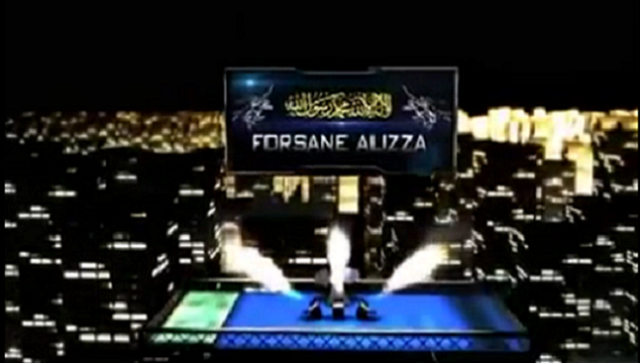
The Forsane Alizza video, from which the snazzy image directly above was taken, shows members practicing martial arts and painball games…

*

And how’s this for an illustration of Bach’s BWV 566, the C Major Toccata and Fugue — and the death of American pop culture?
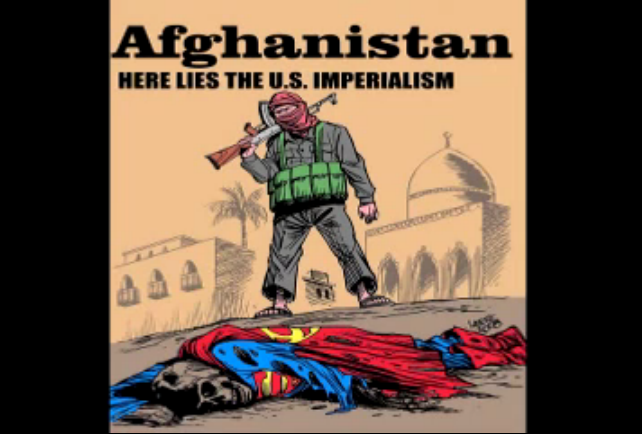
To sum up: what’s all this about? Why pair Bach with bin Laden, the Afridi, the demise of superman and all the rest?

*

I don’t want to leave you with a bad taste in your mouth.

If you want to see what it’s like to hear Gustav Leonhardt conducting the Kyrie from the B Minor Mass juxtaposed with images of bin Laden, you’ll find that here. You may, of course, prefer the Herreweghe version, with another variant of his album cover with the face of Christ as the accompanying visual…

And for Marie-Claire Alain performing Bach, sans the Afridi, may I recommend this hour long recital, which I just happened upon myself thanks to this post?
Key bin Laden para raises translation and other questions

Sunday, May 6th, 2012

[ by Charles Cameron — bin Laden on oath breaking, translation issues, failure of secular viewpoint to comprehend importance of Islam to jihadists, mild countering violent extremism issues, etc etc ]

.

This para from bin Laden writing as “Your brother, Zamray” to “Shaykh Mahmud, may God protect him” (ie Abu Abd al-Rahman Atiyyat Allah) on 21 October 2010 looks to me like an astounding windfall:

Perhaps you monitored the trial of brother Faysal Shahzad. In it he was asked about the oath that he took when he got American citizenship. And he responded by saying that he lied. You should know that it is not permissible in Islam to betray trust and break a covenant. Perhaps the brother was not aware of this. Please ask the brothers in Taliban Pakistan to explain this point to their members. In one of the pictures, brother Faysal Shahzad was with commander Mahsud; please find out if Mahsud knows that getting the American citizenship requires talking an oath to not harm America. This is a very important matter because we do not want al-Mujahidn to be accused of breaking a covenant.

*

This raises a whole number of issues for me. But first, let’s read another translation:

You have perhaps followed the media trial of brother Faisal Shahzad, may God release him, during which the brother was asked to explain his attack [against the United States] in view of having taken an oath [not to harm it] when he was awarded his American citizenship. He responded that he lied [when he took the oath]. It does not escape you [Shaykh `Atiyya] that [Shahzad’s lie] amounts to betrayal (ghadr) and does not fall under permissible lying to [evade] the enemy [during times of war]…please request from our Pakistani Taliban brothers to redress this matter…also draw their attention to the fact that brother Faisal Shahzad appeared in a photograph alongside Commander Mahsud. I would like to verify whether Mahsud knew that when a person acquires an American citizenship, this involves taking an oath, swearing not to harm America. If he is unaware of this matter, he should be informed of it. Unless this matter is addressed, its negative consequences are known to you. [We must therefore act swiftly] to remove the suspicion that jihadis violate their oath and engage in
ghadr.

That one is almost half as long again as the first, at 182 vs 122 words — and even with the bracketed words removed, runs to 156.

Both versions come from West Point’s CTC, the first from page 7 of SOCOM-2012-0000015 [link to single letter] in the folder of documents released [link opens .zip file], and the second, longer version from p. 36 of CTC’s accompanying report titled Letters from Abbottabad: Bin Ladin Sidelined? [link opens .pdf]

It seems to me that the second is far more informative than the first — essentially the first is a stepped down, pop version of the second, more easily reader-digested. All of which makes me wish I had ten additional years orthogonal to the time-stream in which to immerse myself in Arabic, but no dice.

Here’s the explanation, from page 10, footnote 3 of the CTC commentary:

The quality of the English translation provided to the CTC is not adequate throughout. When the translation was deemed inadequate, quotations cited in this report have either been amended or translated anew by Nelly Lahoud.

which leaves me wondering what a Nelly Lahoud translation of the entire batch would look like? — indeed, very much wishing I could read it — and who depends on the pop versions for their understanding of documents such as these? — myself all too often sadly included.

When in any case, as AP’s Matt Apuzzo tweeted (h/t Daveed G-R):

Drawing conclusions about Al Qaeda from these docs is like letting your ex-girlfriend go thru all your emails and choose 17 to release.

No complaints about the CTC from me, incidentally — their entire Harmony Program is nonpareil.

Okay, onward to the content (& contextual) issues.

*

The first has to do with the significance of religion to bin Laden, Al-Qaida, and the jihadist current more generally.

Leah Farrall gets succinctly to two readings that can be taken from this paragraph by western analysts:

It is very clear [that bin Laden was] trying to control acts of violence that fall outside of what he views as morally acceptable, but also that are counterproductive to Al Qaeda’s strategic agenda

There’s a public relations issue here for bin Ladin, in other words — but there’s also a moral issue from the standpoint of Islamic theology. Theology — not just any old ideology borrowed from Marx or whoever, but theology<, the logos pertaining to theos, and thus in Islamic terms transmitted and revealed Word of God, “an Arabic Qur’an that you might understand” (Q 12.2).

Note that the CTC analysis, unlike Leah’s, is focused entirely on the secular, PR side of things and fails to address the religious. Immediately before quoting the paragraph in question (the second version above) in their commentary, the authors write:

Bin Ladin was following Shahzad’s trial in the news and was disappointed by his performance, which he thought distorted the image of jihadis.

Immediately following it, we find:

This is not the only instance that Bin Ladin worried about jihadis violating their oaths. The letter addressed to Abu Basir in which he is asked to focus on operations inside the United States (instead of Yemen) alerted him to focus on Yemenis “who hold either visas or U.S. citizenships to carry out operations inside America as long as they did not take an oath not to harm America.” Underlying Bin Ladin’s thinking is a distinction between a visa (ishara), acquired citizenship — which involves taking an oath (`ahd) — and citizenship by birth — which does not entail taking an oath. From an Islamic law perspective, it is not lawful to violate one’s oath (naqd al-`ahd or naqd al-mithaq).

Bin Ladin wanted to promote the image that jihadis are disciplined and conform to Islamic Law. Faisal Shahzad’s boasting that he lied during his oath not to harm the United States, therefore, is antithetical to the image of jihadis that Bin Ladin wanted the world to see.

Bin Laden wants “to promote the image that jihadis are disciplined and conform to Islamic Law” — but doesn’t he also perhaps want them to “conform to Islamic Law” for the sake of Allah, who commanded that law, and in whose path they are fighting?

What is the Caliphate, if it makes Islamic law the law of the Islamic world, or of the world entire, and obedience to that law is a matter purely of appearances?

*

The second issue that this paragraph beings up for me is that of taqiyya or religiously sanctioned dissembling.

Shariah: The Threat to America (An Exercise in Competitive Analysis—Report of Team ‘B’ II) [link to .pdf], which I take to be the closest thing yet to an indepth, scholarly presentation of the Boykin-Gaffney-Woolsey-Yerushalmi view of Islam, makes a big deal of taqiyya, the Islamic doctrine that permits dissembling under certain circumstances, quoting the Qur’an (3:28):

Let not the believers take the disbelievers as friends instead of the believers, and whoever does that, will never be helped by Allah in any way, unless you indeed fear a danger from them. And Allah warns you against Himself, and to Allah is the final return.

and commenting:

it is imperative that those whose duty it is to protect the United States. from shariah grasp the centrality of taqiyya in the arsenal of its adherents. This is critical because the consequences of taqiyya extend to real world issues related, for example, to Muslim overtures for interfaith dialogue, peace and mutual tolerance – all of which must be viewed in the light of Islamic doctrine on lying.

Bin Laden, in his letter to Mahmud / ‘Atiyya, is not writing to a an audience of non-Muslims to deceive them, he is writing to a comrade in faith and in arms. And he clearly does not believe that either taqiyya or the necessities of war (which often involves deceit) give jihadists the option to lie under oath — even for purposes of jihad, even within the enemy camp. Taqiyya, in bin Laden’s mind, appears to be a far more restricted doctrine than Gaffney and cohort take it for…

As Juan Cole puts it, taqiyya is “not a license to just lie about anything at all, or to commit perfidy. It is just a permission to avoid dying uselessly because of sectarian prejudice.” Corrie ten Boom lying to the Gestapo to protect the Jews hiding in her house might be a somewhat similar situation — as an analogy worth considering, though, not an equation.

*

Then there’s the question of oaths. CTC not surprisingly is interested in exactly what oaths, pledges, promises or words of honor exactly are covered by this sort of restriction, noting:

Bin Ladin may also have had in mind the debate between Ayman al-Zawahiri and his former mentor, Dr. Fadl. The latter reneged on his jihadi views and among the accusations he made was that the 9/11 hijackers violated the terms of their visa, interpreting it as a form of aman (safe passage) from an Islamic law of war perspective. Thus, from Bin Ladin’s perspective, it is only when a Muslim takes an oath that he must be bound by it; a visa and citizenship by birth do not qualify as an oath.

It’s an intriguing question. Murad Batal Shishani @muradbatal tweeted yesterday:

#OBL against using ppl 2 attack US if they paid oath of allegiances 2 it. (what would some “experts” & “intel” say if u said that earlier?)

And what, I wonder, would Anwar al-Awlaki have said to Nidal Hasan if he’d read that particular paragraph?

Thinking about Nidal Hasan puts me in mind of at least two oaths that Hasan, an officer and a physician, presumably took — the US Army Oath of Commissioned Officers, which interestingly enough contains the phrasing:

I take this obligation freely, without any mental reservations or purpose of evasion … So help me God

— and the Hippocratic Oath required of all physicians.

What would their status be, I wonder? And would al-Balawi, the Jordanian physician and triple agent, have taken the Hippocratic Oath?

Come to that, would the Pledge of Allegiance bind those who — “under God” and with their hands on their hearts — recite it to refrain from attacking the United Sates?

I don’t know, but these are questions whose answers have significance in terms of what can and cannot be considered permitted or even obligatory within Islam — which is surely why both bin Laden and Dr. Fadl take the time to address the issue of visas. Such things are important to them.

They are what I’d call “mild” or “light touch” CVE issues — meaning issues to be aware of, not challenges to be shouted from rooftops or forced down anyone’s throat.

And I too would appreciate some answers, pointers, appropriate corrections, clarifications and further insight…

History Will Judge Only if We Ask the Right Questions

Wednesday, April 18th, 2012

Thomas Ricks of CNAS recently had a historically-minded post at his Best Defense blog at Foreign Policy.com:

What Tom would like to read in a history of the American war in Afghanistan 

I think I’ve mentioned that I can’t find a good operational history of the Afghan war so far that covers it from 2001 to the present. (I actually recently sat on the floor of a military library and basically went through everything in its stacks about Afghanistan that I hadn’t yet read.)

Here are some of the questions I would like to see answered:

–What was American force posture each year of the war? How and why did it change?

–Likewise, how did strategy change? What was the goal after al Qaeda was more or less pushed in Pakistan in 2001-02?

–Were some of the top American commanders more effective than others? Why?

–We did we have 10 of those top commanders in 10 years? That doesn’t make sense to me. 

–What was the effect of the war in Iraq on the conduct of the war in Afghanistan?

–What was the significance of the Pech Valley battles? Were they key or just an interesting sidelight?

–More broadly, what is the history of the fight in the east? How has it gone? What the most significant points in the campaign there?

–Likewise, why did we focus on the Helmand Valley so much? Wouldn’t it have been better to focus on Kandahar and then cutting off and isolating Oruzgan and troublesome parts of the Helmand area?

–When did we stop having troops on the ground in Pakistan? (I know we had them back in late 2001.) Speaking of that, why didn’t we use them as a blocking force when hundreds of al Qaeda fighters, including Osama bin Laden, were escaping into Pakistan in December 2001?

–Speaking of Pakistan, did it really turn against the American presence in Afghanistan in 2005? Why then? Did its rulers conclude that we were fatally distracted by Iraq, or was it some other reason? How did the Pakistani switch affect the war? Violence began to spike in late 2005, if I recall correctly — how direct was the connection?

–How does the war in the north fit into this?

–Why has Herat, the biggest city in the west, been so quiet? I am surprised because one would think that tensions between the U.S. and Iran would be reflected at least somewhat in the state of security in western Afghanistan? Is it not because Ismail Khan is such a stud, and has managed to maintain good relations with both the Revolutionary Guard and the CIA? That’s quite a feat. 

Ricks of course, is a prize winning journalist and author of best selling books on the war in Iraq, including Fiasco and he blogs primarily about military affairs, of which Ricks has a long professional interest and much experience.  Ricks today is a think tanker, which means his hat has changed from reporter to part analyst, part advocate of policy. That’s fine, my interest here are in his questions or rather in how Ricks has approached the subject.

First, while there probably ought to be a good “operational history” written about the Afghan War – there’s a boatload of dissertations waiting to be born – I think that in terms of history, this is the wrong level at which to begin asking questions. Too much like starting a story in the middle and recounting the action without the context of the plot, it skews the reader’s perception away from motivation and causation.

I am not knocking Tom Ricks. Some of his queries are important – “What was the effect of the war in Iraq on the conduct of the war in Afghanistan?”  – rises to the strategic level due to it’s impact and the light it sheds on national security decision making during the Bush II administration, which I suspect, will not look noble when it is revealed in detail because it almost never is, unless you are standing beside Abraham Lincoln as he signs the Emancipation Proclamation.  Stress, confusion, anger and human frailty are on display. If you don’t believe me, delve into primary sources for the Cuban Missile crisis sometime.  Or the transcripts of LBJ and NIxon. Exercise of power in the moment is uncertain and raw.

But most of the questions asked by Ricks were “operational” – interesting, somewhat important, but not fundamental. To understand the history of our times, different questions will have to be asked in regard to the Afghan War. Here are mine for the far off day when documents are declassified:

What was the evolution of the threat assessment posed by Islamist fundamentalism to American national security by the IC from the Iranian revolution in 1979 to September 11, 2001?  Who dissented from the consensus? What political objections or pressures shaped threat assessment?

What did American intelligence, military and political officials during the Clinton, Bush II and Obama administrations know of the relationship between the ISI and al Qaida and when did they know it?

What did American intelligence, military and political officials during the Clinton, Bush II and Obama administrations know of the relationship between Saudi intelligence, the House of Saud and al Qaida and when did they know it?

What did American intelligence, military and political officials during the Clinton, Bush II and Obama administrations know of the relationship between the Taliban and al Qaida and when did they know it?

In the aftermath of 9-11, how did Saudi leverage over global oil markets effect American strategic decision making?

In the aftermath of 9-11, how did Pakistani nuclear weapons effect American strategic decision making?

In the aftermath of 9-11, how did the “Iraq problem”  effect American strategic decision making?

In the aftermath of 9-11, how did nuclear terrorism threat assessments effect American strategic decision making?  Did intelligence reports correlate with or justify the policy steps taken?

Who made the call on tolerating Pakistani sanctuaries for al Qaida and the Taliban and why?

Was there a net assessment of the economic effects of a protracted war in Afghanistan or Iraq made and presented to the POTUS? If not, why not?

Why was a ten year war prosecuted with a peacetime military and a formal declaration of war eschewed?

How did the ideological convictions of political appointees in the Clinton, Bush II and Obama impact the collection and analysis of intelligence and execution of war policy?

Who made the call for tolerating – actually financially subsidizing – active Pakistani support for the Taliban’s insurgency against ISAF and the Government of Afghanistan and why?

What counterintelligence and counterterrorism threat assessments were made regarding domestic Muslim populations in the United States and Europe and how did these impact strategic decisions or policy?

What intelligence briefs or other influences caused the incoming Obama administration to radically shift positions on War on Terror policy taken during the 2008 campaign to harmonize with those of the Bush II administration?

What discussions took place at the NSC level regarding the establishment of a surveillance state in the “Homeland”, their effect on our political system and did any predate September 11, 2001 ?

What were the origins of the Bush administration’s  judicial no-man’s land policy regarding “illegal combatants” and “indefinite detention”, the recourse to torture but de facto prohibition on speedy war crimes trials or capital punishment?

The answers may be a bitter harvest.

Call and response?

Tuesday, April 3rd, 2012

[ by Charles Cameron — just curious, entirely speculative ]
.

Just a quick, speculative question here…

I’m wondering whether the movie-poster-style image of NYC above, which (as I understand it) appeared on the jihadi forums today, Monday 2nd April, might have no bearing on actual plots under way, but instead be an over-the-weekend response to Ambassador Crocker’s statement published Friday 30th March?

Ambassador Crocker says “next time it will not be New York or Washington, it will be another big Western city” which raises blood pressure elsewhere, and then the eye-catching image gets posted on the forums and boosted in the NY Daily News — and NYC can get in on the worry too…

Just a thought.

Al-Awlaki and the former and latter rains

Saturday, March 31st, 2012

[ by Charles Cameron — former and latter rain in OT, NT and hadith, also YouTube eulogy for Anwar al-Awlaki ]
.

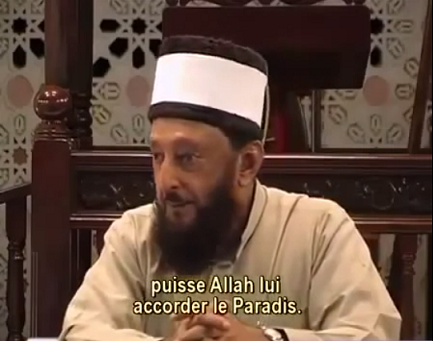
I’ve posted more than once about Sheikh Imran Nazar Hosein [eg: The United States of Islam and Iran or Afghanistan? The Black Flags of Khorasan]: today I saw a clip (screen-cap above) in which he eulogizes Anwar al-Awlaki.

What interests me in Sheikh Imran Hosein’s eulogy is that he references a hadith of the Prophet about the first and last showers of rain

*

So first, some background.

The imagery of “the first rain and the latter rain” dates back at least to the Torah.

In Deuteronomy 11.13-14, we read:

And it shall come to pass, if ye shall hearken diligently unto my commandments which I command you this day, to love the Lord your God, and to serve him with all your heart and with all your soul, that I will give you the rain of your land in his due season, the first rain and the latter rain, that thou mayest gather in thy corn, and thy wine, and thine oil.

That seems to be a fairly straight forward agricultural usage, although as I mentioned recently, scriptural exegesis under the PaRDeS system involves four levels of interpretation.

Joel 2.23 picks up the theme:

Be glad then, ye children of Zion, and rejoice in the LORD your God: for he hath given you the former rain moderately, and he will cause to come down for you the rain, the former rain, and the latter rain in the first month.

But this comes in a celebrated chapter which begins with the sounding of an apocalyptic trumpet and the declaration that “the day of the LORD cometh, for it is nigh at hand” – and which also contains the prophecy (verses 28-30):

I will pour out my spirit upon all flesh; and your sons and your daughters shall prophesy, your old men shall dream dreams, your young men shall see visions: And also upon the servants and upon the handmaids in those days will I pour out my spirit. And I will shew wonders in the heavens and in the earth, blood, and fire, and pillars of smoke…

By the time we reach the New Testament, the theme is clearly used (James 5.7) with a Christian eschatological implication:

Be patient therefore, brethren, unto the coming of the Lord. Behold, the husbandman waiteth for the precious fruit of the earth, and hath long patience for it, until he receive the early and latter rain

And indeed, the imagery of the Latter Rain as an outpouring of the Spirit to occur in the end times has given rise to a movement or series of Pentecostal movements going under the name of the Latter Rain, which have at times drawn the disapproval of apologetics scholars and even fellow Pentecostals.

*

Bearing that in mind, it is interesting to note the following hadith of the Prophet:

The Prophet, sallaallaahu `alaihi wa sallam, further said:

“The example of my Ummah is like that of rain. It is not known whether the initial part (of the rain) is good or the latter part.”

Ibn Taymiyyah, the medieval theologian whose previously somewhat obscure work strongly influenced ‘Abd al-Wahhab, and thus the modern Wahhabi current, commented on this hadith:

..what it means is that among those who come later there will be those who are similar to those who came before, and they will be so close that the one who tries to compare them will not know which is better, even though one of them is in fact better.

This is glad tidings for those who come later, that among them will be those who are close to those who came before them, as it says in another hadeeth: “The best of my ummah are the first and the last, and between them there will be some crookedness. Would that I could see my brethren.” They said, “Are we not your brethren?” He said, “You are my companions.” This shows that precedence was given to the Sahaabah, because they alone are his companions, which is a higher status than merely being brothers.”

*

In his tribute to “our brother Sheikh Anwar al-Awlaki” Sheikh Imran Hosein says “I don’t think there’s need to say more than one statement about Anwar al-Awlaki.” He then quotes the same hadith, repeating the first phrase for emphasis:

My Ummah is like the rain. My Ummah is like the rain: I do not know which shower is better, the first or the last.

And concludes:

Anwar Awlaki belongs to the last shower. That is his status, may Allah grant him Jannah.

— Jannah being the garden of Paradise.

*

But see for yourself — the video clip is only a minute long, and the hadith and commentary are provided below it on the YouTube site:


Switch to our mobile site