zenpundit.com » map

Archive for the ‘map’ Category

WikiLeaks: Counterpoint at the State Department?

Wednesday, December 8th, 2010

[ by Charles Cameron ]

[ note: all links are to youtube videos ]

The pianist Glenn Gould is celebrated for his ability to bring the different and at times positively oppositional voices in a fugue by Bach to our attention, so that we follow each one separately while hearing all at the same time as a single whole. What is less known is that he liked to sit at a table in a truck stop and listen to the different conversations at the other tables and booths, mentally braiding their pale or brightly colored threads of human together into an analogous tapestry — one voice harmonizing with or conflicting against another, here a new subject introduced, there an echo of an earlier idea heard in a fresh context, with the murmurings of waitresses punctuated by the kaching! of the cash register, the hydraulic hiss of a door closing — conversation as counterpoint.

Organizations and individual alike, we all have different and at times dissonant voices, and strive to bring them to some kind of resolution. The many stakeholders debating an issue in town halls, blogs or letters to the editor, the many drives within each one of us, idealistic, hopeful, defeated, paralytic, angry, evasive, sluggish, vengeful, curious, alert, defiant, all have voices, all constitute an experience of polyphony, a “music of many voices”, in point counter point.

One of my interests is to find a way to score these many fugues, these musics of meaning.

My DoubleQuotes, then, can be considered as two-part inventions, attempts to show the multiple tracking of the mind — whether of a single individual, as in this case, or of a group, a community, a world divided – so that something of the music begins to be visible, and some of the dissonances can move towards necessary resolution.

*
QUOwikileaks

*

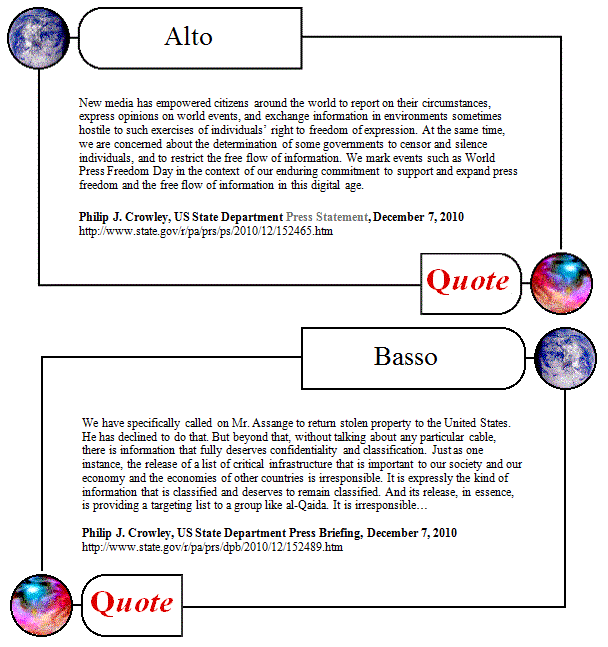
I believe there is unresolved irony between these two statements, made on the same day by Philip J Crowley, the US State Department’s Assistant Secretary, Bureau of Public Affairs – but each has its reasons, and there are arguments to be made for both transparency and opacity, diplomacy and publicity, secrets and revelations.

Between them lies the possibility I think of as a virtual music of ideas.

*

Bach published a series of two-part inventions, BWV 772–801, and wrote of them that he intended to offer them as an honest method

by which the amateurs of the keyboard – especially, however, those desirous of learning – are shown a clear way not only (1) to learn to play cleanly in two parts, but also, after further progress, (2) to handle three obligate parts correctly and well; and along with this not only to obtain good inventions (ideas) but to develop the same well; above all, however, to achieve a cantabile style in playing and at the same time acquire a strong foretaste of composition…

Later comes the Art of Fugue.
Battleground Yemen

Wednesday, January 27th, 2010

An informative post by Curzon at Coming Anarchy

Yemen: Geography Matters!

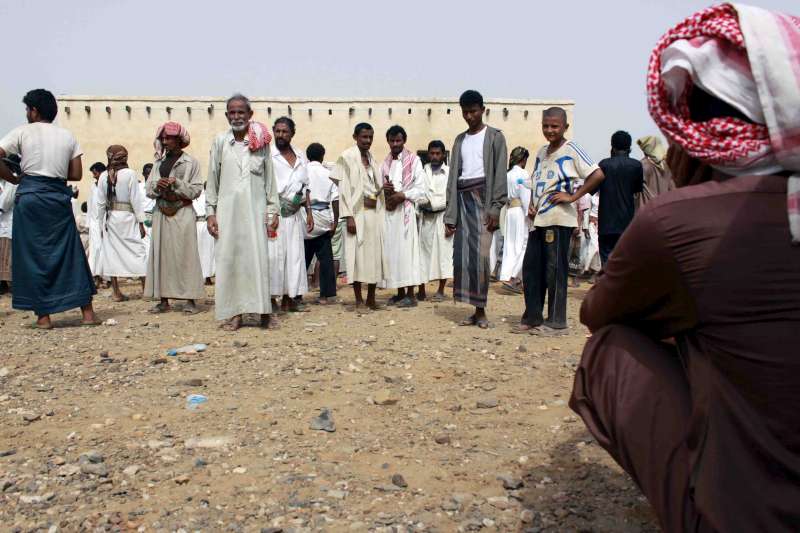
….The Saudis are guilty of aggravating and prolonging the conflict. Wary of taking too many losses on the ground and unable to do much by air and sea, they have recruited the Hashed, a local tribe, to fight against the Huthi, the tribe central to the Shia rebels. The Hashed have several incentives to continue fighting for as long as possible-they have a long-standing feud with the Huthi, and make a great deal of money from fighting for the Saudis, and may be coming up with schemes to prolong the conflict. According to a source of Al Jazeera:

If [the Hashed are] given the mission of taking a particular mountain, for example, they’ll call up the Huthi leaders and tell them: ‘We’re getting five million riyals to take the mountain. We’ll split it with you if you withdraw tonight and let us take over’… After the tribesmen take charge, they hand it over to the Saudis… The next day, the Huthi return and defeat the Saudis and retake the mountain… It’s been happening like this for weeks.

Pushtunistan Rising?

Tuesday, May 19th, 2009


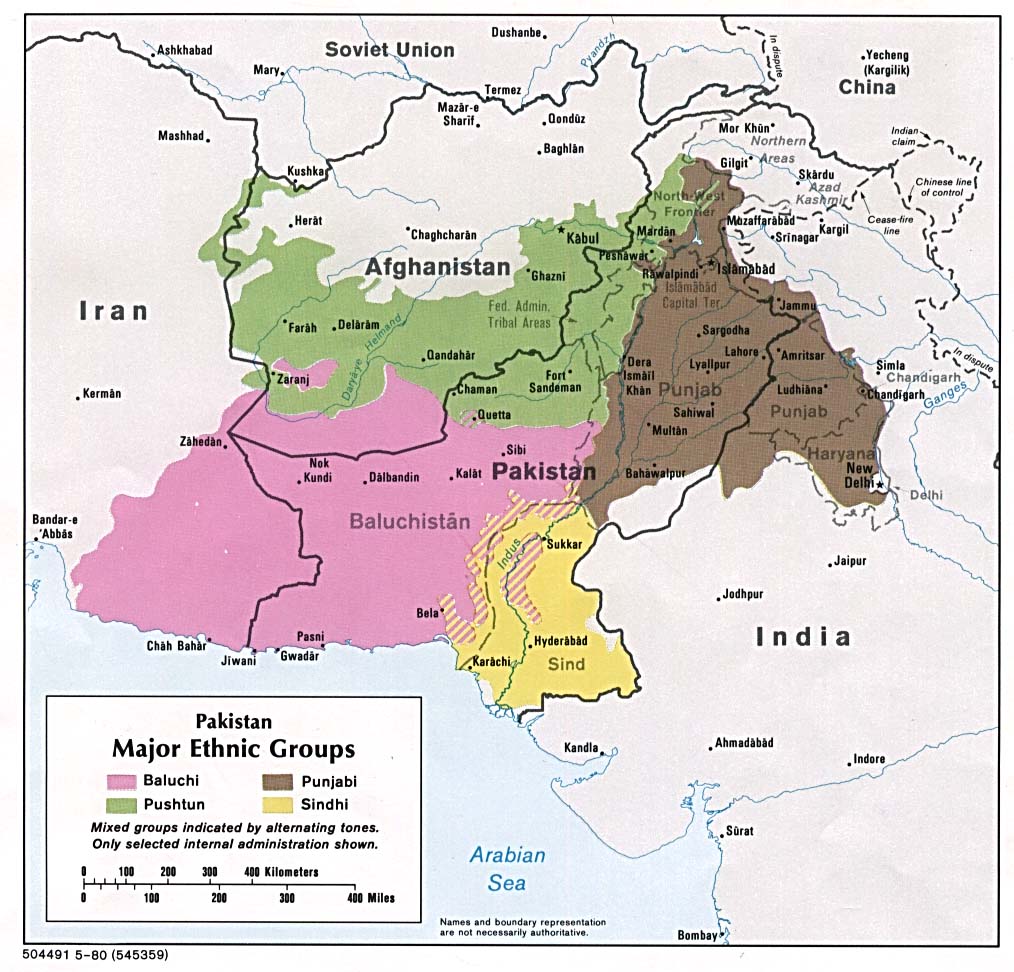
Steve Hynd at Newshoggers made the intriguing suggestion of an independent Pushtun state as a solution to the strategic problems of the Afghanistan-Pakistan region. The Pushtuns, like the Kurds are one of the world’s largest ethnic groups without a state:

The Punjabi and Sindh populations have always regarded the Pashtun as mountain wild men, bandits and reivers. The Pashtun have always regarded their neighbours as prey for their raids. It’s been that way since before the British arrived and shows no sign of abating anytime soon. The Pashtun were only forced at gunpoint into accepting the splitting of their traditional tribal ranges by the Durand Line in 1893. The situation is entirely analogous to the old border reiver clans of the English/Scottish border – another bunch of inter-related hill country wildmen who raided their neighbours irrespective of nationality for over 300 years before finally calming down and accepting imposed nationality. That territorial stramash was only solved by exiling the worst offenders to the American colonies.

….More, with the Pashtun in their own homeland free from outside overlords their reason for supporting the Taliban politically would disappear and the incompatibility between the Taliban’s extreme form of Islam and the Pashtun’s own traditional religious forms would put the two at odds more often than not.

Rather than insisting on fighting the Pashtun, the amswer in Af/Pak may lie in giving them back the independence they once had.

Read the rest here

Sort of like Ralph Peters famous re-drawing of the Mideast map a few years ago, Steve’s suggestion is provocative.The Kurds took decades to get beyond the Talabani-Barzani rivalry and seize the de facto independence that the U.S. invasion of Iraq made possible and “frontier agents”, whether British or from the ISI , have always succeeded in playing off one Pushtun group against another with only the Soviet invasion of Afghanistan in 1979 creating even semi-unity among Pushtuns – and then temporarily. This is the stuff of Pakistani nightmares but a latent sense of Pushtun nationalism lurks in the shadows, with Afghanistan being thought of as a “Greater Pushtunistan”.

Fragile States, Failed States and Spatial Anthropology

Sunday, April 27th, 2008

A pleasant downstream effect of having blogged for a while is that readers will send you interesting things from time to time. Like the following…

Check out: The Complex Terrain Laboratory

Snippets:

This is muddled and confusing. Human Terrain is “an emerging area of study”? No it’s not. Human “terrain” is a label, a metaphor, for guess what? History, geography, anthropology, sociology, psychology, communications, etc., etc. It’s “major goal is to create operational technologies”? No it’s not. That’s what mathematicians and engineers can deliver on multimillion dollar DoD contracts. Human terrain is, just in case anyone hasn’t read a newspaper or wireclip over the last few years, about people, what they think, their perceptions, their loyalties, the consequences they bear in wartime, the support they may or may not provide to insurgents, the physical, cultural, and informational spaces they create and occupy in  times of conflict and crisis. 

Freaking mad scientists. They’re everywhere. Technology is a tool, not the answer

and

What is really meant by ‘fragile’ states is ones that have acquired legal sovereignty but that have lost, or more probably never acquired, the effective powers attached to that status. There are more and more such states. How many depends on one’s definition of fragility. The United Kingdom’s government development agency, the Department for International Development (DFID), one of the smartest outfits in the business, estimates that 46 states, over one quarter of the world’s total, fall within its definition of ‘fragile states’. The population of these 46 states is over 870 million. DFID bases its definition of fragility on a state’s record in combating poverty. Others define fragility not by reference to poverty, but to security. Referring to the slightly different concept of ‘failure’, in the United States’ 2002 National Security Strategy, President Bush stated that America ‘is now more threatened by weak and failing states than…by conquering ones’.

Human Terrain Mapping” is one of those relatively new concepts I’ve been meaning to investigate and CTLab – run by a distinguished trio of scholars and authors Stephen D.K. Ellis, Michael A. Innes and Brian Glyn Williams – fits the bill. Definitely a “blogroll-worthy” site for all of the Intel/COIN/IO/DIME/Foreign Policy bloggers and of interest to the history blogosphere as well since two of the three gentlemen are professional historians.

I look forward to many enjoyable and profitable visits.

UPDATE:

Mike Innes has written in to explain that CTLabs is still expanding their team of SME’s as well as the working on the aesthetic and functionality aspects of the site itself, which will be formally “rolled out” with a higher level of interactivity and collaboration.

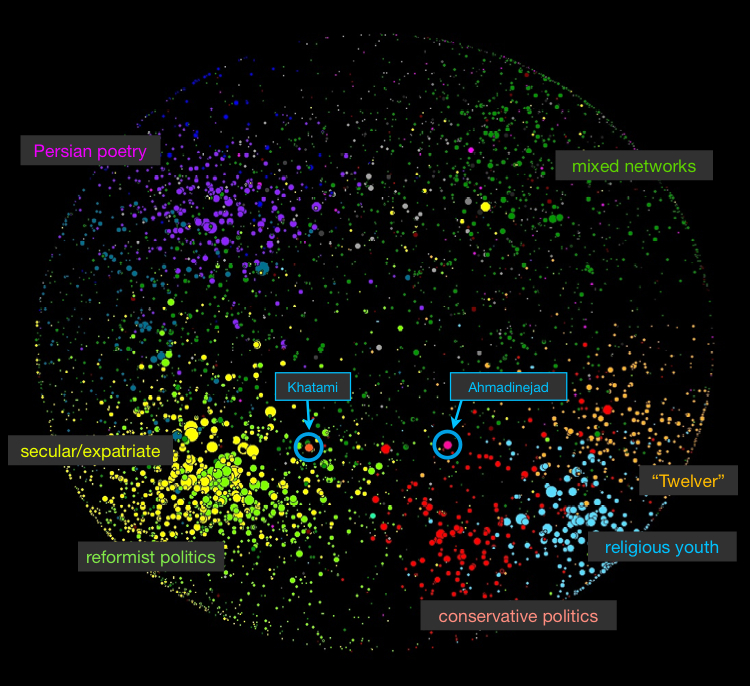
The Iranian Blogosphere Mapped

Tuesday, April 8th, 2008

Intelfusion posts on the Harvard study of the Persian blogosphere.  Found at Jeffreycarr on Twitter.

(I figured that so long as my margin was temporarily messed up on Explorer from Cameron’s text file – why not go with a big visual? In for a penny, in for a pound! Should be ok on Firefox etc.)


Switch to our mobile site