zenpundit.com » state failure

Archive for the ‘state failure’ Category

Guest Post: Mexico, Africa, Zarqawi?

Thursday, October 28th, 2010

Charles Cameron is the regular guest-blogger at Zenpundit, and has also posted at Small Wars Journal, All Things Counterterrorism, for the Chicago Boyz Afghanistan 2050 roundtable and elsewhere.  Charles read Theology at Christ Church, Oxford, under AE Harvey, and was at one time a Principal Researcher with Boston University’s Center for Millennial Studies and the Senior Analyst with the Arlington Institute:

Zen here – I think Charles has hit upon a primal psychological mechanism that comes into full flower as societies break down and war begins to shade into warlordism. We have seen this repeatedly in history from Tamerlane’s mounds of skulls to Khmer Rouge killing fields. Mad Barons, Dogmeat Generals, Friekorps kapteins and butchers long since forgotten by history- there’s a gravitational pull toward atavistic, symbolic, destruction as social norms erode under the corrosive effects of escalating violence.

Mexico, Africa, Zarqawi?

by Charles Cameron

I’ve been struck by a couple of passages I’ve run across in my reading recently that remind me of what I can only call “brutality with religious overtones”.
1. Mexico

There have been a fair number of articles about the various Mexican cartels, but the excerpt from Ed Vulliamy’s book, Amexica: War Along the Borderline that’s now online at Vanity Fair is the one that caught my eye yesterday.

Here’s Vulliamy’s account of a conversation with Dr. Hiram Muñoz of Tijuana:

He explained his work to me during the first of several visits I have made to his mortuary. “Each different mutilation leaves a message,” he said. “The mutilations have become a kind of folk tradition. If the tongue is cut out, it means the person talked too much—a snitch, or chupro. A man who has informed on the clan has his finger cut off and maybe put in his mouth.” This makes sense: a traitor to a narco-cartel is known as a dedo — a finger. “If you are castrated,” Muñoz continued, “you may have slept with or looked at the woman of another man in the business. Severed arms could mean that you stole from your consignment, severed legs that you tried to walk away from the cartel.”<¶>Earlier this year, 36-year-old Hugo Hernandez was abducted in Sonora; his body turned up a week later in Los Mochis, Sinaloa, but not in a single piece. His torso was in one location, his severed arms and legs (boxed) in another. The face had been cut off. It was found near city hall, sewn to a soccer ball.

That’s the brutality — I haven’t see the book itself yet, but I gather it also gets into the narco-corrida music and the “quasi-Catholic cult of Santíssima Muerte” — which brings me to the second part of my interest – the religious aspect.

As Vulliamy mentions, there’s the cult of Holy Death, to be sure, a sort of shadow or inverse of the Blessed Virgin — a Dark Mother for dark times, or perhaps a revival of the ancient Mictlancihuatl, lady of the Dead? — with her own liturgy, too:

Almighty God: in the name of the Father and of the Son and of the Holy Spirit, we ask for your permission to summon Saint Death. Welcome, White Sister: we find ourselves gathered here at this altar of the Romero Romero family and of each one of us, to offer you a Mass that we hope you will like…

Which brings us to the Robin-Hood-like bandit and folk-saint, Jesus Malverde, to whom prayers such as the following [FBI .pdf, see p. 20] are offered:

Lord Malverde, give your voluntary help to my people in the name of God. Defend me from justice and the jails of those powerful ones. Listen to my prayer and fill my heart with happiness. For you shall make me fortunate.

There are even miracles attributed to him:

Oh Malverde! The Vatican did not believe you to be holy and would not canonize you, but when they brought the Caterpillars to tear down your hood, you broke one machine and nobody could move you away, you broke another, leaving those who disrespect you speechless — and when the third one broke, they said, “Let Malverde’s chapel alone.”

Right beside the syncretistic quasi-Catholicism, there’s also a Protestant angle: La Familia is the group that, in Vulliamy’s words, “made its ‘coming out’ known in a famous episode: bowling five severed heads across the floor of a discotheque.” Time magazine reported on what it termed Mexico’s Evangelical Narcos:

Federal agents seized one copy of La Familia’s Bible in a raid last year. Quoted in local newspapers, the scripture paints an ideology that mixes Evangelical-style self-help with insurgent peasant slogans reminiscent of the Mexican Revolution. “I ask God for strength and he gives me challenges that make me strong; I ask him for wisdom and he gives me problems to resolve; I ask him for prosperity and he gives me brain and muscles to work,” Moreno writes, using terms that could be found in many Christian sermons preached from Mississippi to Brazil. But on the next page, there’s a switch to phrases strikingly similar to those coined by revolutionary Emiliano Zapata. “It is better to be a master of one peso than a slave of two; it is better to die fighting head on than on your knees and humiliated; it is better to be a living dog than a dead lion.”

As I commented on Zenpundit a while back,

What’s troubling here is that there is only one undoubtedly “evangelical” phrase in all those that Time quotes, and it is one of then ones said to resemble the aphorisms of Emilio Zapata. “It is better to be a living dog than a dead lion” is a pretty direct borrowing from Ecclesiastes 9.4 in the King James Version: “To him that is joined to all the living, there is hope: for a living dog is better than a dead lion.”

But that’s not actually all. I didn’t mention it at the time, but “I ask God for strength and he gives me challenges that make me strong; I ask him for wisdom and he gives me problems to resolve; I ask him for prosperity and he gives me brain and muscles to work” is almost word-for-word the same as a poem attributed to Islam — or Judaism for that matter. Indeed, it can be hard to tell who is borrowing from whom – but one final source for the La Familia bible is known – it’s the book Wild at Heart by John Eldredge, the pastor of a ministry in Colorado Springs, who must have been surprised at the uses to which his writings were being put.

In any case, as I said on Zenpundit: These people have a theology, and we should be studying it.
2. Africa

My thoughts turned to Africa when I read another paragraph recently, this one from Johann Hari’s review, The Valley of Taboos, of V.S. Naipaul’s new book, The Masque of Africa: Glimpses of African Belief:

I have stood in a blood-splattered house in Tanzania where an old woman had just been beaten to death for being a “witch” who cast spells on her neighbors. I have stood in battlefields in the Congo where the troops insist with absolute certainty they cannot be killed because they have carried out a magical spell that guarantees, if they are shot, they will turn briefly into a tree, then charge on unharmed. I have been cursed in Ethiopia by a witch-doctor with “impotence, obesity, and then leprosy” for asking insistently why he charged so much to “cure” his patients. (I’m still waiting for the leprosy.) Where do these beliefs come from? What do so many Africans get out of them? Can they be changed? These are questions that are asked in Africa all the time, but we are deaf to the conversation.

That sent me in search of some early military anthropology related to guerrilla warfare I’d come across in earlier readings.

James R Price and Paul Jureidini’s 1964 Witchcraft, Sorcery, Magic, and Other Psychological Phenomena and their Implications on Military and Paramilitary Operations in the Congo, and Roger D Hughes’s 1984 Emergency in Kenya: Kikuyu and the Mau Mau Insurrection are both of considerable interest here — but it is LSB Leakey, the world-class British archaeologist initiated as a boy into the Kikuyu ways, who has written the most provocative summary of the relationship between political and religious violence and ritual that I’m interested in tracking.

I’m quoting here from the chapter on “The Mau Mau Religion” in Maj. Hughes paper:

Leakey’s original hypothesis in Mau Mau and the Kikuyu: “Mau Mau was nothing more than a new expression of the old KCA … a political body that was banned … because it had become wholly subversive.” Furthermore, “Mau Mau was synomomous with the new body called the in school, Kenya African Union…” However, Leakey admits to a reversal of his original hypothesis in Defeating Mau Mau, and goes on to say, “Mau Mau, while to some extent synonymous with these political organizations, was in fact a religion and owed its success to this fact more than to anything else at all.”<¶>He then proceeds to attribute the origin of Mau Mau to an “ideology transfer,” wherein the religious beliefs of the Kikuyu transitioned from their ancient tribal religion to Euro-Christianity to Mau Mau. The first transition took place artificially, as the missionaries stripped away the traditional beliefs and supplanted them with “20th Century Europe’s concept of Christianity.” The second transition was more natural and evolutionary than the first. A reactionary hybrid of the old and the new developed, because the supplanted concepts would not hold up in their society. There were too many contradictions between the old and the new, mainly due to the 20th Century European “add-ons.”

Most of us have a pretty fixed view of what religion is, should be, or isn’t. Some of my readers no doubt hold to a evangelical Christian position, some are Catholic, some perhaps Buddhist, agnostic or atheist, and some perhaps Muslim. Each of us tends to take our own view of a particular religion as normative, but the reality is that the history of each of the great world religions contains sanctions for both peace-making and warfare — and human nature itself encompasses a range of behaviors that run from the kind of atavistic violence described above to the forgiving and compassionate impulse behind the Beatitudes…

And while economic pressures and political frustrations may be enough to power great struggles, when religious rituals, beliefs and feelings are added into the mix, it can quickly become even more lethal.
3. And Zarqawi?

All of which leaves me wondering how close the parallels are between the Mau Mau in LSB Leakey’s account, La Familia and the other Mexican cartels — and the brutalities of jihadists such as Abu Musab al-Zarqawi.

We Need Pitchforks and Torches

Monday, October 18th, 2010

Top Billing! The Daily CallerTheDC OP-ED: One nation, under fraud

Tomorrow, a bank-not your bank, but any bank-could evict you from your home. Even if you didn’t know the bank was foreclosing. Even if your mortgage is paid off. Even if you never had a mortgage to begin with. Even if the bank doesn’t hold a single piece of paper that you signed. And major banks not only know this fact, but have spent millions of dollars to defend it in court. Why? The answer starts with a Jacksonville homeowner named Patrick Jeffs.

In 2007, Deutsche Bank sued Jeffs for his home, which is a necessary step in the process of foreclosing on a homeowner in the state of Florida. Curiously, despite the fact that he immediately hired a law firm to defend his property when he found out about the foreclosure, neither Jeffs nor his attorneys were at the trial. That’s because it had already happened. Deutsche won by default because Jeffs wasn’t able to travel backwards in time to attend, even though the trial featured a signed affidavit indicating that he had been served his court summons.

The only problem with the summons Jeffs supposedly received was that it had been conjured out of thin air.

In June of this year, a Florida court ruled that the document was fraudulent, as the person who was supposed to make sure Jeffs was served had mysteriously received a copy of the summons before the lawsuit had even been filed, and Jeffs never even saw the copy. The text of that ruling was posted on various financial news websites in September. The lawyers that Jeffs hired to defend his case say that fraud such as this is not uncommon. It’s a widespread problem, and it has cost countless families their homes.

“I think it’s safe to say that 95% of the foreclosure cases in Florida involve some form of fraud on the part of the bank,” David Goldman of Apple Law Firm, PLLC told The Daily Caller in a phone interview. “It’s probably closer to 99%. And the court system is helping them get away with it.”

Banksters should not only be going to prison for intentionally destroying the lives of people who are not only NOT in default on their mortgages, but have never transacted a mortgage with the institutions attempting to illegally seize their property, these guys should be made to face an angry mob composed of the people they have defrauded.

This is the Oligarchy in action. They intend to hollow this country out and move their loot offshore just like in Russia during the 1990’s

Hat tip to Ron Beasley at Newshoggers.com who also found this gem:

COUNTERPOINT ADDENDUM:

Blogfriend Fabius Maximus, who often blogs on economics, would like to offer a counterpoint and i have agreed to let him put up his perspective here and some excerpts:

  A briefing about the foreclosure fraud crisis: its origin and impacts.
 

….The real estate title system in the US is complex, with safeguards protecting debtor and creditor (for details see this by Barry Ritholz).  It’s also local (rules and data are not national).  This system worked well for generations, but collapsed during the housing boom.

  • Loan volume accelerated, overloading key parts of the system.  Appraisals were often corrupted, as loan originators routed business to compliant appraisers.
  • Massive securitization of mortgages ignored these constraints, and erected a pseudosystem on top of it that cheaply processed the high volume of both mortgage origination and securitization (e.g., the Mortgage Electronic Registration System – a faux version of security clearing corporations; see this explanation).  Securitization also broke the link between the originator and end owner, with many ill consequences.  Among other things, this put great pressures on the servicing firms to lower costs.
  • During the RE boom years recoveries on foreclosed mortgages were zero or positive, which meant a low rate of foreclosures (homes could be sold by the owner rather than default on the mortgage).  So the institutional apparatus for foreclosures atrophied.

The the default bust hit.  Massive flow, overwhelming the system – which was never configured for such an event.  Remember, experts believed home prices never decline for more than a calendar year.  The worst scenario considered by the most experts was flat prices for 3 years.

The servicers (sometimes the bank originating the mortgage, often not) reacted by cutting corners (seethis Reuters story).  Finding the original loan documents was too expensive, so they used lost document procedures designed for extraordinary circumstances (e.g., fire, flood, or misfiling – see this at Calculated Risk and here at Reuters).  Some servicers hired law firms set up as foreclosure mills (e.g., FL), processing incredible numbers of foreclosures.  It’s not clear how, but clearly proper procedures were not followed.

As a result there have been many claims that foreclosure notices were never served (an easy way to make serving a high-margin profit center).  Employees have admitted under oath in depositions to fraudulently signing thousands of notarized affidavits.

This took place in the 23 states with judicial foreclosures only with the cooperation of Judges.  A few Judges protested when shown that their banks and their agents were committing perjury.  But the process ran smoothly for the past few years.  Now the wheels are coming off.  This might be difficult for the financial sector to conceal or mitigate, despite their de facto control over the government’s regulatory machinery.

A situation report about two headine issues – and a more serious problem

….Despite the oft-hysterical analysis, there is as yet insufficient public information about the scale of the problem.  Quite likely even key players (e.g., banks, their law firms, government regulators) lack the necessary information.  Deliberately, as all prefered to “see no evil.”  But now that the problem has erupted into the daylight, this leaves them ill-prepared to respond.  Especially as any adequate response will reveal their incompetence and malfeasance in creating the situation.  (Here are Wells Fargo’s procedures regarding creditors’ complaints; nothing available for their procedures to debtors’ complains).

Political factors, not legal or economic, probably will control the evolution of this crisis.  Hence the likelihood of modest impact to the national economy.  More than the small impact expected by Wall Street; less than expected by the increasingly rabid doomsters.   Over a longer horizon, a year or more, the economy will affect the political dynamics.  For a good analysis of the current political situation see “Congress Taking Cautious Approach with Foreclosure Mess“, American Banker, 14 October 2010.  The Republicans, as usual, eagerly support the banks – despite any violations of the law, despite the interests of the American people.

The economic impact looks to be minimal and probably less than the political effects.  New home sales are unaffected by this crisis.  The title problems are solvable.  New home finance is unaffected, and in any case are now 90% government financed or guaranteed.  Interruptions in sales of existing homes will have severe effects for those affected, but little for the overall economy (despite the massive attention to the volume of existing home sales, they have minimal economic effect).

What could change this forecast? A second dip would radically change the situation, as more links in US and global economy “unexpectedly” break.   As would a long foreclosure moratorium, although this is unlikely under the current political regime.  It could happen as part of system change, of such magnitude that the moratorium would be one of the lesser results.

Moral Decay and Civilizational Rebirth

Wednesday, October 13th, 2010


John Robb at Global Guerrillas:

JOURNAL: Moral Decay?

Moral decay is often cited as a reason for why empires/civilizations collapse.  The slow failure of the US mortgage market, the largest debt market in the world and the shining jewel of the US economic/financial system, is  a good example of moral decay at work.  

Why is this market failing?  It’s being gutted — from wholesale fraud and ruthless profiteering at the bank/servicer level to strategic defaults at the homeowner level — because a relatively efficient and effective moral system is being replaced by a burdensome and ineffective one.  What shift?  Our previous moral system featured trust, loyalty, reputation, responsibility, belief, fairness, etc.   While these features were sometimes in short supply, on the whole it provided us with an underlying and nearly costless structure to our social and economic interactions.  

Our new moral system is that of the dominant global marketplace.  This new system emphasizes transactional, short-term interactions rather than long-term relationships.  All interactions are intensely legalistic, as in: nothing is assumed except what is spelled out in the contract.  Goodness is solely based on transactional success and therefore anything goes, as long as you don’t get punished for it.  

In this moral system, every social and economic interaction becomes increasingly costly due to a need to contractually defend yourself against cheating, fraud, and theft.  Worse, when legalistic punishment is absent/lax, rampant looting and fraud occurs.  

Given the costs and dangers of moral decay, it’s not hard to see why it can cause a complex empire/civilization to collapse.

John is drawing on an intellectual tradition goes back to Gibbon, Ibn Khaldun, Polybius, Confucius and Mencius  but is mashing it up with modern concepts of social complexity, such as is found in Joseph Tainter’s The Collapse of Complex Societies. This makes sense; when members of a ruling class start to behave in an unethical manner, there is a natural reaction by morally vigilant members of the ruling class to check future abuses of power by dividing administrative authority, increasing regulations, creating new watchdogs and erecting balancing countermeasures. This is an increase in complexity that decreases rather than improves efficiency. Society pays more for the same level of effective governance and the creep of corruption will soon require another “re-set” and yet another no-value added  increase in complexity as the elite multiplies and seeks their own aggrandizement.
When Robert Wright wrote of “ossifying” societies unable to stand the test of barbarians in the ancient and medieval worlds, in Nonzero:The Logic of Human Destiny, he was explicit that a moral critique often correlated with economic/darwinian fitness. Rome, for example, eschewed adaptive technological innovation due to it’s heavy reliance on inexpensive slave labor. Oligarchic societies fit the moral decay theory because oligarchies focus on the zero sum game of extracting existing wealth from the population instead of creating and accumulating it. The extraction process requires an expensive social architecture of control and this is subject to diminishing returns. At a certain point, any system reaches the tipping point on adding the next level of non-productive complexity and begins to unravel.

What if the historical ratchet could be reversed?

What if the excess complexity could be systemically pared back along with the opportunities for corruption and self-aggrandizement that required countermeasures?

Societies are occasionally capable of moral and political renovation, cases in point, the Glorious Revolution and the Meiji Restoration, both of which tied ancient ideals to new political forms while sweeping away a corrupt elite. The American Revolution period, through the adoption of the US Constitution would be another example of societal transformation. These successes, which involve constitutional reforms and a rejuvenated political economy are essentially of a social contractual nature and are rare. Failure is more common, as with Sulla’s bloody reforms that temporarily got rid of bad actors and rebooted the Roman Republic to an older, more virtuous model but failed to address the fact that the structural flaws of the Republic itself were the problem, not the ambition of Marius.

Things are not yet too far gone. There is much that is wrong with the United States but we have a more resilient and coherent foundation upon which to reconstruct than did the Romans of the 1st century BC. 

America has many Mariuses but a better Republic.

Breaking the Legions

Tuesday, October 12th, 2010


Fabius Maximus makes waves with a powerful and controversial post:

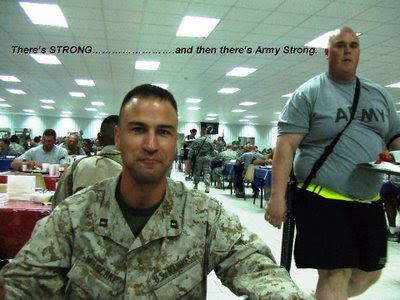
The Army and Marines are breaking, but we don’t care

Summary:  The US Army and Marines are breaking.  It’s a slow inexorable process resulting from fighting 4GWs around the world too long with too few men.  Neocon war-mongers, national leaders, and the general public remain blind to the evidence, so they can express surprise when the results eventually become too severe to ignore.  It took a decade to repair the damage after Vietnam, under more favorable social and economic circumstance than likely in early 21st century America.  Here we see another warning from a senior officer, and revisit data from the lastest Army report about this slow-growth crisis, another in a string of similar reports.  See the links at the end to other articles on this topic.

Update:  The “we” in the title refers (as always on this website) to the American people.  As the shown in previous posts and the report described here, the military quickly recognized these problems and strongly responded with measures to mitigate the damage.  Unfortunately, solutions lie beyond the state of the medical and social sciences.  Perhaps these ills result inexorably result from war.

Before the data, here’s a brief on the situation, from “Dark Hour“, Katherine McIntire Peters, Government Executive, 1 October 2010 (red emphasis added):

“This report literally whistles past the graveyard,” says retired Maj. Gen. Robert Scales, who served as commandant of the Army War College in 2000 and authored a number of books on military strategy and leadership. Suggesting that officers and NCOs or garrison staffs are responsible for a rising suicide rate because of lax leadership, as Scales reads the Army’s report, is “irresponsible,” he says. “This report basically allows people off the hook for the inability to resource these two wars with the people necessary to do it. It’s got nothing to do with politics. It’s got to do with the lack of perception of what land warfare does to a ground force,” he says. “Rarely have I ever read anything that so badly misses the mark. It’s trying to find little nooks and crannies in the Army’s management of these two wars and it absolutely misses the point of what’s been going on.”

Scales says too few troops have been carrying too heavy a burden for too long. “I don’t care if you’ve got an army of Robert E. Lees, the anecdotal evidence clearly shows the ground forces are going through an unprecedented realm of emotional stress,” he says.

Read the rest here.

ADDENDUM:

More at Wings Over Iraq:

Enough complaining, what do we actually do about suicides?

2.) Reduce the Separation Authority.  I think it’s time to admit that we face a mounting discipline problem which will require years to fix.  The instances of misdemeanor activity among soldiers has nearly doubled over the past five years.  In almost a third of those cases, no disciplinary action was taken whatsoever.
Certainly, company commanders need to take action to either rehabilitate or get rid of problem troops.  But this is easier said than done.  For example, the Army has seen a precipitous decline in the number of soldiers chaptered out for obesity in recent years.


Don’t think for a moment it’s because we have fewer obese soldiers, either.?

Part of the problem, in my humble opinion, lies with the fact that separation authority has been taken from battalion commanders and raised to the “special court-martial convening authority” (in many cases, a two-star general)–a full two levels of command. Why?  Because commanders were doing exactly what they should have been doing–kicking sub-par first-term soldiers out of the Army….

Narcos Copycat Global Guerrilla Playbook

Wednesday, September 8th, 2010

The Cartels are following in the footsteps of Nigerian delta rebels and Iraqi insurgents.

Though to my mind, this attack was more of a demonstration than a determination to bring the state to it’s knees. Narco business would be impinged by a true state collapse in Mexico which would activate the USG in unhelpful ways. The cartels would rather someone else mind the store while they get on with making money unhindered.

John’s next book should just be titled “See, I told you so”


Switch to our mobile site

