zenpundit.com » book

Archive for the ‘book’ Category

An English game

Wednesday, December 10th, 2014

[ by Charles Cameron — image and Sotheby’s cataloguing via Michael Robinson ]
.

Carl Jung told his friend Sir Laurens van der Post:

One of the most striking testimonies to the quality of the English spirit is the English love of sport and games in a classical sense and their genius for inventing games.

**

Exempli gratia:

Pooh Stcks

**

Catalog entry:

Shepard, E.H.
“FOR A LONG TIME THEY LOOKED AT THE RIVER BENEATH THEM…”

Illustration for Chapter six of ‘The House at Pooh Corner,’ the episode “in which Pooh invents a new game and Eeyore joins in.” The game is ‘Poohsticks.’ Sold this morning: £314,500 (US$492,727)

Shepard, Ernest H. (10 December 1879 – 24 March 1976)
188 by 148mm, original ink drawing,
signed “EHShepard” lower left.

**

For those who don’t know the game, here’s the relevant excerpt from The House at Pooh Corner:

Pooh had just come to the bridge; and not looking where he was going, he tripped over something, and the fir-cone jerked out of his paw into the river. ‘Bother,’ said Pooh, as it floated slowly under the bridge, and he went back to get another fir-cone which had a rhyme to it. But then he thought that he would just look at the river instead, because it was a peaceful sort of day, so he lay down and looked at it, and it slipped slowly away beneath him, and suddenly, there was his fir-cone slipping away too.

‘That’s funny,’ said Pooh. ‘I dropped it on the other side,’ said Pooh, ‘and it came out on this side! I wonder if it would do it again?’ And he went back for some more fir-cones. It did. It kept on doing it. Then he dropped two in at once, and leant over the bridge to see which of them would come out first; and one of them did; but as they were both the same size, he didn’t know if it was the one which he wanted to win, or the other one. So the next time he dropped one big one and one little one, and the big one came out first, which was what he had said it would do, and the little one came out last, which was what he had said it would do, so he had won twice … and when he went home for tea, he had won thirty-six and lost twenty-eight, which meant that he was – that he had – well, you take twenty-eight from thirty-six, and that’s what he was. Instead of the other way round.

And that was the beginning of the game called Poohsticks, which Pooh invented, and which he and his friends used to play on the edge of the Forest. But they played with sticks instead of fir-cones, because they were easier to mark.’


Brief brief: religion and story

Thursday, December 4th, 2014

[ by Charles Cameron — the bookstore in a church, spirituality in the movies, and the church in a mosque ]
.

Selexyz Dominicanen bookstore 602

**

There’s a recent post in the New Statesman titled The books of revelations: why are novelists turning back to religion?.

It seems to me that’s a difficult topic to prove or disprove, since it depends on which novelists you read before debating it, and perhaps even what your criteria for excellence in writing might be. I read very few novels these days, and tend to confine myself to those whose language, sentence by sentence, gives me joy to equal that of a topic I enjoy. John Fowles did that for me, John Le Carré, and most recently Ann Patchett with Bel Canto.

Are they turning back to religion? If they are, I haven’t noticed.

But then the novel isn’t where I go for story in any case, and if I suspect there’s a better medium to check in on, film would be my next choice up — and yes, Tarkovsky‘s The Sacrifice, even his Nostalghia — not to mention his Andrei Roublev — definitely yes. Kurosawa? Not so much: in his films it’s more a case of “all human life is there”.

**

This quote, from Adrei Tarkovsky’s Cinema of Spirituality, may be helpful:

In the entire history of cinema there has never been a director, who has made such a dramatic stand for the human spirit as did Andrei Tarkovsky. Today, when cinema seems to have drowned in a sea of glamorized triviality, when human relationships on screen have been reduced to sexual intrigue or sloppy sentimentality, and baseness rules the day – this man appears as a lone warrior standing in the midst of this cinematic catastrophe, holding up the banner for human spirituality.

What puts this director in a class all his own and catapults his films onto a height inaccessible to other filmmakers? It is, first and foremost, his uncompromising stance that man is a SPIRITUAL being. This may appear to be self-evident to some, and yet it is just on this very point that 99% of cinema fails. Man’s spirituality is quickly and conveniently pushed aside in favor of other more “exciting” topics: man’s sexuality, man’s psychology, sociology and so on. In today’s cinema, if spirituality is dealt with at all, it is never treated as the foundation of our existence, but is there as an appendage, something the characters concern themselves with in their spare time. In other words, while in other films spirituality may be PART of the plot, in Tarkovsky’s films it IS the plot; it permeates the very fabric of his films. It can be said that his films vibrate with his own spirituality. As he himself states, in all of his films the main characters undergo a SPIRITUAL crisis.

**

Whether sticking a stylish set of bookshelves and other trimmings in a beautiful old church should have won the Lensvelt de Architect prize in 2007 to the designers who added the bookshelves to an already stunning edifice is an interesting question. Is the beauty theirs, or borrowed? Have they incorporated the old church into “their” bookshop?

I think, too, of the Mezquita in Cordoba, with a cathedral dropped into the heart of it:

Mezquita_de_Córdoba aerial view

His Catholic Majesty King Charles V of Castile and Aragon said of this:

They have taken something unique in all the world and destroyed it to build something you can find in any city.

**

Is there an aesthetic principle we might consider here?

The Japanese haiku master Basho was once approached by his pupil Kikaku, who showed him this verse:

Dragonfly
I remove the wings
A pea pod!

Quickly Basho wrote in response and mild correction:

A pea pod
I place wings on it
A dragonfly!

Poetry, in Basho’s view, should lift us from the lesser to the greater, not bring the greater down to a lesser level. It’s an interesting concept, and one with wide potential application beyond the sphere of the arts.

**

Or — let’s cut the architects, Merkx+Girod, some slack, because the bookstore is indeed quite stunning! I love bookstores, yes, and I love cathedrals.

Is the whole thing, perhaps, a DoubleQuote in stone and stories?

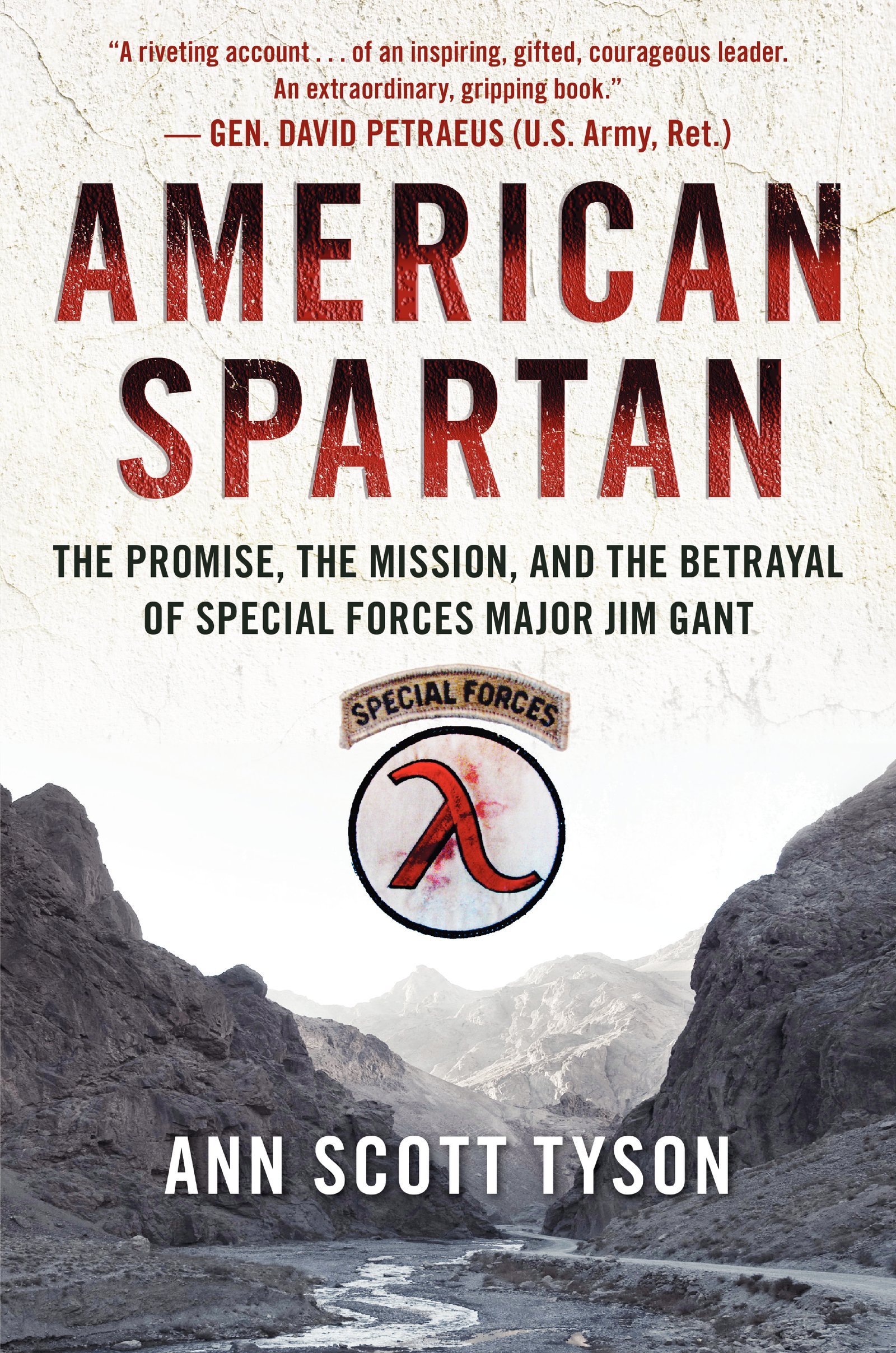
New Book: American Spartan by Ann Scott Tyson

Tuesday, March 11th, 2014

[by Mark Safranski, a.k.a. “zen“]

American Spartan: The Promise, the Mission, and the Betrayal of Special Forces Major Jim Gant by Ann Scott Tyson 

Was just sent a review copy of American Spartan courtesy of Callie at  Oettinger & Associates which tells the story of Major Jim Gant, the special forces officer and AfPak hand who pushed hard for a controversial strategy in Afghanistan based on arming and training loyalist paramilitaries out of Afghan tribesmen ( or whatever localist network would suffice when tribal identity was weak or absent). I am looking forward to reading this book for a number of reasons.

Long time readers may recall Gant coming to wider attention with his paper, One Tribe at a Time with an assist from noted author Steven Pressfield, where he called for a campaign strategy against the Taliban from “the bottom up” using “the tribes” because the current top down strategy of killing insurgents while building a strong, centralized, state would never work – the war would just drag on indefinitely until the US grew tired and quit Afghanistan ( as is happening….now). Gant, who forged a tight relationship with Afghan tribal leader  Noor Azfal ,won some fans with his paper in very high places, including SECDEF Robert Gates and Generals Stanley McChrystal and David Petraeus who gave him some cover to implement his ideas but he also faced formidable resistance and criticism. Academic experts were particularly incensed by Gant’s broad-brush use of “tribes” to cover a wide array of local networks and Afghan identities and that “tribes” were a term modern anthropology held in deep disdain ( RAND’s David Ronfeldt pointed out that while these networks are not historical tribes they are certainly “tribal” in terms of behavior patterns) while the government of Mohammed Karzai and its American boosters were bitterly hostile to any strategy that might arm locals outside Kabul’s direct control.

  It was also a risky strategy. Loyalist paramilitaries are often very effective in a military sense – as happened in Colombia when the government tolerated and encouraged private militias to make war on FARC and the ELN and badly mauled the Communist insurgents – but they are inherently unreliable politically. Paramilitaries can also  “go off the reservation” – this also happened in Colombia – and commit atrocities or become criminal enterprises or engage in warlordism and have to be reined in by the government. All of these were particular risks in the context of Afghanistan where warlordism and drug trafficking had been particularly acute problems even under Taliban rule. On the other hand, warlordism and drug trafficking has hardly been unknown in the ANA regular units and national police and is hardly the province only of irregulars.

Another reason I am interested in this book is the subtitle’s accusation of “betrayal” which I infer comes out of the long institutional cultural and chain of command clashes of bureaucratic politics between Big Army and Special Forces and Special Operations Forces communities. The long history in the big picture is that many general purpose force commanders do not know how to use these troops to best strategic effect and sometimes resent the autonomy with which they operate ( a resentment returned and repaid  at times with a lack of consultation and ignoring of local priorities in operational planning).

The author, Ann Scott Tyson is a long-time and experienced war reporter who embedded extensively with US troops in Afghanistan and Iraq. She is also married to her subject which should make for some interesting analysis when I review the book.

Adding to the Bookpile

Sunday, February 9th, 2014

[by Mark Safranski, a.k.a. “zen“]
  

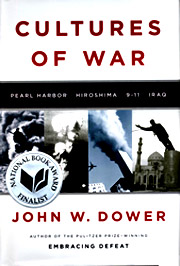
Cultures of War: Pearl Harbor / Hiroshima / 9-11 / Iraq by John Dower 

Berlin Diary: The Journal of a Foreign Correspondent, 1934-1941 by William Shirer

Moral Combat: Good and Evil in World War II by Michael Burleigh 

Picked up a few more books for the antilibrary.

Dower is best known for his prizewinning Embracing Defeat: Japan in the Wake of World War II, which unfortunately, I have never read.  Berlin Diaries I have previously skimmed through for research purposes but I did not own a copy. Shirer’s The Rise and Fall of the Third Reich: A History of Nazi Germany was an immensely bestselling book which nearly everyone interested in WWII reads at some point in time. I would put in a good word for Shirer’s lesser known The Collapse of the Third Republic: An Inquiry into the Fall of France in 1940 . It was a very readable introduction to the deep political schisms of France during the interwar and Vichy years which ( as I am not focused on French history) later made reading Ian Ousby’s Occupation: The Ordeal of France 1940-1944 more profitable.

I am a fan of the vigorous prose of British historian Michael Burleigh, having previously reviewed  Blood and Rage: A Cultural History of Terrorism here and can give a strong recommendation for his The Third Reich: A New History.  Burleigh here is tackling moral choices in war and also conflict at what Colonel John Boyd termed “the moral level of war” in a scenario containing the greatest moral extremes in human history, the Second World War.

The more I try to read, the further behind I fall!

Book Review: Hitlerland by Andrew Nagorski

Sunday, February 2nd, 2014

[by Mark Safranski, a.k.a. “zen“]

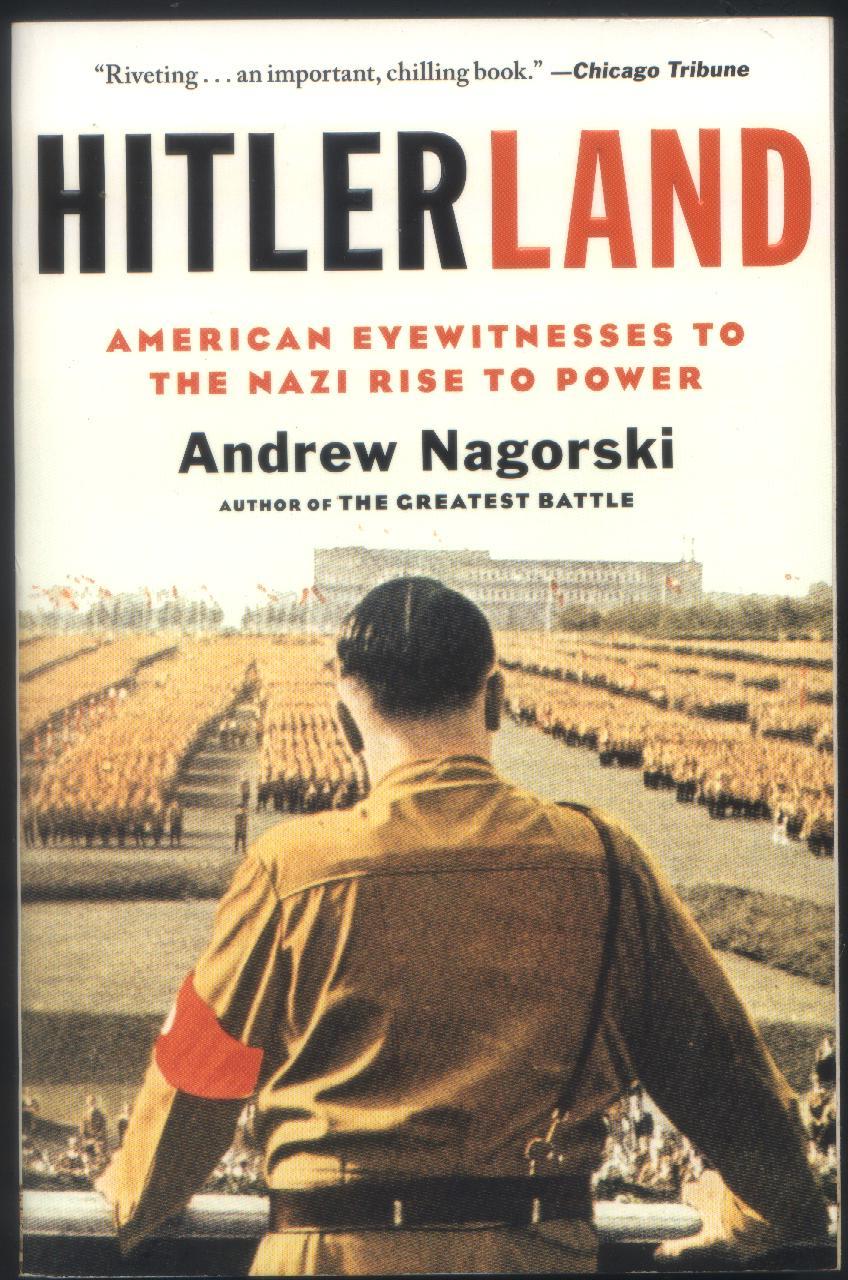
Hitlerland by Andrew Nagorski 

Recent cyber problems here at ZP (as well as work commitments) have left me with an enormous backlog of book-related posts and reviews with which to wade through this month, including re-starting the aborted “friends of zenpundit.com who wrote books” posts.  Here is the first of what hopefully should be many posts to help readers add to their antilibrary:
.
I recently picked up Hitlerland: American Eyewitnesses to the Nazi Rise to Power by journalist Andrew Nagorski and found it to be an enjoyable read. Nagorski is telling the tale of Americans in Germany, predominantly journalists and diplomats, who witnessed the death of the Weimar Republic  at the hands of the Nazis and the subsequent construction of the totalitarian Third Reich under the messianic leadership of Adolf Hitler. It is, to be sure, a cautionary tale that is well-known at a superficial level where “Munich” – the 1938 diplomatic agreement where British and French leaders surrendered Czechoslovakia to Hitler’s aggressive designs – is a shorthand today for ill-considered appeasement of dictatorial regimes.

.

That said, the deep reluctance of American officials and the public back home to acknowledge intellectually the nature of Nazi Germany and the threat it represented at the time, to the frustration of reporters like William Shirer, is less familiar and too often acknowledged only sheepishly – perhaps because the same “see no evil” pattern was replicated in regard to Stalin’s Russia until well after WWII ended. Indeed, one of the book’s more pathetic figures, Martha Dodd,  the irresponsible party-girl daughter of the American ambassador, transitioned seamlessly from being an enthusiastic useful idiot for Nazism to a slavishly loyal Stalinist and lifelong Soviet agent. A phenomena that mirrored that of many young German men who in the latter years of the Weimar Republic found themselves shifting between Communist fighting groups and membership in the Nazi SA without any democratic or liberal waystation in between.

Some thoughts about Hitlerland in no particular order:

  • Nagorski, like most journalists, is an excellent writer and more skilled at weaving a story than are most historians. Hitlerland is extremely “readable” for the general layman who is the target audience of the author.
  • .
  • If you are well read enough on the subject of the Third Reich to be familiar with Nagorski’s major primary sources you will not see much that is original here as the same texts have been relied upon very heavily by many other writers and historians of the Nazi period. I learned only a few details or anecdotes that were new to me. What Nagorski did that is new is to bring together the stories of the Americans in Germany into one book for a synthesis and explained it smoothly and concisely.
  • .
  • One of the more famous of the primary sources, Dr. Ernst “Putzi” Hanfstaengl, who wrote a memoir about Hitler and was a very early (if minor) member of the Nazi Party leadership, a P.R. mentor and court jester of sorts to Adolf Hitler, is given close scrutiny. Nagorski brings out the more sinister and machiavellian side of Hanfstaengl, whose ability to charm and play the clown and his influential Harvard connections helped him escape any kind of punishment for his numerous contributions toward Hitler’s regime.
  • .
  • The inescapability of street level Nazi brutality, the crude and fanatical anti-semitism and the increasing enthusiasm of the German people, even relative anti-Nazi Germans, for accepting the regime’s propaganda claims with credulity after years of being submerged in them is an excellent feature of Hitlerland. Propaganda does damage simply by crowding out truth, even when it is not believed.

.
Recommended.


Switch to our mobile site