zenpundit.com » anthropology

Archive for the ‘anthropology’ Category

Techno-Mahdi?

Saturday, August 4th, 2012

[ by Charles Cameron — of no practical importance, yet curious indeed, Mahdism, Pakistani history, shamanism, magic, the Kwakiutl / Tlingit, religion ]
.
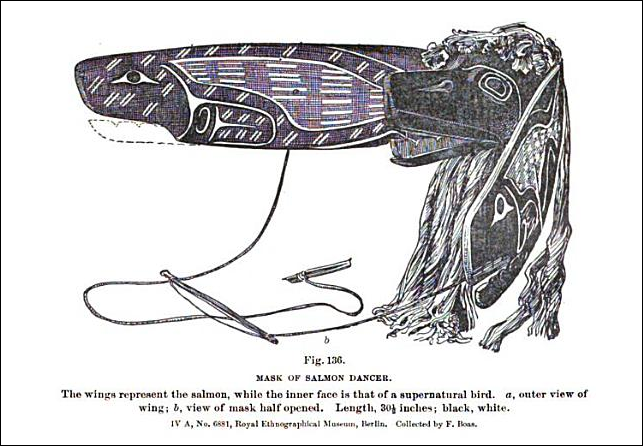
Kwakiutl Salmon Dancer's mask

.

I really don’t have much to say about this, but I’d like to note it as one more instance of Mahdism cropping up in unlikely places. And a h/t to Scott McWilliams @macengr for pointing me to the story. I can’t entirely vouch for its accuracy since I don’t have easy access to 1970s Pakistani newspapers, but I’ve seen allusions to the same story dating back a couple of years

When the Pakistani army and bureaucratic establishment realized that Mujib-ur-Rehman’s Awami League and Zulfiqar Ali Bhutto’s PPP were attracting people—with no other party able to draw even 5000 to its rallies—they imported Zohra Fona, a woman from Indonesia, pregnant with Imam Mehdi. She had visited several Islamic countries, it was propagated, where rulers had offered prayers in her Imamat [i.e. she led the prayers even if a woman is not supposed to do that].

Many Muslim intellectuals and scholars claimed through their writings and lectures that the time for Imam Mehdi’s appearance had arrived. A new Islamic world was about to emerge. During this period the Islamic parties, including Jamat-e-Islami, perpetrated violence. Members started attacking liberal and progressive professors, doctors, writers, journalists as well as their houses. They also burned many libraries and collections of books.

Zohra Fona claimed that the child in her womb recited Azaan [call for prayers] and could lead the prayers. Ulema like Maulana Okarvi and Ehtesham Ul Haque went to see Zohra Fona and listened to Azan with ears close to lady’s womb. Prayer events were arranged for her in open places as well as in the larger mosques, and the Ulema [religious scholars] were praying behind her. She would stretch her legs towards Kaaba [Mecca], directing her womb toward the pulpit. Suddenly Azaan would start coming from her womb or from another private part. The Ulema were so shameless that they were offering prayers while focusing their eyes on her private parts.

Back then the left was very organized so it was difficult to explain this farce. Finally the Pakistan Medical Association and doctors at Jinnah Hospital, Karachi decided to unearth the drama. Several lady gynecologists were asked to help; they knew that this kind of thing could not happen. But Zohra Fona was very clever. Whenever doctors were pursuing her to take a medical examination she avoided with help from the Pakistani security forces. But one day, when she was unable to escape, the doctors of Jinnah hospital, Karachi conducted an examination. The doctors recovered a small tape recorder from her womb.

Does the bit about the tape-recorder in the womb sound a bit far-fetched? Here’s another version, this one from The [International] News:

Zohra Fona, a blessed Indonesian woman, arrived in Pakistan just ahead its first general elections. She was said to be expecting a child who would be Imam Mehdi. She had visited several Islamic countries where, and it was propagated, that rulers had offered prayers in her imamat. Many ulema began to claim that the time for Imam Mehdi’s coming had arrived.

Zohra Fona claimed that the child recited Azaan. Reputed ulema like Maulana Okarvi and Ehteshamul Haque met Zohra Fona and listened to the Azaan with ears close to the lady’s stomach. She began to draw huge crowds to mosques and parks where she led prayers. Our reputed ulema would join the prayers.

Woe betide this country! Some leftist and agnostics at Karachi’s Jinnah Hospital decided to put the legend to scientific test. It was revealed that the holy woman was not even pregnant with an Azan-reciting messiah but had a recording device tied to her body. She immediately left for Indonesia once the farce was exposed.

That sounds more plausible.

**

A word of caution here.

Just as theater and film sometimes deploy “deux ex machina” interventions to immerse their audiences more deeply into their created micro-worlds, so have shamanic performances.

I’ve written about this before in an email to a religious scholars’ list, and in these days when even self-plagiarism is disdained, I am going to repeat here what I wrote then, with very minor changes:

It’s my recollection that [Tlingit / Kwakiutl winter ceremonials] were both entertainment for the long winter nights and “schooling” for the young, and I have a vivid recall of reading somewhere a shaman’s admission to an anthro of the exact nature of the dramatic means by which the shaman’s capacity to defeat death was demonstrated.

I read this in the early eighties, but searching on the web I’ve found something that comes close — Clellan Stearns Ford’s record of Charles James Nowell’s memories in _Smoke from their fires: the life of a Kwakiutl chief_. Around p 120, there are two stories, the first about a girl who “turned the wrong way” during a dance, the second about a girl who is put in a box and burned. In both cases, the nature of the trickery is described but in the version I read all those years ago, the two stories were one — the girl who was put in a box in the fire pit and “burned to death” escapes through a false bottom to the box along a tunnel into the adjoining room, and her voice then issues as if from her ashes, via a kelp tube that goes from the tunnel to the adjoining room where she’s now standing.

She describes her descent into the sea realm, where she is chastened and eventually granted a boon to return to the tribe. A canoe sets out to fetch her, but by the time the audience sees it set out, she’s already secured by rope to the far side of the boat, and at a suitable distance is hauled aboard and brought back to shore, alive.

A child seeing this would be mightily predisposed to believing the shaman had healing powers, and by the time the ruse was revealed, that underpinning of faith is already in place.

In the Nowell version, even the adults, who “know” the deception involved, are deceived: “The fire burned and the box burned, and she was still singing inside, and then the box go up in flames, and they can see her burning there in her blue blanket, and all her relatives just cry and cry. Although they know it is not real, it looks so real they can’t help it. It was all a trick. There was a hole under the box with a tunnel leading out of the house, and the woman went out of the box and put a seal in her place wrapped in a blue blanket, and then someone sang into the fire through a kelp tube, her song. Oh, it looked real!”

The Winter ceremonials of the Pacific Northwestern tribes are by turns opera, history, religion and “general education” to the children of the tribe, and “continuing education” to their elders…

Do we have anything to equal them?

Bearing such things in mind, we may want to consider trickery — a quality of the trickster gods, after all, in many mythologies — a not entirely illegitimate activity for a religious performer…

Liminality II: the serious part

Monday, July 16th, 2012

[ by Charles Cameron — follow-up to Liminality I: the kitsch part, dealing with the strange business of liminality, submarines, monks and more ]
.

Limen is the Latin for threshold, and the liminal is therefore what happens at thresholds.

**

Something pretty remarkable happened as 1999 turned into 2000 — something liminal. And it happened aboard the USS Topeka, SSN-754 (below):

USS Topeka, credit: United States Navy, released ID 090623-N-1126G-005

The Associated Press reported:

Its bow in one year, its stern in another, the USS Topeka marked the new millennium 400 feet beneath the International Dateline in the Pacific ocean. The Pearl Harbor-based navy submarine straddled the line, meaning that at midnight, one end was in 2000 while the other was still in 1999… The 360-foot-long sub, which was 2,100 miles from Honolulu, Hawaii, straddled the Equator at the same time, meaning it was in both the northern and southern hemispheres. Some of the 130 crewmembers were in Winter in the North, while others were in Summer in the South…

Sitting pretty on the threshold between two millennia, two centuries, two decades, years, seasons, months, days and hemispheres was an extraordinarily liminal idea — as the two-faced January is a liminal month — and I think illustrates effectively the terrific power of the liminal to sway human thinking

Navy commanders in charge of billion dollar ships seldom get up to such “fanciful” behaviors!

**

And if we might turn from the contemporary US Navy and its submarine to ancient Indian mythology and Hindu religion for a moment:

Narsingh avatar depicted in Nepali dance, credit: Navesh Chitrakar, Reuters / Landov

The story of Narsingh (above), the fourth avatar of Vishnu in Vaisnavism, also captures the idea of what’s meant by thresholds very nicely:

A tyrannous and oppressive king obtained a boon from the gods that he should die “neither by day nor night, neither within the palace nor outside it, neither at the hand of man nor beast” and thought his boon conveyed immortality — but when he persecuted his son, a devotee of God, a half-man half-lion figure — the Narsingh avatar of Vishnu — met him on his own doorstep at dusk and slew him, so that he died neither by day nor by night, neither within the palace nor outside it, and neither at the hand of beast nor of man.

Dusk, doorsteps and metamorphs are all liminal, — with respect to day and night, home and abroad, man and beast respectively.

**

Anthropologist Mary Douglas has pointed out how things that are “not this, not that” (ie that don’t fit our categories) are precisely the ones that taboos form around – hence her remark in Purity and Danger:

Uncleanness or dirt is that which must not be included if a pattern is to be maintained

Consider for instance the dietary condemnation of amphibians in Leviticus, as being neither walking nor swimming creatures — fitting neither the normative category of “animal” nor that of “fish”. But Douglas is thinking in static categories, while Victor Turner thinks in process.

**

Turner takes the condition that’s between “this” and “that” and views it as part of a process in time, where “this” is how things have been, and “that” is how they can be in future – effectively, the turning point between one way of life and another.

Turner is interested in this primarily because the tribes he studies as an anthropologist create rituals which act as magnifiers of this sort of transition (his scholarly reason), and because such turning points, so ritualized, turn out to be important junctions in human lived experience (his human reason).

Turner tells us that those who are passing through a limen in social life are usually thrown in the stockade — the vice-chief who is about to become chief along with the village drunk, the pickpocket and the crazed idiot — and can then be taunted and tomatoed by all and sundry, while feeling that intense kinship with their stockade mates no matter the symptoms (success, failure) which brought them there. Which keeps them humble, builds character, and builds their capacity for empathy.

Only then can the vice-chief be brought back into society and proclaimed as the new chief.

**

Basing his own work on van Gennep‘s account of rites of passage, Turner sees such rites as involving three phases: before, liminal, and after.

  • Before, you’re a civilian, after, you’re a Marine — but during, there’s an extraordinary moment when you’ve lost your civilian privileges, not yet earned your Marine status, and are less than nothing — as the drill sergeant constantly reminds you — and yet feel an intense solidarity with your fellows.
  • .

    .

    • Before, you’re a novice, not yet “professed”, after, you’re a monk — but during, you lie prostrate on the paving stones of the abbey nave in as you transition into lifelong vows poverty, chastity and obedience.
    • .

      .
      There are two things to note here. One is that liminality is a *humility* device, the other is that is creates a strong sense of bonding which turner calls *communitas*: in one case, the Marine’s esprit de corps, in the other quite literally a monastic community. Part of what is so fascinating here is the (otherwise not necessarily obvious) insight that humility and community are closely related.

      **

      There are also liminal festivals, like India’s Holi Festival or the mediaeval Catholic Feast of Fools (about which Harvey Cox wrote a book), in which the usual hierarchy is turned upside down for a day — so that a choirboy celebrates Mass and the bishop becomes the busboy, or the brahmins are pelted with old shoes and paint balloons by the village prostitutes and drunks…

      This may all sound pretty silly, but consider again the specific quality of humility which it brings out:

      Something of the sacredness of that transient humility and modelessness goes over, and tempers the pride of the incumbent of a higher position or office. Liminality implies that the high could not be high unless the low existed, and he who is high must experience what it is like to be low.

      Turner comments that these are socially sanctioned devices for *making the certain degree of hierarchy that’s inevitable in human affairs tolerable once again* — that we need such devices, that the “modernizing” west tends to forget them, and that liminality as process is deeply embedded in human social wiring, and should be appreciated rather than overlooked.

      **

      Turner himself was a Catholic, and it’s not surprising that he turns to Saint Francis for another example of liminality, pointing out that Francis was basically trying to convene a group of friends to live a *permanently liminal life* with him – that was what his idea of the Franciscan Order was all about — and that all such attempts fail (he compares flower power in the sixties) because the liminal cannot sustain itself but must naturally pass across into hierarchy, where it refreshes and revivifies structures which would otherwise become dry and lifeless:

      It is as though there are here two major “models” for human interrelatedness, juxtaposed and alternating. The first is of society as a structured, differentiated, and often hierarchical system of politico-legal-economic positions with many types of evaluation, separating men in terms of ” more ” or ” less.” The second, which emerges recognizably in the liminal period, is of society as an unstructured or rudimentarily structured and relatively undifferentiated comitatus, community, or even communion of equal individuals who submit together to the general authority of the ritual elders.

      In Turner’s view, this liminal refreshment is constantly arising in the margins of structures, and should be welcomed and incorporated — the strange, edgy and uncomfortable fellow in beggars rags being invited to the high feast – the limen offering spontaneity and inspiration to match and complement the discipline and reliability of the structure.

      **

      And where does all this leave us?

      Hopefully, with the understanding that our categories of the sacred and the profane are too simplistic for the complex workings of human culture and religion.

      Liminality is a mode of intensification.

      And I’m wondering to myself: regiments and battalions and brigades are clear cut categories, there’s nothing (apart from their initiation rites) liminal about them. But insurgents, able to blend in and out of a population, civilian yet militant, militant yet civilian?

      Is insurgency warfare inherently liminal? And if so, what does that have to teach us?

When Does Conflict Become “War”?

Tuesday, May 22nd, 2012

When does mere conflict end and war begin?

Great philosophers of strategy and statecraft did not treat all conflict as war but regarded war as a discernably distinct phenomenon, different from both peace and other kinds of conflict. War had a special status and unique character, glorious and terrible:

“Hence to fight and conquer in all your battles is not supreme excellence; supreme excellence consists in breaking the enemy’s resistance without fighting. “

    -Sun Tzu

“When the Corcyraeans heard of their preparations they came to Corinth with envoys from Lacedaemon and Sicyon, whom they persuaded to accompany them, and bade her recall the garrison and settlers, as she had nothing to do with Epidamnus. If, however, she had any claims to make, they were willing to submit the matter to the arbitration of such of the cities in Peloponnese as should be chosen by mutual agreement, and that the colony should remain with the city to whom the arbitrators might assign it. They were also willing to refer the matter to the oracle at Delphi. If, in defiance of their protestations, war was appealed to, they should be themselves compelled by this violence to seek friends in quarters where they had no desire to seek them, and to make even old ties give way to the necessity of assistance. The answer they got from Corinth was that, if they would withdraw their fleet and the barbarians from Epidamnus, negotiation might be possible; but, while the town was still being besieged, going before arbitrators was out of the question. The Corcyraeans retorted that if Corinth would withdraw her troops from Epidamnus they would withdraw theirs, or they were ready to let both parties remain in statu quo, an armistice being concluded till judgment could be given. “

-Thucydides 

“Thus, therefore, the political object, as the original motive of the war, will be the standard for determining both the aim of the military force, and also the amount of effort to be made. This it cannot be in itself; but it is so in relation to both the belligerent states, because we are concerned with realities, not with mere abstractions. One and the same political object may produce totally different effects upon different people, or even upon the same people at different times; we can, therefore, only admit the political object as the measure, by considering it in its effects upon those masses which it is to move, and consequently the nature of those masses also comes into consideration. It is easy to see that thus the result may be very different according as these masses are animated with a spirit which will infuse vigour into the action or otherwise.”

– Carl von Clausewitz 

We see from the above that war was not regarded as the same as either the political conflict which precipitated it or even, in the case of the Corcyraeans, the violence done against their interests in Epidamnus by the Corinthians, which did not yet rise to be considered war in the eyes of either Corcyra or Corinth. Instead the occupation of Epidamnus was something we would recognize today as coercion.  Like war itself, coercion operates by a calculus that is only partially rational; not only is the psychological pressure of coercion subject to passions of the moment, our reactions to the threat of violence -and willingness to engage in it – may be rooted in evolutionary adaptations going back to the dawn of mankind. Coercion, or resistance to it, usually is the midwife of war.

Prehistoric man lived a life that archaeology increasingly indicates, contrary to philosophical myth-making, was endemic in it’s violent brutality. Whether the violence between or within tiny paleolithic hunter-gatherer bands constituted private murder or warfare is a matter of debate, but the existence of the violence itself is not. Earliest firm evidence of a possible large skirmish or massacre dates back to 14,000 BC and definitive evidence for large-scale, organized battle dates to the end of the Neolithic period and dawn of the Bronze Age in 3500 BC.  Lawrence Keeley, in War Before Civilization, describes primitive man as being hyperviolent in comparison with those noted pacifists, the ancient Romans:

….For example, during a five and a half month period, the Dugum Dani tribesmen of New Guinea were observed to participate in seven full battles and nine raids. One Yanomamo village in South America was raided twenty-five times over a fifteen month period…. 

The high frequencies of prestate warfare contrast with those of even the most aggressive ancient and modern civilized states. The early Roman Republic (510-121 BC) initiated war or was attacked only about once every twenty years. During the late Republic and early Empire (118 BC -211 AD), wars started about once every six or seven years, most being civil wars and provincial revolts. Only a few of these later Roman wars involved any general mobilization of resources, and all were fought by the state’s small (relative to the size of the population) long-service, professional forces supported by normal taxation, localized food levies and plunder. In other words, most inhabitants of the Roman Empire were rarely directly involved in warfare and most experienced the Pax Romana unmolested over many generations. [Keeley,33] 

Simple, prestate societies probably waged “war” – a violent and deliberate conflict with rival groups and in alliance with rival groups against more distant interlopers – but the degree to which archaic and prehistoric humans culturally differentiated between this and their everyday, casual, homicidal violence remains unknown. Moreover, many academics would not accept the thesis of neolithic societies being “warlike”, much less, waging “war” as we understand the term until they rose to levels of social and political complexity generally denoted as chiefdoms, kingdoms and empires (“political” societies).

There’s something to that argument; a certain element of cultural identity is required to see the world in distinctly  “us vs. them” terms instead of an atomized Hobbesian “all vs. all” but I suspect it is far more basic a level of communal identification than the level of cultural identity typical of sophisticated chiefdoms like Cahokia or ancient Hawaii. Cultural and communal identity would tend to focus violence toward outsiders while increasingly complex political and social organization could “shape” how violence took place, molding it into recognizable patterns by regulation, ritual, taboo and command of authority. Once there is enough societal complexity for a leadership to organize and direct mass violence with some crude degree of rational choice and control, not only is war possible but strategy is as well.

Once a society is sophisticated enough to employ violence or the threat of violence purposefully for diplomacy or warfare, it is making a political decision to separate mundane and nearly chronic “conflict” and “war” into different categories. This would appear to be a primitive form of economic calculation distinguishing between conflict that generates acceptable costs and manageable risks and those conflicts that pose unacceptable costs or existential risks. This would give the relationship between primitive tribes the character of bargaining, an ongoing negotiation where the common currencies were violence and propitiation, until one party vacated the area or ceased to exist, most wars then having an innate tendency to escalate toward genocide (our current limitations on warfare, such as they are, derive from greater social complexity and political control over the use of violence).

If an economic calculus is indeed the root of the political decision to recognize some conflicts as “war”, that raises some interesting questions about modernity and advanced  states. What happens  when a conflict occurs with a state sufficiently complex that the ruling elite see their class interests as distinct and superceding those of the state? The calculus and what is considered “acceptable” costs or risks in a conflict vice those mandating “war” shift dramatically away from what might be considered “rational” state interest.

In a society at such an end-state, seemingly intolerable conflict might be tolerated indefinitely while full-fledged wars could be waged over what would appear to be mere trivialities to the national interest.

ADDENDUM:

In addition to some already excellent and extensive comments in the thread, I would like to turn your attention to an interview post at The Last Word on Nothing recommended byZack Beauchamp:

Horgan, Hayden, and the Last Word on Warfare 

Ann:  I understand both of you have written authoritative and charming books on war — John’s, just out, is called The End of War; and Tom’s is Sex and War — and that you’vediscussed these matters before.  I also understand you disagree about war.  How could you not agree?   I mean, war is just nasty stuff and we shouldn’t do it, right?

Tom: Ann, you’re poking the hornet’s nest right off the bat! I don’t think John and I disagree about war, but rather about peace. Don’t get me wrong: we both prefer the latter to the former, by a wide margin. And there are many things we do agree on, I think, such as the substantial observed decrease in the frequency and lethality of war over the past several centuries, and the idea that culture is an important part of the balance between war and peace. But I think we do have a difference of opinion about the attainability of peace (John) versus the inevitability of war (me). I think this makes John a better person than me, and certainly a more optimistic one. And I really, really hope he’s right. In my mind it comes down to an argument about human nature, and whether the impulses and behaviors of war are inborn or acquired. Or at least, that’s my take. John, what’s yours? [….]

Crucifixion and Resurrection, ancient and modern

Wednesday, April 18th, 2012

[ by Charles Cameron — religious resonances of the Tupac video, from the Drachenloch cave bears to today ]
.

1.

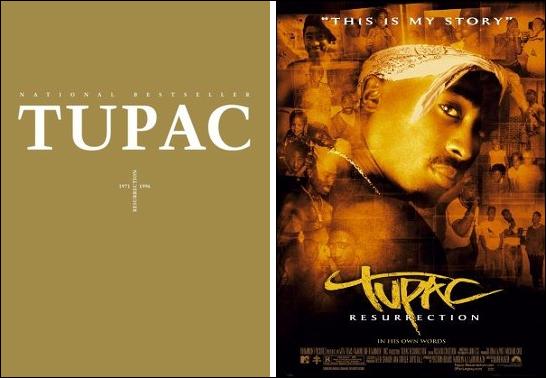
As the 2006 book and DVD covers above suggest, the themes of crucifixion and resurrection have been associated with Tupac Shakur for a while.

R.N. Bradley blogs at Red Clay Scholar and is a doctoral candidate in African American Literature and Culture at Florida State University. She makes the same connection clear in a post titled Smilin’ Serpent: the Violent Passion of Tupac Shakur on September 13, 2010:

Projects revealed Shakur’s pseudo-schizophrenic obsession with death and resurrection. These tropes manifested in videos like “I Ain’t Mad Atcha” or the collabo featuring Scarface “Smile,” and the coverart of The Don Illuminati: the 7 Day Theory(1996).

2.

Death comes before resurrection: Tupac Shakur died of gunshot wounds in 1996, after completing his final album, Makaveli — which was posthumously released:

3.

What may be more surprising is that he was brought back to something approximating life — in a holographic performance that included a duet with a decidedly non-holographic Snoop Dogg— just this week…

4.

But then, that’s religion.

Time-bound, mortal and frankly disintegrating as we are, we’d like there to be more to the story after death, and that yearning is something that religion addresses.

Perhaps to get the point across in an interesting way you’ll allow me to quote from a move in a game I played some years back:

Exploring the Drachenloch cave in Switzerland, Emil Bachler found cave bear skulls arranged in wall niches in one part of the cave, and stone tombs in another chamber containing cave bear skulls and bones. Ursus spelaeus, the cave bear, has now been extinct 10,000 years, while the Neanderthal inhabitants of the caves appear to have ceased as a species themselves about 40,000 years ago.

In Shepard and Sanders’ book, The Sacred Paw, which deals with both the natural history of the bear and its appearances in myth and ritual, Bachler surmises that his finds provide “the first evidence in man of an already awakened higher spiritual life.”

But why the bear in particular? What could we learn from the bear that we couldn’t learn anywhere else? Shepard and Sanders’ answer is that the bear seemed able to teach us how to survive bodily death. Hibernation isn’t just a “natural” phenomenon — it’s also a “spiritual” revelation… I’ll let them explain in their own words:

The bear, more than any other teacher, gave an answer to the ultimate question… an astonishing, astounding, improbable answer, enacted rather than revealed. Its passage into the earth, winter’s death, and burial under the snow was like a punctuation in the round of life that would begin again with its emergence in the spring…

The miracle was double, for the bear burst out with young — birth and rebirth. Somehow the bear knew when to reenter the world again, emerging just ahead of the snowmelt, as though its very heat set the new year in motion… Clearly the bear was master of renewal and the wheel of the seasons.

The bear ‘knows’ about death and how to survive it… She is therefore seen by traditional peoples as a guide to the movement between worlds.

So the bear is not only the first shaman, s/he’s also the first dying and rising God, and the first divine “Mother and Child” — teaching us two things that are still at the heart of religion 40,000 years later: nativity and resurrection!

5.

Death and resurrection certainly date back quite a ways. Attis, Osiris and Odin are only a few of those thought to have died and been resurrected — and indeed the early Christian writer Justin Martyr confirms (In his First Apologia XXI), the similarities between Christian and pagan teachings when he writes:

In saying that the Word, who is the first offspring of God, was born for us without sexual union, as Jesus Christ our Teacher, and that he was crucified and died and after rising again ascended into heaven we introduce nothing new beyond those whom you call sons of Zeus. You know how many sons of Zeus the writers whom you honor speak of — Hermes, the hermeneutic Word and teacher of all; Asclepius, who was also a healer and after being struck by lightning ascended into heaven –as did Dionysus who was torn in pieces; Heracles, who to escape his torments threw himself into the fire; the Dioscuri born of Leda and Perseus of Danae; and Bellerophon…

6.

Here’s the video:

7.

Max Eddy, blogging at The Geeoksystem today, not only describes the technology used to bring Tupac back to artificial life, but gives us a feel for the event:

The Tupac Hologram put on an eerie performance. When it appeared, the crowd became noticeably quiet while the show continued so achingly aware of its strangeness. The CG simulacrum even declared “I’m a ghost” during a rendition of “Hail Mary.” The ghostly, semi-transparent image went on to do two more numbers – one opposite a likely perturbed Snoop Dogg – before, no kidding, dissolving into triangles in a blaze of otherworldly light.

He also gives us an overview of the endurance of the resurrection motif within the music biz. He writes:

While I must confess ignorance to the life and body of work of Tupac, the resurrection obsession is part and parcel of the music industry. We can get specific: Back in 1995, the surviving Beatles recorded two new tracks along with unreleased demos recorded by John Lennon in 1977. Lennon had been dead since 1980. For his 75th birthday in 2010, Elvis Presley netted $60 million despite having been dead since 1977. Deceased in 2004, Ol’ Dirty Bastard still managed to appear on 2009?s “Blackroc,” a rap album put together by the Black Keys.

Though resurrections are a phenomenon that is particularly common in the music industry, it’s notable that CG recreations of dead actors haven’t broken into mainstream film. Perhaps it’s because fooling the ear is easier than fooling the eye.

Posthumous musical careers are clearly not unique to Tupac, but Shakur’s has been particularly lively. Since his death, seven albums have been released under the rapper’s name. For Forbes’ 2002 edition of the magazine’s annual list of top-earning dead celebrities, Shakur came in at number ten. A 2003 documentary about Shakur’s life, titled Tupac: Resurrection, was narrated entirely by Shakur. From 1997 on, Shakur has made 49 guest “appearances” on the tracks of other recording artists.

All of this is not to mention the rumors held by some ardent fans that Shakur is, in fact, still alive and in hiding somewhere.

8.

I don’t know whether this image is taken from an early archaeological report on the Drachenloch caves, or is just a reconstruction of what those first bear-altars with their carefully arrange skulls and bones might have looked like. I don’t really know if the dying-and-rising-god meme has been overblown or not — or the circumpolar bear cult for that matter.

But bears hibernating and coming back to life, Attis and Adonis, Christ, Arthur, the Once and Future King, more recently, Elvis sightings — and now Tupac coming back, as a hologram — it makes me wonder.

9.

I’ll give Max Eddy the final word:

When a singer is on stage, he or she is mostly their celebrity, with their humanity tucked safely away for later. At home, they are someone else, but on stage they fill a role assigned to them by their fans and perhaps by themselves. Some take it to an extreme – Ozzy bit the head off a bat. For others, it’s subtle – Roy Orbison’s dark glasses, for instance.

Unlike them, the Tupac Hologram has no humanity; it is only celebrity. The Tupac Hologram will not go home and read Shakespeare, as Shakur did. The Tupac Hologram will not make controversial political statements. The Tupac Hologram will not visit Tupac’s mother, Afeni Shakur Davis. The Tupac Hologram is empty, and we made it.

[ … ]

When we look into the Tupac Hologram, we see ourselves reflected brightly on a thin Mylar screen.

_________________________________________________________________________________________________________
A hat tip to Doug Breitbart, for suggesting I check out the Tupac video and nudging me along the way. The details of Crucifixion and Resurrection are from the superlative Isenheim Altarpiece by Matthias Grunewald (ca. 1510).

Two for the Dalai Lama, and one more

Thursday, April 5th, 2012

[ by Charles Cameron – the UN panel of happiness experts, human nature on and off the freeway, and royal rainmaking in Thailand and Tanzania ]
.

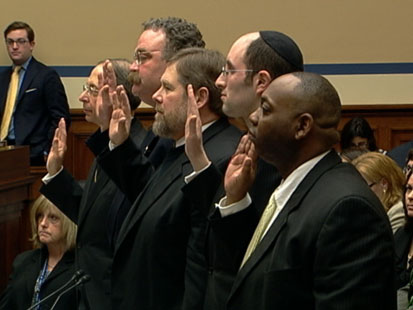
Seeings as how the Kingdom of Bhutan just convened a UN forum on the topic of Happiness and Well-being: Defining a New Economic Paradigm, I thought it might be interesting to compare the faces in reports of a recent, controversial congressional panel on contraceptive issues with those of the folks on the happiness panel:

And to be frank, neither panel looked particularly cheerful. I thought it might be nice to get away from all that seriousness, so I featured the Dalai Lama’s often playful eyes as an inset…

Seriously: is happiness something we should figure out in committee?

To be fair, though, they did have some decent guest speakers — Joan Halifax for one. My guess is, some people just bring their happiness with them.

*

And while I have the Dalai Lama in mind and in a conveniently copiable graphic, I thought I’d post a second, quick item — this one also having to do with happiness, I suppose, and raising the question of what human nature is.

When you’re stuck on the San Diego Freeway on the way back from work, you may not feel as “one with nature” as you do when you’re out for an evening walk on the beach in Malibu. But are the ribbons of the Interstate system really that different from the veining of a leaf?

I suspect that question might bring some quiet laughter to the Dalai Lama’s eyes…

Hat-tip: I have Andrea Lobel of Concordia U to thank for this second pair of images, which she very kindly sent me knowing of my delight in such pairings.

*

Time for one more?

Given my strong interest in ritual, you won’t be surprised to learn that royal rainmaking is of interest to me.

The insignia on the left is that of the Thai Bureau of Royal Rainmaking and Agricultural Aviation, founded by Thailand’s King Bhumibol Adulyadej, who holds European patents on several of his methods:

According to the notes attached to this video:

Among the best-known and most successful of His Majesty’s water provision projects has been the Royal Rainmaking programme. He began to study how clouds might be seeded to produce rain. In 1969 he carried out preliminary tests at Khao Yai National Park using a Cessna 180 and dry ice. In August 1969, he moved to Hua Hin and used two aircraft in a variety of weather conditions to determine what worked best. Initially, he financed the research with his own funds but in 1970, he sought temporary funding for a “Rainmaking Project” from the government. With it, he established the Royal Rainmaking Research and Development Institute. Based on it, he has spent succeeding years refining his techniques to accord with varying cloud conditions and to suit differing climatological and geographic areas, enjoying considerable success throughout Thailand.

On the right is the encampment for the mapolyo a mbula or ancestral offerings for rain of the Ihanzu of Tanzania.

Todd Sanders, in his book Beyond Bodies: Rainmaking and Sense Making in Tanzania, writes:

Because the Ihanzu have long depended on the rain for their very existence, it is not surprising that rainmaking is central, both conceptually and practically, to their everyday lives. They have two royal rainmakers – one male, the other female – whose job it is to ensure the rains arrive on time and fall properly each year. … Through varied rain rites carried out each year in the village of Kirumi, royal rainmakers regulate the annual movement from the dry ‘male’ season (kipasu) to the wet ‘female’ one (kitiku) and back again. These rites take various forms, as we shall see…

For a detailed account of the mapolyo a mbula rites and the legend that accompanies and explains the diagram above, see Sanders’ Reflections on Two Sticks: Gender, Sexuality and Rainmaking in Cahiers d’Etudes Africaines:

These rites take place only when the rains have utterly failed and it has been divined that the royal Anyampanda clan spirits have demanded such an offering. Offerings take place over two days, but the entire ritual sequence often lasts a month, sometimes longer. It is only the two Anyampanda royal leaders, and no one else, who can bring such rain offerings to fruition.

*

Enough, I’m done for now — I’m happy.


Switch to our mobile site