zenpundit.com » COIN

Archive for the ‘COIN’ Category

The al-Masri Dialogue

Tuesday, February 9th, 2010

Charles Cameron, in his latest guest post here, penned a beautiful essay regarding the ongoing exchanges between Australian counter-terrorism scholar Leah Farrall and Abu Walid al-Masri, an adviser to the Taliban and an experienced strategist of Islamist insurgency. Farrall has translated and posted this dialogue on her blog, All Things Counter Terrorism, which has received much attention, commentary and criticism in the blogosphere and on private listservs and quasi-official bulletin boards.

Generally, I leave this sort of subject to Charles, since he has the academic expertise to drill down to a granular level of Islamic theology and Islamist ideology, but al-Masri is an intriguing figure and his public conversation with Farrall is a novelty worth investigating. It would be hard to imagine during the Cold War, an open media debate between a Western CI official and a Soviet spymaster still engaged in espionage in the field ( Kim Philby hurled public jermiads it is true, but that was in retirement in Moscow and only after his long-suffering KGB handlers had managed to get his severe alcoholism under control). In that spirit, I want to offer a few observations.

While there is artifice present, as al-Masri is consciously speaking to a multiplicity of audiences in his remarks, the idea that we should therefore dismiss the dialogue with Farrall, as some suggest, is an error. There is also posturing in purely intra-Islamist-debates on which we eavesdrop and, frankly, within our own arguments inside government and out. We learn from what people do and do not do, from what they say and what is left unsaid. Being able to speak to multiple audiences is a constraint, as well as an advantage, as it shapes the parameters of the premises to be employed and the extent to which the underlying logic can be permissably extrapolated. To quote a Zen saying, if you wish to fence in a bull, give him a large meadow. 

The constraints, if correctly discerned, are illuminating and are analytically useful in constructing our own tactical responses and message strategy (assuming someone can convince the State Department bureaucracy that IO and public diplomacy are important and persuade Congressional leaders to fund such activities with more than pocket change). They are also useful in helping to understand the worldview and governing paradigms of our opponents in more complex and nuanced manner than reflexively saying “they hate our freedoms”. Well, many jihadi types do in fact, viscerally hate our freedoms or deny that democracy is a legitimate form of government in an abstract sense, much the same way they casually disparage Hindus as “cow worshippers” or Thais as “crazy Buddhists”; however those loose attitudes and spasms of hostility are not akin to operational principles or strategic doctrines.

For that, we have to dig deeper into the politico-religious motivations of violent Islamists and listen closely to what our enemies are saying – particularly when they are making an effort to speak to us directly, as al-Masri is doing, his determination to score propaganda points in his little elicitation dance with Farrall notwithstanding. Americans are not very good at listening and our elites are deeply uncomfortable with the entire subject of religion, tending to view pious expressions of Christianity with contempt and Islam as a completely taboo subject. There is a strong preference in government and academia for analytical models of terrorism or insurgency that dwell on DIME spectrum variables because these fit in the personal comfort zones and the educational, social and professional experiences of the American elite. This would be a perfect approach if al Qaida’s leadership were composed of Ivy League alumni and Fortune 500 CEOs.

Economics and military force are always factors in geopolitical conflict, the war of terror included, but until Islamist extremists oblige us by becoming secular Marxist revolutionaries waving little red books, it would behoove us to look with greater scrutiny at the curiously reified religious ideology with which they justify or eschew courses of action to themselves. Our own strategies might be more focused and effective if the operators across our intelligence, military, diplomatic and law enforcement agencies had something approaching a shared understanding of violent Islamism and if they could communicate this understanding along with the benefit of their experience and current intelligence to help political leaders shape American policy.

Sullivan and Elkus on Narco-Insurgency

Wednesday, February 3rd, 2010

Over at SWJ Blog.

Cartel v. Cartel: Mexico’s Criminal Insurgency

All Against All

The government’s strategy, essentially a ‘war of attrition’ is failing. The result of heavy-handed military action is the increasing ‘fractilization’ of the conflict, higher levels of violence, and increasing discontent by the general public and elites. Though the war has largely vanished from the mainstream American press after last summer’s panic over the prospect of Mexico as a ‘failed state,’ the violence continues and risks of cross-border spillover remain.

A good piece.

I am still sticking with my thought experiment on Mexico, which is looking increasingly plausible.

Follow Ups to the Follow Up….

Thursday, January 28th, 2010

One of the rewards of blogging is to set a discussion in motion and watch the debate unfold. Here’s two more well worth your time.

For those unfamiliar with Project White Horse, it is a site moderated by Ed Beakley, deeply influenced by the ideas of John Boyd, dedicated to critical inquiry as to how American first response, security and defense can become more adaptive and resilient in the face of emerging threats. If you were a fan of Dr. Chet Richards’ now defunct DNI, I strongly suggest that Project White Horse should become a regular read

Ed Beakley at Project White Horse

EEI#27 “What kind of War?” – First Addendum – The Post-COIN Era is Here

….The Post-COIN article has received significant discussion on other blogs, critical review, and comment including from author of The Pentagon’s New Map, Thomas P.M. Barnett. One line of reasoning introduced by Barnett is the degree to which COIN and the debate and decisions have impact on the larger defense and security issues facing DOD and the nation.

In  preliminary articles (EEI’s #6, #7, #10) to the “what kind of war” series, the point was made that as we move in time from 9-11, the  force structure and technical direction decisions made by and for DOD will impact decisions on risk mitigation, risk management, and  level of risk acceptance that the homeland security, public safety and first responder organizations nation-wide will have left on their plate. Understanding these issues, it would seem then , is essential and critical for citizens, private sector and local government alike.  In that sense, to what degree counter insurgency, COIN, is considered method, tactic, tool or core to strategic thinking has significant ramifications –

Gates is attempting to change not just what the Pentagon is buying, but its fundamental understanding of what it is procuring weapon systems for and why. Cold War-era weapons with such focused utility as the F-22 are not what he believes the Pentagon needs with an uncertain future… Gates is attempting a more fundamental reorientation of the entire Pentagon, with greater emphasis on the current campaigns in Iraq and Afghanistan, ‘hybrid wars’ and ‘fourth-generation’ warfare. (STRATFOR analysis on the F-22 decision)

Pundita

While I linked to Miss Pundita previously, newer readers here may not be familiar with her (as I noted from Madhu’s enthusiastic comment about her last post). Pundita specializes in inside-the-beltway diplomatic and economic commentary, laced heavily with political scuttlebutt and graceful rhetorical punches to the kidneys of the State Department.

Afghanistan War: McChrystal’s Choice, and an updated version of “The Bridge on the River Kwai”

…..Taliban are not Viet Cong

The Italian bribery scandal folds into the story of widescale bribery payments to the Taliban so they won’t attack ISAF supply routes. Shortly after The Nation published a jaw-dropping investigative piece on the bribery, Rufus Phillips told John Batchelor that the same thing happened during the Vietnam War, that U.S. troops paid Viet Cong not to attack U.S. supply convoys so “those people down in Washington” shouldn’t work themselves into a lather about similar arrangements with the Taliban. Beginning in 1954 Mr Phillips, who’s a frequent guest on John’s nightly Afghanistan War panel, “spent almost 10 years doing undercover and pacification work for the CIA and the U.S. Agency for International Development in South Vietnam,” according to the publisher’s review of his book about Vietnam, and he remained plugged into the Vietnam War throughout.(1) So I have no reason to dispute his contention.However, I don’t recall ever hearing that the Viet Cong shared proceeds from their moonlighting with people who plotted and carried off catastrophic attacks on the U.S. homeland. One problem with ISAF forces and their contractors bribing the Taliban to guard supply routes is that they never know whether they’re inadvertently donating to Pakistan’s military and al Qaeda. Yet evidentially the tack will be on the table during Thursday’s summit in London. From yesterday’s Q&A in the Financial Times about McChrystal’s openness to negotiating with the Taliban:

Q: Can Taliban fighters simply be bribed?A: Maybe. Western countries gathering in London for a conference on Thursday will pledge funds for a scheme outlined by Hamid Karzai, the president, to try to lure Taliban foot soldiers with job offers. Details remain sketchy. Insurgents may simply accept the incentives then return to the fight. The central problem remains: the Taliban may simply believe it can outlast the west.

Even assuming that the Taliban could be bribed, and that they’d stick to their agreement, this does not address the biggest issues. The overriding issue is how to prevent the Taliban from using force of arms to take over Kabul and launch a massacre of non-Taliban Afghanis if U.S. forces decamp.

Finally, I would like to thank Dave Schuler of The Glittering Eye for nominating The Post-COIN Era is Here  at The Watcher’s Council. Much appreciated Dave!

Battleground Yemen

Wednesday, January 27th, 2010

An informative post by Curzon at Coming Anarchy

Yemen: Geography Matters!

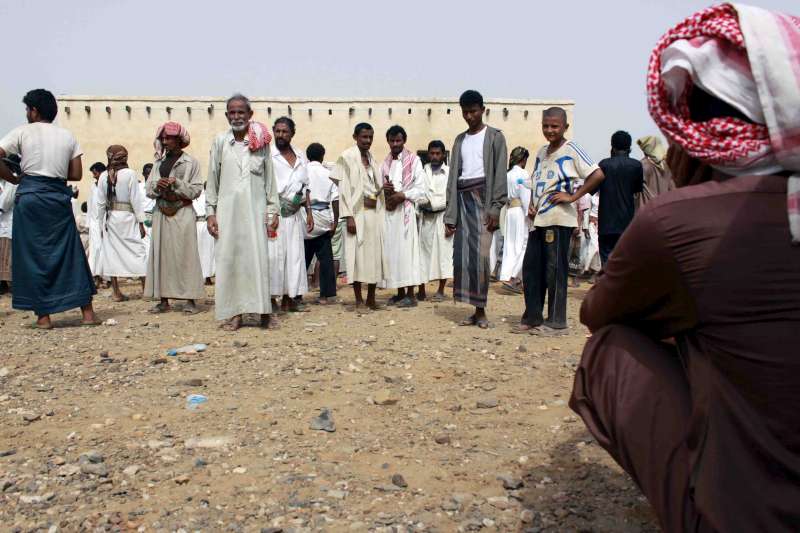
….The Saudis are guilty of aggravating and prolonging the conflict. Wary of taking too many losses on the ground and unable to do much by air and sea, they have recruited the Hashed, a local tribe, to fight against the Huthi, the tribe central to the Shia rebels. The Hashed have several incentives to continue fighting for as long as possible-they have a long-standing feud with the Huthi, and make a great deal of money from fighting for the Saudis, and may be coming up with schemes to prolong the conflict. According to a source of Al Jazeera:

If [the Hashed are] given the mission of taking a particular mountain, for example, they’ll call up the Huthi leaders and tell them: ‘We’re getting five million riyals to take the mountain. We’ll split it with you if you withdraw tonight and let us take over’… After the tribesmen take charge, they hand it over to the Saudis… The next day, the Huthi return and defeat the Saudis and retake the mountain… It’s been happening like this for weeks.

Further Links to the Post-COIN Era

Wednesday, January 27th, 2010

I appreciate the time and attention that folks put in on commenting about or linking to the previous post, whether it was by blog or bulletin board. Here are a few more:

Thomas RicksToasted Eikenberry?  Gives ZP a quick nod  (and a great flow of traffic). Thanks!

Thomas P.M. Barnett – The Zen of COIN

Dr. Barnett was annoyed by my use of Col. Bacevich as a foil. I can sympathize because I don’t much agree with Bacevich either, but used him because he represents a policy constituency. I recommend taking a look at how Tom walks through the DoD institutional meta-picture that encompasses the narrower “domestic politics/fiscal woes hitting COIN” approach I took yesterday:

1) Remember the larger distinction between the operating force (out there in the regional commands) and the institutional force back home (which trains up and equips the operating force). The “ascendancy” of COIN as the reinstatement of long-discarded tactics and operations has occurred overwhelmingly in the operating force. Why? Simply the compelling need created by insurgents in both Iraq and Afghanistan. There has been no real ascendancy of COIN within the institutional force, where advocates like John Nagl have argued long and hard for more appropriate training and force structure. While the training has come, as had the doctrine (the two are deeply linked), no serious observer would subscribe to the notion that US military force structure has been subverted to the small-wars orientation….

2) There is a natural frequency/load rate associated with U.S. military interventions abroad, something I explored in PNM. Generally, there is a combined capacity on the part of the regional commands to be able to put troops in countries and do things. Pick a generic level of effort, like 20k troops engaged in security ops and humanitarian assistance and training of local militaries (which, in sum, is very COIN-like). If you add up the combined capabilities of the regional commands, you can come up with a general sense of how many such ops they could collectively mount and maintain at any one time. For purposes of discussion, let’s say it’s a dozen such sized ops, with Pacom owning several, Eucom a few, Centcom probably the most, etc. If we’re in Iraq and that’s using up seven such units of capability (an out-of-my-ass estimate), and Af-Pak eats up four more, then, at any one time, we can mount something small on the side (like 10k troops in Haiti right now) and not much else, meaning, once the system hits near-capacity, there’s no logical discussing of additional units of effort. That’s been true for a long time, really since the Cold War’s end, when our frequency of contingency ops inside the Gap took off in both absolute frequency and length of operations (a subject I explore at length in PNM)…..

T. Greer“COIN, Meet Democracy (And Your Doom)” | T. Greer — The Scholar’s Stage

Greer OTOH, sees much more of what I perceived the other day – the feedback loop between economic problems, domestic political angst and strategic policymaking:

….But the political situation back home never seemed to be a real concern for the COIN theoreticians. Fascinated by case studies, distracted by factional debates, and anxiously engaged in developing “new paradigms” and operational approaches, politics fell to the wayside. It was quite astounding to see men who were so acutely aware of the political dynamics of foreign locales so completely disregard Washington’s own political constraints. Domestic politics was simply not a part of the discussion.

To take a fairly recent example, Sean McFate’s call to purge the Afghanistan National Army is (to this citizen’s untrained eye) operationally sound. Yet however operationally sound it may or may not be, it could happen only in policy fantasy land. The ANA is the result of eight years of sweat and toil; you cannot simply scrap it and start all over as you would flip a switch. Who shall fork money over to ISAF to perform such a restructure? Which country is going to stay in Afghanistan for another eight years while the new ANA is formed, trained, and battle hardened? Most importantly, are the citizens of those states whose soldiers compose the ISAF ready to recommit themselves and their countrymen to a reboot of the entire project?

These questions were left untouched by McFate. Like most folks discussing COIN, small budgets, restless constituents, and domestic politcking belonged to a realm worlds away. This is no longer true. The time soon approaches when all members of the defense community will be forced to deal with Washington’s political realities – COINdistas included.

Eric MartinThe Real Vietnam Syndrome « American Footprints

Martin counsels restraint and an end to a period of “conservative internationalism” of heroic ambitions based on miserly expenditures:

….While true, the essential lesson from recent foreign policy failures, the realization that COIN is not a panacea (and an expensive tool to wield regardless) and the underwhelming results from the serial mismatch of ambitious goals with limited means under the doctrine of conservative internationalism (and its liberal cousins) is that foreign policy adventurism is too expensive.  Attempts to conceal its costs have failed, and purported fixes are themselves enormous commitments that likely outpace the strategic necessity.  This is especially true at a time when the United States has limited resources that are declining relative to the rest of the world, with mounting domestic needs

Rather than persist in undertaking interventionist policies that are doomed – if not to failure, at least to underachievement – from the onset due to a lack of necessary resources, and rather than dedicating a fortune and a half chasing COIN phantoms of limited relative value and dubious prospects for success, the United States would be far better served to limit its military interventions to only those that are truly vital and necessary.  In contemporary terms, that means, at the least, no military confrontation with Iran, and extreme caution and circumspection with respect to any proposed increased involvement in places like Yemen

I will also again recommend that you visit Dr. Marc Tyrell and Pundita on this subject, if you have not done so already. Pundita for her blend of analysis and stiletto-like sarcasm and Dr. Tyrell for his brainy use of big words that make my head hurt.


Switch to our mobile site
