zenpundit.com » terrorism

Archive for the ‘terrorism’ Category

Book Review: Architect of Global Jihad by Brynjar Lia

Thursday, August 18th, 2011

Architect of Global Jihad by Brynjar Lia

Architect of Global Jihad: The Life of al Qaida Strategist Abu Mus’ab al-Suri is Brynjar Lia’s definitive biography of the shadowy terror theorist, Islamist intellectual and sometime jihadi, Mustafa bin Abd al Qadir Sitt Maryam.

Sitt Maryam, who went by al-Suri in jihadi circles, was a red haired, fair-skinned Syrian renegade from the Muslim Brotherhood who was trained in military tactics and explosives in Saddam Hussein’s terrorist camps, passing on his skills to fellow “Arab Afghans” during and after the Soviet War. Attracted to secular military theory, guerrilla warfare tactics and strategy rather than theological disputes, hating the West but despising Salafist radicals, Lia’s Abu al-Suri is an isolated and anomalous figure in “the jihadi current” of the 1990’s and post-9/11 era.

“A born critic” with a grim and unsmiling demeanor who entangled himself in acrimonious personal feuds with leading jihadis, including Osama bin Laden, al-Suri failed to win many adherents to his insightful “system not organization” (nizam la tanzim) theory of jihad until his arrest caused his writings, especially his magnum opus The Global Islamic Resistance Call to go viral in the Islamist darknet.

A true intellectual, widely read in western literature and military writings, al-Suri crafted a stategy of jhad that adapted arguments of 4GW, “leaderless resistance” and classical Maoist insurgency to suit Islamist purposes and conditions while rejecting secret, hierarchical, organizations and al-Qaida’s “Tora Bora mentality” as historical failures. Self-radicalization and “sudden jihad syndrome” among alienated Western Muslims was the stuff from which al-Suri hoped to build a massively decentralized, open source, self-sustaining campaign of terrorism.

A hundred and forty some pages of text in Architect of Global Jihad are devoted exclusively to excerpts from al-Suri’s 1,600 page treatise on terrorism operations and strategy. He was a serious and determined opponent of Western civilization’s core values, despite having enjoyed long stretches of reasonably comfortable Western exile in Spain and “Londonistan” to such a degree that al-Suri was in no particular hurry to rejoin the jihad and even acquired the unenviable (and inaccurate) reputation of only being a “pen jihadi”.

Musab al-Suri, who is likely dead at the hands of Baathist jailers, is best described as an Islamist parallel to Vladimir Lenin before the Bolshevik Revolution. The similarities are striking, the irascible temperment, formidible intelligence, the frustrating politics of exiled revolutionary communities, the ideological marginalization both men endured as radicals in a community of already extreme activists and the embrace of terrorism (tactically in Lenin’s case, strategically in al-Suri’s). al-Suri and Lenin, despite wide ideological differences, as revolutionaries represent the psychological type Eric Hoffer termed “true believers” – pitiless, absolutely committed, intellectually rigid on matters of principle but tactically flexible and creative in terms of method.

Such men are dangerous, to themselves as well as to society.

Strong recommendation:

ADDENDUM:

Related posts on or including Abu Musab al-Suri

Lexington GreenAbu Musab al-Suri: Theorist of Modern Jihad and The Networked Jihad: Parasitic on Developed World Technology, Information, Ideas

Charles CameronA Terrorist’s Call to Global Jihad: Deciphering Abu Musab al-Suri’s Islamic Jihad Manifesto

John RobbSURI: nizam, la Tanzim (system, not organization) – Global Guerrillas

The Jamestown FoundationThe Jamestown Foundation: Al-Suri’s Adaptation of Fourth  , The Jamestown Foundation: Al-Suri’s Doctrines for Decentralized  and The Jamestown Foundation: Abu Mus’ab al-Suri and the Third

Jihadica Abu Mus`ab Suri: Architect of Global Jihad Neglected? and Training for the Lone Jihadi

The Hoover InstitutionThe Terror Fringe

New Book: Storming the World Stage by Stephen Tankel

Monday, August 15th, 2011

Storming the World Stage: The Story of Lashkar-e-Taiba by Stephen Tankel

I returned from Texas yesterday to find on my doorstep, a review copy of Storming the World Stage: The Story of Lashkar-e-Taiba by Carnegie scholar Stephen Tankel.  Mirv Irvine of CNAS describes it thusly:

…one of the definitive accounts of Lashkar’s rise as well as the 2008 Mumbai attacks, and his book should be the go-to-guide for those looking to understand Pakistan’s reliance on proxies against India and its attached baggage

Moreover, my co-blogger and expert on esoteric religious militancy, Charles Cameron has already expressed book envy of this review copy and covets it. Heh. With such strong endorsements, I am moving it to the top of the pile for immediate reading.

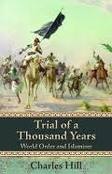
Trial of a Thousand Years, by Charles Hill—a review

Thursday, August 11th, 2011

 trial of thousand years

by J. Scott Shipman 

Trial of a Thousand Years, World Order and Islamism, by Charles Hill

Ambassador Charles Hill’s Grand Strategies, Literature, Statecraft, and World Order was the best book I read in 2010, so I had high expectations for this volume and was not disappointed. Ambassador Hill provides a 35,000-foot view of the relationships between the West and Islam in history focusing on the subtitle of his earlier work in the form of “world order.”

Unsurprisingly, as in Grand Strategies Hill goes back to the roots of modern order in the Treaty of Westphalia (1648). He provides a brief review of the world ushered in by the men who negotiated, and quotes another historian who said, “men who were laboring, each in his own way, for the termination of a terrible war. They had no idea of progress. The word “innovation” was anathema to them. The last thing on their minds was the creation of a new system of sovereign states…” Here we are 363 years later and “from the seeds sown at Westphalia” the system they set in place is has grown, but has been under siege many times from many fronts.

Westphalia was distinctive because it was “procedural, not substantive” and required a minimum number of procedures/practices to which to adhere and allowed disparate parties with different, “even mutually antagonistic, substantive doctrines and objectives” to work together. Hill points out four distinctions:

  • Religious arguments were not allowed in diplomacy.
  • The State was the fundamental entity.
  • Interstate/international norms and laws were encouraged, absent “divine sources” but based on mutually beneficial/positive agreements.
  • Use of professional military and diplomats with “its own set of protcols.” [Personal note: In another life, I was an arms control inspector enforcing the START I and INF Treaties—protocol was very serious and the true measure of the actual treaty language. There was also a strong and consistent application of reciprocity that made each party think before stretching protocol—this happened to my teams more than once.]

For Hill a central mission of the United States is the defense of the Westphalian world order. In less than 165 pages and six chapters, he outlines the origins of modern Western order and correspondingly covers Islamic order. From the beginning to the end Hill provides ample evidence of challenges to Westphalia, often from indigenous Western sources, but focusing mostly on our trials with Islam.

Hill sets the sources from whence the Western and Islamic world orders arose, where the West was grounded in Christianity, and the Islamic in the Caliphate. For two religions claiming Abrahamic roots, their worldviews were, and in many instances remain diametrically opposed. Central was the question of duality or unity. For the West, the State and religion were two complementary systems/powers—following the teaching of Christ ““Render unto Caesar the things which are Caesar’s, and unto God the things that are God’s” (St Matthew’s Gospel 22:21) For Islam there was no distinction, and the very thought was hateful to Islamists. Islam’s “unswerving devotion to monotheism” continues to this day among those groups and states using terror to upend existing world order.

I am sympathetic to Hill’s ideas; however recognize with globalization and the internet tweaks may be required. And I’ll take this segue to introduce an idea for consideration.

Westphalia’s removal of religion made trade possible among former religious enemies. Unambiguous rules for contracts and dispute resolution evolved. What if we could bridge the gap between Western jurisprudence and tribal, or non-Western legal systems? What if, instead of insisting our way or the highway we design a solution that would allow both sides to keep their respective legal processes and procedures, thereby opening untapped markets?

At least one person has already considered these alternatives. Michael Van Notten (1933-2002) was a practicing lawyer in the Netherlands and married into a Somali tribe. Van Notten used his legal training and insights gained as a member of his new family to design a method of contracting where tribal law and Western jurisprudence could peacefully and prosperously coexist. Van Notten recorded his ideas in a book called The Law of Somalis, A Stable Foundation for Economic Development in the Horn of Africa. I’ll not review this book, but wanted offer this as a teaser alternative.

After reviewing the history of the West and Islam, Hill identifies seven Clausewitzian centers of gravity for both: legal, military, the State, women, democracy, nuclear weapons, and values. Hill makes the distinction between the use of diplomacy by Islam and the Islamist (the fundamental variety). No surprises, to the Islamist a secular State is an “apostasy,” as is international law (Sharia being the single source), democracy and the rights of women.

Hill concludes, “Islamic civilization entered the international system under duress,” which he believes has contributed to the current situation of failing states and lagging economies that establish conditions where radicalized Islam can flourish. The radicalized elements reject the secular Westphalian world order, however Hill points out that some in Islam insist that sharia imposed by the state “cannot be the true law of Islam. It is not possible to apply sharia through the state; it can only be applied through acceptance by human beings (An-Na’im).” Another alternative is the Medina polity established by the Prophet (“later called the Pact—kitab—of Medina) “guaranteeing each tribe the right to follow its own religion and customs, imposing on all citizens rules designed to keep the overall peace, establishing a legal process by which the tribes settled purely internal matters themselves and ceded to Muhammad the authority to settle intertribal disputes…Although this document has been called the first written constitution, it was really more of a multiparty treaty” (Ansary).

Hill convincingly demonstrates that more often than not, rulers have co-opted Islam as a way to dominate the people (Iran comes to mind.). He quotes Professor L. Carl Brown of Princeton, “nothing exclusively “Islamic” about this Muslim attitude towards politics, any more than the politics of feudalism or of imperial Russia was distinctly “Christian.” It is the political legacy of Muslims, not the theology of Islam…”

For the Islamist, secularism is the booger man, but secularism in the Westphalian order has its own set of problems. Hill writes, “A new phenomena arose: wars motivated by religious convictions were replaced by wars driven by ideologies—surrogates for religion—each aimed to oppose, undermine, destroy and replace the Westphalian system. The greatest of these was international communism, the latest is international Islamism.”

In many respects, Trials is as good as Grand Strategies. Ambassador Hill is to be commended for his insight, courage, and conviction—this little book packs a big, enlightening punch. Strongest recommendation.

References you may find of interest (links to quoted authors above are links to the respective reference):

The Incoherence of the Philosophers, Abu Hamid Muhammed Al-Ghazali

The Crisis of Islamic Civilization, Ali A. Allawi

The Caliphate, Thomas W. Arnold

Sayyid Qutb and the Origins of Radical Islamism, John Calvert

Crimea: The Last Crusade, Orlando Figes —Figes’ The Whisperers was very good.

The Morality of Law, Lon L. Fuller

The Muqaddimah, Ibn Khaldun (Translated Franz Rosenthal)

The Clash of Empires: The Invention of China in Modern World Making, Lydia H. Liu

The Government of the Ottoman Empire in the time of Suleiman the Magnificent, Albert Lyber

Byzantine Civilization and The Fall of Constantinople, both by Steven Runciman

The First World War, Hew Strachan

Mozart and the Enlightenment; Truth, Virtue and Beauty in Mozart’s Operas Nicholas Till

Muslim Intellectual: A Study of Al-Ghazadi, W. Montgomery Watt

Dialectic of Enlightenment, Max Horkheimer and Theodor W. Adorno 


Killebrew on The End of War

Thursday, August 11th, 2011

Colonel Robert Killebrew comes to a conclusion I would endorse as both empirical and probable for reasons of economics – interstate warfare and military establishments are very expensive, while irregular conflict is both cheap and accessible to many hands of various motives. Great power wars can still happen, but as ventures of existential risk.

The End of War: Nonstate violence is the new norm

In “The Invention of Peace,” British historian Michael Howard notes that it was the rise of the modern state, with powerful kings, that first brought the idea of “peace” to the Western world. So long as the king or government retained sufficient power, determining “peace” and “war” remained the prerogative of the state, to be managed as required. Hence, the marching armies of August 1914. In the beginning years of the 21st century, though, we are entering into a new historical period. The state no longer has a monopoly on violence, and national borders are not as inviolate as they were in the long-ago 20th century. No other concept for managing fractious relations between states has yet emerged. (Except, perhaps, the concept of “bigness,” as in, “I’m big enough to do this and get away with it.”)

Since the attacks of Sept. 11, 2001, constant conflict has been the norm not only for the U.S. but also for much of the world, whether because of ideological struggle (the Balkans and Southwest Asia), political conflict (the Middle East and Eurasia), tribal wars (the Balkans and Africa), criminal insurgencies (Mexico, Central and South America) or terrorism (global). The pat-down at your local airport is a sign that the world has changed. Looking back, it’s hard to believe that Americans and Europeans used to vacation in spots where they would be beheaded today. In Central America – now the most violent region in the world – citizens report the social fabric that held their civic life together is disintegrating in the face of gang violence and government impotence.

Five global conditions that have grown exponentially since the end of the Cold War are challenging governments everywhere: first, the enormous growth in criminal wealth over the past two decades, fueled by drug money, human trafficking, illegal arms sales and other crimes; second, mass migrations of peoples from south to north, pressing in on developed countries; third, the Internet and other technology that has brought violent organizations into the same technical sphere as governments; fourth, the free flow of arms that supplies firepower equal (or superior) to government security forces; and, finally, the empowerment of violent extremists who use the first four conditions to attack states and their legal institutions, whether to overthrow them, neutralize them for criminal or other purposes, or out of simple nihilism.

….It is increasingly clear that the greatest armed threat the U.S. faces is the attack on international civil order that violent extremists represent. The most likely use for U.S. armed forces in the coming century will be to help extend the rule of law to states struggling against extremists that also threaten the U.S. This does not mean the end of armored warfare, for example; future battlefields are impossible to predict. But the Afghan and Iraqi conflicts have already begun to align U.S. military thought toward the more complex world of the 21st century. Conflict changes both winners and losers, and the armed services’ world after Iraq and Afghanistan will not be a return to the good old days of predictable deployments and annual training cycles, any more than the Army in 1946 was able to go back to the garrisons of 1935. While the development of aggressive, highly skilled units and combined-arms capabilities is still very necessary, the uses to which they are put will change….

ADDENDUM:

Posting from me will be light until next Monday.

UBL and Fisk: a quick note on something that caught me eye

Sunday, August 7th, 2011

[ by Charles Cameron — taqiyya, diplomacy, or theology? ]

.

I understand that Robert Fisk is viewed differently by different segments of the public, and hope we won’t get entangled in that discussion here – because I want to quote a story he tells, with an eye for two or three significant details.

The first detail, which you’ll find right at the end of the story, has to do with a leader’s standing when he must “withdraw” in front of his men – in other words, it’s a matter of honor and shame, and Fisk clearly feels that’s a motif of significance in his tale, though we might miss it if we weren’t specifically looking for it…

Here then is the story as Fisk tells it:

19 March 1997. There was a sudden scratching of voices outside the tent, thin and urgent like the soundtrack of an old movie. Then the flap snapped up and Bin Laden walked in, dressed in a turban and green robes. I stood up, half bent under the canvas, and we shook hands, both of us forced by the tarpaulin that touched our heads to greet each other like Ottoman pashas, bowed and looking up into the other’s face. Again, he looked tired, and I had noticed a slight limp when he walked into the tent. His beard was greyer, his face thinner than I remembered it. Yet he was all smiles, almost jovial, placing the rifle which he had carried into the tent on the mattress to his left, insisting on more tea for his guest. For several seconds he looked at the ground. Then he looked at me with an even bigger smile, beneficent and, I thought at once, very disturbing.

“Mr Robert,” he began, and he looked around at the other men in combat jackets and soft brown hats who had crowded into the tent. “Mr Robert, one of our brothers had a dream. He dreamed that you came to us one day on a horse, that you had a beard and that you were a spiritual person. You wore a robe like us. This means you are a true Muslim.” This was terrifying. It was one of the most fearful moments of my life. I understood Bin Laden’s meaning a split second in front of each of his words. Dream. Horse. Beard. Spiritual. Robe. Muslim. The other men in the tent were all nodding and looking at me, some smiling, others silently at the Englishman who had appeared in the dream of the “brother”. I was appalled. It was both a trap and an invitation, and the most dangerous moment to be among the most dangerous men in the world. I could not reject the “dream” lest I suggest Bin Laden was lying. Yet I could not accept its meaning without myself lying, without suggesting that what was clearly intended of me – that I should accept this “dream” as a prophecy and a divine instruction – might be fulfilled. For this man to trust me, a foreigner, to come to them without prejudice, that was one thing. But to imagine that I would join them in their struggle, that I would become one with them, was beyond any possibility. The coven was waiting for a reply.

Was I imagining this? Could this not be just an elaborate, rhetorical way of expressing traditional respect towards a visitor? Was this not merely the attempt of a Muslim to gain an adherent to the faith? Was Bin Laden really trying – let us be frank – to recruit me? I feared he was. And I immediately understood what this might mean. A Westerner, a white man from England, a journalist on a respectable newspaper – not a British convert to Islam of Arab or Asian origin – would be a catch indeed. He would go unsuspected, he could become a government official, join an army, even – as I would contemplate just over four years later – learn to fly an airliner. I had to get out of this, quickly, and I was trying to find an intellectual escape tunnel, working so hard in digging it that my brain was on fire.

“Sheikh Osama,” I began, even before I had decided on my next words. “Sheikh Osama, I am not a Muslim.” There was silence in the tent. “I am a journalist.” No one could dispute that. “And the job of a journalist is to tell the truth.” No one would want to dispute that. “And that is what I intend to do in my life – to tell the truth.” Bin Laden was watching me like a hawk. And he understood. I was declining the offer. In front of his men, it was now Bin Laden’s turn to withdraw, to cover his retreat gracefully. “If you tell the truth, that means you are a good Muslim,” he said. The men in the tent in their combat jackets and beards all nodded at this sagacity. Bin Laden smiled. I was saved.

I’m interested in the honor / shame angle because I have just been reading my friend Richard Landes‘ paper Edward Said and the Culture of Honour and Shame: Orientalism and Our Misperceptions of the Arab-Israeli Conflict and his blog post Game Theory and Social Emotions… I may not always agree with Richard, but he certainly sets me thinking…

The second point of interest here — which I’ve noted before — is the emphasis in the minds of bin Laden and his followers on the prophetic nature of dreams.

It is the third that is, if Fisk is accurate in his recall here, the most interesting – that bin Laden would utter the words “If you tell the truth, that means you are a good Muslim.” Fisk is not threatening him, so this is not an occasion for taqiyya as I understand it – perhaps it is an occasion, as Fisk himself suggests, for diplomacy.

But how does that remark sound as theology in the mode of Ibn Abd al-Wahhab?


Switch to our mobile site