zenpundit.com » academia

Archive for the ‘academia’ Category

Mindlessness and Mindfulness

Tuesday, January 22nd, 2013

In the midst of writing a lengthy post, it may eventually become my longest, about Socrates.

There’s no assurance that volume will equate with importance – most likely, the opposite. The post began as a book review and then grew to two books, then I reversed course and started over; it has been unusually slow going because the subject matter has forced me to stop periodically and uncomfortably rethink my assumptions – and then pick up new books. In one sense, there’s no hurry. After all, Socrates will still be just as relevant or not when I finish blogging about him than when I began. On the other hand, the spirit of our times calls out for Socrates’ techne logon, his “craftsmanship of reason”, so I keep plugging away at it.

The flip side to this intense focus has been an increasing desire for a little mindless entertainment. So, I started watching Sons of Anarchy of my iPad, Season One. So far, It’s fun:

The theme and setting is interesting and the characters and plot are generally more credulity-stretching than even The Soprano’s in their twilight seasons, but Sons of Anarchy fills the bill in terms of entertainment.Boardwalk Empire, is also supposed to be very good, even better, but one at a time.

What do you use as a diversion?

Empirical Studies of Conflict Site

Monday, January 21st, 2013

For those studying war, insurgency, irregulars or terrorism ESOC will be extremely useful – and depending on your area of research, possibly invaluable – as a resource.

Small Wars Journal had this to say about ESOC:

.…ESOC identifies, compiles, and analyzes micro-level conflict data and information on insurgency, civil war, and other sources of politically motivated violence worldwide. ESOC was established in 2008 by practitioners and scholars concerned by the significant barriers and upfront costs that challenge efforts to conduct careful sub-national research on conflict. The ESOC website is designed to help overcome these obstacles and to empower the quality of research needed to inform better policy and enhance security and good governance around the world.

The ESOC team includes about forty researchers (current and former) and is led by six members: Eli Berman, James D. Fearon, Joseph H. Felter, David Laitin, Jacob N. Shapiro, and Jeremy M. Weinstein.

The website is organized by countries and research themes. The six country pages are: Afghanistan, Colombia, Iraq, Pakistan, the Philippines, and Vietnam. The content is structured according to five themes: Demographic/Socioeconomic, Geography, Infrastructure, Public Opinion, and Violence. The website currently hosts about 45 ESOC data files, over 35 ESOC peer-reviewed publications (with replication data), and ten working papers. The ESOC team has also posted links to many external data repositories and external readings that have proven useful for analysis. The website will be regularly updated with new micro-level conflict data and contextual information, as it is compiled and submitted by ESOC researchers.

One caution: based on my source who was one of the folks gathering data for part of this project, as with all quantitative method research, there are hidden qualitative decisions in who did the counting, how and by what yardstick. If you are drawing conclusions about big picture trends in insurgency or irregular warfare across periods of time you are good to go. If your research is sharply confined to a specific and narrowly defined historical case study (say one campaign, a battle, one district – whatever), then drill down into ESOC’s data and methodology to the granular level before drawing a conclusion vice your sources and data outside ESOC.

New Books

Wednesday, January 2nd, 2013


Picked up some new books during the holidays…..

Socrates: Ironist and Moral Philosopher by Gregory Vlastos

I just finished two books on Socrates, I.F. Stone‘s  The Trial of Socrates and Socrates: A Man for Our Times by Paul Johnson, about which I am in the process of writing a lengthy post. Despite the many divergences between the books and their authors, both relied upon and recommended the scholarship of the late Gregory Vlastos, with Johnson specifically citing this analytic biography for high praise.

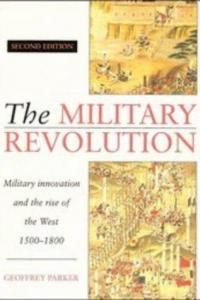
The Military Revolution: Military Innovation and the Rise of the West by Geoffrey Parker  

Military historian Geoffrey Parker published this important book back when I was an undergraduate ( he was teaching at the University of Illinois at the time) and I recall reading it in the library when I was supposed to be researching Anglo-American WWII diplomacy with the Salazar regime instead. I consider it a “must have” text for those interested in strategy and military affairs and…now I have a copy.

Antifragile: Things that Gain From Disorder by Nassim Nicholas Taleb

One of the  “must read” books for 2013. I watched Taleb kick around some of the concepts in Antifragile on his Facebook page and then observed friends like co-blogger Scott Shipman and Dr. Terry Barnhart comment as they started reading shortly after the book’s release. There are many things in Antifragile (including, it seems, a fair piece on the epistemic deficiencies of Socrates) and this is a book to read with care – not least because I intuitively agree with a number of Taleb’s arguments which means reading with a critical eye will require more effort.

Makers: The New Industrial Revolution by Chris Anderson 

This book is somewhat outside the norm for me. Anderson is the former editor-in-chief of WIRED and the author of The Long Tail, which is a book you should read if you don’t understand what a Pareto curve explains and economically could imply in the real world. Makers is about the desktop manufacturing revolution that many see emerging, such as blogfriend John Robbthat could have economy-shaking effects (provided vested interests do not effectively strangle this revolution in it’s crib).

The History of Political Philosophy by Leo Strauss and Joseph Cropsey

The long deceased and formerly obscure University of Chicago political philosopher Leo Strauss was elevated in the past decade in parts of the American Left into a bizarre kind of mystical bogeyman figure. An imperialist ghost who orchestrated the invasion of Iraq from beyond the grave and from whose cranium the Neoconservatives were born, fully grown and armed with think tank sinecures and contracts with FOXnews. Strauss was none of those things but he was a respected scholar in the Chicago tradition; this weighty tome of a book received a further endorsement from Lexington Green, which tipped the scales for me.

New Book: The Violent Image by Neville Bolt

Friday, December 14th, 2012

The Violent Image by Neville Bolt 

Columbia University Press just sent me a review copy of The Violent Image, by Dr. Neville Bolt of King’s College vaunted War Studies Department.  Initially, I was amused by the colorful book jacket, but flipping through, it belies a very weighty, heavily footnoted, academic exploration of the iterative relationship between propagandistic imagery and insurgency. Even a casual perusal indicates that The Violent Image is a book many readers of ZP will  like to  get their hands on.

From the jacket:

….Neville Bolt investigates how today’s revolutionaries have rejuvenated the nineteenth century “ptopaganda of the deed” so that terrorism no longer simply goads states into overreacting, thereby losing legitimacy. Instead the deed has become a tool to highlight the underlying grievances of communities

A small sampling of some of the section titles:

Strategic Communications:the State
Strategic Communications: the Insurgent
Networks in Real and Virtual Worlds
Images as Weapons
POTD as Insurgent Concept of Operations
Anonymity and Leaderless Revolutions
The Arab Uprisings and Liberation Technology
POTD as Metaphor

Endnotes run slightly over 90 pages and the bibliography tips the scales at 50, for those interested in such things.

Looking forward to reading this and seeing how Bolt presents his case.

Three from the avatar… Aaron Zelin

Friday, November 16th, 2012

[ by Charles Cameron — keeping up with Aaron Zelin on a good day can be quite a feat — this post has taken me a few days to write! ]
.

Let’s start with this avatar business. I picked it up from Gregory Johnsen, who applied the term in a tweet a few days ago to Aaron Zelin:

I chuckled at the description and RT’d Johnsen’s tweet at the time — but a day later the full force of the words “more than just a high producing avatar” came back to me, when I took a look at the things I wanted to pass along here on Zenpundit from that day’s haul, and found that three of them came via Aaron.

**

First up on the 14th: Aaron’s own post on Foreign Policy‘s Middle East Channel, Maqdisi’s disciples in Libya and Tunisia.

This featured the Benghazi and Tunisian groups that share the name Ansar al-Sharia (ASB and AST), and points to the idea that:

much of the scope of their activities lies outside violence. A large-portion of the activities of these groups is local social service provision under their particular dawa (missionary) offices. This broader picture is crucial to better understanding emerging trends in societies transitioning from authoritarian to democratic rule.

This emphasis, Aaron suggests, derives from the writings of Sheikh Abu Muhammad al-Maqdisi:

One of the main critiques Maqdisi presents, and hopes to create a course correction within the jihadi movement, is his differentiation between the idea of qital al-nikayya (fighting to hurt or damage the enemy) and qital al-tamkin (fighting to consolidate ones power), which he expounds upon in his book Waqafat ma’ Thamrat al-Jihad (Stances on the Fruit of Jihad) in 2004. Maqdisi argues the former provides only short-term tactical victories that in many cases do not amount to much in the long-term whereas the latter provides a framework for consolidating an Islamic state. In this way, Maqdisi highlights the importance of planning, organization, education, as well as dawa (calling individuals to Islam) activities.

Finally, Aaron places ASB (Benghazi) and AST (Tunisia) in the wider context of Islamist movements, both Sunni and Shia, writing:

By providing charity, care, and aid ASB and AST are acting similarly in their operations (though should not be confused for allies with or having ideological connections) to the Muslim Brotherhood, Hamas, and Hezbollah. Providing social services has provided leverage for these groups to gain wider popularity and support within the local community.

For more detailed discussion of Maqdisi, Aaron points us to Joas Wagemaker‘s essay, Protecting Jihad: The Sharia Council of the Minbar al-Tawhid wa-l-Jihad.

By my count, therefore, we now have at least five tendencies to think about: (i) politically engaged Islamists, such as the Brotherhood and the Ennahda movement, (ii) jihadists who hope to topple the “near” enemy, ie local despotic rulers of Muslim-majority states, (iii) jihadists who hope first to cripple the “far” enemy, following bin Laden‘s doctrine, (iv) jihadists in the wake of Abu Musab al-Suri‘s nizam, la tanzim (system, not organization), with its implication of decentralized jihad and leaderless resistance, and (v) the distinctive approach to jihad that Aaron discusses, in which al-Maqdisi’s theories are implemented:

ASB and AST do not buy into the democratic process and in spite of it are attempting to consolidate their future Islamic State one small act of charity at a time.

**

Second, Aaron’s Jihadology blog the same day hosted a fascinating piece by Jack Roche, a former member of Jama’ah Islamiyyah, titled The Indonesian Jama’ah Islamiyyah’s Constitution (PUPJI).

One point of interest to me here was a version of the well-known “saved sect” hadith, which has been specifically viewed as referring to al-Qaida on occasion:

It was narrated from ‘Awf bin Malik that the Messenger of Allah said: “The Jews split into seventy-one sects, one of which will be in Paradise and seventy in Hell. The Christians split into seventy-two sects, seventy-one of which will be in Hell and one in Paradise. I swear by the One in Whose Hand is the soul of Muhammad, my nation will split into seventy-three sects, one of which will be in Paradise and seventy-two in Hell.” It was said: “O Messenger of Allah who are they?” He said: “Al Jama‘ah – The main body.” (Sunan Ibnu Majah 3992).

I’d seen versions of the hadith in which it is promised that one Islamic sect will endure to the end and be worthy of paradise, but I’m not sure I’d ever seen this version, with one Jewish and one Christian sect similarly treated.

I imagine the “three” sects are in fact the “one” sect of those who, in the different Abrahamic traditions, have remained faithful to the one truth taught by all the prophets from Moses via Jesus to Muhammad — but might there be some Christians faithful to this day, as is perhaps suggested by Qur’an 5.82 —

The nearest to the faithful are those who say “We are Christians.” That is because there are priests and monks among them and because they are free of pride.

The first part of that verse, be it noted, is less than flattering regarding the Jews…

Again, this post of Roche’s lead me to another source, in this case Nasir Abas‘ book, Exposing Jama’ah Islamiyah. This presumably belongs on the mental shelkf next to Muhammad Haniff Hassan‘s Unlicensed to Kill: Countering Imam Samudra’s Justification for the Bali Bombing [both links are to free, downloadable e-books].

There is much reading to be done…

**

Last, to return to the matter of Twitter, there was Aaron’s response to an FBI announcement —

The FBI tweet actually came after they had made the announcement Aaron was responding to, but his critique still stands…

**

There may be some flattery in this post, but if so, it’s not Aaron’s fault; there’s certainly a sincere compliment intended from my side. But what this post really is — and the length of time it’s taken me to write this has made the timing right — is a “Follow Friday” #FF for @azelin on Twitter, and the articles and resources his twitter feed will lead you to.

consider Aaron a friend in the digital way of things, but my point here is point you towards him if you do not already follow him, and to raise just a few of the issues that struck me in reading just one day’s worth of his output.


Switch to our mobile site