zenpundit.com » 20th century

Archive for the ‘20th century’ Category

In Honor of Our Oldest Veteran

Thursday, November 12th, 2009

Frank Woodruff Buckles, the last American veteran of WWI and a Japanese POW in WWII, was previously featured here in March, 2008. Mr. Buckles is now 108 years old and going strong, and in honor of Veteran’s Day, I am re-running that post. 

Thank you to all of America’s veterans!

**************************************************************************************************

I meant to note this at the time of publication but America now has only one surviving veteran of the First World War, Frank Buckles, age 107:

Now there is only one. When Harry Richard Lucas died recently, Frank Buckles was left as the only American soldier who can recount his personal experience in World War I. He is the last surviving American World War I veteran. The Great War, as it was once known, is receding into ancient history, an era as distant from us today as the Civil War or the American Revolution.But every war lingers, long after the last soldier has died. Generations hence, the ghosts still speak to us, even if we no longer acknowledge the voices. Look no further than our current travails in the Middle East, in large measure a result of the political consequences of World War I, which created the political boundaries of those tribal regions. And in an echo of the current presidential debate, Americans in 1917 were passionately divided about being drawn into a European conflict we had little direct stake in, arguably less than we have in Iraq today.

When Mr. Buckles went ” Over There” the nation was still more agrarian than urban and both the Civil War and Slavery remained within living memory, neither the electric light nor running water were taken for granted and motion pictures were silent. The changes that Frank Buckles has seen in his lifetime surpass that of most 500 year periods in history.

WWI had been overshadowed for decades by the sheer enormity of it’s larger and more lethal sequel, the Second World War but historians are coming to see the Great War as a watershed in modern history, the tipping point at which the twentieth century went unpredictably, horribly, wrong. John Keegan elegantly writes of the war, despite having been “curiously civilized”, cutting down a generation like stalks of wheat and twisting the survivors, turning them against the liberal and rational civilization of the Enlightenment. The war’s unprecedented slaughter desensitized Europeans to violence and cultivated widespread disillusionment with the traditional order, leaving a spiritual and political vacumn that would be filled by the malevolent dynamism of Fascism and Communism.

For practical purposes, that “Lost Generation” is now gone and the “Greatest Generation” that had to fight WWII and “finish the job” is going fast. Let’s hope the hard lessons they learned do not pass from memory along with them.
The Return of Colonel Cross of the Gurkhas

Tuesday, September 22nd, 2009

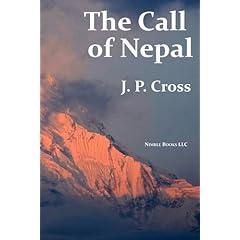
The Call of Nepal: My Life In the Himalayan Homeland of Britain’s Gurkha Soldiers by Col. J.P. Cross

Nimble Books, a publisher I am proud to be associated with, is rolling out the American edition of the memoirs of the legendary COIN specialist, soldier and linguist, Colonel John Philip Cross, of the Gurkhas. Foreword by Robert D. Kaplan.  Disclosure – I had a part, albeit a small one, along with Lexington Green, in connecting Col. Cross with Nimble Books, and I could not be more pleased to see this memoir in print. Not many books these days start by announcing how modern academics will hate it.

Cross was the focus of a story by Kaplan in The Atlantic Monthly magazine in 2006.

Review soon to come….

The Father of Sovietology

Sunday, September 13th, 2009

Great piece of intellectual history here by Dr. David Engerman, writing in Humanities on Philip Mosley, who was to Cold War Sovietology what Vannevar Bush was to the Manhattan Project:

The Cold War’s Organization Man How Philip Mosely helped Soviet Studies moderate American policy

When Winston Churchill ominously announced in March 1946 that an “Iron Curtain had descended over Europe,” the United States government employed around two dozen experts on the Soviet Union and even fewer on Central and Eastern Europe. Two years later, after a steady drumbeat of Cold War crises, the young Central Intelligence Agency employed thirty-eight Soviet analysts, only twelve of whom spoke any Russian. The few university-based Russia specialists varied tremendously in intellect and energy; only a handful were willing and able to contribute to shaping policy. How could American officials chart a foreign policy without knowing what was going on inside the Soviet Union, let alone inside the Kremlin? As Geroid Tanquary Robinson, head of the USSR analysis for wartime intelligence and the founding director of Columbia’s Russian Institute, put it, “Never did so many know so little about so much.”

Into this breach stepped a handful of scholars, including Philip Edward Mosely, the man who would become the most influential Sovietologist of the Cold War. He lacked the name recognition and elegant writing style of the diplomat George Kennan, whose 1947 “X” article introduced the concept of containment to the world. Nor could he rival the publication record and scholarly reputation of Harvard professor Merle Fainsod, whose 1953 book How Russia Is Ruled introduced generations of readers to Soviet politics. And Mosely was nowhere near as colorful a character as the economic historian Alexander Gerschenkron, whose 1952 essay on “economic backwardness” remains a subject of debate into the twenty-first century. Mosely’s contributions to the development of Soviet Studies have received little attention. But in a field of study that emphasized its practical application to policymaking, no one else was so adept at working the lines of influence and power that connected America’s campuses and its capital.

Read the rest here.

Hat tip to Meredith Hindley.

Family Time

Thursday, August 20th, 2009

2watches.jpg

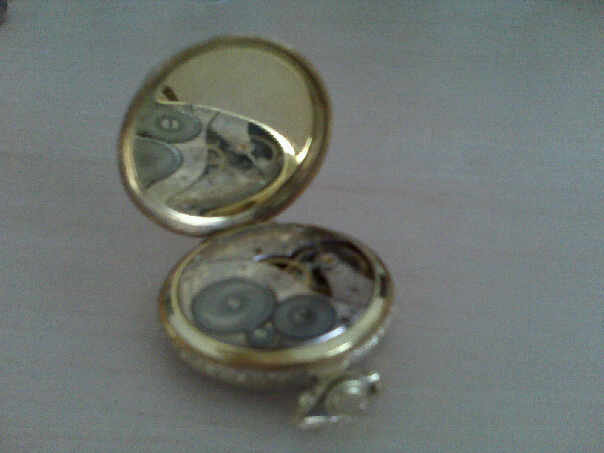
I was rooting around for my passport today and in the course of opening a strongbox I came across one of my grandfather’s old pocket watches, the kind men once wore with three piece suits on a chain with a fob. My father had given them to me around twenty years ago during one of his moves ( pocket watches were not in style then and have not been since) saying they had belonged to my grandfather but were probably broken. I put the everyday watch (on the left with the chain) in a box of knicknacks. The gold watch (on the right) came with a display stand and it sat gathering dust during my twenties and thirties.

Curious, I began fiddling with a watch and found that it still worked, so I wound it and found that the gold watch was also functional. My grandfather, who died of pancreatic cancer when I was still a child, had been a very successful corporate tax attorney who had graduated from DePaul Law School in 1932. He was extremely conservative and had worked for the FBI for a time before settling into tax law and he did not travel or indulge in many extravagances. However, he did like to live well – my grandparents frequently entertained ( they had a full bar downstairs) and my grandfather liked good cigars, good food and dressing stylishly – the pocket watches were part of “the look” that a man at a certain level of success had in those days.

The everyday watch was made by Gruen, which went out of business in 1958. It is a Verithin model where the numerals show an edge of art deco while the hands have an older, gothic, style and it requires winding about twice a day. The gold watch, which was monogrammed and has decorative inlay on the case was made by Elgin National Watch Company, which once produced half of all the watches used in the United States and closed its’ original factory in 1964 and sold the rights to the name, which is now owned by a Chinese concern. The long abandoned  factory in Elgin, Illinois was converted into trendy “loft” condos sometime in the last decade. I opened the back panel and the inside is still as polished as a mirror. The parts are paper thin metal and show a precision of mechanical design that no longer is associated with the United States – at least in consumer items of this kind.

elginwatch.jpg

I like to think my grandfather took some pleasure in owning these watches. He certainly took care of them; the Gruen watch may date back to the thirties and they both have a heavy, masculine quality. The watches feel “solid” in the palm of your hand and give a sense of a different, calmer, era. At some point, I will pass them on to my own children when they are mature enough to value such things, and with some luck, they will continue the tradition.

“Time is what we want most, but… what we use worst”  – William Penn

Book Review: The Bloody White Baron

Wednesday, July 29th, 2009

The Bloody White Baron: The Extraordinary Story of the Russian Nobleman Who Became the Last Khan of Mongolia by James Palmer

The 20th Century was remarkable for its voluminous bloodshed and civilizational upheaval yet for inhuman cruelty and sheer weirdness, Baron Roman Nikolai Maximilian Ungern von Sternberg manages to stand out in a historical field crowded with dictators, terrorists, guerillas, revolutionaries, fascists and warlords of the worst description. Biographer James Palmer has brought to life in The Bloody White Baron an enigmatic, elusive, monster of the Russian Civil War who is more easily compared to great villains of fiction than real life war criminals. Palmer’s bloodthirsty Mad Baron comes across like a militaristic version of Judge Holden from Cormac McCarthy’s Blood Meridian or perhaps more like Hannibal Lecter with a Mongol Horde.

Ill-tempered, impulsively violent, insubordinate and socially isolated even among fellow aristocratic officers, Baron Ungern was, as Palmer admits, without much wit or charm, a complete failure in Tsarist society and the Imperial Army until the coming of the Great War. As with many “warlord personalities“, the chaos and ruin of the battlefield was the Baron’s natural element and for the first time in his life, he experienced great success, his maniacal bravery under fire winning Ungern promotions and the highly coveted St. George’s Cross. This is an eerie parallel with the life of Adolf Hitler, and numerous times in the text, Palmer alludes to similarities between the Baron’s apocalyptic views on Communists and Jews, and that of Baltic-German refugees like Alfred Rosenberg and Max Scheubner-Richter who contributed eliminationist anti-semitism and theories about “Jewish- Bolshevism” to Nazi ideology.

A fanatical monarchist and philo-Buddhist fascinated with far-off Mongolia and Tibet, the Baron regarded the Russian Revolution as the greatest of calamities and joined the Whites under the leadership of the gangster-like Ataman Semenov to rape, loot, torture and murder with a hodgepodge Cossack horde across the Transbaikal region of Siberia. The Baron’s fiefdom under Semenov was a macabre, bone-littered, execution ground ruled by reactionary mysticism and ghoulish exercises in medieval torture visited upon the Baron’s own soldiers scarcely less often than on hapless peasants or captive Reds.

Dismayed by Semenov’s corruption and dependence on the Japanese and the collapsing fortunes of Russia’s White armies, Palmer recounts how the Baron fled with a ragtag band of followers to Chinese occupied Mongolia, where, in a series of bizarre circumstances, the Baron managed to destroy a sizable Chinese army (charging on horseback straight into enemy machine gun fire and emerging unscathed), seized the fortified capital, restored the “living Buddha” the Bogd Khan to the throne and become celebrated the eyes of the Mongolians, variously as the reincarnation of Ghengis Khan and/or the prophesied coming of the “God of War”. Naturally, to further his dream of building a pan-Asian Buddhist Empire, Baron Ungern unleashed a nightmarish reign of terror in Mongolia, taking especial and personal delight in the executions of Jews and captured commissars.

Ungern’s final foray in battle, before his capture, trial and execution at the hands of the Bolsheviks, is like something out of the Dark Ages:

With this final defeat, Ungern shed any trace of civilization. He rode silently with bowed head in front of the column. he had lost his hat and most of his clothes. On his naked chest numerous Mongolian talismans and charms hung on a bright yellow cord. He looked like a prehistoric ape-man. People were afraid to look at him.

Despite the best efforts of the Bolshevik prosecutor to focus upon political motives, even the Soviet revolutionary tribunal that condemned him to death on Lenin’s orders, considered the Baron to be a dangerous madman.

James Palmer has shed a great deal of light on one of the darkest corners of the Russian Civil War, Baron Ungern von Sternberg, a subject that largely eluded prominent historians like W. Bruce Lincoln, Orlando Figes and Richard Pipes. The Bloody White Baron is a fascinating read and a window into the life of the 20th century’s strangest warlord.


Switch to our mobile site