zenpundit.com » cognition

Archive for the ‘cognition’ Category

History as a Gen Ed Credit for Engineering Students Aspiring to Naval Leadership

Tuesday, February 15th, 2011
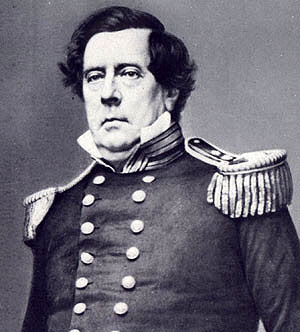
Commodore….errr….what’shisnameagain???

As a rule, I generally do not write about US Navy affairs because it is not an area of expertise for me and I think Galrahn covers that territory admirably well without my poor help. Every so often though, an item from our sea-roving friends catches my eye that I am qualified to speak about and today is one of those days.

Teaching naval history has become an inconvenience to those entrusted with training our nation’s future captains and admirals because they need to get the budgetarily “sexy” topic of “cyber warfare” into the US Naval Academy curriculum. Yes, that’s right. Because someday, in the midst of battle, the combatant commander of PACOM will be furiously barking out HTML code at the bridge of the Eisenhower, above the cries of wounded men.

Gentlemen, gentlemen….in matters of education, fundamentals come before esoterica!

I strongly recommend this post by LCDR Benjamin “BJ” Armstrong, historian, pilot and Navy officer who tackled this subject with an enviable grace and eloquence at the USNI blog:

HH104, WWATMD…

….More than policy or naval strategy, Mahan believed in teaching officers the best ways to approach the challenges of command.  He saw his job as a Naval War College plankowner in those terms, about teaching command, and to do so he turned to history.  But, it wasn’t just senior officers who needed grounding in our naval past.  He wrote in his very first published article, winning third place in “Proceedings” annual essay contest, that history was also a key foundation for learning at the Naval Academy.

When he said that history “lies at the foundation,” it wasn’t just a convenient turn of phrase.  He believed that before subjects like gunnery, engineering, or even cyber-warfare, could be taught a Midshipman needed to know why he was learning them.  Why did any of it matter?  The best way to show a student why hitting the target in gunnery class was important was to teach him the history that showed what happened when crews weren’t drilled properly.  Perhaps he would teach the Midshipman about Captain James Lawrence sailing Chesapeake out of Boston harbor with a green and undrilled crew in 1813 to face HMS Shannon, a short time later uttering his final command, “Don’t give up the ship” just before he succumbed to his wounds and the British boarding party swarmed aboard in victory.  Maybe the Midshipman would recognize the words…from the battle flag bearing the phrase in Memorial Hall that was flown at the Battle of Lake Erie.  Mahan felt that once a Midshipman understood the importance of mastering the craft, of studying their trade, a subject like weapons systems engineering would become important even to the lowly humanities major.

The second part of Mahan’s statement is also important, “all sound military conclusions and practices.”  In our age of checklist leadership and officers educated as engineers there is a desire to approach leadership challenges as equations where certain inputs are guaranteed to give you the desired results.  But Mahan doesn’t say all “correct” military conclusions and practices, he says “sound.”

Mahan recognized that both naval strategy (conclusions) and combat leadership (practices) were art, not science.  In his book “Naval Strategy: Compared and Contrasted with the Principles and Practice of Military Operations on Land,” published in 1911, Mahan compared naval officers to artists.  He wrote that artists had to learn certain techniques, mediums and certain skills, but that wasn’t what made their artwork great.  In the end “art, out of materials which it finds about, creates new forms in endless variety,” artists take those foundation basics and then mix and match them based on inspiration and experience to create a masterpiece.  History helps us understand that frequently there are no right answers to military questions of strategy or leadership.  There are only “sound conclusions,” which are drawn from understanding basics and history.  Demonstrating this great truth to Midshipman early in their education, say as a Plebe before they have taken three years worth of engineering classes that teach them there is always an equation and a correct answer, is much more valuable than having them learn it after years of service.

Bravo!

This decison is wrong on so many levels it amounts to pedagogical malpractice. It should be reversed.

What kind of mind do we want our Navy officers to have in the moment of decision?  An admiral in command of a carrier task force has more destructive power at his disposal than any man on earth except for the ruler of Russia and the President of the United States. At a crisis point, it is too late to roll back the clock to gain the benefit of a career of professional reading, discussion and reflection on the lessons of naval warfare, strategy and statesmanship. EE courses are good things, and demonstrably useful, but they do not inculcate the same habits of mind as does the learning of history.

Historically, the US Navy was the plenipotentiary service of the United States with it’s admirals and commodores assuming extremely sensitive diplomatic or even proconsular duties alongside their responsibilities of military command. The careers of Farragut, Perry, Dewey, Leahy, King, Nimitz and others of lesser rank attest to how naval command has always been deeply entwined in American history with statesmanship and keen political insight. The 21st century will be no different.

The lessons of history are a sword and shield.

Egypt: Jan 25 and the internet

Sunday, February 6th, 2011

[ by Charles Cameron — cross-posted from Brainstormers on the Web ]

There are so many possible lessons to take here:

That a single image speaks louder than dozens of words. That we are more easily persuaded by images than by words. That FB and Twitter are clearly important to Egyptian youth. That dozens of words can convey nuances that a single image misses. That FB and Twitter were at best among the vehicles, rather than the drivers, of the events of January 25th.

That we’d do well to bear the Aristotelian distinction between material, formal, efficient and final causes in mind when talking about what “caused” or “becaused” those events – and elsewhere.

That the simple juxtaposition of two closely similar ideas can illuminate both, and perhaps create a spectral “third thing” which possesses the full detail of both with greater depth than either one in a single understanding, by a sort of stereo process not too different from stereoscopic vision or stereophonic sound.

That we live in exciting times…

A Recommended Blog for Metacognition

Sunday, January 30th, 2011

A while back, I added Ribbonfarm to the blogroll, which is written by Dr. Venkat Rao, a corporate scientist typeafter John Hagel featured in his twitterstream an old but amusing post by Rao analyzing sociopathology in corporate life via characters from The Office. Clever. I thought I would blogroll him and check in periodically.

Later, I noticed that Rao makes frequent references to Clausewitz in his posts and that he is writing Tempo, a book on decision making that will be of great personal and professional interest to many readers here. At this juncture, I’m intrigued.

Then last week, Rao featured a lengthy post on metacognition where he made some excellent points. Here’s a few of them, but as I can only put up a small selection, you should go read the full post:

Boundary Condition Thinking:

 ….To build mathematical models, you start by observing and brain-dumping everything you know about the problem, including key unknowns, onto paper.  This brain-dump is basically an unstructured take on what’s going on. There’s a big word for it: phenomenology. When I do a phenomenology-dumping brainstorm, I use a mix of qualitative notes, quotes, questions, little pictures, mind maps, fragments of equations, fragments of pseudo-code, made-up graphs, and so forth.

You then sort out three types of model building blocks in the phenomenology: dynamics, constraints and boundary conditions (technically all three are varieties of constraints, but never mind that).

Dynamics refers to how things change, and the laws govern those changes. Dynamics are front and center in mathematical thought. Insights come relatively easily when you are thinking about dynamics, and sudden changes in dynamics are usually very visible.  Dynamics is about things like the swinging behavior of pendulums.

Constraints are a little harder. It takes some practice and technical peripheral vision to learn to work elegantly with constraints. When constraints are created, destroyed, loosened or tightened, the changes are usually harder to notice, and the effects are often delayed or obscured. If I were to suddenly pinch the middle of the string of a swinging string-and-weight pendulum, it would start oscillating faster. But if you are paying attention only to the swinging dynamics, you may not notice that the actual noteworthy event is the introduction of a new constraint. You might start thinking, “there must be a new force that is pushing things along faster” and go hunting for that mysterious force.

This is a trivial example, but in more complex cases, you can waste a lot of time thinking unproductively about dynamics (even building whole separate dynamic models) when you should just be watching for changes in the pattern of constraints.

….Historians are a great example. The best historians tend to have an intuitive grasp of this approach to building models using these three building blocks.  Here is how you can sort these three kinds of pieces out in your own thinking. It involves asking a set of questions when you begin to think about a complicated problem.

  1. What are the patterns of change here? What happens when I do various things? What’s the simplest explanation here? (dynamics)
  2. What can I not change, where are the limits? What can break if things get extreme? (constraints)
  3. What are the raw numbers and facts that I need to actually do some detective work to get at, and cannot simply infer from what I already know? (boundary conditions).

Besides historians, trend analysts and fashionistas also seem to think this way. Notice something? Most of the action is in the third question. That’s why historians spend so much time organizing their facts and numbers.

Nice. There’s a multitude of places here to jump off and generate further epistemic analysis, and I am sure that some of the admirers of Boyd, Polanyi, Wohlstetter, Feynman, Kahn and Clausewitz in the ZP readership might do so in the comments. Or my co-blogger Charles might weigh in from the imaginative/mythic/visual domain. We’ll see.

Regardless, I think if you are following blogs like Metamodern, Thomas P.M. Barnett,  Open the Future, Global Guerrillas, John Hagel’s Edge Perspectives, Eide Neurolearning Blog or liked the old Kent’s Imperative (suddenly live again after being dormant for 2 years), you’ll want to consider adding Ribbonfarm to your RSS feed or blogroll.

ADDENDUM:

Ed at Project White Horse, another fine site for your blogroll, is also blogging on boundary conditions:

Stall, Spin, Crash, Burn and Die – Boundary Conditions for 2011

….You can’t fix things without some understanding, real understanding of the problem – nor can there be real leadership without actionable understanding. That’s where establishing boundary conditions as a vehicle to frame the problem – and therefore garner greater insight – become important.

Drilling for oil at a depth of 5000ft and in open ocean – Deepwater Horizon – should have been/should be seen as a “crisis” in waiting no matter the historical track record. Proper understanding would have meant that the National decision making level immediately recognized the high potential for the initial crisis migrating into a severely complex catastrophe after the explosion and acted, not waiting to see if BP’s response plans would work. Activities in “Blue Water”/open ocean are not a linear extrapolation from “inshore,” nor is 5000 ft a linear extrapolation from 200ft or 500ft. depths.  BP’s plans might have been up to the problem, but the shear nature of the environment, if scrutinized in context of “unconventional” as described below, should have been a trigger to initiate intermediate action.  Rather, the declaration of an Event of National Significance was 30+ days in coming??? A significant point, I believe, is the problem generated by not recognizing the nature or even acknowledging the existence of a different kind of  problem, one potentially very complex or stochastic in nature – an “unconventional crisis.”

DoubleQuotes and Questions

Friday, January 28th, 2011

[ by Charles Cameron ]

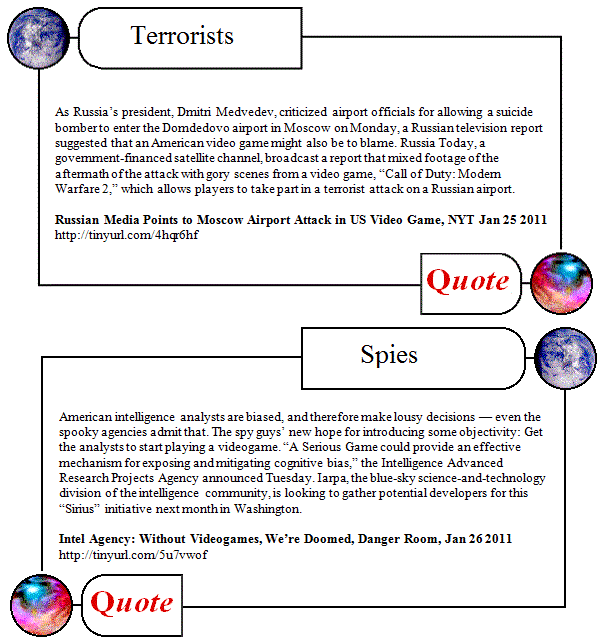
You know, I really enjoy building my DoubleQuotes. They can be entirely frivolous, as is this one, for instance:

with its touch of gothic — a taste I share with my friend Bryan Alexander.

Or they can work like a Necker cube, offering opposite framings with which to view a single topic — in this case, video games.

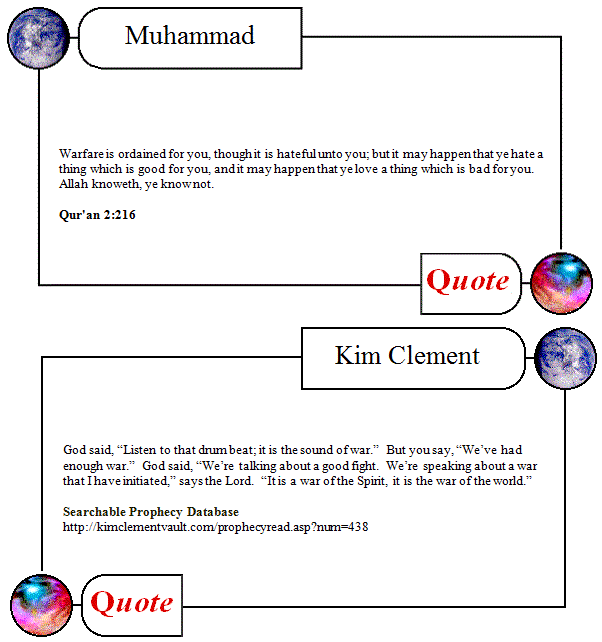
They can also work like Rorschach blots — this one compares two prophecies, one from the Quran and one from a contemporary Christian prophet (if I’m not mistaken, President Obama quoted him recently) —

— but it is left up to the reader to determine the value of each…

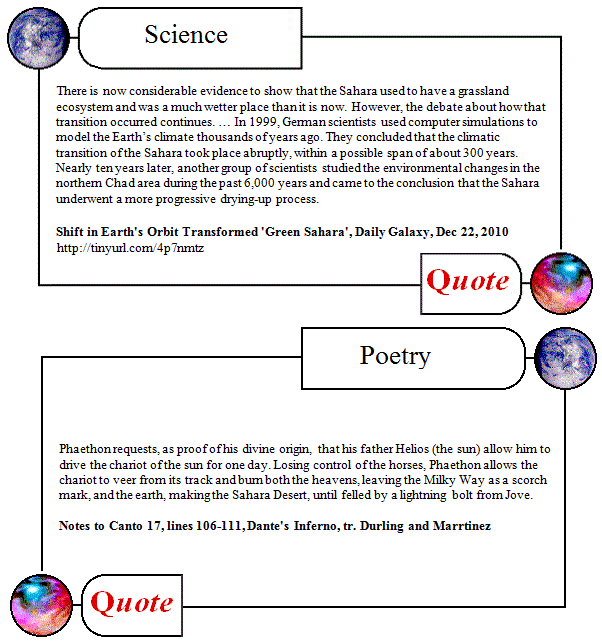
And they can also pose fundamental questions of preference:

Has science simply replaced myth, d’you think? or is science for the facts, perhaps, and the mind — while poetry and myth are for the heart, and truth?

Untangling two words

Monday, January 17th, 2011

[ by Charles Cameron ]

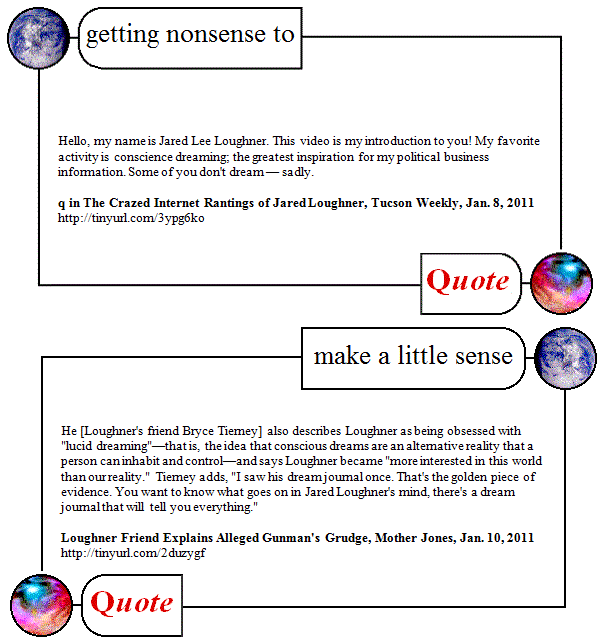
I’d like to take one small data-point and bring it into sharp focus with what lit critics would call a close reading of a two-word phrase from one of Loughner’s videos.

Maybe it’s because in French conscience means both what we’d call conscience and consciousness in English, when I read the weirdly stilted prose of Jared Loughner with its curious insistence on syllogism, the phrase “conscience dreaming” suggested “conscious dreaming” to me — and I wondered whether Loughner wasn’t perhaps thinking of the activity called “lucid dreaming” in which one knows while dreaming that one is dreaming, and begins to “direct” the dream in much the same way in which a film-maker directs a film.

The first quote in this DoubleQuote is from one of Loughner’s videos — the second, which confirms my hypothesis, quotes a friend of his.

I am not suggesting that “lucid dreaming” is responsible for Loughner’s actions — I’m not sure that anything or anyone is, including Loughner himself.

My point is that here as elsewhere, figuring out what the allusions in an unfamiliar rhetoric mean is an important step in understanding the mental processes that produce it.

Lucid dreaming is one clue in the tangled mess that was Loughner’s state of mind that day…


Switch to our mobile site