[by Charles Cameron — some remedial philosophy at age 71 ]
.
I seem to be doing remedial political philosophy this week. As it happens, I read a Chinese comedian in my youth and was admonished against “sitting down while running round in circles” and have been aerating my brain with too much conscious breathing ever since — neither leaving me much time or interest for what in Oxford in my day was known, somewhat dismissively, PPE — Philosophy, Politics and Economics.
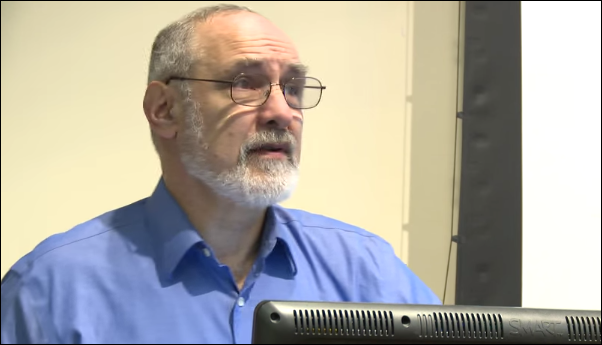
Which brings me today, and to grabbing lectures in just that sort of thing from Harvard’s Michael Sandel, courtesy of YouTube:
The video shows Sandel’s lectures, “Justice: Putting a Price Tag on Life”, and “How to Measure Pleasure” — salted with some dark humor:
Back in ancient Rome, they threw Christians to the lions in the Coliseum for sport. If you think how the utilitarian calculus would go, yes, the Christian thrown to the lion suffers enormous, excruciating pain, but look at the collective ecstasy of the Romans. .. you have to admit that if there were enough Romans delirious with happiness, it would outweigh even the most excruciating pain of a handful of Christians thrown to the lion.
I enjoyed the two lectures immensely — maybe I should rewind fifty years, and try PPE at Harcard?.
I mean, all of which made me wonder about Jeremy Bentham, I suppose.
We had Locke at Christ Church, staring disdainfully from his portrait during dinners in the Great Hall — but Bentham? I don’t think I saw any utility in utilitarianism.
**
But then I also wondered:
I wondered: how close is the analogy between the trolly problem and the ticking bomb torture questionn? Do we start from numbers of likely victims in each case and decide from there, or should we instead start by contemplating torture — and recognize the abyss staring back at us?
What Shakespeare said, though — getting back to my title — was “The quality of mercy is not strain’d” — not the quantity, the quality — unquantifiable.
As Jews fasted on Tisha B’Av (Av 9) mourning the destruction of the First and Second Temples, hundreds of Jewish visitors made pilgrimage to the Temple site.
In preparation for Jews visiting the Mount on the annual fast, armed Muslim youth barricaded themselves in the Al-Aqsa Mosque. Several dozen Arab masked rioters attacked Israeli police, hurling rocks and setting off fireworks into the crowd of responders, wounding several officers.
After defusing the situation and arresting three to six participants, Israeli police found a trove of makeshift weapons in the Al-Aqsa Mosque — Molotov cocktails, firecrackers, concrete blocks, stones, and planks, with which they planned to attack Jewish mourners. [ .. ]
One of those mourners was Agriculture Minister Uri Ariel, who has in the past emphasized that there is a “need to build a real Temple on the Temple Mount.”
scripturally..
Isaiah 2:2–3:
In the last days, the mountain of the Lord’s Temple will be established as the highest of the mountains; it will be exalted above the hills, and all nations will stream to it. Many peoples will come and say, “Come, let us go up to the mountain of the Lord, to the Temple of the God of Jacob.”
and / or..
Qur’an 17.1:
Exalted is He who took His Servant by night from al-Masjid al-haram to al-Masjid al-Aqsa, whose surroundings We have blessed, to show him of Our signs. Indeed, He is the Hearing, the Seeing.
He has the pedigree: Meir Ettinger is a grandson and the namesake of Meir Kahane, the slain American-Israeli rabbi considered the father of far-right Jewish militancy. [ .. ]
He also has the ideology: In a series of Bible-quoting blog posts that amount to a manifesto, Mr. Ettinger calls for the “dispossession of gentiles” who inhabit the Holy Land and the replacement of the modern Israeli state with a new “kingdom of Israel” ruled by the laws of the Torah.
“The key is not to seek to delay the explosion,” he wrote on July 22, “but to try to bring it on as soon as possible and on our own initiative.”
[ by Charles Cameron — I was (unexpectedly) almost totally deaf at the time, so the videos of the conference allowed me a second go-around, for which I’m profoundly grateful ]
.
Richard Landes, opening the Boston conference
**
With what I hope will turn out to be the wisdom of a fool, I am going to propose the importance of (a) Richard Landes‘ now defunct Center for Millennial Studies at Boston University, and (b) its recent resurgence as a single and singular conference on Apocalyptic Hopes, Millennial Dreams and Global Jihad.
Bear with me, I’m an enthusiast.
**
Gregory Bateson died thirty-five years ago July 4th, the day I started writing this post — a fact I only know because I’m inclined to associate the Boston Conference as one of the great cross-disciplinary and initially underestimated conferences alongside the early Macy conferences on Cybernetics, in which Gregory Bateson was so significant a partner — or the seminal Eranos Conferences attended by the friends of CG Jung.
The Macy conferences ushered in the computer age, the Eranos conferences celebrated the highest level of cross-cultural and cross-disciplinary exchanges between psychologists, philosophers, religious scholars and physicists — while the Millennial Studies conferences focused on a studiously ignored area of knowledge that has swung into heightened significance via the arrival on scene of Al-Qaida and the Islamic State.
**
Participants, Macy and Eranos:
The Macy Cybernetics Conferences included such participants as William Ross Ashby, William Grey Walter, Kurt Lewin, J. C. R. Licklider, Warren S. McCulloch, Margaret Mead, Oskar Morgenstern, F. S. C. Northrop, Walter Pitts, I. A. Richards, Claude Shannon, Heinz von Foerster, John von Neumann, and Norbert Wiener.
The Eranos Conferences included presentations by Carl Gustav Jung, Rudolf Otto, Mircea Eliade, Wolfgang Pauli, Karl Kerényi, Erich Neumann, Henry Corbin, G van der Leeuw, Louis Massignon, Gilles Quispel, Hellmut Wilhelm, Hugo Rahner, Erwin Schrödinger, Gershom Scholem, Heinrich Zimmer and Martin Buber.
In each case, the ideation was intensely and deliberately cross-disciplinary, and the importance of the series of conferences only widely apparent at a later date.
**
Participants, Center for Millennial Studies:
In the case of the Boston conference on Apocalyptic Hopes, Millennial Dreams and Global Jihad, the series in whicb it partakes is that of the new defunct Center for Millennial Studies, an extraordinary organization which studied millennial movements from the Dead Sea Scrolls via the Taiping Rebellion (20-30 million dead), and the Siege of Mecca (1979 CE), to Aum Shinrikyo, Waco and Y2K — with implications for future events at least as far as the 2000th anniversary of the crucifixion in the 2030s and the start of the next Islamic century in the 2070s.
Among the attendees at this year’s conference were Richard Landes, William McCants, Graeme Wood, Timothy Furnish, Cole Bunzel, Jeffrey M. Bale, myself, David Cook, JM Berger, Itamar Marcus, David Redles, Paul Berman, Charles Strozier, Brenda Brasher, Mia Bloom and Charles Jacobs. Husain Haqqani was expected to attend and intended to speak about the Ghazwa e-Hind but couldn’t make it, and Ayaan Hirsi Ali cancelled her appearance for security reasons as a result of the Garland, TX, shooting the day before.
Speakers at previous CMS conferences included, in additiopn to some of the above, Steven O’Leary, Michael Barkun, Albert Baumgarten, Chip Berlet, Bruce Lincoln, Moshe Idel, Michael Tolkin, Gershom Gorenberg, Damian Thompson and Robert Jay Lifton.
**
You can see the entire series of CMS 2015 Conference videos
You can follow those up with such friends and worthies as Tim Furnish, JM Berger, and (on Palestinian messaging) Itamar Marcus — Itamar’s brilliant presentation shifted my thinking on the Israeli-Palestinian question by about ten degrees.
My recent discombobulations (see previous post) and an over-busy writing schedule have prevented me from posting separately on each of the talks at the conference, which I had hoped to do — but McCant’s forthcoming book will soon be with us, and this brief introduction (and my three reading lists) will hopefully provide background while we await it.
[ by Charles Cameron — 3 Quarks Daily, Boston Apocalyptic conference, LapidoMedia, World Religions and Spirituality Project, Bellingcat, Loopcast, Pragati, Sembl ]
.
First, please vote!
. [ Note added: voting is now closed: my story received the fifth highest tally of votes out of 45 entries, and is now up for consideration by the 3QD editors in the next round — many, many thanks! ]
My story, War in Heaven, is in the running for the 3 Quarks Daily Arts & Literature Prize. 3 Quarks Daily is a great aggregator site, I’m honored to have made the cut so far, and would love to make it to the next level. My entry is #33 in the alphabetical list here, and votes can be cast at the bottom of the page. Networking for votes is all part of the game, so I’m hoping you’ll vote — & encourage your friends to go to that page & vote my entry up.
There’s even a Google Hangout video in which Atlantic Council Non-Resident Senior Fellow August Cole, who directs the Art of Future Warfare project, interviews the contest’s winner and finalists, myself included. August’s book, Ghost Fleet: A Novel of the Next World War, is in the running for next great Tom Clancy like techno-thriller.
You’ll find plenty of other good entries at the 3QD contest page, and daily at 3QD as well — as I say, it’s excellent in its own right, and one of the richest contributors of varied and interesting posts on my RSS feed.
**
Then, in no particular order — check ’em all out —
To my way of thinking, the critical thing to know about the Islamic State is its “apocalyptic, end-of-days strategic vision” as Martin Dempsey put it — and the implications of that statement, both in terms of strategy and of recruitment & morale. That’s what the Boston conference focused on, and that’s why I think it was no less significant for being sparsely attended. In a series of future blogs I hope to go over the videos of the various presentations and spell some of their implications out — Will McCants‘ book, The ISIS Apocalypse, is due out in September, and I’d like to have filled in some background by then.
Here, though, as I’m giving an update on my own doings, is my presentation — an attempt both to tie together some of the strands of the panel I was commenting on (but could barely hear, but that’s a tale or another day), and to express my sense of the importance of apoclyptic thinking, not merely as an intellectual exercise but as an emotional and indeed visceral relaity for those swept up in it:
The other speakers were Richard Landes, WIlliam McCants, Graeme Wood, Timothy Furnish, Cole Bunzel, Jeffrey Bale, David Cook, J.M. Berger, Itamar Marcus, Charles Jacobs, David Redles, Mia Bloom, Charles Strozier, Brenda Brasher and Paul Berman — quite a stellar crew.
**
My two latest pieces for LapidoMedia, where I’m currently editor:
YOU might not think that ‘what jihadis do in their spare time’ would be a topic of much interest, but it’s one that has been under-reported and is just now breaking into public awareness.
Much of the credit for this goes to Robyn Creswell and Bernard Haykel for their current New Yorker piece, Battle lines: Want to understand the jihadis? Read their poetry.
But behind Creswell and Haykel’s piece lurks a striking presentation given by the Norwegian terrorism analyst Thomas Hegghammer at St Andrews in April.
Hegghammer’s Wilkinson Memorial lecture was titled Why Terrorists Weep: The Socio-Cultural Practices of Jihadi Militants…
A CHINESE couple, dismayed by the Taliban’s destruction of Bamiyan’s two Buddha statues, has brought the larger of the statues back to life.
Locals and visitors can once again see the Bamiyan Buddha through the use of laser technology – this time not in stone but in light.
Carved into the great cliff face towering over the fertile valley of Bamiyan in Afghanistan, two Buddha statues stood for centuries.
In 2001 the Taliban dynamited the statues, built in the Sixth century in the Gandhara style, the larger of them standing 55 metres tall.
It was not the first attack against them.Lapido aims to provide (mostly secular) journalists with insight into the religious & spiritual values behind current events.
I stood there, atop the Bamiyan Buddha: it’s personal.
**
At the World Religions and Spirituality Project at Virginia Commonwealth University, I’m one of two Project Directors for the JIHADISM Project. We’re very much a work in progress, aiming to provide a resource for scholarship of religion as it relates to jihadism.
**
Justin Seitz made a post titled Analyzing Bin Ladin’s Bookshelf on Bellingcat, to which I responded, and we had a back-and-forth of emails &c.
Justin then gave our discussion a shoutout at The Loopcast —
— the immediate context starts around the 30 min mark, and runs to around 35 — and followed up with a second Bellingcat post, Analyzing Bin Ladin’s Bookshelf Part 2 — in which he quoted me again. Key here is his remark:
a human with domain expertise is always going to be in a better position to make judgement calls than any algorithm
Agreed — & many thanks, Justin!
Bellingcat — definitely an honor to get a shoutout there,
It’s a terrific feeling to see the next runner in a relay race take off from the handover… Cath is getting some high praise for her work on Sembl for the museum world, including the following:
Sembl incredibly succesfully mixes competitive and collaborative play, creativity and expression, and exploration and inspiration. It’s the sort of game you think about when you’re not playing it, and it’s the sort of game that helps you see the world in new ways.
Paul Callaghan
Writer, Game Developer, Lecturer at Unversity of East London
Meanwhile, I’m still quietly plugging away at some other aspects of the HipBone / Sembl project.
Zenpundit is a blog dedicated to exploring the intersections of foreign policy, history, military theory, national security,strategic thinking, futurism, cognition and a number of other esoteric pursuits.