A kindergarten teacher in Mexico seeks to protect her students and calm their fears as narco-cartel fighters conduct a raging gun battle outside the window of her school. The woman has nerves of iron.
But hey…..Mexico can’t have an “insurgency” because the narcos don’t have “political” goals. Or a unified political goal. Or because there are still good vacation deals there at all-inclusive resorts. Or….Or…Or…. whatever flimsy rationale helps policy makers continue to punt the war next door.
For months, many arab commentators have observed that the uprisings are mainly about “dignity”: e.g., identity and dignity, or dignity and freedom, or some other combination — but always dignity.
In contrast, American observers keep saying the uprisings are mainly about “democracy” — freedom and democracy in particular. some Arabs include a call for democracy with their call for dignity; but Americans only occasionally acknowledge their parallel pursuit of dignity. in fact, Americans rarely think about dignity; we’re raised to assume it. Language about dignity slides right through our modernized minds.
Yet, in many cultures, dignity is a more crucial concept than democracy. Dignity (along with its customary companions: respect, honor, pride) goes to the core of how people want to be treated. it’s an ancient tribal as well as personal principle. indeed, it’s central to the tribal form. tribal and clannish peoples think and talk about dignity far more than do americans and other westerners in advanced liberal democratic societies.
In the Arab spring, what many arabs seem concerned about is thus more primal than democracy. They’re fed up with the indignities inflicted by corrupt, rigged patronage systems, by rulers and functionaries who act in predatory contemptuous ways, by the endless abuse of personal rights and freedoms — in other words, by all the insults to their daily sense of dignity. Of course, many Arabs seek democracy too; and dignity and democracy (not to mention justice, equality, and other values) overlap and can reinforce each other. But dignity and democracy are not identical impulses, nor based on identical grievances. in some situations, the desire for dignity trumps the desire for democracy.
This interplay between “dignity” and “democracy” may have implications for US policy and strategy. I’m not exactly sure what they are, but it seems to me that we ought to be analyzing and operating as much in terms of dignity as democracy. I bring this up not only because americans tend to overlook the significance of the dignity principle, but also because I detect a dignity-democracy fault-line among the Arab-spring’s protagonists — a fault-line that may relate to whether the Arab spring ends up having democratic or re-authoritarian consequences.
My sense is that the younger modernizing protagonists of the Arab spring may well be pursuing democracy (along with dignity) as their strategic goal, but the older, more traditionalist elements operating alongside them are more interested in pursuing dignity, without necessarily favoring democracy. and the latter may be stronger than we have observed. if so, the quest for dignity may be satisfied by outcomes that have little to do with democracy: say, for example, a shift in tribal and clan balances, an enhanced appeal for islamic law (shariah), or a charismatic call for strong government devoid of foreign influence. It may be easier, and more popular, to gratify a quest for dignity than a quest for democracy.
*
I’m led to these observations via the TIMNframework about the four major forms of organization that lie behind social evolution: tribes + hierarchical institutions + markets + info-age networks. the young modernizing protagonists of the arab spring express the nascent +N part of TIMN, while the older traditionalist elements remain steeped in the ancient pro-T part — and therein lies the fault-line I mentioned earlier.
For further details of Dr. Ronfeldt’s published work, see his RAND portfolio.His current interests include in particular:
Development of a framework (TIMN) about the long-range evolution of societies, based on their capacity to use and combine four major forms of organization: tribes, hierarchical institutions, markets, and networks
Development of a framework (STA) for analyzing people’s mind-sets and cultural cosmologies in terms of basic beliefs about the nature of social space, social time, and social action
As readers of this blog know, grand strategy is an important and timely subject that speaks directly to the difficulty American leaders have had in navigating the ship of state in the waters of the international arena. The Shaping of Grand Strategy: Policy, Diplomacy, and War by Williamson Murray, Richard Hart Sinnreich and James Lacey (Ed.) and contributing authors Colin S. Gray, Marcus Jones, Jeremy Black and John A. Lynn III postulates what grand strategy is and explain from historical case studies how statesmen struggled to fashion one in peace and war.
The Shaping of Grand Strategy has a number of strengths to recommend it to the serious student of history or strategic practitioner:
Focus: The case studies are all anchored in the Westphalian state system starting with the early modern period of European absolutism and apex of “national” monarchies and transitions through a Bismarckian 19th century to finish with the West’s cataclysmic 20th century battle with totalitarianism. This gives the chapters by different scholars a sense of cohesion and chronological succession.
Balance: The Shaping of Grand Strategy gives scholarly treatment from both the theoretical, strategic studies perspective as well as the historical case study. I learned some things about Louis XIV’s Europe and the Great Britain of the Pitts and the Hanoverian dynasty of which I was unaware. Theory bookends history in this tome.
Nuance: Each scholar gives his subject an adult treatment. Controversial points are interesting rather than shrill and each author engages an impressive synthesis of historiographic material as they cover a broad ground in investigating grand strategy. Each chapter is sound and engaging.
Limitations, such as they are, to be considered:
Absent: Powerful non-Western case studies. The ancient world. Revolutionary war (French, Soviet or Islamist insurgent) as a grand strategy. Geoeconomics asnd political economy as a foundation for grand strategy.
Weak: Insufficient treatment of the impact of nuclear weapons and deterrence on grand strategy, which frankly deserved a chapter of it’s own.
If you are composing a syllabus for a class on grand strategy or strategy, The Shaping of Grand Strategy would serve as an excellent generalist core for the course, supplemented by cognate, specialist or subtopical readings.
Some things that struck me while reading The Shaping of Grand Strategy:
Colin Gray’s distillation of the strategic dilemmas faced by Truman and an almost Boydian implicit explanation of what grand strategy is and why it needs a compelling moral power:
High policy does not emerge in a vacuum, though it can be invented in a hurry without much forethought when necessity presses. Policy requires a North Star for guidance that can inspire, yielding to would-be leaders the fuel they require to recruit and satisfy their followers
James Lacey’s realistic and granular treatment of the relationship between military strategy and grand strategy in the WWII Anglo-American Alliance and his generally admiring assessment of FDR as a strategist vs. a critical treatment of George Marshall.
Marcus Jones’ emphasis of the importance of the strategist himself and the uncertainty of decision making in his chapter on Otto von Bismarck.
The drawing of historical parallels with today byJohn Lynnand Richard Sinnreich as well as the investigation of the reasons for grand strategic failure of British appeasement by Williamson Murray.
The Shaping of Grand Strategy is a tight, concise and focused academic book that furthers the discussion of grand strategy by providing coherent and detailed examples as well as a readable an interesting analysis from which both the professional or the the student can profit.
Barack Obama will announce during his first state visit to Britain this week that the White House is to open up its highly secretive national security council to Downing Street in a move that appears to show the US still values the transatlantic “special relationship”.
A joint National Security Strategy Board will be established to ensure that senior officials on both sides of the Atlantic confront long-term challenges rather than just hold emergency talks from the “situation room” in the White House and the Cobra room in the Cabinet Office.
….Britain believes that co-operation between the British and US national security councils marks a significant step. One British government source said: “The US and UK already work closely together on many national security issues. The new board will allow us to look ahead and develop a shared view of emerging challenges, how we should deal with them, and how our current policy can adapt to longer-term developments.”
The new board is a rare step by the White House, which guards the secrecy of the national security council. Founded in 1947 by Harry Truman, the NSC was in 1949 placed in the executive office of the president, who chairs its meetings.
Cameron tried to replicate the council when he established a body with the same name on his first full day as prime minister. It is chaired by the prime minister and designed to co-ordinate the work of the three Whitehall departments responsible for foreign affairs – the Foreign Office, the Ministry of Defence and the Department for International Development.
One government source said that Ricketts and Donilon would have to tread with care. “There is a little bit of disconnect between the two. The US national security adviser is a political appointment, whereas Sir Peter Ricketts is a civil servant. But this does make sense. We have a highly developed relationship with the USA where our military and intelligence officials work closely together. This is a useful move…
It is a start and I am heartened by the decision to formally include “strategy” as the body’s brief, that and the transatlantic nature coupled with bureaucratic differences may lead the new board to concentrate to a greater degree on looking at isues a strategic perspective rather than the S.O.P of wading into granular bureaucratic minutia. Given that I recently floated the idea of a Grand Strategy Boardhere ( along with Aaron), I can only be pleased to see a trend in that general direction from the Obama administration and our British allies.
Aaron was first on this story at Egremont, but he expresses some deep skepticism:
….What immediately came to mind was the Combined Chiefs of Staff which, had it continued, might have become such a board. The engine to drive the Special Relationship forward. However, unless the UK is willing to throw away 40 years of foreign policy, the National Security Board (NSB) could be nothing more than a fair weather institution. The shared strategic interests that kept the alliance alive in the 20th century disappeared at the end of the Cold War. Other countries may prove more useful partners this century.
The given rationale for a NSB is to keep senior officials in touch with the broader challenges that face the two countries. Unfortunately, there are reasons why it might not succeed.
As global power shifts eastwards and emerging Asian states challenge US hegemony, Washington will be increasingly concerned with security and stability in the western Pacific. This is their broader challenge and President Obama is pursuing the correct policies in that region. The UK does not have a similar strategic clarity. If we want to enjoy the kind of relationship we enjoyed last century then our defence and foreign policies must expand east of Suez. Professor Michael Clarke, the head of the RUSI, has written that such a radical move “would represent the most judicious, and audacious, use of the hard/soft power combination yet seen in contemporary politics”. So far, however, the Government has shown no sign that it plans to make as big a shift as this in its ‘Big Picture’ thinking. Yet without it the NSB may prove fit only for fair weather.
….Nor do I see how the NSB can solve the institutional problems that I outlined last month. The board is supposed to move beyond crisis management, with senior officials from each side of the Atlantic focusing on the bigger picture. Given both countries’ bureaucracies have been promoting problem solvers at the expense of strategists, it isn’t evident that thinking will suddenly become more long-term. The same people will be shaping things, just this time sharing hats with Anglo-Saxon cousins. As with the Grand Strategy Board, the NSB’s utility also depends on the extent to which it taken seriously by our leaders. “You can organise government all you like, but strategy is an essentially political process that comes from the top,” Julian Lindley-French told MPs last September.
I think Aaron is spot on with the last paragraph.
Strategy is the crystallization of a kind of thinking process that needs to be present in the room or what you will have in the NSSB is a “coordination council” rearranging the deck chairs instead of charting the course. The British Cabinet and the Obama administration should strongly consider adding a few mutually acceptable wise men who do not have to juggle the supremely hectic schedules of a Foreign Secretary or a National Security Adviser, or at least some executive staffers recommended for the excellence of their strategic thinking. It will help lean against the relentless and universal gravitational pull of bureaucratic and political culture toward the short term time horizon and the tactical details.
Israeli intelligence officers caught on camera moments before carrying out an assassination of a HAMAS terrorist.
“Information wants to be free” – Stewart Brand
You do not need to be Alvin Toffler or Marshall McLuhan to have noticed that as a result of the information revolution that in the past decade, much like individual privacy, secrecy has taken one hell of a beating. While Wikileaks document dumping demonstrated that much of what governments overclassify as “top secret” are often simply diplomatically sensitive or politically embarrassing material, the covert ops raid that killed Osama Bin Laden was a reminder that some actions, operations and lives are critically dependent on secrecy.
Secrecy in the sense of intelligence agencies and other actors being able to carry out clandestine and covert activities is rapidly eroding in the face of ominpresent monitoring, tracking, hacking, scanning, recognition software and the ability to access such data in real time, online, anywhere in the world. A few examples:
It is virtually impossible for an agency to provide sufficient cover for a false name. If you provide information like where you went to school, what posts you have served before, etc., the information can be quickly checked. (Most yearbooks are online; graduates are listed in newspapers; property records, etc.) If you don’t provide that information, then your bio sticks out.
Giving an intern the list of names of personnel at an embassy and telling them to build the person’s bio from online sources — with cross-checking — will quickly cut through a light cover. It will also challenge even a well-constructed cover. I think this is going to be one of the challenges for human intelligence in the 21st century.
What makes the security camera shots released last night by the Dubai police interesting is the professionalism exhibited by the suspected assassins of senior Hamas figure Mahmoud al-Mabhouh.
They arrived on separate flights from different destinations; one of them flew in via Munich and Qatar. They stayed in different hotels and were careful to make phone calls using international routers. They wore clothing that makes them difficult to identify. One is seen with a mustache and a hat, others wearing hats and glasses. They try, throughout, to appear to be innocent tourists or business people, there to enjoy themselves and even play some tennis…
Pity the poor intelligence officer operating without diplomatic cover. A false beard and glassses will no longer suffice.
What kind of adaptions are possible or likely to take place by intelligence, law enforcement, military and corporate security agencies in the face of an emerging surveillance society? First, consider what clandestinity is often used for:
To avoid detection
To avoid identification even when detected ( providing “plausible deniability” )
To facilitate the commission of illicit acts or establish relationships under false pretenses
To conduct covert surveillance
To collect secret information of strategic significance (i.e. – espionage)
To facilitate long term influence operations over years or decades
Taking the long term view will be required. Some thoughts:
One effect will be that marginal subpopulations that live “off the grid” will be at a premium someday for recruitment as intelligence operatives. These “radical offliners” who have never had a retinal scan, been fingerprinted, had their DNA taken, attended public school, uploaded pictures or created an online trail, been arrested or worked in the legal economy will be fit to any false identity constructed and, if caught, are unidentifiable.
Another will be the creation of very long term, institutional, “false front” entities staffed by employees who will never know that the real purpose of the enterprise is to provide airtight legitimate covers and that the economic or other activities are merely ancillary. They won’t be standing jokes like Air America or the various business activities of Armand Hammer, but real organizations with only a few key insiders to facilitate periodic use for intelligence purposes. A similar tactic will be intel agencies “colonizing” legitimate entities like universities, law firms, consultancies, media, financial institutions, logistical and transhipping corporations and NGO’s with deep cover officers who are intended to make ostensible careers there. This of course, is part of basic intelligence history but the scale, subtlety and complexity will have to significantly increase if authentic “legends” are to stick.
Then there’s the creepier and less ethical path of intelligence agencies stealing and using the identities of real citizens, which hopefully a democratic state would eschew doing but which bad actors do now as a matter of course in the criminal world.
Speed will also be an option. As with the Bin Laden raid, fast will increasingly go hand in hand with secret, the latter being a transient quality. If you cannot avoid detection, like the Mossad agents out playing tennis on survellance video, beat the reaction time. Clandestine may also come to mean “Cyber” and “Robotic” moreso than “HUMINT”
Being invisible in plain sight is an art that will grow increasingly rare.
Zenpundit is a blog dedicated to exploring the intersections of foreign policy, history, military theory, national security,strategic thinking, futurism, cognition and a number of other esoteric pursuits.

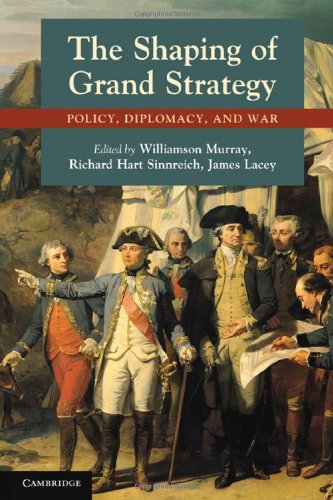
 by Williamson Murray, Richard Hart Sinnreich and James Lacey (Ed.)



